
TL;DR
Screen printer and Ideal Home contributor Hannah Carvell used discounted Moroccan tiles to add a mint-green accent inside her painted fireplace. Her account highlights practical issues for similar projects: her initial estimate of 1.5 square metres was at least half the amount needed, and the tile thickness affected the wood burner’s clearance.
Screen printer Hannah Carvell, a new contributor to Ideal Home, has described using discounted handmade Moroccan tiles to add colour inside her living-room fireplace, after prices for her preferred alternatives came to about £500 or more. Her account also shows how an underestimated tile quantity and the thickness of the tiles affected the project around her wood-burning stove.

Get furniture and decor delivered free with Prime
- Fast, free delivery on millions of items
- Prime Video, Amazon Music and more included
- Member-only deals all year
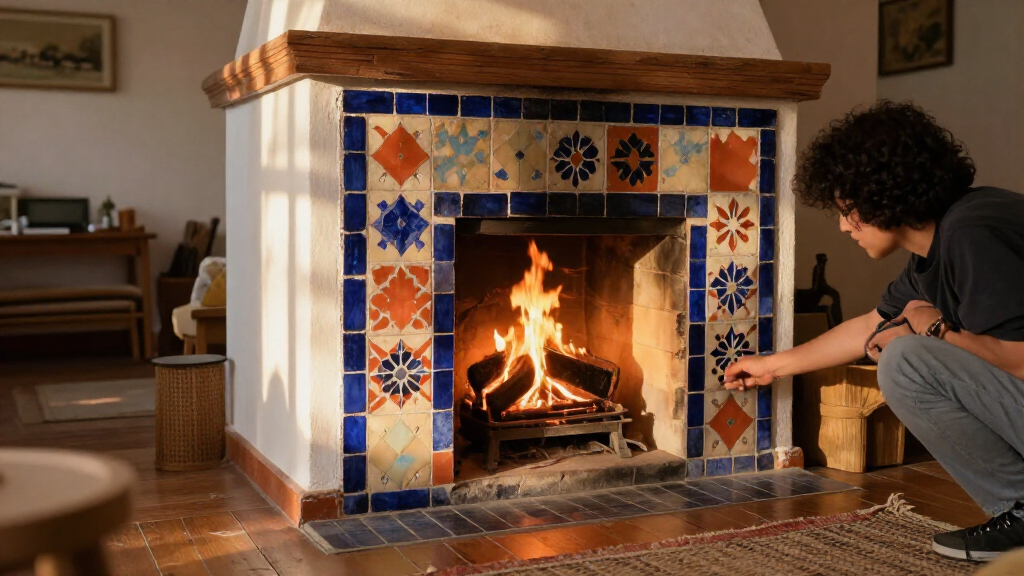
Carvell had already painted the room green, including a large, relatively new brick fireplace surround, using Dulux Heritage Sage Green emulsion over an undercoat. She said she would not have painted the bricks if they had been old and original. The fireplace still had a large black metal sheet behind the log burner, which she wanted to replace with tiles.
She first considered tiles from brands including Maitland & Poate, Otto Tiles and Fired Earth, and ordered samples. But her estimate of 1.5 square metres was not enough to make the options affordable: she put the total for the tiles and delivery at around £500 or more. A Bristol shop, the Moroccan Encaustic Tile Company, offered leftover tiles from earlier projects at a discount; collecting them herself also avoided an £80 delivery charge.
Carvell chose a mint-green glazed tile. During installation, a log-burner fitter told her the tiles were thick enough to affect the space available for the stove to sit back on its ledge. Carvell and her husband laid an additional course of bricks, then checked the tile layout and discovered they needed at least twice the amount she had first estimated. The source account does not give the completed project’s final cost or describe the finished installation.
Moroccan tiles bring character to a fireplace
Hannah Carvell used discounted handmade tiles for a mint-green fireplace accent. Her experience shows why careful measuring and stove-clearance checks matter.
A distinctive, lower-cost choice
Discounted leftover stock offered an immediate alternative to a pricier bespoke order.
Mint-green accent
Carvell chose glazed Moroccan tiles for colour and their handmade, imperfect character.
Stock or bespoke
A future Marrakech order could match a chosen colour, but would cost more and take longer.
Plan the project in order
Measure the full area and check the stove fit before buying or starting work.
The initial 1.5-square-metre estimate proved far too low; the final quantity is unreported.
Check available stock, delivery and fitting costs before committing.
Ask a qualified fitter to assess tile depth, removal, refitting and appliance requirements.
One account, open questions
The report ends before the finished installation is confirmed.
- Thick tiles affected space for the burner on its ledge.
- The couple added another course of bricks.
- The first quantity estimate was at least half what they needed.
- Final tile quantity or project cost.
- Whether the fireplace was completed.
- Final clearance measurements or appliance specifications.
The Costs Behind a Tile Accent
Carvell’s account offers a practical example of how a small-looking fireplace area can involve more than buying a few tiles. Material quantity, delivery, removal work and stove clearance all affected the plan, so a low price for leftover tiles did not remove the need to check dimensions and installation details.
For homeowners considering a similar change, the main takeaway is to measure the entire surface carefully and confirm the tile depth against the appliance and its surround before buying. Where a wood burner is involved, its removal and refitting should be discussed with a qualified stove fitter; the article describes Carvell arranging for a local fitter to remove and later refit hers. Aesthetic choices can shape a room, but they do not replace safety and installation checks.
Products Worth Considering

Samsung 55-Inch M70H Series 4K HDR Mini-LED Smart TV with HDMI Cable and 12-Month CPS Warranty

Philips Hue Play Floor Lamp, RGBWWIC LED, 53 Inch, Black

Blueair Blue Pure 211i Max Smart Air Purifier for Large Rooms
As an affiliate, we earn on qualifying purchases.
From Green Room to Tiled Hearth
The fireplace project followed a wider living-room makeover that Carvell had covered in earlier Ideal Home articles. She said painting the walls led to sanding the wooden floors, and that her decision to colour-drench the room in green extended to the fireplace surround. She described the bricks as relatively new, shiny and uniform, rather than original historic brickwork.
For the fireplace interior, she was drawn to the handmade look of Moroccan tiles, which she described as often imperfect, chipped or uneven. The shop owner told her he could arrange tiles in a chosen colour during a future buying trip to Marrakech, but that option would cost more and require waiting. Carvell instead bought discounted stock already available. Her experience illustrates the trade-off between a bespoke order and a less expensive, immediate alternative.
Final Cost and Finish Unreported
The account does not state the final tile quantity, total project cost or completed result. It also does not say whether additional tiles were bought from the same discounted stock or sourced elsewhere. The source describes a clearance concern raised by the fitter, but does not provide the stove model, installation specifications or the final clearance measurements.
Those details matter because the account is one homeowner’s experience, not technical guidance for a particular fireplace or appliance. The source does not establish that the same tile, fitting approach or modifications would suit another home. Homeowners should check applicable requirements with a qualified installer before changing a stove surround.
Confirming Supply and Stove Fit
The reported next steps were to work out how to obtain enough tiles and complete the installation around the wood burner. Carvell’s account ends after she and her husband realised the original estimate was too low, so it does not confirm whether the tiling was finished or when the stove was refitted.
For readers planning a comparable project, the practical next steps are to verify measurements and tile stock before starting, account for delivery and fitting costs, and arrange for a qualified stove fitter to assess removal, refitting and clearance. Any changes to the hearth or surrounding materials should be checked against the appliance’s requirements rather than assumed safe based on appearance alone.
Key Questions
How much did the tiles in Carvell’s first options cost?
Carvell estimated that 1.5 square metres of her preferred tiles, plus delivery, would cost around £500 or more. She later found discounted leftover tiles at a Bristol shop and avoided an £80 delivery charge by collecting them.
How much tile did the fireplace need?
Carvell initially thought she needed 1.5 square metres. Once she laid out the tiles and checked the measurements, she and her husband concluded they needed at least that amount again. The final quantity is not given.
Why did the tile thickness matter?
Carvell said the stove fitter warned that the tiles were thick enough to affect whether the wood burner could sit back on its ledge. The couple added another course of bricks. The account does not provide appliance specifications or measurements.
Did Carvell finish the fireplace?
The source account ends after the couple discovered they needed more tiles. It does not confirm whether the project was completed or give the finished fireplace’s cost.
Source: idealhome.co.uk