TL;DR

Get furniture and decor delivered free with Prime
- Fast, free delivery on millions of items
- Prime Video, Amazon Music and more included
- Member-only deals all year
A Hunker report describes a simple home-decor project that puts marbles inside cleaned acorn caps and secures them with strong glue. The finished pieces can be displayed in a basket or added to wreaths, garlands and suncatchers; the report does not describe a new product launch or formal announcement.
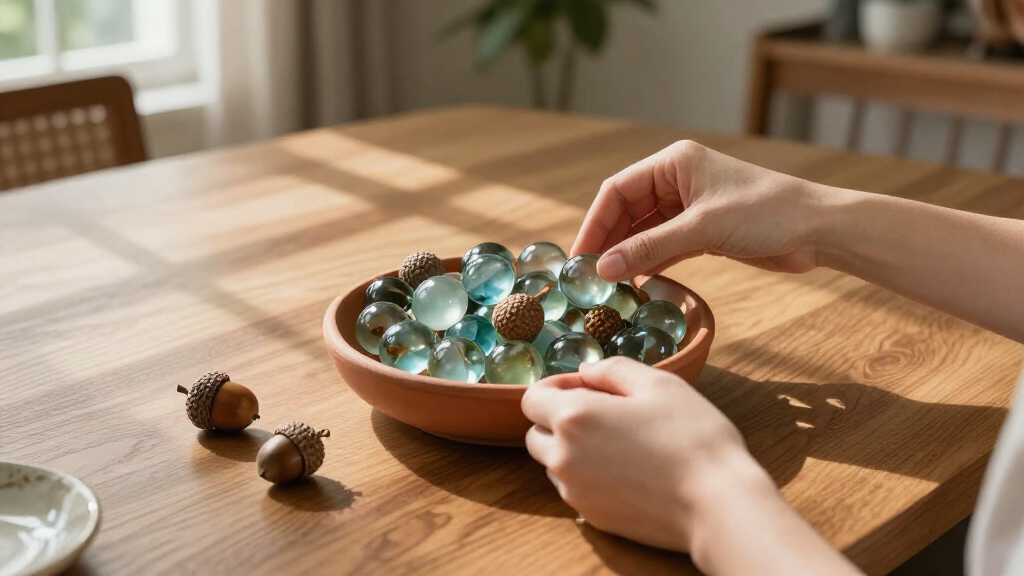
Hunker has published a home-decor DIY that turns sturdy acorn caps and marbles into small decorative pieces, offering a way to reuse fallen natural materials and craft supplies. The instructions call for cleaning and sanitizing the caps, checking that the marbles fit, then attaching each marble with strong glue.
The project uses an equal number of acorn caps and marbles, along with strong glue. The report says marbles may be glass, stone or resin, and can be found online, at craft stores or at thrift stores. Clay can also be used to make marbles, according to the article. The caps can be bought or gathered beneath oak trees, generally in fall, though some may drop during summer.
Hunker recommends selecting caps that are intact and sturdy, with openings that can hold the chosen marbles. If only whole acorns are available, the cap can be removed by twisting or rotating the acorn. Before assembly, discard damaged caps, wash the usable ones in soapy water and let them air-dry fully. The report then recommends baking the caps on a foil-lined tray at about 175 degrees Fahrenheit for one or two hours to sanitize them; marbles can be cleaned while the caps are in the oven.
After the caps have cooled, test each marble for fit before adding glue. The instructions say to place a small amount of glue inside the cap and press the marble into place, avoiding rotation that could spread glue across the marble or onto the work surface. Once the glue dries, the pieces can be displayed in a basket or used in wreaths, garlands or suncatchers. The report suggests choosing colors to suit the display, such as red or orange for a fall arrangement or translucent and jewel-toned marbles for brighter settings.
A Small-Scale Reuse Craft
The project gives households a way to use fallen acorn caps rather than treating them as yard debris, while putting leftover or secondhand marbles to decorative use. Its materials are simple and the finished pieces can be adapted to different displays, from a seasonal table to a sunny windowsill. That makes the instructions relevant to readers looking for a low-complexity craft that can use items they already have or can gather locally.
The practical steps matter as much as the appearance: caps need to be clean, dry and sound enough to hold a marble, and glue must set before the objects are handled or displayed. The article presents the result as decorative, not as a functional item or a guaranteed durable outdoor ornament. Display location, adhesive choice and the condition of natural caps may affect how well each piece holds up.
Products Worth Considering

Dreame H15 Pro Wet-Dry Vacuum and Mop

Bose TV Speaker (2nd Gen) Compact Soundbar with Bluetooth and HDMI-ARC, Black

Levoit Eleva 300X HEPA Air Purifier
As an affiliate, we earn on qualifying purchases.
From Fallen Acorns to Ornaments
The Hunker report frames the project around the seasonal fall of acorns near oak trees. It advises gathering caps rather than nuts where possible, leaving the acorns for wildlife. Because caps may also drop earlier in the year, the article says summer is another possible time to find some. It does not give a specific region, collection date or estimate of how many usable caps a person might find.
The idea relies on the natural cup shape of an acorn cap: a marble sits in the opening where the nut would otherwise be. The report offers several display options rather than prescribing one finished design. Color choices can be coordinated with existing decor, while twine may be added if the pieces are to hang from an archway. These are suggestions in the source, not tested performance claims.
Details the Guide Does Not Specify
The source does not identify a publication date, test the finished decorations over time or specify a particular glue brand or curing period. It also does not say whether every type of marble will fit every cap, so fit should be checked individually before gluing. The report gives an oven temperature and duration for sanitizing caps but does not describe testing for all cap sizes, moisture levels or oven conditions.
The article does not establish that the decorations are suitable for outdoor exposure, food-contact areas or homes with small children or pets. Marbles can present a choking hazard, and loose pieces could be accessible if the glue fails. Readers should decide where to display the finished craft based on their household and follow the glue maker’s handling and ventilation directions.
Assemble and Choose a Display
The next steps are practical rather than tied to a scheduled announcement: gather or purchase suitable caps and marbles, clean and dry the caps, sanitize them as described, and test each pair before gluing. Allow the adhesive to dry according to its product directions before moving the pieces. The report provides no follow-up event, product release or additional testing timeline.
Once assembled, the pieces can be grouped in a small basket or incorporated into a wreath, garland or suncatcher. Readers can choose colors to match the intended setting, but should keep the decorations where they can be monitored if children or pets are present. How long the pieces last will depend on the materials, adhesive and conditions where they are displayed.
Key Questions
What materials does the acorn-cap project require?
The instructions call for one marble per acorn cap and strong glue. The report says marbles may be glass, stone or resin; it also mentions clay as an option for making marbles.
How should acorn caps be prepared?
Choose caps that are intact, wash them in soapy water and let them dry fully. Hunker recommends baking them on a foil-lined tray at about 175 degrees Fahrenheit for one or two hours, then letting them cool before assembly.
How do you attach the marble?
Test the fit first, put a small amount of glue inside the cap, and press the marble into place. The report advises against spinning the marble, which may spread glue onto its surface or the work area. Follow the adhesive label for handling and drying.
Where can the finished decorations be used?
The report suggests arranging them in a basket or adding them to wreaths, garlands and suncatchers. It also mentions hanging them with twine. It does not establish that they are weatherproof.
Source: rss