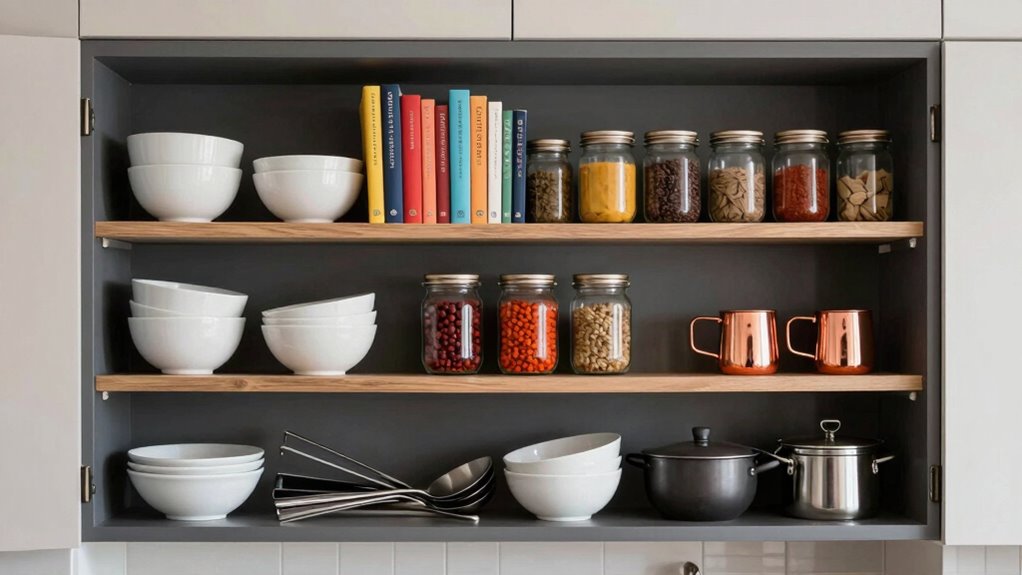

To keep your open shelving looking stylish and organized, display your favorite decorative pieces like ceramics, framed photos, or eye-catching books that reflect your personality. Hide less attractive or everyday clutter, such as remotes or chargers, in stylish storage containers or cabinets. Group similar items and use varying heights for visual interest. Balancing visible decor with concealed storage creates an inviting space. Want tips on perfecting this balance? Keep exploring for expert advice.

Get furniture and decor delivered free with Prime
- Fast, free delivery on millions of items
- Prime Video, Amazon Music and more included
- Member-only deals all year
Key Takeaways
- Display eye-catching decor like ceramics, framed photos, or art books to add personality and visual interest.
- Hide clutter such as remotes, chargers, or cleaning supplies in stylish storage solutions.
- Keep only a few decorative items openly, and conceal less attractive or infrequently used items.
- Group similar objects together with varying heights and textures for a clean, curated look.
- Regularly reassess shelf content to maintain balance between displayed items and hidden storage.
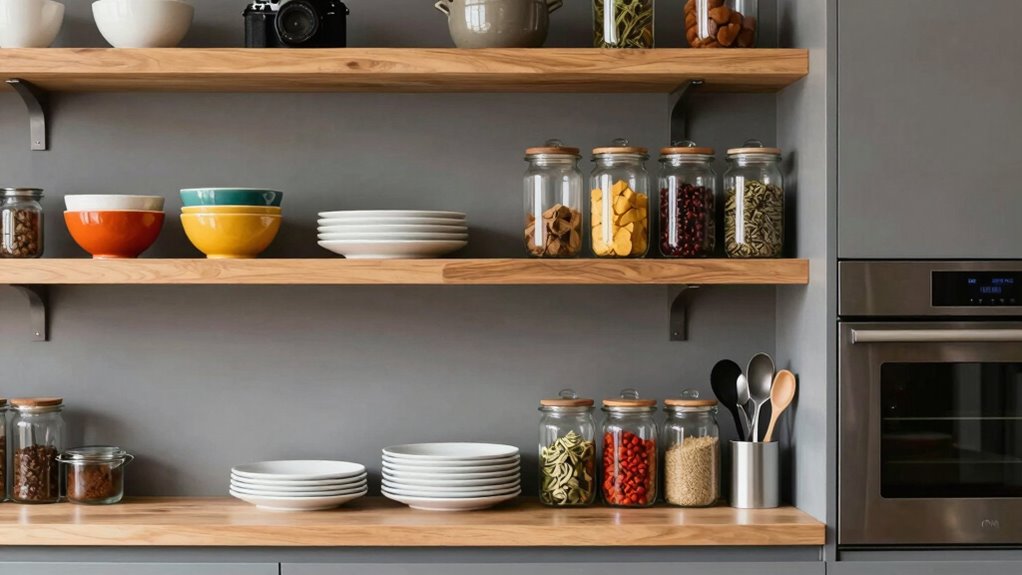
Open shelving offers a stylish way to display your favorite items, but knowing what to keep visible and what to hide can make all the difference in maintaining a clutter-free and cohesive look. When you’re organizing your shelves, focus on creating decorative displays that draw the eye and reflect your personality. Think of your open shelving as a curated gallery. Place a few standout pieces—such as beautiful ceramics, framed photos, or eye-catching books—that add visual interest without overwhelming the space. These decorative displays serve as focal points, giving your shelves character and charm.
Showcase select pieces to create a stylish, personalized, and clutter-free open shelving display.
To manage clutter effectively, be selective with what you leave out in the open. Avoid overcrowding shelves with too many items. Instead, group similar objects together to create clean, intentional arrangements. For example, stack some cookbooks next to a small plant or a decorative bowl. Use varying heights and textures to add depth and visual appeal. Remember, less is often more; a well-edited collection of a few thoughtfully chosen pieces looks more polished than a jumble of everything you own. Incorporating visual hierarchy can help guide the eye and make displays more balanced.
When it comes to concealing items, consider using storage solutions that blend seamlessly with your decor. Decorative baskets, closed cabinets, or even stylish boxes can hide everyday items like remote controls, chargers, or cleaning supplies. Implementing appropriate storage techniques can further enhance your space and prevent visual clutter. Not only does this reduce visual clutter, but it also keeps your shelves looking neat and cohesive. Keep items that are used regularly or have sentimental value in plain sight, but store less attractive or less frequently used items out of view.
Balancing decorative displays with hidden storage helps you maintain clutter management while still showcasing your style. For instance, display a few decorative vases or art books on an open shelf, but tuck away electronics or miscellaneous clutter in decorative boxes beneath. This contrast creates an organized, intentional look that’s both functional and attractive. Regularly reassess what’s on your shelves, swapping out clutter for more appealing decor or hiding items as needed.
Ultimately, the key is to curate your open shelving with purpose. Keep a few eye-catching pieces in clear view, and use storage options to hide the rest. Being mindful of content organization can help you create a space that’s both inviting and practical. Doing so ensures your space remains inviting, well-organized, and visually appealing—showcasing your taste without sacrificing practicality.
Products Worth Considering

Dyson Cyclone V10 Origin Cordless Vacuum

Philips Hue Play Gradient Light Tube, Large, Black

Samsung 85-Inch QN70F Neo QLED 4K Smart TV (2025)
As an affiliate, we earn on qualifying purchases.
Frequently Asked Questions
How Often Should Open Shelving Be Cleaned and Dusted?
You should dust your open shelving at least once a week as part of your cleaning schedule to prevent dust buildup. Regular dusting keeps your shelves looking tidy and preserves your items. If you notice more dust or debris, increase the dusting frequency to twice a week. Incorporate gentle cleaning with a soft cloth and mild cleaner, ensuring your open shelving stays fresh and visually appealing.
What Are the Best Materials for Open Shelving?
Opt for materials that blend durability with aesthetic appeal, ensuring your open shelving stands the test of time while looking great. Wood, especially hardwoods like oak or walnut, offers warmth and resilience. Metal frames, such as steel or brass, add modern charm and strength. Glass shelves provide a sleek, airy feel, but require careful maintenance. Balancing these options allows you to create open shelving that’s both functional and visually mesmerizing.
Can Open Shelving Be Customized for Small Spaces?
Yes, open shelving can be customized for small spaces. You can choose compact, space-efficient designs that maximize storage without cluttering your area. Custom shelving options allow you to tailor the height, depth, and materials to fit your specific needs, making it easier to organize and access your items. With small space solutions, you create a functional, stylish environment that feels open and uncluttered, even in tight quarters.
How Do I Prevent Items From Falling off Open Shelves?
To prevent items from falling off open shelves, focus on decor stability and shelf organization. Use non-slip pads or liners to keep decorative items steady, preventing slips and tumbles. Arrange heavier objects on lower shelves and lighter ones on top for balance. Embrace basket storage or containers to contain smaller items, ensuring everything stays put. This approach creates a tidy, safe, and visually appealing space that feels both organized and secure.
What Are Quick Tips for Styling Open Shelving Effectively?
To style open shelving effectively, start by arranging decorative accessories thoughtfully, mixing textures and sizes for visual interest. Use color coordination to create harmony, balancing bold and neutral tones. Keep the arrangement balanced, avoiding clutter by leaving some space between items. Rotate accessories seasonally to refresh the look. Remember, a curated display makes your shelving look intentional and stylish, making your space feel inviting and well-designed.
Conclusion
By choosing what to keep visible and what to hide, you create a balanced, stylish space that reflects your personality. Keep the beautiful and functional items in plain sight, and hide the clutter or less appealing pieces away. Embrace the art of organization, the beauty of display, and the simplicity of minimalism. Let your open shelving be a showcase of your personality, a reflection of your style, and a proof of your taste.