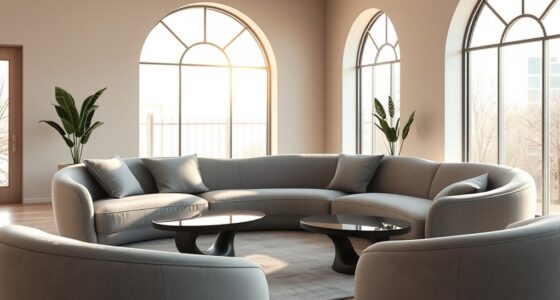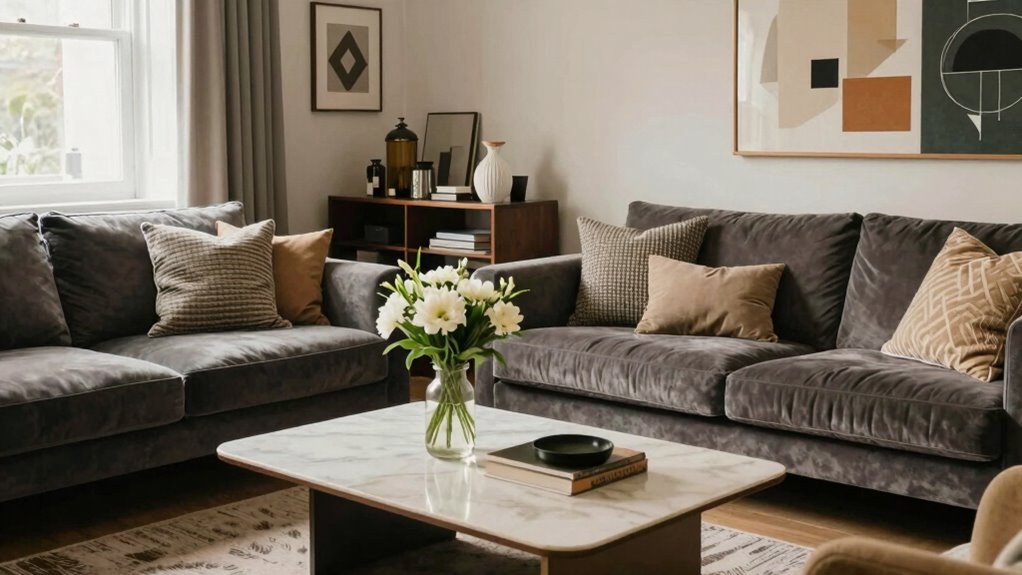

Decorating focuses on adding aesthetic touches like furniture, accessories, and color schemes to set a mood or theme. Interior styling, however, involves a strategic and holistic approach, balancing form and function to optimize space and enhance beauty. It considers furniture placement, lighting, and storage solutions for practicality. If you want to create a space that’s both stylish and functional, understanding this difference will guide your efforts—there’s much more to explore below.

Get furniture and decor delivered free with Prime
- Fast, free delivery on millions of items
- Prime Video, Amazon Music and more included
- Member-only deals all year
Key Takeaways
- Decorating focuses on surface aesthetics like color schemes and accessories, while true interior styling emphasizes functional space planning and harmony.
- Decorating is quick, trend-driven, and superficial; styling involves strategic, holistic design considerations for long-term utility.
- Interior styling considers layout, lighting, and flow to optimize both beauty and practicality, unlike decorating which centers on visual appeal.
- Styling incorporates design principles ensuring elements interact cohesively; decorating primarily involves individual decorative choices.
- Decorating can be easily changed; true interior styling involves deeper planning for a balanced, functional environment.
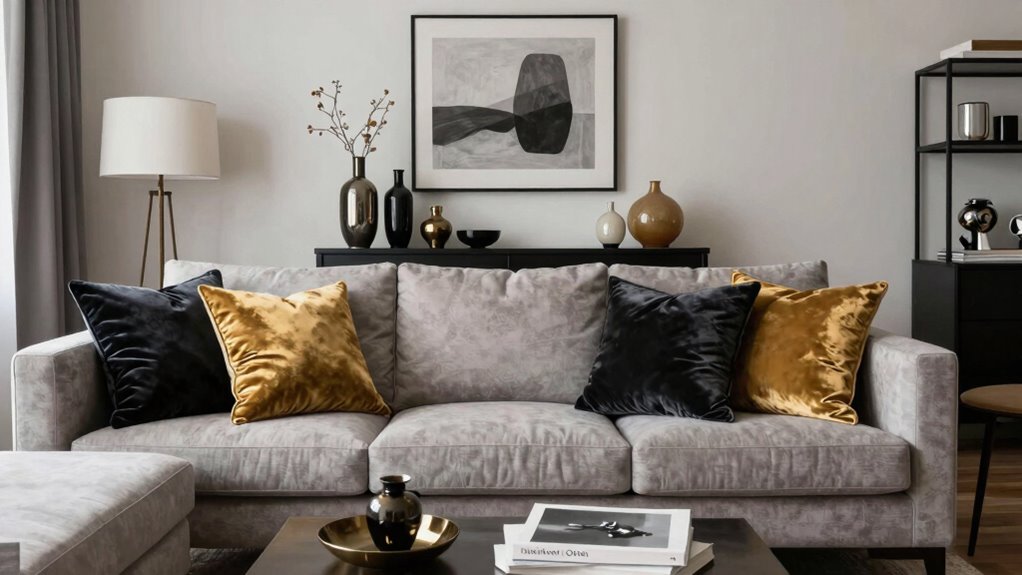
When you’re exploring ways to enhance your living space, it’s important to understand the difference between decorating and interior styling. Decorating typically involves adding aesthetic touches—like choosing furniture, accessories, or paint colors—that make your space look appealing. It’s often focused on creating a certain mood or theme through color coordination and decorative elements. Interior styling, on the other hand, goes deeper. It’s about designing a space that functions seamlessly while reflecting your personality and lifestyle. Less about just appearance, it emphasizes space optimization—making sure each area serves its purpose efficiently—and thoughtful placement of items to enhance both form and function.
In decorating, your main goal might be to select a color palette that sets a particular tone. For example, you might pick soft pastels to create a calm, relaxing bedroom or bold, vibrant hues to energize a living room. While color coordination is essential here, decorating tends to focus on surface-level choices—furniture styles, throw pillows, artwork—that add visual interest. It’s often a quicker, more superficial process that can be easily changed with the seasons or trends. Interior styling, however, considers these choices as part of a larger puzzle. It involves understanding how every element interacts with the space and with each other to maximize utility and aesthetic harmony. You’ll think about how furniture placement impacts movement, how lighting affects mood, and how to use color schemes to unify the overall design.
Space optimization is a key aspect of true interior styling. Instead of cluttering a room with unnecessary pieces, you analyze how each item can serve multiple purposes or contribute to the flow. You might incorporate multi-functional furniture or clever storage solutions to keep the space feeling open and inviting. This strategic approach ensures that your home isn’t just beautiful but also practical. Additionally, lighting design plays a crucial role in enhancing both style and functionality, creating a welcoming atmosphere. Incorporating home design principles can greatly improve how well your space functions and looks. Developing a comprehensive understanding of these principles and techniques can help in making more informed and effective design choices. Furthermore, understanding the difference between decorating and styling helps in prioritizing your efforts and achieving a cohesive result that aligns with your needs and preferences.
Ultimately, decorating is a component of interior styling, but it’s not the whole picture. While decorating can be done quickly and with a focus on visual appeal, interior styling demands a thoughtful, all-encompassing approach that considers how everything works together. When you understand this difference, you can make more intentional choices—whether you’re updating a single room or redesigning your entire home—ensuring your space is both beautiful and functional.
multi-functional furniture for small spaces
As an affiliate, we earn on qualifying purchases.
As an affiliate, we earn on qualifying purchases.
Frequently Asked Questions
How Long Does a Typical Interior Styling Project Take?
A typical interior styling project usually takes between one to three weeks, depending on the scope. During this time, you’ll work on refining color palettes and furniture placement to create a cohesive look. You’ll select accessories, artwork, and textiles that complement the space. The process involves planning, sourcing, and arranging, ensuring every detail enhances your style. With clear communication, you can enjoy your beautifully styled space in just a few weeks.
What Is the Average Cost Difference Between Decorating and Styling?
A typical cost comparison shows decorating usually costs between $1,500 and $5,000, while true interior styling can range from $3,000 to $15,000. For example, if you want a room refreshed with new accessories and paint, decorating covers that scope. But if you seek a complete, personalized interior redesign with furniture, lighting, and layout, styling offers a broader service scope, justifying the higher cost.
Can I Switch Between Decorating and Styling Services Later?
Yes, you can switch between decorating and styling services later. Many professionals offer flexible service options, allowing you to adapt your project as your needs evolve. Rely on their professional expertise to guide you through the changeover, ensuring your space reflects your current style and goals. Clear communication with your interior specialist helps you navigate this switch smoothly, making your home truly personalized and aligned with your vision.
Do Interior Stylists Work With Existing Furniture or Only New Items?
Interior stylists can work with your existing furniture, focusing on furniture arrangement and accessory selection to refresh your space. They might suggest rearranging pieces to improve flow or adding new accessories to enhance style. If you prefer, they can also incorporate new furniture, but they’re skilled at transforming your current items into a cohesive, stylish look. So, whether you keep or update your furniture, a stylist helps create a personalized, polished space.
How Do I Choose the Right Professional for My Needs?
Choosing the right professional is like finding a compass that points to your personal style. Start by clarifying your style preferences and budget considerations. Look for someone whose portfolio resonates with you, and don’t hesitate to ask about their experience with projects similar to yours. A good interior stylist listens to your needs and transforms your space into a true reflection of you, making the journey enjoyable and stress-free.
As an affiliate, we earn on qualifying purchases.
Conclusion
Remember, decorating is like adding the brushstrokes to a canvas—it’s about choosing colors and furniture to fill a space. Interior styling, on the other hand, is your artist’s eye, weaving those choices into a harmonious story that whispers “home.” Think of it as planting seeds of personality and nurturing a space where every corner blooms with your unique essence. Embrace the art of interior styling, and watch your home become a living masterpiece.
storage solutions for home organization
As an affiliate, we earn on qualifying purchases.
As an affiliate, we earn on qualifying purchases.
interior styling decor accessories
As an affiliate, we earn on qualifying purchases.
As an affiliate, we earn on qualifying purchases.
Halloween Picks
halloween
As an affiliate, we earn on qualifying purchases.