To create a functional open-concept living space, focus on thoughtful furniture arrangement that promotes easy traffic flow and natural pathways. Keep larger pieces against walls or in corners to maximize space, and define zones with rugs and lighting. Maintain balance and symmetry while ensuring accessibility and storage. Avoid clutter by strategizing layouts that connect living, dining, and workspace areas seamlessly. For more tips on optimizing your open layout, continue exploring the key design principles.

Get furniture and decor delivered free with Prime
- Fast, free delivery on millions of items
- Prime Video, Amazon Music and more included
- Member-only deals all year
Key Takeaways
- Define distinct zones using rugs, furniture placement, or visual cues to create separation within the open space.
- Ensure clear traffic pathways by positioning larger furniture against walls and avoiding obstructions.
- Balance furniture sizes proportionally to the room to maintain openness while providing comfort.
- Incorporate varied lighting to highlight zones and enhance the layered, inviting atmosphere.
- Use symmetry and thoughtful storage solutions to promote order and accessibility throughout the layout.
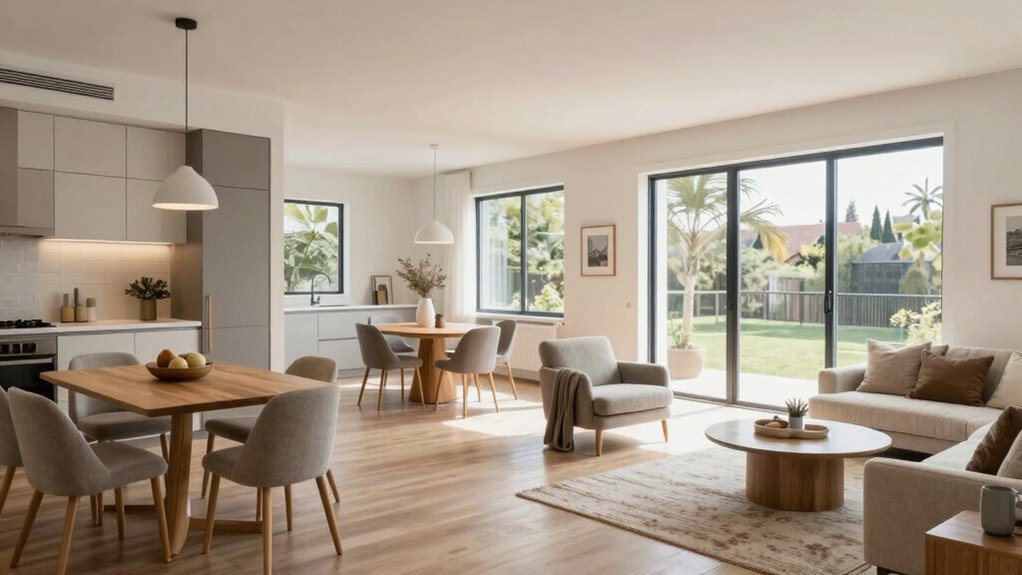
Are you struggling to create a cohesive and functional open-concept living space? It’s a common challenge, but with the right approach, you can design a layout that feels natural and inviting. The key is to focus on furniture arrangement and traffic flow, ensuring each zone serves its purpose without cluttering the space or creating obstacles. Start by visualizing how people will move through the area. You want pathways that are clear and unobstructed, allowing smooth navigation from one part of the room to another. Avoid placing furniture in a way that blocks doorways, windows, or natural walkways. Instead, think of the room as a series of connected zones—living, dining, and sometimes even a workspace—that should flow seamlessly into each other.
Create flowing, unobstructed pathways by thoughtfully arranging furniture and defining zones for a cohesive open-concept space.
When arranging furniture, contemplate the scale of each piece relative to the space. Too much furniture can make an open floor plan feel cramped, while too little can make it seem sparse and disconnected. Balance is essential. For a cozy yet spacious feel, group seating around a focal point like a fireplace or entertainment center, but leave enough space to move comfortably around the furniture. Use rugs to define specific areas, which helps visually separate different zones without building physical barriers. With regard to traffic flow, position larger pieces, such as sofas and dining tables, against walls or in corners to maximize open space in the center. This keeps the pathways clear and encourages free movement.
Another rule to think about is maintaining symmetry and balance, especially when arranging seating areas. Symmetrical arrangements promote a sense of order and make the space feel intentional. However, asymmetry can add visual interest if done thoughtfully. Keep in mind the importance of accessibility—make sure that key features like outlets, light switches, and storage are conveniently located relative to your furniture layout. This will prevent awkward wiring or awkward access. Additionally, paying attention to spatial organization can help optimize your layout and improve overall flow. Thoughtful storage solutions can also help reduce clutter and keep the space feeling open and organized. Incorporating proper cabling solutions can further streamline the space and prevent tangled wires that disrupt the clean layout.
Lighting also plays a role in guiding traffic flow and defining zones. Use a mix of overhead lights, lamps, and accent lighting to highlight different areas, making the space layered and inviting. Incorporating different lighting styles can also help create a cohesive ambiance that enhances the overall atmosphere of your open-concept space. Ultimately, your goal should be to create a layout that encourages social interaction while allowing for privacy when needed. By paying attention to furniture arrangement and traffic flow, you’ll craft an open-concept living space that’s both functional and welcoming, making it easy for everyone to enjoy and move through comfortably.
sectional sofa for open living room
As an affiliate, we earn on qualifying purchases.
As an affiliate, we earn on qualifying purchases.
Frequently Asked Questions
How Do I Define Separate Zones Without Walls?
To define separate zones without walls, use area rugs to visually demarcate spaces, creating a sense of boundary and purpose. Incorporate decorative screens or room dividers that can be moved easily, adding privacy and style. Arranging furniture strategically also helps, such as placing a sofa to separate the living area from the dining space. These elements help you carve out distinct zones while maintaining an open, airy feel.
What Lighting Strategies Suit Open-Concept Layouts Best?
You should combine ambient lighting with task illumination to create a versatile atmosphere in your open-concept space. Use ceiling-mounted fixtures or recessed lighting for general ambient light, ensuring the entire area feels welcoming. Add task lighting like pendant lights, table lamps, or under-cabinet lights in specific zones such as the kitchen or reading nook. This layered approach helps define spaces while maintaining an open, cohesive feel.
How Can I Create Privacy in Shared Spaces?
You can create privacy in shared spaces by using soundproof barriers and flexible dividers. These elements allow you to carve out personal zones without sacrificing the open feel. For instance, strategically placing a bookshelf or a folding screen offers visual separation and dampens noise. You get the best of both worlds—an open vibe with cozy, private nooks, making your space functional and inviting.
What Furniture Placement Maximizes Space and Flow?
To maximize space and flow, focus on furniture arrangement that creates clear pathways and designated zones. Place sofas and chairs away from doorways and walkways to maintain smooth traffic flow. Use rugs to define different areas, and position furniture in a way that encourages conversation without blocking movement. Keep larger pieces against walls, and avoid overcrowding, ensuring your open-concept space feels spacious and easy to navigate.
How Do I Choose Color Schemes for Open Areas?
Ever wonder how to create a cohesive look in your open space? You should start by considering color psychology—calming blues or energizing yellows can set the mood. For accent wall ideas, choose a bold color or pattern that complements your main palette. Keep your scheme balanced with neutral tones for larger areas, and add pops of color through accessories. This approach guarantees your open area feels inviting and visually harmonious.
As an affiliate, we earn on qualifying purchases.
Conclusion
Remember, a well-designed open-concept space can boost your home’s functionality and aesthetic appeal. According to recent surveys, 78% of homeowners find that open layouts increase social interaction and make homes feel larger. By following these layout rules, you’ll create a versatile, inviting environment that maximizes space and promotes connection. So, trust your instincts, plan thoughtfully, and enjoy a living space that truly works for you and your lifestyle.
As an affiliate, we earn on qualifying purchases.
adjustable floor lamps for living spaces
As an affiliate, we earn on qualifying purchases.
As an affiliate, we earn on qualifying purchases.
Halloween Picks
halloween
As an affiliate, we earn on qualifying purchases.