To stay safe this winter, I recommend using the Essential Winter Freeze Checklist for detailed prep and the Backcountry Access Field Book for outdoor safety and logistics. Both are printable and customizable, letting you organize supplies, contacts, and safety steps effectively. They’re durable, easy to update, and suited for various environments. If you want practical tips on choosing the best options, keep going—there’s more to discover for your winter preparedness.
Open a free Amazon Business account
Business pricing, bulk buying and tax-exempt orders.
As an affiliate, we earn on qualifying purchases.
Key Takeaways
- Look for checklists that cover essential emergency supplies, home maintenance, and safety procedures tailored for winter hazards.
- Choose printable checklists with large fonts, clear headings, and visual aids for easy quick-reference during emergencies.
- Opt for weatherproof, durable materials like waterproof paper or laminated sheets to withstand winter outdoor conditions.
- Select customizable checklists that allow adding specific household needs, such as pet safety or vehicle prep.
- Prioritize checklists offering digital versions for easy updates, sharing, and comprehensive coverage of winter preparedness tasks.
Essential Winter Freeze Checklist and Preparation Book

If you’re looking for a straightforward way to stay organized and prepared for winter freezes, the Essential Winter Freeze Checklist and Preparation Book is an excellent choice. I’ve found it incredibly helpful for reducing panic and ensuring I cover all bases. It guides me through evacuation plans, emergency contacts, and insurance details, making disaster management smoother. The book includes handy checklists for property hazards and management, plus quick notes pages for important reminders. Its large print and user-friendly design make writing simple and stress-free. Overall, it’s a practical, reliable resource that gives me peace of mind during unpredictable winter weather.
Best For: homeowners, renters, and families seeking an organized, stress-free way to prepare for and manage winter freeze emergencies.
Pros:
- Comprehensive checklists and planning tools for thorough winter freeze preparedness
- Large print design makes writing and reading easy, reducing strain and errors
- Includes quick notes pages and essential contacts for quick access in emergencies
Cons:
- Limited to winter freeze specific content, may require additional resources for broader disaster planning
- Paperback format may not be as durable for frequent use in rough environments
- May not include detailed instructions for all types of winter-related emergencies beyond freezes
Backcountry Access Field Book
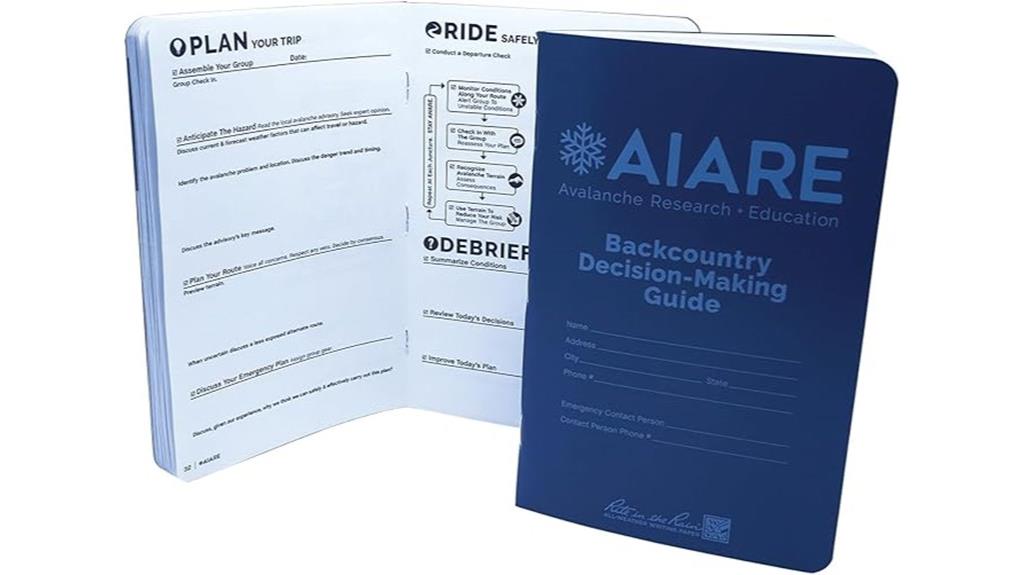
The Backcountry Access Field Book is an essential tool for avalanche safety and backcountry travelers who want quick, reliable reference material in the field. This redesigned edition aligns with North American Pro/Rec class formats, developed by the American Institute for Avalanche Research and Education (AIARE), and meets American Avalanche Association (A3) standards. Made from water-resistant paper, it’s durable and perfect for outdoor use. Its compact size (7 x 4.5 inches) and lightweight (3.2 ounces) make it easy to carry. Whether for education or field reference, this guide provides updated standards and clear formatting to help you stay safe while exploring snowy backcountry terrain.
Best For: backcountry travelers, avalanche safety professionals, and outdoor educators seeking a reliable, durable field reference for snow safety.
Pros:
- Made from water-resistant paper, ensuring durability in snowy conditions
- Compact and lightweight design for easy portability in the field
- Updated to align with current North American Pro/Rec standards and AIARE guidelines
Cons:
- Limited space may require supplementary materials for detailed information
- May not include digital or electronic formats for quick access
- Designed primarily for North American standards, less suited for international contexts
Factors to Consider When Choosing a Winter Preparedness Checklist Printable
When selecting a winter preparedness checklist printable, I consider how adaptable it is to fit my specific needs. I also look at whether it’s compatible with my supplies and if the design makes it easy to use. Finally, I decide if it’s available in physical or digital format and how exhaustive the checklist is.
Customization Options Available
Have you ever considered how a one-size-fits-all winter preparedness checklist might fall short of your specific needs? Customization options let you tailor a checklist to your climate and household. You can add or remove sections such as vehicle prep or pet safety, making your plan more detailed. Printable checklists often include adjustable layouts, color coding, and space for handwritten notes, which boost usability. This flexibility helps guarantee you’ve covered all relevant hazards and property details unique to your situation. By customizing your checklist, you’re more likely to remember critical tasks and address specific concerns, ultimately improving your winter disaster readiness. It’s a practical way to create a personalized, easy-to-use plan that truly reflects your household’s needs.
Compatibility With Supplies
Choosing a winter preparedness checklist printable that suits your needs requires careful consideration of its compatibility with your supplies. I look for a checklist that has dedicated sections for organizing essentials like food, water, and medical kits, making it easy to keep track of everything. It’s important that the format allows me to add specific supplies unique to my household or region. I also check for space to note quantities, expiration dates, and storage locations, so I know exactly what I have and where. Additionally, I prefer layouts that include emergency tools, batteries, and backup power sources relevant to winter conditions. Finally, ensuring the printable works with different paper types and sizes helps me customize storage and display options to suit my preferences.
Ease of Use Design
A well-designed checklist not only helps me stay organized but also makes it easier to use in stressful winter situations. Clear headings, an intuitive layout, and logical organization let me find what I need quickly, even when time is tight. Large, legible fonts and high-contrast colors boost readability in low-light or stressful moments. Checkboxes and fill-in sections make tracking completed tasks simple, so I know what’s done and what’s left. Simplified instructions and concise language help me understand exactly what to do without confusion. Visual aids like icons or diagrams further enhance comprehension, especially if I’m pressed for time or facing literacy challenges. Overall, a user-friendly design guarantees I can rely on the checklist when emergencies strike or when I just need quick guidance.
Physical vs. Digital Format
When deciding between physical and digital winter preparedness checklists, I consider how I prefer to access and update my list during emergencies or busy moments. Physical checklists are tangible, so I can easily mark, highlight, or write on them without needing a device. They’re reliable during power outages and aren’t affected by technical glitches. On the other hand, digital checklists are convenient for storage, editing, and sharing across multiple devices. They often include interactive features like check-off buttons or embedded links, which can boost organization. Ultimately, my choice depends on my personal preference, accessibility needs, and whether I prioritize portability, ease of use, or environmental impact. Both formats have their strengths, so I pick based on what suits my lifestyle best.
Completeness of Checklists
Have you ever realized a checklist isn’t thorough enough until you’re caught unprepared? That’s why the completeness of your winter preparedness checklist matters. A good checklist should cover all key areas—emergency supplies, home maintenance, and personal safety. Detailed descriptions and quantities guarantee you don’t forget critical items during storms. It should also include both preventive actions and recovery steps, like handling power outages or frozen pipes. Specific tasks for different scenarios make the checklist more effective. Plus, a well-organized, regularly updated list keeps you on track and ready for anything. When choosing a printable checklist, look for one that’s all-encompassing, clear, and easy to follow. Only then can you confidently face winter hazards and stay safe throughout the season.
Space for Personal Notes
Ever considered how much easier winter preparations become when you have adequate space for personal notes on your checklist? Having room for notes allows me to customize the checklist with specific tasks or reminders tailored to my needs. It helps me track my progress and update preparations as weather or circumstances change. I also use this space to jot down emergency contacts, important dates, or special instructions, making quick reference easy during emergencies. Including personal note sections encourages me to review and reflect on my readiness, ensuring nothing gets overlooked. A well-designed notes area keeps my checklist organized by separating general tasks from personal observations or tips. Overall, this space makes my winter preparedness more thorough, flexible, and efficient.
Durability and Material
Choosing the right materials for a winter preparedness checklist printable is essential to guarantee it withstands harsh conditions. I recommend opting for waterproof or tear-resistant paper to assure durability in snow, sleet, and cold temperatures. Using fade-resistant ink is imperative so the checklist remains visible despite moisture or low light. Laminated or plastic-coated pages boost longevity, especially if you handle or update the checklist outdoors frequently. Additionally, consider the weight and flexibility of the material; lightweight, flexible options make carrying and updating the checklist easier across different environments. Weatherproof or water-resistant printables are critical for maintaining the integrity of your checklist during winter weather. Selecting durable, high-quality materials helps guarantee your preparedness list stays intact, readable, and functional throughout the season.
Accessibility and Cost
When selecting a winter preparedness checklist printable, it’s important to prioritize accessibility and affordability to guarantee everyone can benefit from it. Look for checklists available in multiple formats, like PDFs or large print, to accommodate different needs. Consider free or low-cost options to make preparedness more inclusive for all households. Confirm the printable has clear, straightforward instructions so users with varying literacy levels can easily follow it. Check if it’s simple to download and print at home, which reduces extra expenses and logistical barriers. Additionally, opt for scalable or customizable checklists that can be tailored to different household sizes or budgets. By focusing on these factors, you ensure the checklist is practical, accessible, and cost-effective for everyone preparing for winter.
Frequently Asked Questions
How Often Should I Update My Winter Preparedness Checklist?
I recommend updating your winter preparedness checklist at least once a month during the season. This helps guarantee you’re ready for unexpected weather changes or emergencies. I also suggest reviewing it after any significant weather event or if your circumstances change, like new supplies or health needs. Staying proactive keeps you safe and well-prepared, so don’t forget to keep your list current and tailored to your situation.
Are Digital Checklists as Reliable as Printed Ones?
I believe digital checklists can be just as reliable as printed ones, like a sturdy bridge over a frozen river. They’re easy to update, accessible from anywhere, and often come with reminders, making sure nothing gets overlooked. However, I always keep a printed copy as a backup, just in case technology takes a winter nap. Combining both gives me peace of mind, ensuring I stay prepared no matter what.
What Are the Best Safety Tips for Winter Travel?
When I travel in winter, I always prioritize safety by checking the weather forecast first. I make sure my vehicle is equipped with snow tires, chains, and an emergency kit. I keep my phone charged, share my route with someone, and drive slowly on icy roads. Staying alert, avoiding distractions, and knowing how to handle skids are vital. These tips help me stay safe and confident during winter journeys.
How Can I Customize a Checklist for My Specific Needs?
To customize a checklist for your needs, I start by evaluating my specific risks, like local weather patterns or travel plans. I then add items tailored to those needs, such as extra blankets for colder areas or snow chains for icy roads. I also include personal essentials like medications or pet supplies. Regularly updating and reviewing my list ensures I stay prepared for any winter surprise.
What Are Common Winter Hazards Not Covered in Standard Checklists?
I’ve found that common winter hazards often missed include carbon monoxide buildup from heating systems, icy driveway slips, and frozen pipes. Many checklists overlook these risks, so I always add extra precautions like installing CO detectors, using salt or sand for icy walkways, and insulating pipes. Staying aware of these overlooked hazards helps me stay safer during the winter months, beyond just the basics.
Conclusion
Staying safe this winter starts with proper preparation, and these checklists make it easy. Whether you prefer the detailed Essential Winter Freeze Checklist or the versatile Backcountry Access Field Book, you’ll find what works best for you. Remember, a stitch in time saves nine—being prepared now keeps winter’s surprises at bay. So, print your chosen checklist, customize it, and enjoy the season with confidence. Stay warm and safe out there!
Flea & tick season Picks
flea and tick prevention
As an affiliate, we earn on qualifying purchases.