Finding the right power supply for a tiny home involves balancing capacity, portability, and cost. The Jackery HomePower 3600 Plus stands out as the best overall choice thanks to its high capacity and expandability, making it suitable for both daily use and emergency backup. The BLUETTI AC200L offers a robust Lithium Iron Phosphate (LiFePO4) battery for longevity, while the EcoFlow Delta 3 Classic provides a compact, lightweight option for those prioritizing portability. The main tradeoffs involve choosing between higher capacity and portability, as larger units tend to be heavier and more expensive. Keep reading for a detailed breakdown to help you pick the perfect power supply for your tiny home.

Get furniture and decor delivered free — and shop member deals
- Fast, free delivery on millions of items
- Access to Prime Big Deal Days deals on October 6–7
- Prime Video, Amazon Music and more included
Complete the kit


Key Takeaways
- Top picks balance capacity and portability, with the Jackery and BLUETTI models standing out for their versatility.
- Expandable systems like the Jackery HomePower 3600 Plus offer future-proofing but come at a higher initial cost.
- LiFePO4 battery technology, as seen in the BLUETTI, provides longer lifespan and safer operation over traditional lithium-ion options.
- Budget-conscious buyers will find solid options in smaller units like EcoFlow Delta 3 Classic, but with limited capacity.
- Additional features like solar compatibility and multiple outlet types significantly enhance usability for tiny home setups.




| power supply for tiny home | Weight |
|---|---|
| Portable Power Station 2400W S | 55.5 pounds |
| Jackery HomePower 3600 Plus Po | 77.2 pounds |
| Pyramid Universal Compact Benc | — |
| Anker SOLIX S2000 Portable Pow | 35.7 pounds |
| BLUETTI AC200L Portable Power | — |
| EcoFlow Portable Power Station | 26.7 pounds |
| Jesverty DC Power Supply Varia | 1.53 kg |
More Details on Our Top Picks
Portable Power Station 2400W Solar Generator for Home Use
This model stands out for its high capacity of 1843.2Wh and 2400W surge power, making it suitable for running multiple household appliances during outages or off-grid living. Compared with the BLUETTI AC200L, it offers similar power but slightly less expandability, which could matter for larger setups. The fast recharging options, including solar, provide flexibility, but its weight of 55.5 pounds makes it less portable for frequent moving. Its multiple output ports support diverse devices, and the built-in UPS ensures seamless backup. However, the complexity of setting up solar charging and the higher price may deter casual users.
Pros:- High-capacity 1843.2Wh battery suitable for whole-home backup
- Fast recharging via solar and AC sources
- Multiple output ports for various devices
- Built-in UPS for seamless power transition
Cons:- Heavy at 55.5 pounds, less portable
- Relatively high price may be a barrier
- Complex solar setup process
Best for: Homeowners seeking reliable, high-capacity backup power for off-grid or emergency use.
Not ideal for: People needing a lightweight, portable solution for frequent transport or small-scale use.
- Wattage:2400 watts
- Battery Capacity:1843.2Wh
- Charging Time:1.6-2.5 hours (AC), 3-7.5 hours (solar)
- Weight:55.5 pounds
- Output Voltage:120 volts
- Recommended Uses:Camping, Residential
Our verdict“This generator makes the most sense for those prioritizing high capacity and reliability over portability.”
Jackery HomePower 3600 Plus Portable Power Station, 3600W AC Output, 3584Wh LFP Solar Generator, Expandable up to 21kWh, Home Backup for Emergencies and RV
Compared with the Anker SOLIX S2000, the Jackery HomePower 3600 Plus offers a higher power output and larger capacity, making it well-suited for powering multiple essential appliances during extended outages. Its 3584Wh capacity is expandable to a remarkable 21kWh, which is perfect for larger households or off-grid setups that need scalability. The inclusion of wheels and a telescoping handle improves mobility, but its weight of 77.2 pounds can still be a challenge for frequent moving. With only two outlets, it might require additional units for comprehensive power coverage, and the price could be prohibitive for casual users. It excels where high power and expandability are priorities.
Pros:- High output of 3600W suitable for multiple appliances
- Expandable capacity up to 21kWh for future growth
- Wheeled design enhances portability
- Multiple charging options including solar
Cons:- Heavy at 77.2 pounds, less portable for frequent movement
- Limited to 2 outlets, may require multiple units
- Potentially high cost for casual users
Best for: Large households or off-grid enthusiasts needing scalable backup power with mobility features.
Not ideal for: Individuals looking for a lightweight, simple, and less expensive power solution for occasional use.
- Power Output:3600W
- Capacity:3584Wh
- Expandable Capacity:up to 21kWh
- Weight:77.2 pounds
- Charge Time:AC in 2.5 hours, solar in 4 hours
- Outlets:2
Our verdict“This pick is ideal for those needing a scalable, high-power backup system for large or expanding setups.”
Pyramid Universal Compact Bench Power Supply – 6 Amp Linear Regulated AC-to-DC 12V Converter with 13.8V DC Output
This bench power supply differs significantly from the portable units by focusing on stable 13.8V DC output, ideal for powering radios, scanners, or other 12V electronics, unlike the larger capacity options. Its rugged, compact design is perfect for workshop or hobbyist environments, but it’s not suited for off-grid or home backup scenarios needing high wattage. The fixed 13.8V output and limited 6A capacity mean it’s best for specific low-power applications, and external AC power is necessary, making portability limited. Compared to portable generators, it offers less versatility for home or camping use but excels as a reliable power source for electronic projects.
Pros:- Provides a stable, regulated 13.8V DC output
- Built-in safety protections for reliable operation
- Compact and durable design
- Easy screw-terminal connections
Cons:- Limited to 6A continuous current, not suitable for high-power devices
- Fixed voltage output with no adjustment
- Requires external AC power source
Best for: Hobbyists or technicians needing a reliable, regulated power source for small electronics or workshop projects.
Not ideal for: Those seeking a portable, high-capacity power solution for home backup or off-grid living.
- Amperage:6.0 A (constant)
- Output Voltage:13.8V DC
- Input Voltage:115V AC
- Power Input:100 Watt
- Dimensions:7.5″ x 4.9″ x 3.0″
Our verdict“This supply is best for stable, low-voltage power needs in workshop or hobby settings, not for portable or high-capacity applications.”
Anker SOLIX S2000 Portable Power Station, 2010Wh, 3000W Peak, Home Backup
Compared with the BLUETTI AC200L, the Anker SOLIX S2000 offers a more compact and lighter design at 35.7 pounds, making it easier to move around. Its 2010Wh capacity supports extended backup, but it’s slightly less capable in pure power output at 1500W continuous—still sufficient for many essential devices. The long-lasting battery with 10,000 cycles promises durability, and multiple charging options including solar add flexibility. However, it lacks a dedicated 12V DC port, which could limit some off-grid applications, and its runtime might be limited for larger appliances. This model fits those wanting portability without sacrificing significant capacity.
Pros:- High capacity with 2010Wh
- Supports solar charging
- Long-lasting battery with 10,000 cycles
Cons:- Limited to 1500W continuous power
- No dedicated 12V DC port
- Price not specified but likely premium
Best for: Individuals needing a portable, reliable backup power station for emergencies and small off-grid setups.
Not ideal for: People needing a high-power station for large appliances or off-grid systems with extensive expansion needs.
- Wattage:2010Wh
- Peak Power:3000W
- Runtime:35 hours
- Weight:35.7 pounds
- Charge Time:Not specified
- Outlets:8
Our verdict“This pick works best for portability-focused users needing reliable emergency backup with decent capacity.”
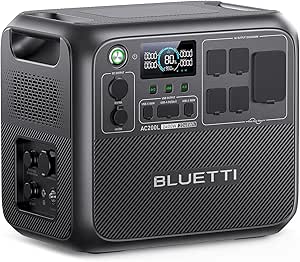
BLUETTI AC200L Portable Power Station 2048Wh 2400W LiFePO4 Battery
The BLUETTI AC200L offers a robust 2048Wh capacity with a 2400W output, making it ideal for powering multiple devices or small appliances during power outages. Its fast recharge time of about 45 minutes to 80% via AC, and quick solar recharging, stand out for users who need rapid turnaround. Compared to the Anker SOLIX S2000, it is bulkier and heavier, which limits portability, but its extensive port options, including RV and DC connections, support off-grid and camping needs well. Expansion up to 8192Wh provides future scalability, though the initial investment can be steep. It’s suited for those who want a balance of capacity, speed, and versatility.
Pros:- High capacity with 2048Wh
- Fast recharge via AC and solar
- Multiple ports including RV and DC
- Expandable to 8192Wh
Cons:- Heavy and bulky for portability
- Complex setup with multiple batteries
- Potentially high price for budget-conscious buyers
Best for: Campers, off-grid dwellers, or homeowners wanting fast recharging and expandable capacity.
Not ideal for: People seeking a lightweight, portable solution for frequent moving or casual use.
- Capacity:2048Wh
- Max Expansion Capacity:8192Wh
- Output Power:2400W
- Recharge Time (AC):45 minutes to 80%
- Recharge Time (Solar):1.7-2.2 hours
- Ports:13
Our verdict“This station suits users needing rapid recharging, high capacity, and system expandability at the expense of portability.”
EcoFlow Portable Power Station Delta 3 Classic, 1024Wh, 1800W AC
The EcoFlow Delta 3 Classic stands out for its large 1024Wh capacity and rapid recharge capabilities, making it ideal for both home backup and outdoor adventures. Its 1800W continuous output easily handles multiple devices simultaneously, surpassing smaller units like the Pyramid Compact Power Supply, which offers only 12V DC outputs. Compared with larger stations like the Jackery HomePower 3600 Plus, the Delta 3 is lighter and more manageable for mobility, though it sacrifices some power capacity. The inclusion of solar recharging and a smart app gives it a notable edge for off-grid use and remote monitoring. However, its weight of nearly 27 pounds and limited to 120V outlets can be drawbacks for those needing international compatibility or ultra-light portability. Overall, this pick is best for users who want a robust, versatile power source that balances capacity and convenience without excessive bulk.
Pros:- High-capacity 1024Wh battery suitable for multiple devices
- Fast charging from 0 to 80% in just 45 minutes
- Supports solar recharging for off-grid independence
- Smart app control for remote management
Cons:- Relatively heavy at 26.7 pounds, affecting portability
- Limited to 120V outlets, not ideal for international use
Best for: Homeowners seeking reliable backup power and outdoor enthusiasts who value quick recharging and smart controls
Not ideal for: International travelers who need multi-voltage compatibility or ultralight solutions for backpacking
- Capacity:1024Wh
- Output Power:1800W
- Surge Power:3600W
- Battery Type:LiFePO4
- Weight:26.7 pounds
- Dimensions:7.9 x 11.1 x 15.7 inches
- Number of Outlets:6
- Voltage:120 volts
- Solar Recharging Time:2.5 hours with 500W panel
Our verdict“This power station excels for those needing a powerful, versatile, and remotely manageable backup source, with some tradeoffs in weight and global compatibility.”
Jesverty DC Power Supply Variable, 0-32V 0-10A Switching Bench Power Supply with USB & Type-C Quick-Charge
The Jesverty DC Power Supply offers highly adjustable voltage and current, making it perfect for electronics projects and testing, especially compared to the EcoFlow Delta 3 Classic’s focus on power delivery and capacity. Its fine and coarse encoder knobs allow for precise output settings, which can be critical for technical work but may feel overly complex for casual users. The dual USB ports supporting fast charging add convenience, yet the limited voltage output of up to 32V restricts its use to low-voltage applications, unlike larger units like the Jackery or Bluetti stations which handle higher loads and capacities. Its lightweight aluminum and plastic construction makes it portable, but the interface may challenge those unfamiliar with bench power supplies. This model is best suited for hobbyists, students, or technicians needing exact voltage control rather than high-capacity power backup.
Pros:- Precise voltage and current adjustment with encoder knobs
- Dual USB ports supporting 20W quick charge
- Lightweight and compact for easy portability
- Multiple safety protections including OCP and temperature regulation
Cons:- Limited to 32V output, unsuitable for higher voltage needs
- Complex interface may overwhelm beginners
- Test leads are generic, possibly requiring higher capacity for long-term use
Best for: Electronics hobbyists, students, and professionals needing precise voltage and current adjustment for testing and development
Not ideal for: Those seeking a portable power source for large appliances or home backup, as it cannot handle high wattage or voltage
- Input Voltage:115V/230V selectable
- Output Voltage:0-32V
- Output Current:0-10A
- Output Wattage:320W
- Weight:1.53 kg
- Dimensions:7.09 x 3.35 x 6.1 inches
- Connector Type:USB-A, USB-C
- Enclosure Material:Aluminum, Plastic, Polycarbonate
Our verdict“This power supply is ideal for those needing fine-tuned, low-voltage power for electronics projects, with some complexity and limitations on high-voltage applications.”

How We Picked
The products in this roundup were evaluated based on performance, capacity, portability, build quality, and ease of use. Priority was given to units that can reliably power essential tiny home appliances and can be expanded or integrated with renewable energy sources like solar panels. We also considered value for money, safety features, and user flexibility. The ranking reflects a balance between high capacity, portability, and overall reliability, ensuring options meet a range of needs—from emergency backup to full-time living power supplies.Factors to Consider When Choosing Power Supply For Tiny Homes
Choosing the right power supply for a tiny home requires understanding your specific energy needs and how different units will fit into your lifestyle. It’s important to consider capacity, portability, expandability, and compatibility with renewable energy sources. Making a purchase based solely on initial price can lead to limitations down the line, so weighing the long-term value and potential for growth is key. Below are the main factors to keep in mind when selecting a power supply for your tiny home.Capacity and Power Output
Capacity determines how many appliances or devices your tiny home can run simultaneously and for how long. Look for units with enough watt-hours (Wh) and continuous wattage ratings to cover your essential needs, such as refrigeration, lighting, and small appliances. While larger capacities provide more flexibility, they also tend to be heavier and more expensive. Balancing your daily power demands with portability is essential—overestimating capacity can lead to unnecessary bulk, while underestimating can leave you short during critical times.
Portability and Size
For tiny homes, especially those on wheels or with limited space, portability is a key consideration. Smaller, lighter units like the EcoFlow Delta 3 Classic excel in mobility but often have limited capacity. Larger systems such as the Jackery HomePower 3600 Plus or BLUETTI AC200L offer more power but at the cost of increased weight and size. Consider how often you’ll need to move or transport your power supply—if frequent relocation is expected, prioritize compactness and weight.
Expandability and Renewable Compatibility
Future-proofing your power system often involves adding solar panels or increasing capacity over time. Many units, like the Jackery and BLUETTI, support solar input, which can reduce reliance on grid power and increase self-sufficiency. If renewable energy integration is a priority, verify the maximum solar input, compatibility with panels, and whether the system can be expanded or upgraded easily. Skipping these features may limit your ability to grow your setup or reduce energy costs long-term.
Battery Technology and Longevity
The type of battery technology impacts lifespan, safety, and overall cost. Lithium Iron Phosphate (LiFePO4) batteries, used in models like the BLUETTI AC200L, generally last longer—often over 2000 charge cycles—compared to conventional lithium-ion batteries. They also run cooler and are safer in case of damage. However, LiFePO4 units tend to be more expensive upfront. Weigh the initial investment against the potential savings on replacements and safety benefits over time.
Additional Features and Usability
Features like multiple AC outlets, USB ports, car chargings, and app controls enhance convenience and flexibility. Consider whether you need fast-charging options or specific port types to match your devices. Solar compatibility, inverter quality, and user interface can also influence your overall satisfaction. A system with more features might cost more but can streamline your power management and reduce the need for additional adapters or converters.
Frequently Asked Questions
Can a portable power station fully power a tiny home?
While many portable power stations can supply enough energy for essential devices and some appliances, fully powering a tiny home continuously often requires a larger, more integrated system. Portable units excel for backup power, partial use, or supplementing a grid connection. For full-time living, combining a high-capacity station with solar panels or stationary batteries provides a more reliable and scalable solution. It’s important to match the power station’s capacity with your daily energy consumption to avoid shortages.
Is solar compatibility worth investing in for tiny home power supplies?
Solar compatibility can significantly reduce dependency on grid power and lower ongoing energy costs, making it a worthwhile feature for tiny homes. Units that support solar input allow you to harness renewable energy, especially when off-grid or during power outages. However, proper planning is needed to match your solar panel setup with the power station’s input capacity. Investing in solar-ready systems typically involves higher upfront costs but pays off in long-term savings and sustainability.
What should I consider when choosing between a portable power station and a stationary system?
Deciding between portable and stationary power solutions depends on your mobility needs and energy demands. Portable stations are ideal for off-grid adventures, emergencies, or occasional use, but they often have limited capacity. Stationary systems, sometimes integrated with solar or grid connections, support higher loads and continuous operation. They are better suited for full-time tiny home living but require installation and are less flexible for frequent movement. Evaluate your lifestyle and energy requirements to choose the best fit.
How important is battery lifespan when selecting a power supply for my tiny home?
Battery lifespan directly impacts the long-term value and safety of your power system. Longer-lasting batteries like LiFePO4 can endure over 2000 charge cycles, translating into years of reliable service. Cheaper or older battery technologies may need replacement sooner, increasing overall costs. Investing in a system with durable batteries ensures sustained performance and minimizes maintenance or replacement disruptions, especially critical for off-grid or emergency setups.
Should I prioritize capacity or portability when choosing a power supply for my tiny home?
This decision hinges on how you plan to use your tiny home. If mobility and frequent moving are key, prioritize a lightweight, compact system, even if it means sacrificing some capacity. Conversely, if your setup is stationary or semi-permanent, investing in a larger capacity unit makes more sense. Balancing these factors requires assessing your typical energy needs and how often you’ll need to move your power supply, aiming for a solution that offers reliable power without unnecessary bulk.
Conclusion
For those seeking a comprehensive, reliable power solution for full-time tiny home living, the Jackery HomePower 3600 Plus offers excellent capacity and expandability. If budget is a primary concern, the EcoFlow Delta 3 Classic provides decent power in a portable form. For long-term durability and safety, the BLUETTI AC200L with LiFePO4 batteries is a standout choice. Beginners or those with minimal power needs may find smaller units sufficient, while more advanced users should consider systems with solar compatibility and expandability. Your ideal choice depends on balancing capacity, portability, and future growth plans.
Halloween Picks
halloween
As an affiliate, we earn on qualifying purchases.