If you’re a power user needing 2TB or more storage, I recommend looking at the latest Mac Studio models with high-performance chips like the M4 Pro, which offers a 12-core CPU and 16-core GPU. These models come with up to 8TB of internal SSD, ideal for demanding tasks like video editing and 3D rendering. To find the best fit for your setup, explore options that balance storage, performance, and expandability, and you’ll discover more options that suit your needs.
Key Takeaways
- Look for Mac Studio models with internal SSD options up to 8TB for ample storage capacity.
- Prioritize configurations with powerful M4 Pro chips, 12-core CPU, and high-performance GPUs for demanding tasks.
- Check for multiple Thunderbolt 4/5 ports and external drive support to enhance workflow flexibility.
- Consider models with larger RAM (48GB-64GB) and robust connectivity options like Ethernet and HDMI.
- Evaluate size, design, and upgradability to ensure seamless integration into your high-performance workspace.
Apple 2024 Mac mini Desktop Computer with M4 Chip

If you’re a power user seeking a compact yet powerful desktop, the Apple 2024 Mac mini with the M4 chip is an excellent choice, especially when paired with 2TB+ of storage. Its small size—just five by five inches—fits easily next to your monitor, but don’t let that fool you. The M4 chip delivers impressive performance with a 10-core CPU, 10-core GPU, and a 16-core Neural Engine, handling demanding tasks effortlessly. With up to three display support and hardware-accelerated media processing, it’s perfect for creative workflows. Plus, it’s carbon neutral, aligning with Apple’s environmental goals, making it a sleek, eco-friendly powerhouse.
Best For: power users and creative professionals seeking a compact, high-performance desktop with extensive display and media capabilities.
Pros:
- Compact size (5×5 inches) easily fits next to monitors for space-saving setup
- Powerful M4 chip with 10-core CPU and GPU handles demanding tasks effortlessly
- Supports up to three displays and hardware-accelerated media processing for creative workflows
Cons:
- Limited initial storage options (starts at 256GB SSD) may require upgrading for large files
- Only three display outputs, which might be insufficient for extensive multi-monitor setups
- Price may be higher compared to similarly specced compact desktops from other brands
Apple Mac mini Desktop Computer with M4 Chip (2024)

The Apple Mac mini Desktop Computer with M4 Chip (2024) stands out as an ideal choice for power users who need a compact yet powerful machine that seamlessly integrates with their Apple ecosystem. Its small size—just 5×5 inches and 2 inches tall—belies its impressive performance, thanks to the M4 chip with a 10-core CPU, 10-core GPU, and a 16-core Neural Engine. It offers up to 32GB of unified memory and configurable storage up to 2TB SSD. With support for multiple high-resolution displays, fast Thunderbolt 4, HDMI, and Ethernet ports, it’s perfect for demanding workflows. Plus, it’s environmentally friendly and integrates effortlessly with iPhone and iPad features.
Best For: power users and professionals seeking a compact, high-performance Mac mini that integrates seamlessly with the Apple ecosystem.
Pros:
- Compact size fits easily on any desk or workspace
- Powerful M4 chip with 10-core CPU and GPU ensures rapid performance
- Supports multiple high-resolution displays and fast connectivity options
Cons:
- Limited to 16GB standard memory, upgradeable only up to 32GB
- Higher storage configurations can be costly
- Lacks dedicated graphics card options, which may affect certain specialized workflows
Apple 2024 Mac mini Desktop Computer with M4 Chip
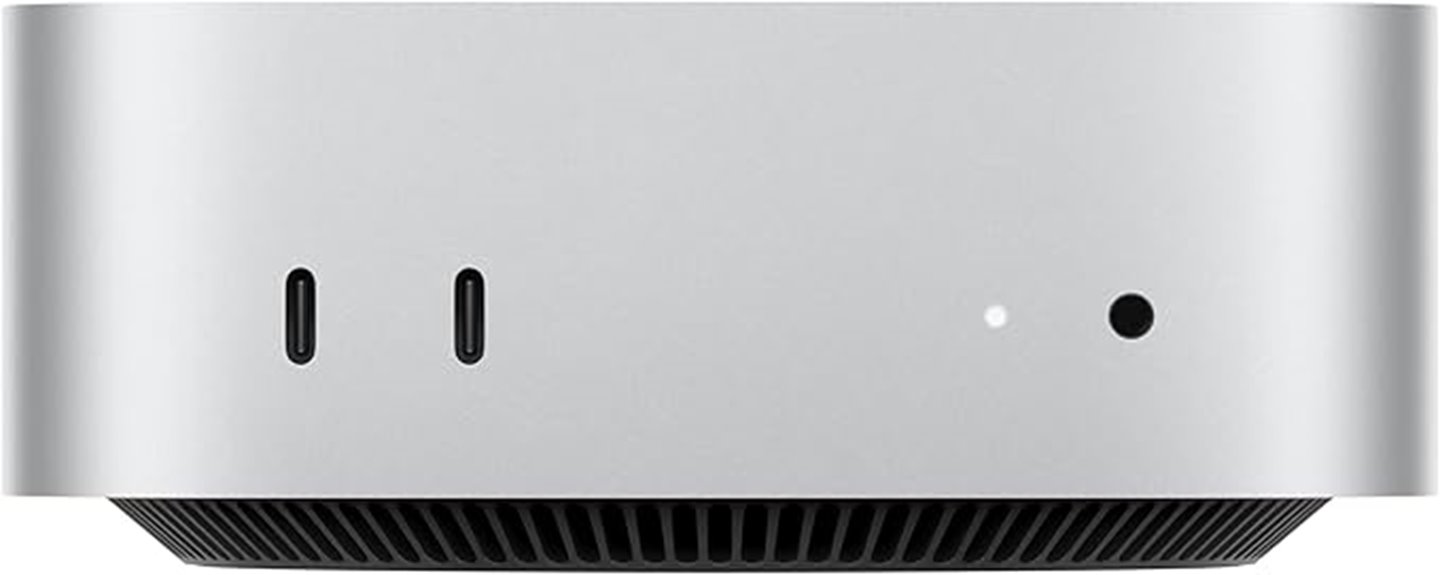
Designed for those who need a compact yet powerful desktop, the 2024 Mac mini with M4 chip offers impressive performance in a small form factor. It features a 10-core CPU (4 performance + 6 efficiency cores), a 10-core GPU, and a 16-core Neural Engine, supporting hardware-accelerated ray tracing and media processing. Its sleek 5×5-inch design weighs just 1.5 pounds, fitting easily next to monitors or in tight spaces. With 24GB of unified memory (upgradable to 32GB) and storage options up to 2TB SSD, it handles demanding tasks effortlessly. Connectivity includes Thunderbolt 4, HDMI, USB-C, and Wi-Fi 6E, making it versatile for power users.
Best For: professionals and power users who need a compact yet high-performance desktop capable of handling demanding applications and multitasking with seamless connectivity.
Pros:
- Compact, lightweight design fits easily in tight spaces or next to monitors
- Powerful M4 chip with 10-core CPU and GPU delivers fast, efficient performance
- Versatile connectivity options including Thunderbolt 4, HDMI, and Wi-Fi 6E
Cons:
- Limited upgradeability post-purchase, especially for RAM and storage
- Only supports up to three displays, which may be restrictive for some multi-monitor setups
- Premium price point compared to traditional desktop PCs with similar specs
Apple 2024 Mac mini Desktop Computer with M4 Pro chip
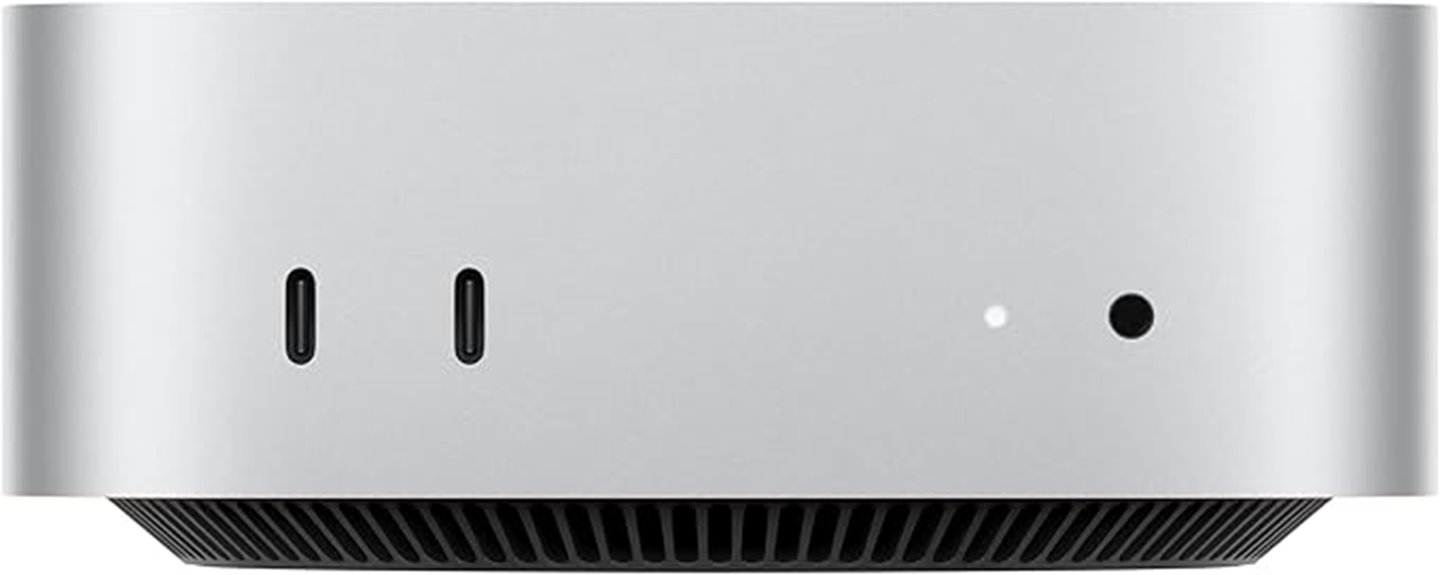
For power users seeking a compact yet highly capable workstation, the Apple 2024 Mac mini with M4 Pro chip stands out thanks to its impressive performance and versatile connectivity. Measuring just 5×5 inches and weighing 1.6 pounds, it fits easily beside monitors and integrates seamlessly with Apple devices. Powered by a 12-core CPU, 16-core GPU, and 16-core Neural Engine, it handles demanding tasks like video editing, coding, and 3D rendering effortlessly. With up to 64GB of RAM and configurable storage up to 8TB, it offers ample room for intensive workflows. Its array of ports, including Thunderbolt 5, HDMI, and Ethernet, guarantees high-speed connectivity for any setup.
Best For: power users and creative professionals seeking a compact, high-performance workstation with versatile connectivity.
Pros:
- Compact design easily fits next to monitors and integrates seamlessly with Apple devices
- Powerful M4 Pro chip with a 12-core CPU and 16-core GPU handles demanding tasks effortlessly
- Extensive ports including Thunderbolt 5, HDMI, and Ethernet for high-speed connectivity
Cons:
- Limited upgradeability due to integrated hardware design
- Higher initial cost with maximum configurations reaching premium prices
- May require external peripherals for expanded functionality in certain workflows
Factors to Consider When Choosing Mac Studio With 2TB+ Storage
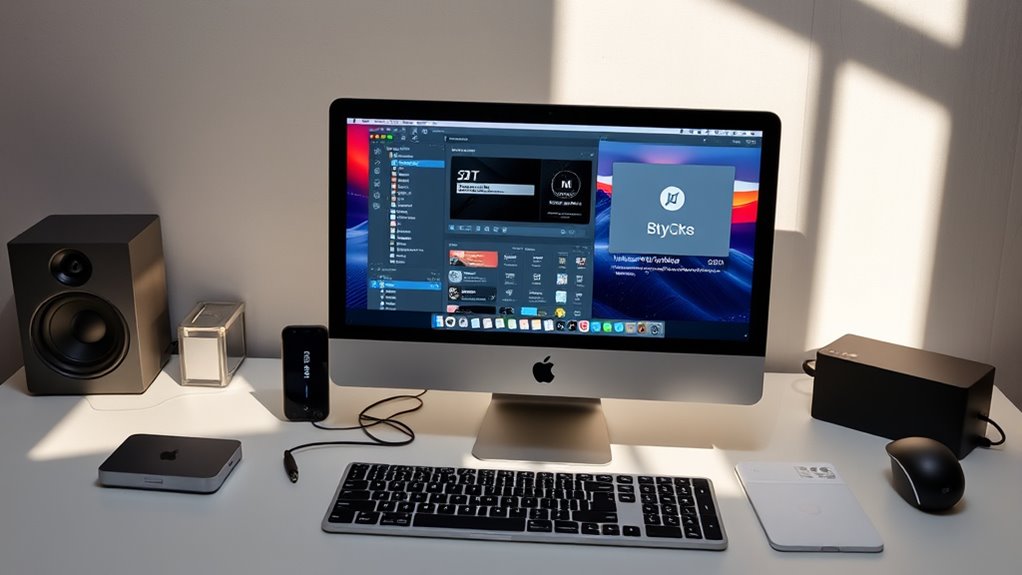
When choosing a Mac Studio with over 2TB of storage, I consider factors like storage options and how flexible they are for my needs. I also evaluate the performance capabilities required for my work, along with compatibility with my existing workflows. Additionally, I pay attention to port selection, connectivity, and whether the size and design fit my workspace.
Storage Options and Flexibility
Choosing the right storage option for your Mac Studio with 2TB or more depends on your specific needs and how much flexibility you want. Larger storage capacities give you plenty of space for big files, multimedia projects, and software libraries. Most Mac models offer SSDs, which provide faster data access and transfer speeds compared to traditional HDDs. Many models allow you to customize storage at purchase, offering options like 512GB, 1TB, or 2TB and beyond. Flexibility varies—some Macs support external drives or upgrades, while others have fixed internal storage. Bigger internal options tend to cost more but offer the convenience of fast, built-in storage without needing external solutions. Your choice should balance your storage needs with your budget and desired upgrade options.
Performance Capabilities Needed
Selecting a Mac Studio with 2TB or more storage means you’ll need a machine capable of handling demanding tasks smoothly. A powerful processor, like the M4 Pro chip with a 12-core CPU and 16-core GPU, is vital for efficient performance. At least 24GB of unified memory is recommended, with options to upgrade to 48GB or 64GB for better multitasking and editing. High-speed data transfer capabilities, such as Thunderbolt 5 and USB 4 ports supporting up to 120Gb/s, guarantee quick access to large files. A hardware-accelerated media engine is indispensable for efficient decoding and encoding of formats like ProRes, AV1, and HEVC, streamlining media workflows. Larger SSD capacities (2TB+) provide ample space for storing big projects without sacrificing speed.
Compatibility With Workflows
Ensuring your Mac Studio’s hardware and software align with your workflow is essential for smooth operation. I always verify that my software and tools are compatible with the Mac Studio’s specifications to avoid disruptions. Connectivity options, like Thunderbolt 4 or USB-C ports, must match my peripherals and accessories for seamless integration. I also check if the storage capacity supports my current data volume and allows room for future expansion without sacrificing performance. Additionally, confirming compatibility with my network infrastructure—such as Ethernet and Wi-Fi standards—guarantees reliable data transfer and remote access. Finally, I evaluate whether the Mac Studio’s processing power and GPU capabilities meet the demands of my specialized applications and multitasking needs. Proper compatibility ensures my workflow remains efficient and uninterrupted.
Port Selection and Connectivity
When evaluating a Mac Studio with 2TB+ storage, it’s crucial to take into account the variety and placement of ports to support your workflow efficiently. Confirm the device has multiple Thunderbolt 4 or Thunderbolt 5 ports for fast data transfer and connecting peripherals. Check for HDMI and USB-C ports to support different display setups and external devices. A Gigabit Ethernet port, preferably configurable to 10Gb Ethernet, is essential for reliable wired network connections. Also, verify the number of USB-A or USB-C ports to accommodate external drives, input devices, and peripherals. Finally, consider port placement—front and back—to ensure easy access and maintain an organized workspace. Proper port selection enhances connectivity and streamlines your workflow seamlessly.
Size and Design Preferences
Choosing the right size and design for your Mac Studio with 2TB+ storage depends largely on your workspace and personal style. I consider whether a compact, small form factor fits my setup or if a larger, more expandable model is better for future upgrades. The aesthetic also matters; I want a design that complements my existing setup or reflects my personal taste. Placement options are essential—size should allow easy integration next to monitors or within my designated area without clutter. Portability isn’t a priority for me, so I focus on stationary setups, but I also evaluate airflow and internal expansion to guarantee reliable performance. Ultimately, matching the device’s size and design to my environment helps streamline my workflow and maintain a cohesive workspace.
Environmental and Sustainability Goals
Opting for a Mac Studio with 2TB+ storage aligns with my sustainability goals by reducing the need for additional devices and cutting down electronic waste. Larger storage capacities often come with energy-efficient hardware that delivers high performance while conserving power. Eco-friendly models are typically built with sustainable materials and designed for easy recycling, supporting broader environmental commitments. Choosing higher storage options also means fewer data transfers and less reliance on cloud storage, which reduces energy consumption in data centers. Additionally, many manufacturers pledge to carbon neutrality and sustainable manufacturing practices, making these models a responsible choice. By selecting a Mac Studio with ample storage, I can enjoy robust performance while actively supporting environmentally conscious initiatives. It’s a smart move for those committed to reducing their ecological footprint.
Budget and Value Considerations
Since higher storage capacities like 2TB or more usually come with a higher price tag, it’s important to weigh whether the extra cost is justified for your needs. Consider whether investing in a Mac Studio with larger internal storage saves you money over time by reducing reliance on external drives or cloud services. Comparing the price of a higher-storage model to the costs of expanding storage later helps determine if the upgrade offers good value. Often, paying more upfront for more built-in storage can be more cost-effective and improve performance, especially for demanding workflows. Be sure to evaluate the device’s performance features at different price points to ensure you’re getting the right balance of capacity, speed, and value for your professional or creative tasks.
Frequently Asked Questions
How Does Mac Studio Performance Compare With High-End Mac Mini Models?
The Mac Studio outperforms high-end Mac Mini models considerably. I’ve found it delivers faster processing, better graphics, and superior handling of demanding tasks like video editing and 3D rendering. Its higher-end chips and more robust cooling system keep performance steady during intensive work. If you need serious power and reliability, the Mac Studio is the way to go, especially for professional workflows that demand top-tier performance.
What Are the Upgrade Options for Storage Beyond 2TB?
Did you know that upgrading storage beyond 2TB on a Mac Studio isn’t possible internally? Instead, I recommend using high-speed external drives or Thunderbolt 3/4 SSDs, which offer fast access and large capacities. You can also consider network-attached storage (NAS) for expanded, scalable space. These options give you flexibility, and I find they’re perfect for handling massive files and demanding workflows without sacrificing performance.
Is External Storage Recommended for Additional Capacity?
Yes, I recommend external storage for extra capacity. It’s a flexible way to expand without sacrificing performance or paying a premium for higher internal storage. I use high-speed external drives for backups and large files, which keeps my Mac Studio running smoothly. Plus, it’s easy to upgrade or swap out external drives as my needs grow, making it a practical solution for power users like you and me.
How Does Thermal Management Impact Long-Term Performance?
Thermal management is essential for long-term performance because it prevents overheating, which can throttle your Mac’s speed and cause hardware issues. While high-performance tasks generate heat, effective cooling keeps everything running smoothly. I’ve found that good airflow and possibly external cooling solutions help maintain speed and stability over time. Ignoring thermal management might save space now, but it risks damaging your system and reducing its lifespan in the long run.
Are There Specific Software Optimizations for Large Storage Configurations?
Yes, there are specific software optimizations for large storage configurations. I make sure to keep my system updated because these updates often include improvements for managing large files efficiently. I also use specialized software that optimizes disk usage, reduces fragmentation, and speeds up data access. Additionally, I configure my storage settings to prioritize performance, ensuring my workflow stays smooth even with extensive data stored on my Mac Studio.
Conclusion
No matter which Mac Studio model I choose, I see them as powerful engines ready to fuel my creative journey. With 2TB+ storage, they’re like a vast, open highway, letting my ideas run wild without fear of running out of space. Picking the right one is like finding the perfect key to unlock my true potential. Trust me, these machines are the backbone of every power user’s digital empire—ready to conquer whatever comes next.