If you’re looking for the best Mac Studio options for photography in 2025, I recommend considering models with the latest M4 or M4 Pro chips, plenty of RAM, and fast SSD storage. These machines handle large RAW files, multitask smoothly, and support multiple high-resolution displays for stunning results. Each configuration offers a different balance of power and capacity, so if you keep exploring, you’ll discover the ideal setup to boost your workflow and image quality.
Key Takeaways
- Mac Mini models with M4 and M4 Pro chips offer powerful performance and multi-display support tailored for professional photography workflows.
- Configurable memory up to 64GB and fast SSD storage ensure smooth handling of large RAW files and complex edits.
- Multiple Thunderbolt 4 and HDMI ports facilitate high-speed connections to external drives, peripherals, and high-resolution displays.
- Native Apple Silicon optimization enhances stability, speed, and efficiency in editing applications like Photoshop and Lightroom.
- Limited internal upgrade options make initial configuration crucial for long-term speed, stability, and project management.
Apple Mac mini Desktop Computer with M4 Chip, 16GB Memory, 256GB SSD
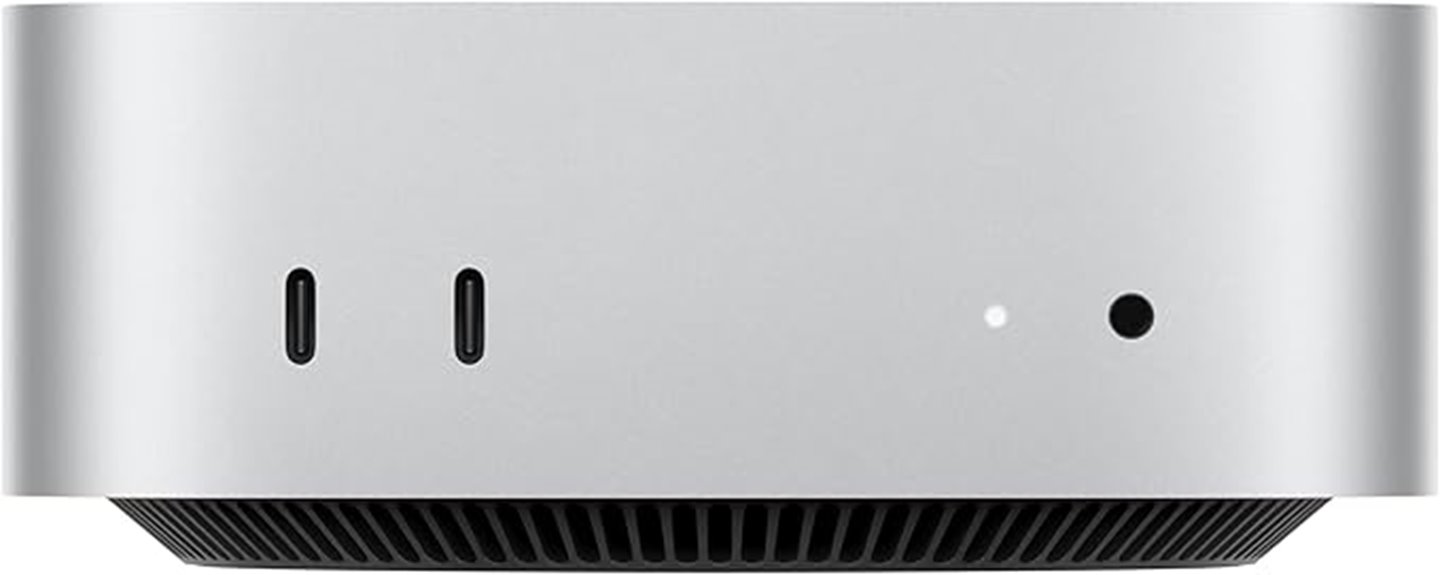
If you’re a photographer looking for a powerful, compact desktop that seamlessly integrates with your Apple devices, the Mac mini with M4 chip, 16GB memory, and 256GB SSD is an excellent choice. Its small five-by-five-inch design easily fits next to your monitor, saving space while delivering top-tier performance. Powered by the M4 chip with a 10-core CPU and GPU, it handles demanding editing tasks effortlessly. The 16GB of unified memory ensures smooth multitasking, and the fast SSD accelerates your workflow. With support for multiple high-resolution displays and robust connectivity options, this Mac mini keeps your creative process efficient and connected.
Best For: creative professionals and photographers seeking a compact, high-performance desktop that easily integrates with Apple devices.
Pros:
- Compact size fits easily next to monitors, saving desk space
- Powerful M4 chip with 10-core CPU and GPU handles demanding editing tasks smoothly
- Seamless compatibility with Apple ecosystem and support for multiple high-resolution displays
Cons:
- Limited storage options starting at 256GB, which may require external drives for large files
- Only two front USB-C ports may require additional hubs for extensive peripherals
- Slightly higher price point compared to other compact desktops with similar specs
Apple Mac mini Desktop Computer with M4 Chip (512GB SSD, 16GB RAM)
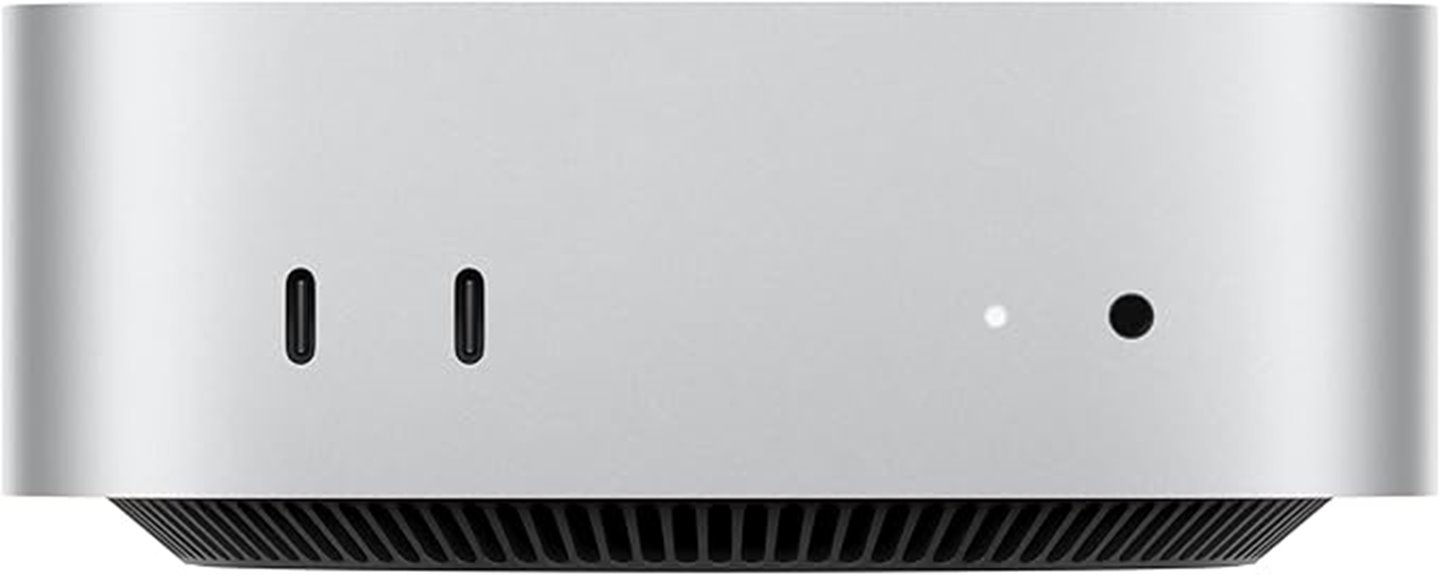
The Apple Mac mini with M4 chip is an ideal choice for photographers who need a powerful yet compact desktop that seamlessly integrates with their creative workflow. Its small footprint—just 5×5 inches and 2 inches tall—fits easily on any desk or workspace. Powered by the M4 chip with a 10-core CPU, GPU, and 16-core Neural Engine, it delivers impressive speed and stability. The 512GB SSD and 16GB RAM handle large files effortlessly, while support for up to three displays enhances productivity. Its eco-friendly design and seamless compatibility with the Apple ecosystem make it a versatile, reliable tool for professional photography workflows.
Best For: creative professionals and photographers seeking a compact, powerful, and eco-friendly desktop that integrates seamlessly with the Apple ecosystem.
Pros:
- Compact size fits easily on any workspace without clutter
- Powerful M4 chip with 10-core CPU and GPU ensures smooth performance for demanding tasks
- Supports up to three displays, ideal for multitasking and workflow enhancement
Cons:
- Limited upgrade options for storage and memory after purchase
- Higher price point compared to traditional desktops with similar specs
- Fewer ports on the front, requiring connection management for multiple peripherals
Apple Mac mini Desktop Computer with M4 Chip, 24GB Memory, 512GB SSD
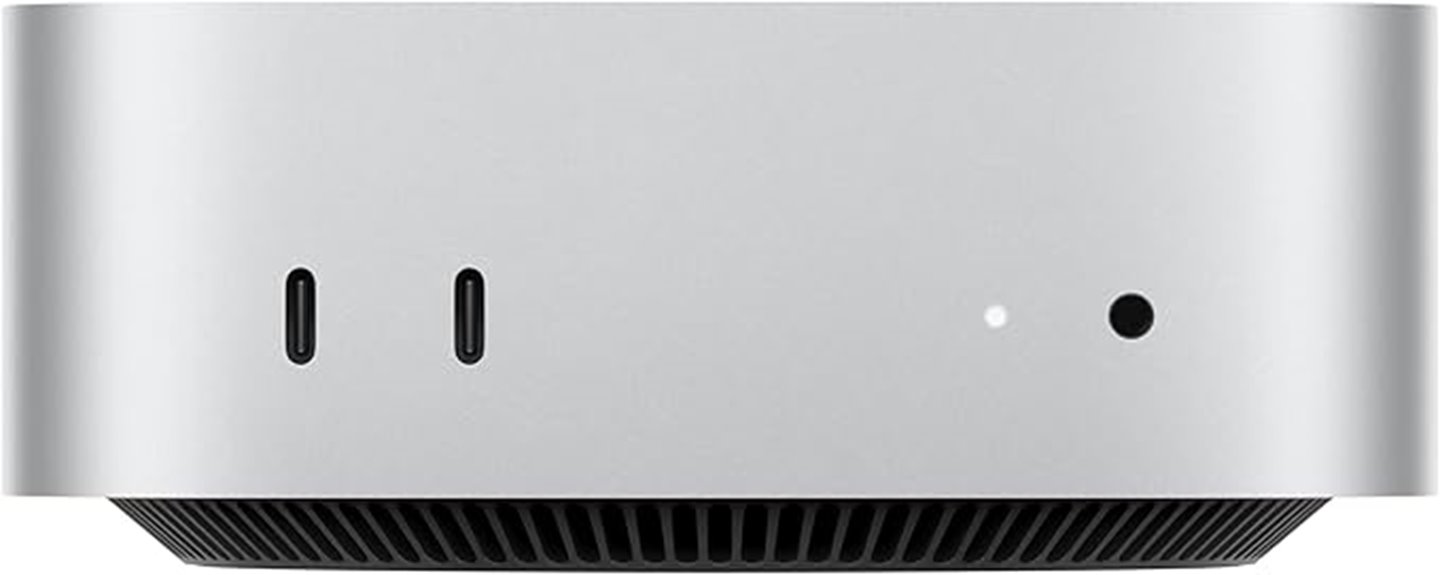
Looking for a compact yet powerful desktop that handles demanding photo editing and creative workflows with ease? The Apple Mac mini with M4 chip, 24GB memory, and 512GB SSD is a perfect fit. Its 10-core CPU and GPU deliver fast, smooth performance, even with large files. The small size—just 5×5 inches—fits easily next to your monitor, while multiple ports ensure you connect everything you need. With support for up to three displays and advanced media engines, it’s built for stunning visuals and efficient multitasking. Plus, its eco-friendly, carbon-neutral design aligns with sustainability goals, making it a smart, versatile choice for serious photographers.
Best For: creative professionals and photographers seeking a compact, powerful desktop to handle demanding editing workflows with multiple displays and advanced media capabilities.
Pros:
- Compact size fits seamlessly next to monitors, saving space
- Powerful M4 chip with 10-core CPU and GPU for smooth multitasking and large file processing
- Supports up to three high-resolution displays for enhanced productivity
Cons:
- Limited upgradeability, especially in memory and storage post-purchase
- Higher price point compared to more basic mini desktops
- Fewer ports on the front, requiring users to access the back for most connections
Apple Mac mini Desktop Computer with M4 Pro Chip
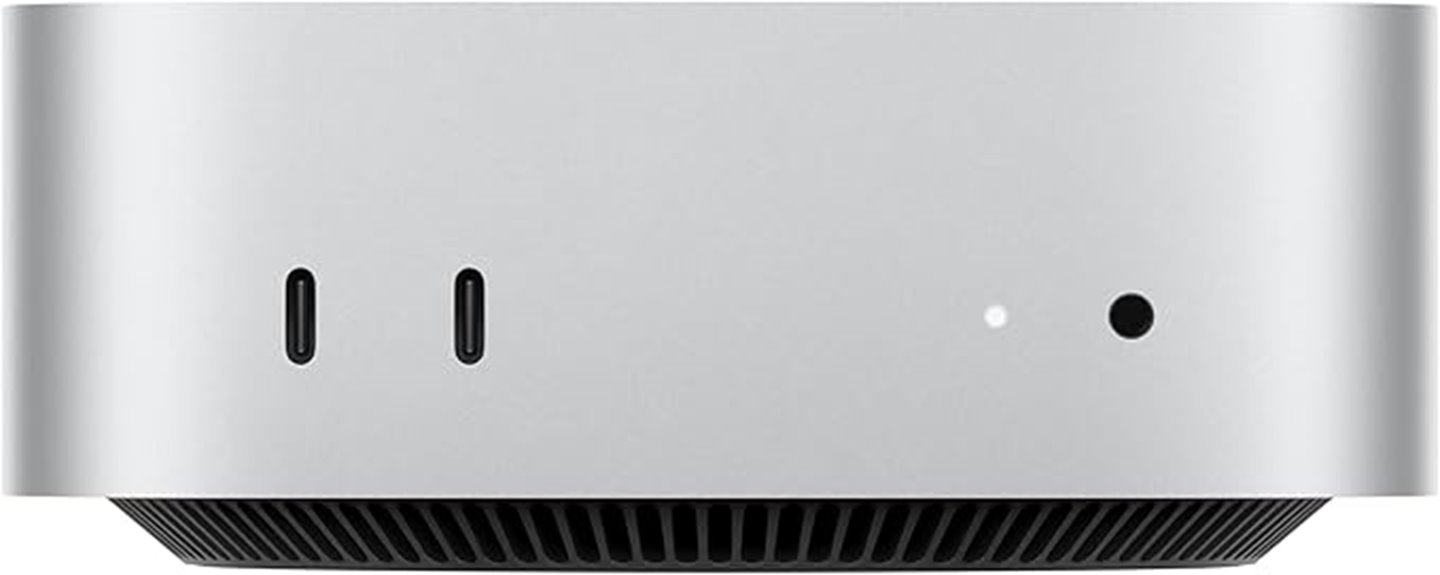
For photographers seeking a compact yet powerful desktop, the Apple Mac mini with M4 Pro chip is an ideal choice. Measuring just 5×5 inches and weighing 1.6 pounds, it fits seamlessly next to monitors or in tight spaces. Its M4 Pro processor offers a 12-core CPU, 16-core GPU, and 16-core Neural Engine, providing exceptional speed and efficiency for demanding editing tasks. With 24GB of unified memory, configurable up to 64GB, and fast SSD storage up to 8TB, it handles complex workflows effortlessly. Its versatile ports—including Thunderbolt 5, HDMI, and Ethernet—support multiple displays and fast data transfer, making it a robust, space-saving powerhouse for photography professionals.
Best For: photographers and creative professionals who need a compact, high-performance desktop to handle demanding editing workflows and multi-display setups.
Pros:
- Compact size fits easily next to monitors or in tight spaces without sacrificing power
- Powerful M4 Pro chip with 12-core CPU and 16-core GPU delivers exceptional speed for editing and rendering tasks
- Versatile connectivity options including Thunderbolt 5 and multiple ports support multiple displays and fast data transfer
Cons:
- Limited upgradability due to integrated hardware design
- Higher cost compared to traditional mini desktops with similar specifications
- May require external peripherals for full workstation setup
Factors to Consider When Choosing Mac Studio for Photography Workflows
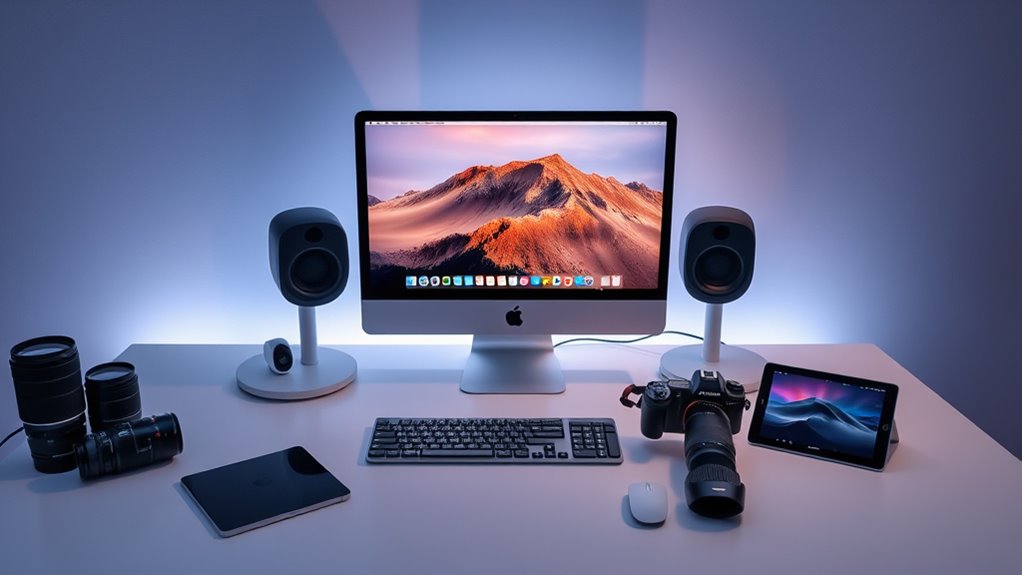
When selecting a Mac Studio for photography, I consider several key factors to guarantee it meets my workflow needs. I look at processing power, display options, memory, storage, and connectivity to optimize performance and efficiency. By evaluating these points, I can choose a setup that handles my editing tasks smoothly and reliably.
Processing Power Needs
Choosing the right Mac Studio for photography workflows hinges considerably on processing power, as it directly impacts how quickly and smoothly your editing tasks run. A powerful processor speeds up rendering and exporting large RAW files, saving you valuable time. Multi-core CPUs with more performance cores enhance efficiency when applying filters or adjustments to multiple images simultaneously. This reduces lag and boosts responsiveness, especially with high-resolution images and complex layers. If you work with 4K or 8K video footage integrated into your photography projects, increased CPU performance becomes even more essential for real-time editing. Additionally, strong processing power ensures that resource-intensive applications like Photoshop and Lightroom operate smoothly together, preventing crashes or delays. Overall, investing in a Mac Studio with robust processing capabilities keeps your workflow fast, stable, and productive.
Display Compatibility Options
Selecting a Mac Studio with the right display compatibility guarantees your photography workflow remains seamless and efficient. Make sure it supports native DisplayPort 1.4 or higher to handle high-resolution monitors without issues. Check the available video output ports—Thunderbolt 4, USB-C, or HDMI—to confirm they match your display’s inputs. It’s also essential to verify how many displays the Mac Studio can support simultaneously, especially if you work with multiple 6K, 8K, or 4K screens for detailed editing. Additionally, confirm that the hardware supports hardware-accelerated decoding for formats like ProRes, HEVC, or AV1, which enhances display performance. These factors ensure your setup can handle your visual needs smoothly, delivering sharp, accurate, and fluid image rendering for professional-quality results.
Memory Capacity Flexibility
Opting for a Mac Studio with flexible memory options is essential for maintaining smooth photography workflows, especially as your projects grow more complex. Higher memory capacity allows me to handle large RAW files and intricate edits without slowing down, keeping my productivity high. Upgrading from 16GB to 24GB or 32GB helps me adapt to evolving demands without needing immediate hardware changes. Sufficient RAM minimizes disk swapping, which markedly boosts editing efficiency. Additionally, having scalable memory means I can multitask smoothly with applications like Photoshop, Lightroom, and video tools running simultaneously. Choosing a Mac with expandable or higher base memory future-proofs my setup, ensuring I won’t outgrow my system too quickly as software requirements and project sizes increase. Flexibility here is key for long-term performance.
Storage Requirements
Have you considered how storage capacity impacts your photography workflow? If you’re dealing with high-resolution images and large photo libraries, opting for at least 1TB of internal SSD storage is essential. SSDs offer faster data access and transfer speeds, which notably boost editing efficiency. To future-proof your setup, consider larger capacities because RAW files and multiple projects can quickly fill up space. External drives are a smart addition, providing extra room for backups and archiving large collections without cluttering your main storage. The key is to match your storage choices to your workflow demands, ensuring smooth importing, editing, and exporting processes. Adequate storage not only keeps your work flowing seamlessly but also minimizes delays and keeps your creative momentum intact.
Connectivity and Ports
When setting up a Mac Studio for photography, the available connectivity options play a essential role in ensuring a smooth workflow. I look for multiple Thunderbolt 4 ports to connect high-speed external drives and peripherals essential for editing and backing up images. Sufficient HDMI and USB-C ports are critical for running external monitors, card readers, and other accessories simultaneously without hassle. A Gigabit Ethernet port is standard, but I prefer the option to upgrade to 10Gb Ethernet for faster file transfers and reliable network connectivity. Additionally, native support for DisplayPort 1.4 over USB-C allows seamless multi-display setups, enhancing productivity. High-impedance headphone jacks and quality audio outputs are also significant for accurate audio monitoring during multimedia editing, ensuring my workflow remains efficient and precise.
Graphics and GPU Power
A powerful GPU is vital for handling the demanding tasks involved in professional photography workflows. A 16-core or higher GPU accelerates rendering high-resolution images and complex edits, boosting efficiency. It markedly speeds up processes like applying filters, effects, and 3D rendering within photography software. High-end graphics processors also enable real-time previews and smooth manipulation of large RAW and HDR files, which is essential for detailed editing. Support for multiple high-resolution displays allows me to work comfortably with reference images and editing tools side-by-side, improving accuracy and workflow speed. Robust GPU performance minimizes lag and guarantees that GPU-accelerated tasks such as compositing, retouching, and 3D modeling are seamless, saving time and reducing frustration. Overall, strong GPU power elevates productivity and quality in my photography projects.
Software Optimization
Choosing the right Mac Studio for photography workflows depends heavily on software optimization, which directly impacts performance and efficiency. Well-optimized photo editing applications run smoothly, reducing lag and speeding up your workflow. Native support for Apple Silicon in programs like Adobe Photoshop and Lightroom boosts both stability and speed, allowing you to handle large files effortlessly. Optimization also enables hardware-accelerated features, such as GPU ray tracing and Neural Engine capabilities, for advanced image processing tasks. Regular updates from developers ensure compatibility with the latest Mac Studio configurations, maximizing hardware utilization. Efficient software optimization minimizes system resource use, so you can multitask and work on multiple high-resolution images without performance issues. Overall, choosing software that’s finely tuned to your hardware is vital for a seamless, productive photography workflow.
Ecosystem Integration
Ever wondered how seamless your photography workflow can become with the right ecosystem integration? When your Mac Studio works smoothly with your iPhone and iPad, it transforms how you manage and edit images. Features like AirDrop let you quickly transfer photos without fuss, while Universal Clipboard enables copying and pasting across devices instantly. Continuity tools such as Handoff and Instant Hotspot make switching between devices effortless during editing or review sessions. Deep integration with macOS guarantees all your professional apps and data stay synchronized, reducing disruptions. This ecosystem synergy not only speeds up your workflow but also minimizes compatibility issues, allowing you to focus more on your creative process. Choosing a Mac Studio with strong ecosystem integration means a more efficient, cohesive photography experience from capture to final edit.
Frequently Asked Questions
How Does the M4 Pro Chip Improve Photography Workflow Performance?
The M4 Pro chip boosts my photography workflow by offering faster processing speeds and improved efficiency. It handles large photo files effortlessly, reducing rendering and export times. The enhanced GPU accelerates editing tasks, making real-time adjustments smoother. With better thermal management, my Mac stays cool during intensive work. Overall, it’s like having a powerhouse that helps me work faster, more reliably, and produce stunning results without frustrating delays.
Are External GPUS Compatible With Mac Studios for Enhanced Editing Speed?
You might wonder if external GPUs work with Mac Studios to boost editing speeds. The truth is, recent Mac Studio models with Apple Silicon chips don’t support external GPUs, unlike older Intel-based Macs. So, if you’re aiming for faster performance, you’ll need to rely on the Mac Studio’s internal hardware. That said, optimizing your workflow with high-quality storage and efficient software can still deliver stunning results.
What Are the Best Storage Options for Large Photo Libraries on Mac Studios?
If you’re working with large photo libraries on a Mac Studio, I recommend using high-speed external SSDs for best performance. Thunderbolt 3 or 4 drives offer rapid data transfer, ensuring smooth editing and backups. Additionally, consider using RAID configurations for redundancy and extra speed. Internal storage options are great, but for massive libraries and quick access, fast external drives are the way to go.
How Does Macos Optimize Performance for Professional Photography Applications?
macOS optimizes performance for photography apps by intelligently managing resources, prioritizing active tasks, and utilizing Metal for graphics acceleration. I notice faster rendering and smoother editing when I keep my system updated and run background processes minimally. The system also leverages SSD speeds and RAM efficiently, making large file handling seamless. With these optimizations, I can focus on creativity without worrying about technical slowdowns or instability.
Can Mac Studios Handle 4K or 8K Video Editing Alongside Photography Workflows?
Absolutely, Mac Studios can handle 4K and 8K video editing alongside photography workflows with ease. I’ve experienced smooth performance even with intensive tasks, thanks to their powerful processors, ample RAM, and advanced GPU options. The seamless integration of software and hardware guarantees quick rendering and stable multitasking. If you’re working with high-resolution videos and photos simultaneously, Mac Studios are a reliable choice that won’t slow you down.
Conclusion
Choosing the right Mac Studio feels like selecting the perfect paintbrush—you want one that’s reliable, precise, and ready to bring your vision to life. I once underestimated my needs and ended up with sluggish edits; now, I know that investing in speed and stability pays off. Whether you’re editing high-res images or managing large files, the right setup guarantees your workflow flows smoothly, turning your creative ideas into stunning reality every time.