
If you’re looking for the top Mac Studio models for machine learning in 2025, I recommend considering the latest configurations with M4 and M4 Pro chips, ample RAM up to 64GB, and high-performance GPUs. These compact desktops include multiple display support, fast connectivity, and powerful Neural Engines for demanding ML tasks. By choosing these, you’ll get the perfect balance of power and space efficiency. Keep going to explore which models best fit your ML needs and budget.
Key Takeaways
- The Mac mini models with M4 and M4 Pro chips offer top-tier CPU, GPU, and Neural Engine performance optimized for ML workloads.
- Configurable RAM up to 64GB and GPU VRAM up to 24GB support large datasets and intensive training tasks.
- Support for multiple high-resolution displays and Thunderbolt 5 ensures seamless external device expansion for ML workflows.
- Compact design with high-speed connectivity makes these models ideal for space-constrained, portable ML setups.
- High-performance hardware, eco-friendly build, and future-proof features make these Macs excellent for demanding ML applications in 2025.
Apple Mac mini Desktop Computer with M4 Chip, 16GB RAM, 256GB SSD

If you’re looking for a compact yet powerful machine for machine learning tasks, the Apple Mac mini with M4 chip is an excellent choice. Its small five-by-five-inch design easily fits next to your monitor, saving space without sacrificing performance. Powered by the M4 chip with a 10-core CPU, 10-core GPU, and a 16-core Neural Engine, it handles demanding workloads smoothly. With 16GB of unified memory and a 256GB SSD, it offers fast processing and quick data access. The Mac mini also supports multiple high-resolution displays and connects seamlessly with other Apple devices, making it an ideal, eco-friendly desktop for AI and ML projects.
Best For: users seeking a compact, high-performance desktop ideal for machine learning, AI, and creative workflows within the Apple ecosystem.
Pros:
- Small, space-saving design fits easily next to monitors
- Powerful M4 chip with 10-core CPU, GPU, and Neural Engine for demanding tasks
- Seamless integration with other Apple devices and ecosystem
Cons:
- Limited storage options starting at 256GB SSD, which may require external storage for large datasets
- Only three display support, potentially limiting multi-monitor setups for advanced workflows
- Up to 32GB RAM configuration may still be insufficient for very large-scale ML models
Apple 2024 Mac mini Desktop Computer with M4 Chip
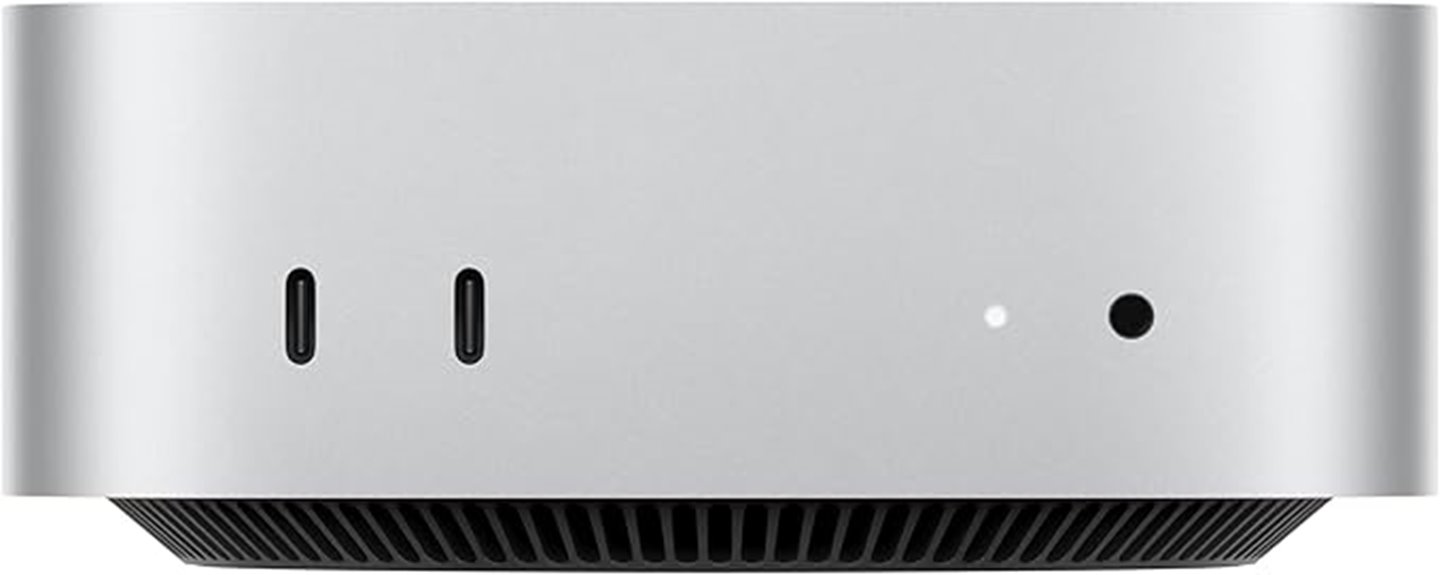
The Apple 2024 Mac mini with the M4 chip stands out as an ideal choice for professionals seeking powerful performance in a compact design. Its small footprint—just 5×5 inches and 2 inches tall—belies its impressive hardware, featuring a 10-core CPU, 10-core GPU, and a 16-core Neural Engine. With 16GB of unified memory and fast SSD options, it handles demanding machine learning tasks seamlessly. Its versatile connectivity supports up to three displays and various ports, making it easy to integrate into any setup. Plus, it’s environmentally friendly, carbon neutral, and works seamlessly with Apple’s ecosystem, offering both power and portability in one package.
Best For: professionals and creatives seeking a powerful, compact desktop that easily integrates into the Apple ecosystem for demanding tasks and multitasking.
Pros:
- Compact and lightweight design fits easily on any desk or workspace
- Powerful M4 chip with 10-core CPU and GPU delivers excellent performance for demanding applications
- Supports multiple high-resolution displays and seamless connectivity options
Cons:
- Limited to 16GB of unified memory standard, which may be restrictive for some intensive workflows
- Storage options are relatively modest at 512GB base, requiring upgrade for large data needs
- Higher-end configurations could be costly compared to other compact desktop options
Apple Mac mini Desktop Computer with M4 Chip and 24GB Memory

For professionals seeking a compact yet powerful machine for machine learning tasks, the Apple Mac mini with the M4 chip and 24GB of memory stands out. Its 10-core CPU and GPU, combined with a 16-core Neural Engine, deliver impressive speed and efficiency for demanding workloads. The small form factor—just 5×5 inches and 2 inches high—fits easily next to monitors or in tight spaces. With support for multiple high-resolution displays, fast connectivity options, and hardware-accelerated ray tracing, it’s a versatile choice. Plus, its energy-efficient, carbon-neutral design aligns with sustainability goals while providing the power needed for advanced machine learning projects.
Best For: professionals and creative users who need a compact yet powerful machine for demanding tasks like machine learning, video editing, and high-resolution display support.
Pros:
- Compact size with a sleek, space-efficient design that fits easily next to monitors or in tight spaces.
- Powerful M4 chip with a 10-core CPU and GPU, plus 24GB of memory, enabling fast performance for intensive workloads.
- Supports multiple high-resolution displays and advanced connectivity options, ideal for multitasking and professional workflows.
Cons:
- Limited upgradeability in terms of RAM and storage after purchase.
- The small form factor may limit expansion options compared to traditional desktops.
- Higher price point relative to similar performance in more traditional or customizable desktops.
Apple 2024 Mac mini Desktop Computer with M4 Pro chip
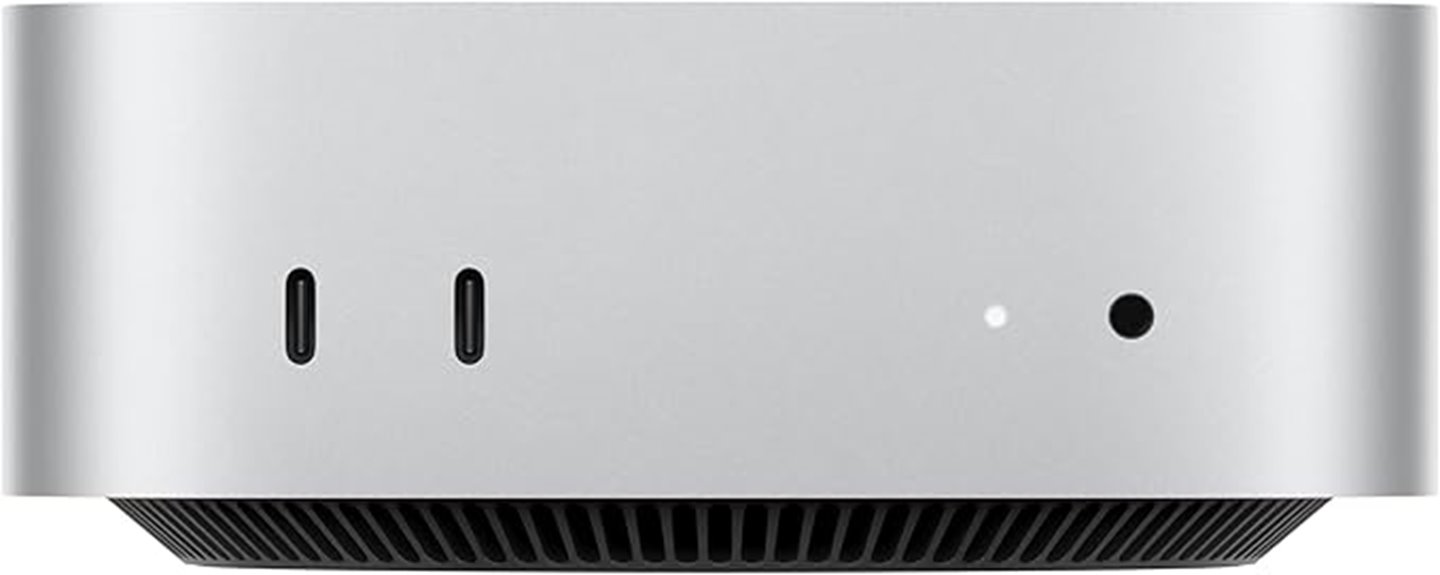
Designed to deliver powerful performance in a compact form, the Apple 2024 Mac mini with M4 Pro chip is an ideal choice for machine learning enthusiasts who need desktop reliability without taking up much space. It measures just 5×5 inches, weighs 1.6 pounds, and seamlessly fits next to monitors. Equipped with a 12-core CPU, 16-core GPU, and 16-core Neural Engine, it handles demanding tasks like complex scene rendering and code compilation effortlessly. With up to 64GB of memory and multiple high-speed ports, including Thunderbolt 5 and HDMI, it offers excellent connectivity and expandability. Plus, its eco-friendly design aligns with Apple’s carbon-neutral commitments, making it a smart, sustainable powerhouse.
Best For: machine learning enthusiasts and professionals seeking a compact, high-performance desktop that seamlessly integrates with Apple ecosystem.
Pros:
- Compact design fits easily next to monitors, saving space.
- Powerful hardware with M4 Pro chip, 24GB+ memory, and multiple ports for demanding tasks.
- Eco-friendly, carbon-neutral construction aligns with sustainability goals.
Cons:
- Limited upgrade options post-purchase due to integrated design.
- Higher price point compared to traditional mini desktops with similar specs.
- May require additional accessories for extensive external connectivity needs.
Factors to Consider When Choosing a Mac Studio for Machine Learning
When choosing a Mac Studio for machine learning, I focus on key factors like processor power, GPU capabilities, and memory size to guarantee ideal performance. It’s also important to take into account storage needs and compatibility with your preferred ML tools. These elements together help determine the best fit for your specific machine learning workload.
Processor Power and Cores
The number of cores in a Mac Studio processor directly influences its ability to handle multiple machine learning tasks efficiently. More cores, such as 12 or greater, enable faster parallel processing, reducing training times for complex models. A mix of performance cores and efficiency cores helps optimize power consumption without sacrificing computational power. Specialized cores, like Neural Engines, further boost performance by accelerating machine learning workloads through hardware-accelerated operations. Processors with multithreaded capabilities improve both training speed and model inference, making them ideal for demanding tasks. When selecting a Mac Studio, prioritizing higher core counts ensures smoother multitasking and faster results, which are essential for keeping up with the intensive demands of machine learning workloads.
GPU Capabilities and VRAM
A powerful GPU with ample VRAM considerably boosts a Mac Studio’s ability to handle machine learning tasks efficiently. High core counts and substantial VRAM accelerate training times and enable processing of large datasets without memory bottlenecks. VRAM capacity directly affects the ability to work with complex models and high-resolution data, guaranteeing smoother performance during training. Hardware features like ray tracing and dedicated media engines can further enhance speed for specific AI workloads. Compatibility with frameworks such as TensorFlow or PyTorch is also essential, as it determines how well the GPU integrates with your workflows. Overall, selecting a Mac Studio with robust GPU capabilities and sufficient VRAM ensures you can tackle demanding machine learning projects with greater ease and efficiency.
Memory Size and Speed
Choosing the right memory size and speed is vital for maximizing a Mac Studio’s machine learning performance. Larger memory options, like 24GB or 32GB, allow me to work with bigger datasets and more complex models without slowing down. Memory speed, measured in bandwidth (e.g., 120GB/s), directly influences how quickly data moves between the CPU, GPU, and memory, impacting training times and efficiency. Faster unified memory reduces latency, which is essential during real-time data processing and model inference. Upgrading to higher memory configurations helps prevent bottlenecks when handling large models or high-resolution data. Striking the right balance between size and speed ensures smoother operation, quicker training, and better overall performance during intensive machine learning tasks.
Storage Capacity Needs
Since large datasets and complex models demand ample storage, selecting the right capacity for your Mac Studio is essential for efficient machine learning workflows. If you work with extensive datasets or high-resolution multimedia files, consider upgrading to higher SSD options like 2TB or 4TB. Larger storage capacities, such as 1TB or more, help you manage data locally, reducing reliance on external drives and decreasing transfer times during training. The storage size should align with the scale of your models and data volume, ensuring smooth data handling and faster iteration. While budget constraints matter, investing in ample SSD space can profoundly boost your workflow efficiency, allowing you to focus on training and experimentation without constant data management concerns.
Compatibility With ML Tools
To guarantee your Mac Studio works seamlessly with your preferred machine learning frameworks, it’s essential to verify that the system supports the necessary tools and libraries. First, check that the model has enough GPU cores, like the 16-core GPU in the M4 Pro, to handle ML workloads efficiently. Make sure it supports popular ML frameworks such as TensorFlow, PyTorch, and Core ML, all optimized for Apple silicon. Compatibility with hardware-accelerated features like the Neural Engine and ray tracing can considerably speed up training and inference. Also, confirm that your macOS version is up to date, ensuring compatibility with the latest ML software updates. Finally, consider high-speed ports like Thunderbolt 5, which enable connecting external GPUs or peripherals for added processing power.
Connectivity Options Needed
After verifying your Mac Studio supports the right ML tools and libraries, it’s important to contemplate its connectivity options to maximize performance. I look for models with plenty of Thunderbolt 4 or Thunderbolt 5 ports to connect multiple high-speed devices simultaneously. Having multiple USB-C or USB 4 ports is also essential for versatile wired connections to hardware like external GPUs or storage. I check for HDMI ports and support for native DisplayPort over USB-C so I can connect several high-resolution displays without hassle. A Gigabit Ethernet port is a must, or the option to upgrade to 10Gb Ethernet, to handle large data transfers efficiently. Additionally, Wi-Fi 6E and Bluetooth 5.3 ensure reliable, high-speed wireless communication with peripherals and network devices, keeping my workflow smooth and uninterrupted.
Power Efficiency and Cooling
Choosing a Mac Studio for machine learning means paying close attention to its power efficiency and cooling capabilities, as these factors directly impact performance and hardware longevity. Efficient cooling systems prevent thermal throttling during intensive tasks, ensuring consistent processing power. Advanced heat sinks and airflow designs help maintain ideal temperatures, even under heavy computational loads. Power-efficient components reduce overall energy consumption, allowing longer training sessions without overheating concerns. Lower power usage also minimizes heat generation, which is crucial for hardware stability during extended workloads. Proper thermal management not only sustains peak performance but also prolongs the lifespan of internal components. When selecting a Mac Studio, prioritizing models with robust cooling and energy-efficient design is essential for reliable, sustained machine learning operations.
Budget and Cost Limits
When selecting a Mac Studio for machine learning, keeping budget and cost limits in mind helps guarantee you get the best value without overspending. I recommend establishing a clear budget range upfront to avoid unnecessary expenses. Consider how different configurations—such as RAM, storage, and processor options—affect the total cost, since higher specs can quickly increase your investment. Don’t forget to account for additional accessories or peripherals like external GPUs or specialized software, which can add to your overall expenses. Research current market prices, discounts, and bundles to ensure you’re getting the best deal. Ultimately, balance your budget constraints with the hardware requirements for your workload, so you don’t overspend on features that aren’t essential for your machine learning tasks.
Frequently Asked Questions
How Does the M4 Pro Chip Outperform Standard M4 in Machine Learning Tasks?
The M4 Pro chip outperforms the standard M4 in machine learning tasks by offering more cores and enhanced architecture, which accelerates data processing. I’ve noticed faster training times and smoother performance when running complex models. Its increased GPU and neural engine capabilities handle heavy workloads efficiently, making it ideal for demanding ML projects. Overall, the M4 Pro delivers a significant boost in speed and efficiency for machine learning compared to the standard M4.
What Are the Key Differences Between Mac Mini Models for AI Development?
Sure, the Mac mini models are practically siblings yet wildly different in AI development. The M2 Mac mini offers a solid start with decent CPU and GPU power, perfect for beginners. The M2 Pro version, however, steps up to a more serious league, with more cores and RAM, making it ideal for intensive machine learning tasks. So, it’s about balancing your needs and budget for the perfect fit.
Can Older Mac Studio Models Still Handle Advanced Machine Learning Workloads?
Older Mac Studio models can still handle advanced machine learning workloads, but their performance depends on the specific configuration and your workload’s demands. I’ve found that models with higher RAM and powerful GPUs perform better. While they might not match the latest models, they’re still capable of running complex ML tasks effectively. Upgrading certain components or optimizing workflows can also help you get the most out of older machines.
How Does RAM Size Impact Machine Learning Performance on Mac Studio?
They say “more is better,” and that’s especially true for RAM in machine learning. When I work on ML tasks, I notice that larger RAM allows me to handle bigger datasets and run more complex models smoothly. On a Mac Studio, increasing RAM directly boosts performance, reduces bottlenecks, and speeds up training times. So, if you’re serious about ML, opt for the highest RAM option you can afford.
Are External GPUS Beneficial for Mac Studio Machine Learning Workflows?
External GPUs can be beneficial for Mac Studio machine learning workflows, especially if you’re working with large models or datasets. They provide additional graphics processing power, which can speed up training times and improve performance. However, I recommend checking compatibility first, as not all external GPUs work seamlessly with Mac systems. If compatible, an eGPU can be a valuable upgrade to boost your machine learning tasks.
Conclusion
In summary, choosing the right Mac Studio means mastering the mix of memory, machine power, and model needs. Whether you’re seeking speed, storage, or supreme processing, I’ve shown you the stellar selection of models. Stay sharp, select smartly, and set yourself up for success. Remember, the perfect Mac makes machine learning more manageable, more mighty, and ready to revolutionize your projects. Make your move and master the magic of machine learning with the right Mac!