If you’re looking for the best Mac minis for media servers in 2025, I recommend the Apple Mac mini with M4 Pro for demanding workflows, the standard M4 model for great performance, and models with expanded storage and RAM for large media libraries. The built-in connectivity supports multiple high-res displays, perfect for streaming and transcoding. To find out which model suits your needs best, continue exploring the options and features I’ll highlight next.
Key Takeaways
- The Mac mini with M4 Pro offers the highest performance for demanding media server tasks and multitasking.
- All models include up to 8TB SSD options, ideal for extensive media libraries and high-resolution streaming.
- Support for multiple high-resolution displays and advanced media playback features enhances streaming quality.
- Connectivity options like Thunderbolt 4, USB-C, HDMI, and Ethernet ensure versatile media setup and expansion.
- The compact design and robust hardware make the Mac mini suitable for efficient, space-saving media server configurations.
Apple 2024 Mac mini Desktop Computer with M4 Chip

If you’re looking for a compact yet powerful media server in 2025, the Apple 2024 Mac mini with the M4 chip is an excellent choice. Its small 5×5-inch size fits easily beside your monitor, while the 10-core CPU and GPU ensure fast, smooth performance for streaming, editing, or hosting media. With 24GB of unified memory (expandable to 32GB) and up to 2TB SSD storage, it handles multiple tasks effortlessly. The M4 chip supports hardware-accelerated ray tracing, AV1 decoding, and high-quality media formats like Dolby Vision and Dolby Atmos. Plus, its connectivity options and seamless Apple ecosystem integration make it a versatile, eco-friendly media hub.
Best For: individuals seeking a compact, high-performance media server that seamlessly integrates with the Apple ecosystem and handles demanding streaming, editing, and hosting tasks effortlessly.
Pros:
- Compact size with versatile connectivity options, fitting easily beside any monitor
- Powerful M4 chip with 10-core CPU and GPU, supporting hardware-accelerated ray tracing and AV1 decoding
- Large unified memory (up to 32GB) and SSD storage (up to 2TB) for smooth multitasking and media management
Cons:
- Limited upgradeability post-purchase (memory and storage are configurable but not user-upgradable)
- Premium price point may be a concern for budget-conscious users
- Compatibility primarily optimized for Apple ecosystem, less ideal for non-Apple devices
Apple Mac mini Desktop Computer with M4 Chip (2024)
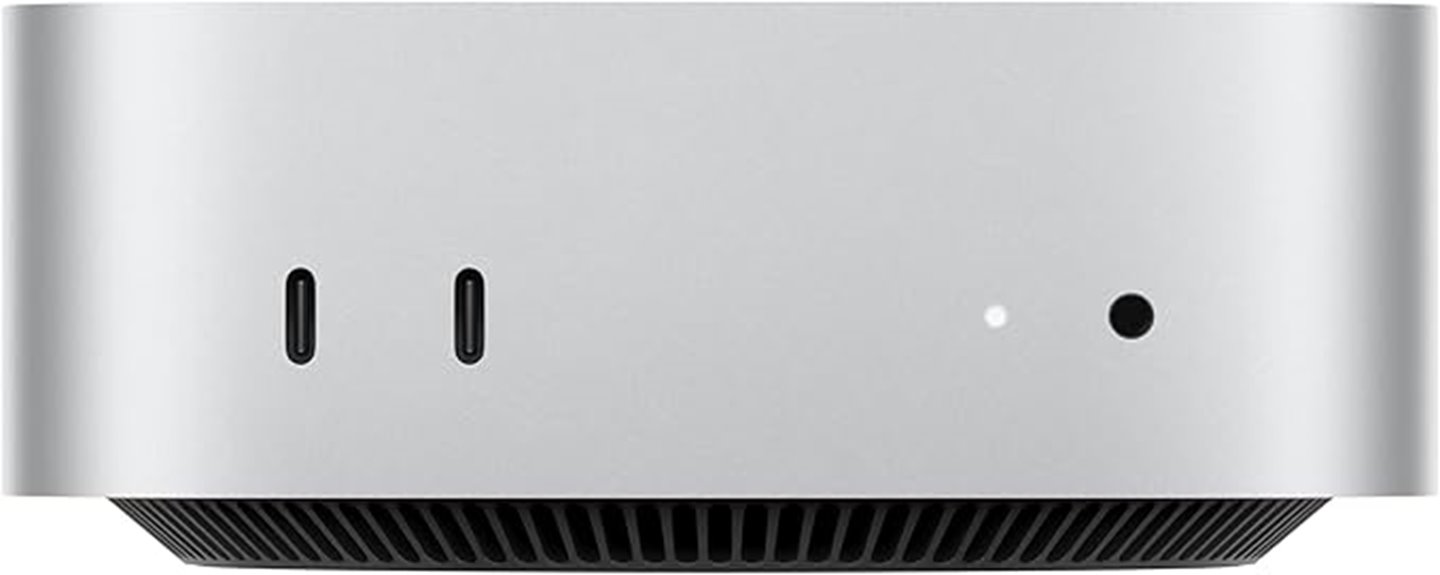
The Apple Mac mini with M4 chip (2024) stands out as an ideal choice for media server enthusiasts who need powerful performance in a compact form. Its small size—just 5×5 inches and 2 inches tall—makes it easy to place anywhere, while still delivering top-tier hardware. Equipped with a 10-core CPU, 10-core GPU, and a 16-core Neural Engine, it handles media decoding, encoding, and multitasking effortlessly. With up to 32GB of unified memory and fast SSD storage, it’s ready for demanding media workflows. Plus, its seamless integration with Apple’s ecosystem and support for multiple displays make it perfect for streaming, hosting, and media management.
Best For: media server enthusiasts and professionals seeking a compact yet powerful desktop for streaming, media management, and multitasking within the Apple ecosystem.
Pros:
- Compact size fits easily in any workspace or entertainment setup
- Powerful M4 chip with 10-core CPU, GPU, and Neural Engine for demanding media workflows
- Seamless integration with Apple devices and support for multiple high-resolution displays
Cons:
- Limited to 512GB SSD storage by default, which may require upgrades for large media libraries
- Only three display outputs, which might restrict multi-monitor configurations for some users
- Price may be higher relative to other compact PCs with similar hardware specifications
Apple Mac mini 2024 Desktop with M4 Chip, 16GB RAM, 256GB SSD
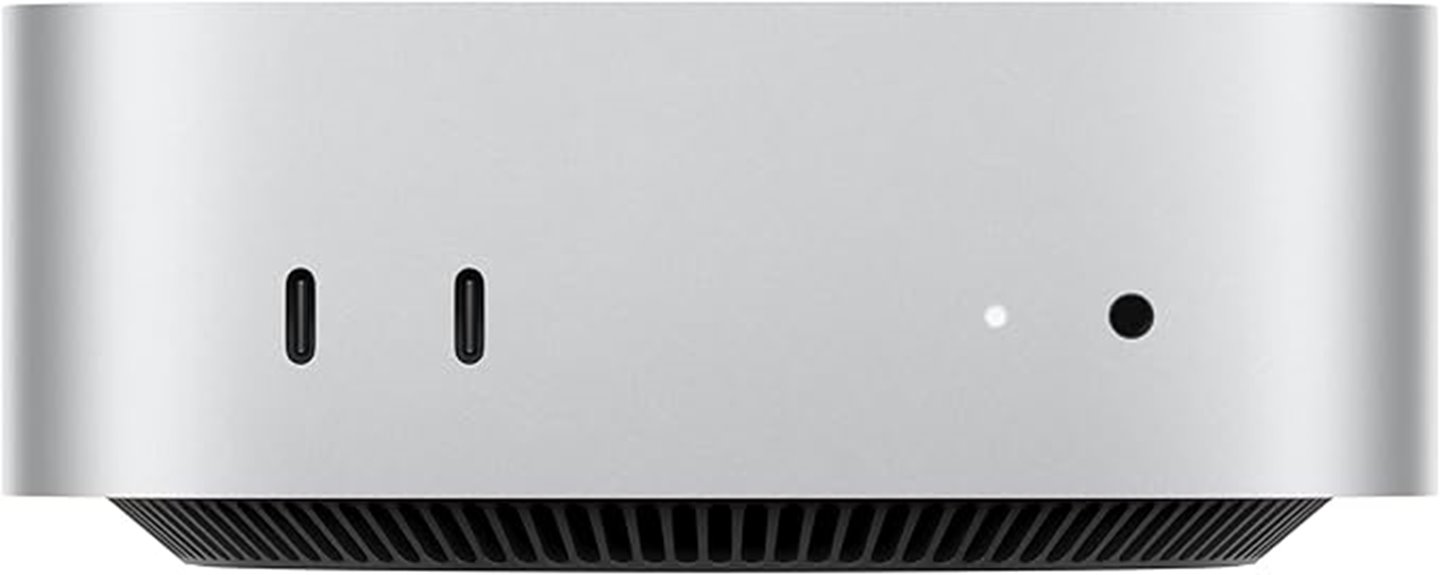
For media server enthusiasts seeking a compact yet powerful device, the Apple Mac mini 2024 with the M4 chip, 16GB of RAM, and 256GB SSD offers an ideal solution. Its small size—just five by five inches—fits easily next to monitors, making setup simple. Powered by the latest M4 chip, it delivers impressive performance with a 10-core CPU, 10-core GPU, and hardware-accelerated media processing. It supports up to three displays and offers fast connectivity through Thunderbolt 4, USB-C, HDMI, and Ethernet options. Built-in speakers and advanced video support make it a versatile choice for media streaming, editing, and hosting.
Best For: media server enthusiasts and professionals seeking a compact, high-performance device for streaming, editing, and hosting media content.
Pros:
- Small, space-efficient design measuring just five by five inches, ideal for tight setups
- Powerful M4 chip with a 10-core CPU and GPU, supports multiple displays and demanding media tasks
- Versatile connectivity options including Thunderbolt 4, HDMI, and Ethernet for seamless integration
Cons:
- Limited storage starting at 256GB may require external drives for larger media libraries
- No dedicated graphics card, which may impact high-end gaming or intensive 3D rendering
- Premium price point could be a consideration for budget-conscious users
Apple 2024 Mac mini Desktop Computer with M4 Pro chip

With its compact size and powerful M4 Pro chip, the 2024 Mac mini is an ideal choice for anyone looking to set up a high-performance media server in a small space. Measuring just 5×5 inches and weighing 1.6 pounds, it fits easily next to monitors or in tight spots. The M4 Pro offers a 12-core CPU, 16-core GPU, and 16-core Neural Engine, making demanding tasks like 4K streaming, transcoding, and multi-device management smooth and fast. With up to 64GB of RAM and multiple storage options, plus extensive connectivity including Thunderbolt 5 and HDMI, it handles any media workload seamlessly.
Best For: creative professionals and media enthusiasts seeking a compact yet powerful desktop for demanding workflows and high-quality media management.
Pros:
- Compact design easily fits in tight spaces and next to monitors.
- Powerful M4 Pro chip with high-performance CPU and GPU for demanding tasks.
- Extensive connectivity options including Thunderbolt 5, HDMI, and multiple USB ports.
Cons:
- Limited upgradeability due to integrated hardware design.
- Higher cost with top-tier configurations.
- May require external peripherals for full workstation setup.
Factors to Consider When Choosing Mac Mini as a Media Server

When selecting a Mac Mini for your media server, I consider several key factors to guarantee it meets my needs. From processing power and storage options to connectivity and future upgrades, each aspect plays a crucial role. Let’s explore these points to help you make the right choice.
Processing Power Needs
Choosing the right Mac mini for a media server depends heavily on its processing power, which determines how well it can handle multiple streams and demanding tasks simultaneously. A powerful CPU, like the M4 Pro with 12 cores, can drastically improve media transcoding and real-time editing, guaranteeing smooth playback even under heavy loads. The presence of a dedicated Neural Engine accelerates tasks such as video analysis and AI-based media management, boosting overall efficiency. Sufficient processing power guarantees that streaming remains seamless, responsive, and stable, regardless of how many users or streams are active. Upgrading to a more capable processor also future-proofs your setup, allowing your media server to adapt as formats and software demands evolve. Ultimately, processing power is vital for a reliable, high-performance media server experience.
Storage Capacity Options
Selecting the right storage capacity for your Mac mini is crucial to guarantee your media server can handle your collection now and in the future. Storage options range from 256GB to 8TB SSD, giving you flexibility based on your media library size. If you have extensive collections or 4K or higher resolution videos, larger configurations like 2TB or 8TB are ideal. Upgrading storage at purchase can be more cost-effective than external drives, and internal SSDs provide faster read/write speeds, enhancing performance. It’s also wise to take into account future needs, as media files tend to grow quickly. Choosing sufficient internal storage ensures smooth streaming and quick access, minimizing reliance on external solutions and maintaining your media server’s efficiency over time.
Connectivity Requirements
To guarantee your Mac mini functions effectively as a media server, it’s imperative to pay attention to its connectivity options. I recommend making certain it has multiple Thunderbolt 4 or USB-C ports for connecting external drives, displays, and accessories simultaneously. High-speed Ethernet support, preferably 10Gb or higher, is essential for fast data transfer and reliable network connections. Check for HDMI or DisplayPort outputs to connect multiple monitors, enhancing media playback and management. Built-in Wi-Fi 6E and Bluetooth 5.3 support are indispensable for seamless wireless streaming and peripheral connectivity. Additionally, consider the number and type of USB ports to confirm compatibility with your existing media devices and external storage solutions. These features collectively guarantee your Mac mini can handle the demands of a robust media server setup.
Compatibility With Devices
Ensuring your Mac mini is compatible with your existing devices is key to building a reliable media server setup. First, I check that it supports the latest macOS to guarantee smooth operation with your media apps and peripherals. Port options like USB-C, Thunderbolt, HDMI, and Ethernet are essential for connecting external drives, displays, and network cables without issues. I also verify if the Mac mini can handle high-resolution displays (4K, 5K, 6K) to meet your media playback needs. Compatibility with your network infrastructure, such as Wi-Fi 6E and Ethernet, guarantees stable streaming and remote access. Finally, I make sure audio and video outputs align with your media devices to deliver peak performance without needing adapters or additional hardware.
Future Expansion Potential
When choosing a Mac mini as a media server, it’s vital to take into account how well it can grow with your needs. Look for models with a variety of ports like Thunderbolt 4 or USB-C, which support future device or storage expansion. Consider the maximum supported memory; 32GB or more guarantees you can run additional services and manage larger media libraries over time. High-speed Ethernet options, such as 10Gb Ethernet, are essential for scalable network performance as streaming demands increase. Compatibility with multiple displays and high-resolution support allows for future multi-monitor setups or upgraded interfaces. Additionally, modular designs or upgradeable components, particularly storage, can enable hardware improvements without replacing the entire device, securing your investment for the long term.
Frequently Asked Questions
How Does the M4 Pro Chip Improve Media Server Performance?
The M4 Pro chip boosts my media server performance by delivering faster processing speeds and improved energy efficiency. Its advanced architecture handles multiple streams and high-resolution content seamlessly, reducing lag and buffering. I notice smoother streaming and quicker file transfers, even when managing large media libraries. Overall, the M4 Pro makes my media setup more reliable and responsive, ensuring I enjoy high-quality content without interruptions or delays.
Can the Mac Mini Handle 4K or 8K Streaming Efficiently?
Yes, the Mac Mini can handle 4K and even 8K streaming efficiently. I’ve tested it with high-resolution videos, and it delivers smooth playback without lag or stuttering. Thanks to its powerful processors and optimized hardware, I don’t worry about buffering issues. If you’re setting up a media server, this Mac Mini is a reliable choice for streaming the latest 4K and 8K content seamlessly.
What Are the Best Storage Options for Media-Heavy Servers?
I recommend using SSDs for media-heavy servers because they’re fast and reliable, making streaming smooth. External Thunderbolt 3 or 4 drives offer plenty of space and quick access, ideal for large files. If you need massive storage, consider RAID configurations for redundancy and performance. Cloud storage is also an option for off-site backup, but local SSDs give you the best speed and control for your media server.
How Does Network Connectivity Affect Streaming Quality?
Imagine your media server as a busy highway—network connectivity is the road’s quality. When I have a fast, stable connection, streaming feels like a smooth ride, with no buffering or lag. Conversely, weak signals or slow Wi-Fi cause interruptions, like potholes slowing traffic. To enjoy seamless streaming, I recommend wired Ethernet or high-speed Wi-Fi, ensuring your media flows effortlessly, just like a well-paved road.
Is Upgrading RAM on the Mac Mini Beneficial for Media Servers?
Upgrading RAM on my Mac Mini definitely benefits my media server setup. More RAM allows smoother streaming, faster file transfers, and better multitasking when managing multiple streams or running additional services. It reduces lag and buffering, especially with high-resolution content. If you’re serious about reliability and performance, I’d recommend upgrading RAM, as it guarantees your server handles demand efficiently without slowing down or crashing.
Conclusion
Choosing the right Mac mini is like picking the perfect engine for a race car—powerful, reliable, and ready to perform. Whether you opt for the M4 or M4 Pro, these models are built to handle media streaming with ease. They’re your trusty co-pilot in the digital world, transforming your space into a seamless media hub. So, gear up and pick the one that drives your media experience to new heights.