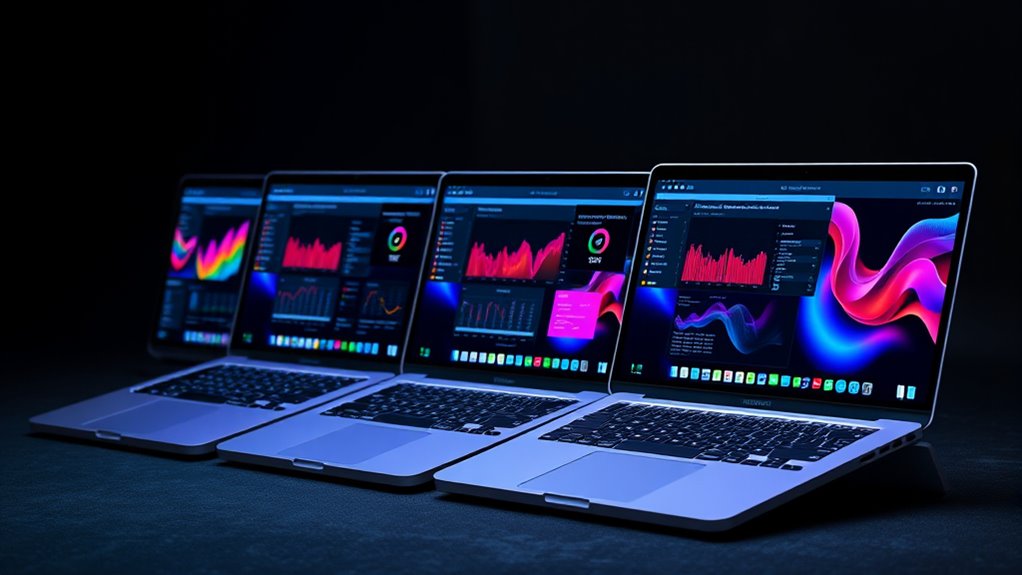

A 4TB MacBook Pro is for someone who wants a large internal workspace for active projects, not just a machine for everyday browsing. My strongest matches are the 16.2-inch M5 Max configurations for graphics-heavy work, the 14.2-inch M5 Max for high performance in a more portable body, and the 14.2-inch M5 Pro with 2TB for buyers who value internal capacity but do not need 4TB. The central tradeoff is straightforward: only three laptops here actually include 4TB, and all three pair it with M5 Max and 128GB of memory. The other two cost you less storage headroom in exchange for M5 Pro configurations and different screen or portability priorities.

Get furniture and decor delivered free with Prime
- Fast, free delivery on millions of items
- Prime Video, Amazon Music and more included
- Member-only deals all year
I rank the 4TB models ahead because they directly meet the search for a 4TB MacBook Pro. Among them, screen size, chassis portability, and configuration details distinguish the picks more than processor or memory. I also include two useful alternatives, but I would not mistake their 1TB and 2TB drives for 4TB options. My guide calls out that gap plainly so you can choose between buying the capacity you asked for and accepting a smaller internal drive.
Complete the kit


Key Takeaways
- The 14.2-inch M5 Max with 128GB memory and 4TB SSD is my pick for maximum capability in the more portable size; it shares the core chip and storage configuration with the 16-inch contenders.
- Both 16.2-inch M5 Max models combine 128GB memory and 4TB storage, so screen size, available configuration details, and delivery expectations matter more than the headline processing specs.
- The 14.2-inch M5 Pro with 2TB SSD is the closest storage alternative, but it has half the internal capacity of the requested 4TB models and a lower-tier chip configuration.
- The 16.2-inch M5 Pro has a 48GB memory configuration and only 1TB storage; it makes sense for a large-screen workflow that can rely on external storage, not for a strict 4TB requirement.
- All five use integrated, fixed storage configurations in the supplied details, so I would choose the capacity needed for active work at purchase rather than plan on upgrading the internal SSD later.
| Apple MacBook Pro with M5 Max, 14.2-inch Display, 128GB Memory, 4TB SSD, Space Black |  | Best Overall 4TB MacBook Pro | VIEW ON AMAZON | See Our Full Breakdown |
| Apple MacBook Pro 16.2-inch with M5 Max, 18-Core CPU, 40-Core GPU, 128GB Memory, 4TB SSD, Space Black |  | Best for a Large Built-In Workspace | VIEW ON AMAZON | See Our Full Breakdown |
| Apple 16-inch MacBook Pro with M5 Max chip, 18-core CPU, 40-core GPU, 128 GB memory, 4 TB SSD, Space Black, 140 W |  | Best for a Specified Power-Adapter Bundle | VIEW ON AMAZON | See Our Full Breakdown |
| Apple 2026 MacBook Pro Laptop with M5 Pro Chip, 14.2-inch Liquid Retina XDR Display, 24GB RAM, 2TB SSD, Space Black |  | Best 2TB Alternative for a Compact Setup | VIEW ON AMAZON | See Our Full Breakdown |
| Apple 2026 MacBook Pro Laptop with M5 Pro Chip, 16.2-inch Liquid Retina XDR Display, 48GB RAM, 1TB SSD, Wi-Fi 7, Space Black | 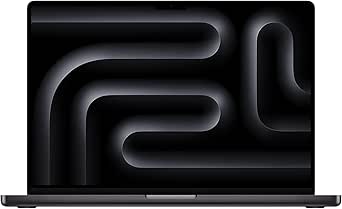 | Best for a Large Screen and More Memory on M5 Pro | VIEW ON AMAZON | See Our Full Breakdown |
More Details on Our Top Picks
Apple MacBook Pro with M5 Max, 14.2-inch Display, 128GB Memory, 4TB SSD, Space Black
This is my best overall choice because it delivers the core promise directly: 4TB of internal storage, 128GB of unified memory, and the M5 Max in a 14.2-inch MacBook Pro. Its 18-core CPU and 40-core GPU are aimed at demanding creative, graphics, and AI workloads, while the smaller display size makes the laptop easier to fit into a mobile work setup than either 16.2-inch alternative. The Liquid Retina XDR display still gives creative work a high-contrast screen rather than asking you to accept a basic panel for portability.
Compared with the two 16.2-inch M5 Max models below, its defining advantage is size, not a different performance tier: the listed chip, memory, and storage match. It also includes Thunderbolt 5, HDMI, SDXC, MagSafe 3, Wi-Fi 7, and Bluetooth 6, which help reduce reliance on adapters and support a varied desktop setup. The tradeoff is that sustained work on a 14-inch screen may feel cramped beside the larger models, and 128GB memory and 4TB storage are fixed configuration choices in the supplied information. I would choose it for capability in a more manageable footprint, not for the biggest built-in workspace.
Pros:- 4TB SSD provides substantial room for active projects and large working files.
- M5 Max, 128GB memory, and a 40-core GPU target demanding professional workloads.
- 14.2-inch format is more compact than the two 16.2-inch 4TB alternatives.
- Thunderbolt 5, HDMI, SDXC, and MagSafe 3 support a flexible desk and travel setup.
Cons:- The 14.2-inch display provides less workspace than the 16.2-inch M5 Max options.
- Memory and storage are not presented as user-upgradable, so the configuration needs to fit from the outset.
- The high-end specification is excessive for routine browsing and office work.
Best for: Creative professionals, developers, and AI users who need 4TB internal storage and high memory but prefer a more portable 14.2-inch laptop.
Not ideal for: Buyers who want the largest built-in canvas, need an inexpensive general-use Mac, or expect to upgrade memory or storage later.
Our verdict“I would choose this 14.2-inch M5 Max when 4TB capacity and professional performance matter more than a 16-inch workspace.”
Apple MacBook Pro 16.2-inch with M5 Max, 18-Core CPU, 40-Core GPU, 128GB Memory, 4TB SSD, Space Black
If I were choosing a 4TB model for work that benefits from a generous laptop screen, this 16.2-inch M5 Max would be my large-display pick. It keeps the same headline configuration as the 14.2-inch option—18-core CPU, 40-core GPU, 128GB unified memory, and 4TB SSD—but gives that hardware more display area. The listed peak brightness of up to 1600 nits, Liquid Retina XDR panel, and six-speaker system make the larger chassis a more self-contained workstation for reviewing media or working away from an external monitor.
Compared with the 14.2-inch M5 Max, the clear gain is screen real estate; the tradeoff is a larger laptop to carry. The listing also specifies a 12MP Center Stage camera and support for up to four external displays, details that may matter to people building a multi-screen setup. The other 16.2-inch M5 Max entry has a similar core configuration, so I would not assume this one is faster based on the available specifications. Its drawback is practical: buyers who travel frequently or work in tight spaces may prefer the smaller model, while buyers who do not need the extra display area should avoid carrying the larger form factor simply to get the same 4TB and chip.
Pros:- Pairs a 16.2-inch XDR display with 4TB storage and 128GB unified memory.
- M5 Max configuration matches the 14.2-inch lead option on listed CPU and GPU cores.
- Up to 1600 nits peak brightness and six speakers suit media-focused work.
- Includes a 12MP Center Stage camera and support for up to four external displays.
Cons:- Larger size is less convenient to carry than the 14.2-inch 4TB model.
- The provided core specifications do not show a performance advantage over the other M5 Max picks.
- Its high memory and storage configuration may be more than many buyers need.
Best for: Video editors, 3D artists, and other professionals who want a 4TB internal drive, high memory, and a roomy built-in display.
Not ideal for: Frequent travelers prioritizing a smaller laptop, or anyone whose work is better served by a lighter, less demanding configuration.
Our verdict“I recommend this 16.2-inch M5 Max for buyers who want the 4TB configuration and prefer working directly on a large laptop display.”
Apple 16-inch MacBook Pro with M5 Max chip, 18-core CPU, 40-core GPU, 128 GB memory, 4 TB SSD, Space Black, 140 W
This is another direct 4TB contender: it lists a 16.2-inch Liquid Retina XDR display, M5 Max with an 18-core CPU and 40-core GPU, 128GB unified memory, and a 4TB SSD. Its distinguishing detail is the included 140W USB-C power adapter, making the configuration description more explicit about the supplied power hardware than the other 16.2-inch listing. It also states all-day battery life, though that claim does not provide a workload-specific runtime figure.
Against the B0GV1GFZFQ model, the main listed computing and display specifications are nearly identical. I would treat these as close alternatives rather than claim one is faster or has a better screen. The other listing provides extra specifics about its camera, speaker system, ports, and external display support; this one explicitly identifies its adapter and macOS. The listing flags its configuration as custom order and warns that fulfillment may take longer, so I would favor it only if the exact configuration and adapter detail suit my needs and I can accommodate potential wait time. Buyers seeking a smaller 4TB machine should move to the 14.2-inch option instead.
Pros:- Includes the requested 4TB SSD and 128GB unified memory.
- M5 Max combines an 18-core CPU and 40-core GPU for demanding workloads.
- 16.2-inch XDR display offers more laptop workspace than the 14.2-inch 4TB pick.
- Listing specifies a 140W USB-C power adapter and macOS.
Cons:- Custom-order status may mean a longer delivery wait.
- The supplied specifications show little separation from the other 16.2-inch M5 Max option.
- The larger chassis is less convenient for buyers focused on portability.
Best for: A professional who wants a 16.2-inch 4TB M5 Max configuration and values having the 140W adapter stated in the listing.
Not ideal for: Buyers who need quick delivery, want a compact computer, or expect a clear hardware advantage over the other 16.2-inch M5 Max configuration.
Our verdict“I would select this 16.2-inch M5 Max when its listed 140W adapter detail fits my setup and a possible custom-order wait is acceptable.”
Apple 2026 MacBook Pro Laptop with M5 Pro Chip, 14.2-inch Liquid Retina XDR Display, 24GB RAM, 2TB SSD, Space Black
This is the closest alternative for someone who wants a more compact MacBook Pro and plenty of internal storage but does not need the full 4TB. It has a 2TB SSD, 24GB unified memory, and an M5 Pro with a 15-core CPU and 16-core GPU, all in a 14.2-inch chassis. That gives it a distinct role: it is not a 4TB substitute, but it may suit projects that fit comfortably in half that capacity and benefit more from a smaller machine than from the M5 Max tier.
Compared with the 14.2-inch M5 Max pick, this M5 Pro has half the storage and substantially different listed memory and GPU configurations, so buyers should not assume it offers equivalent headroom for the heaviest graphics or AI workflows. Compared with the 16.2-inch M5 Pro, it doubles the SSD capacity while keeping the smaller screen size. Its ports include Thunderbolt 5, MagSafe 3, SDXC, HDMI, and a headphone jack, plus a 12MP Center Stage camera and six-speaker audio. I would choose it for mobility and a still-capacious 2TB drive; I would skip it if 4TB is a firm requirement or if the work depends on the highest listed GPU and memory configuration.
Pros:- 2TB SSD offers twice the storage of the 16.2-inch M5 Pro alternative.
- 14.2-inch size suits buyers who value a more compact laptop.
- M5 Pro and 24GB unified memory support demanding professional tasks.
- Includes Thunderbolt 5, HDMI, SDXC, MagSafe 3, and a Center Stage camera.
Cons:- It does not meet the 4TB capacity requested by this roundup.
- Its 24GB memory and 16-core GPU configuration sit below the listed M5 Max models.
- A 2TB drive may still require external storage for extensive active projects.
Best for: Mobile professionals who prefer a 14.2-inch MacBook Pro, can work within 2TB, and do not require the M5 Max configurations.
Not ideal for: Anyone with a strict 4TB requirement, very large local media libraries, or workloads that call for the 128GB M5 Max configurations.
Our verdict“I recommend this compact M5 Pro only when 2TB is sufficient and portability matters more than meeting the full 4TB brief.”
Apple 2026 MacBook Pro Laptop with M5 Pro Chip, 16.2-inch Liquid Retina XDR Display, 48GB RAM, 1TB SSD, Wi-Fi 7, Space Black
This 16.2-inch M5 Pro is the large-screen alternative for buyers who prioritize display area and 48GB of unified memory over internal storage capacity. Its 1TB SSD is the smallest drive in this roundup, so it is the least suitable choice for someone searching specifically for a 4TB laptop. Its role is still clear: a large XDR display, M5 Pro processing, and more listed memory than the 14.2-inch M5 Pro make it a possible fit for demanding work when active files can live on external or network storage.
Compared with the 14.2-inch M5 Pro, this model offers twice the listed memory, but half the SSD capacity. Set beside the three 4TB M5 Max laptops, it gives up both internal room and the higher listed chip configuration; in return, it keeps a 16.2-inch screen without stepping up to those 4TB specifications. Its ports include Thunderbolt 5, MagSafe 3, SDXC, HDMI, and a headphone jack, with Wi-Fi 7 and Bluetooth 6. The supplied description gives no specific battery duration, so I would not use the all-day claim from other models as a direct runtime comparison. Choose it for a large display and 48GB memory, not as a 4TB purchase.
Pros:- 16.2-inch Liquid Retina XDR display offers a generous work area.
- 48GB unified memory exceeds the 24GB configuration of the 14.2-inch M5 Pro.
- M5 Pro includes an 18-core CPU and 20-core GPU.
- Thunderbolt 5, HDMI, SDXC, and MagSafe 3 provide broad connection options.
Cons:- 1TB SSD is the smallest capacity in this lineup and far below the 4TB target.
- M5 Pro configuration does not match the listed M5 Max CPU and GPU setup.
- The larger screen and chassis are not the compact choice.
Best for: Professionals who want a 16.2-inch XDR screen and 48GB unified memory, and can keep most files off the internal drive.
Not ideal for: Buyers who need 4TB built in, maintain large local project libraries, or want the highest listed GPU and memory configuration.
Our verdict“I would pick this M5 Pro for its large display and 48GB memory only if 1TB internal storage is enough for my workflow.”

How We Picked
I ranked these options by how closely they answer the specific request for a 4TB MacBook Pro. A laptop with a 4TB internal SSD earns a stronger placement than one with a smaller drive, even if the smaller-drive option might suit a different buyer. That is why the three 4TB M5 Max configurations lead and the M5 Pro models follow as alternatives rather than direct matches.
Within the 4TB group, I focused on distinctions buyers can act on: 14.2-inch versus 16.2-inch display size, whether a configuration description adds useful detail, and any stated tradeoff around ordering. All three list an M5 Max with an 18-core CPU, 40-core GPU, 128GB unified memory, and 4TB SSD, so I do not pretend that their supplied core specifications establish a major performance gap. A larger panel can improve workspace, while the 14-inch model is the more compact choice.
I also included two M5 Pro laptops because a roundup is more helpful when it explains what buyers give up if they decide 4TB is unnecessary or unavailable. Their 2TB and 1TB drives make them storage compromises, not 4TB equivalents. I assessed the provided display, memory, ports, chip, and battery claims, while avoiding unsupported real-world speed or runtime comparisons. Each pick has a distinct role, and each review names a buyer who should skip it.
Factors to Consider When Choosing 4tb Macbook Pro Laptops
Choosing among these laptops starts with deciding whether 4TB is a requirement or a preference. That one decision separates the three M5 Max models from the two M5 Pro alternatives. Then I would choose screen size and consider whether the machine will spend most of its time on a desk or travel with me.
Start with the storage requirement
If large active projects need to stay on the laptop, the three 4TB M5 Max configurations are the only direct matches here. A 4TB SSD can keep more source media, project files, and working data close at hand, reducing the need to shuffle files to external drives. The 2TB M5 Pro may be enough for a smaller collection, while the 1TB model is a clear compromise. I would not buy either M5 Pro expecting its internal capacity to equal a 4TB configuration.
Think about what must be available offline and what can live on external or network storage. If external drives fit your routine, a smaller internal SSD may be workable. If your laptop needs to contain several active projects at once, capacity should carry more weight than a minor convenience or a larger screen.
Choose M5 Max for the listed high-end configuration
Every 4TB laptop in this group pairs the SSD with an M5 Max, 128GB unified memory, and 40-core GPU. That makes these the natural candidates for users whose work makes use of substantial memory and graphics capacity. The two M5 Pro alternatives list less memory, smaller SSDs, and lower GPU core counts, so they belong in the comparison only if their storage limits fit your needs.
I would avoid treating chip names alone as a promise of a specific speedup for a particular app. Check that your own software benefits from the extra GPU or memory headroom. For everyday tasks, the 4TB M5 Max configuration may be more machine than necessary; for demanding professional work, its generous memory and storage can reduce the need to compromise between active projects.
Decide between 14.2 and 16.2 inches
The 14.2-inch M5 Max stands out for people who need 4TB capacity but want the more compact format. The 16.2-inch models provide more built-in workspace and may be easier to use away from a separate monitor. That display difference is the most meaningful distinction among the 4TB picks because their listed CPU, GPU, memory, and SSD capacities are otherwise closely aligned.
A larger screen makes the laptop less convenient to carry and use in tight spaces. A smaller display can make timelines, code, and large documents feel more confined. I would choose around my normal working setup: travel and flexible work favor the 14.2-inch option, while a laptop-centered workstation favors 16.2 inches.
Check ports, external displays, and desk use
The listed 4TB configurations include Thunderbolt 5, MagSafe 3, SDXC, HDMI, and a headphone jack, providing useful options for storage, cameras, external monitors, charging, and audio. The B0GV1GFZFQ listing specifically states support for up to four external displays and describes a 12MP Center Stage camera and six speakers. The B0GSXC4TZ9 listing explicitly names a 140W USB-C adapter. These are details that may help match a laptop to a workstation, but they do not establish a core performance difference.
Before choosing, map your actual accessories: how many displays, whether a card reader matters, and whether your current drives use USB-C or Thunderbolt. Port variety is useful, but it cannot replace checking the exact connection needs of a studio or office.
Buy the configuration you can live with
The supplied product details do not present internal memory or storage as user-upgradable. I would select enough capacity for the expected ownership period, rather than count on expanding the internal SSD later. The custom-order note on B0GSXC4TZ9 also makes delivery timing a point to check if the laptop is needed for a scheduled project.
Battery descriptions use broad all-day language rather than a shared test result, so I would not rank these models by an exact runtime that is not provided. For buyers who work unplugged, screen size, workload, and the need to connect accessories all affect practical use. Match the laptop to the work pattern instead of treating a general battery claim as a guarantee.
Frequently Asked Questions
Which laptop in this roundup actually has 4TB of internal storage?
The three M5 Max models have 4TB SSDs: the 14.2-inch B0H6CMPFJJ and the 16.2-inch B0GV1GFZFQ and B0GSXC4TZ9. The M5 Pro alternatives have 2TB and 1TB respectively, so neither meets a strict 4TB requirement. I would start with the three matching configurations, then choose based on screen size and the details that suit your setup.
Is the 14.2-inch M5 Max less powerful than the 16.2-inch M5 Max options?
The specifications provided list the same M5 Max chip with an 18-core CPU and 40-core GPU, plus 128GB memory and a 4TB SSD, for the 14.2-inch and 16.2-inch models. The clearest stated difference is display size, not processor configuration. I would choose the 14.2-inch version for a more compact laptop and a 16.2-inch model for a larger built-in workspace.
Can I choose an M5 Pro model if I need 4TB?
Not among these five configurations: the listed M5 Pro models have 2TB and 1TB SSDs. They can make sense if your files fit on a smaller internal drive or you are comfortable using external storage, but neither should be treated as a 4TB option. For a firm 4TB requirement, I would choose one of the M5 Max models in this roundup.
Should I choose a 14.2-inch or 16.2-inch MacBook Pro?
I would choose 14.2 inches if carrying the laptop and using it in smaller spaces matter more than having a large built-in work area. The 16.2-inch display is better suited to workflows where I want more room for timelines, documents, or multiple windows without relying on an external monitor. In this selection, the 4TB M5 Max specifications are closely matched, so the screen and laptop size are the practical deciding factors.
Is a 4TB MacBook Pro worth choosing over a smaller SSD?
A 4TB configuration makes sense when large active files need to stay on the laptop, such as extensive project libraries or media files. If most data can live on external drives or network storage, the 2TB or 1TB M5 Pro options may be sufficient, though they do not satisfy the 4TB specification. I would base the decision on how much work needs to be available locally, not on storage capacity alone.
Conclusion
For the closest match to the search, I recommend the 14.2-inch M5 Max with 4TB to buyers who want high-end specifications in the more compact size. Choose the 16.2-inch M5 Max if a generous laptop display matters most; compare the two listings on their stated details and delivery expectations rather than assuming a performance difference. The 2TB 14.2-inch M5 Pro fits mobile professionals willing to compromise on capacity, while the 1TB 16.2-inch M5 Pro suits buyers who prioritize its large screen and 48GB memory and can keep files elsewhere. If 4TB is non-negotiable, stay with the three M5 Max options.
Halloween Picks
halloween
As an affiliate, we earn on qualifying purchases.