
Choosing a neutral kitchen paint is less about finding a beige that looks good on a swatch and more about matching its undertone and sheen to your cabinets, counters, light, and cleaning routine. I rank Natural Beige as the most versatile starting point, Beach Beige as the lower-sheen-leaning pick for a softer look, and Coconut Cream as the warmest, palest option for kitchens that need a light, creamy wall color. All three are EVOLVE acrylic-latex paints and primers with stated coverage of 300–400 square feet per gallon, but their color character and finish descriptions give each a different role.

Get furniture and decor delivered free with Prime
- Fast, free delivery on millions of items
- Prime Video, Amazon Music and more included
- Member-only deals all year
The central tradeoff is warmth versus flexibility. A beige with more depth can help a large or cool-toned kitchen feel inviting, while a cream can brighten a room but look distinctly warm beside white cabinets or cool stone. I also weigh practical claims such as stain resistance and suitability for humid rooms against the supplied caveats about coverage variation and touch-ups. These picks are best read as a color-and-fit comparison, not a guarantee that one coat will cover every surface or that every neutral will match every kitchen.
Complete the kit


Key Takeaways
- Natural Beige is my most balanced starting point: its #d9c6af color code suggests a deeper beige than Coconut Cream, and its eggshell finish suits buyers who want a soft, cleanable-looking wall surface.
- Beach Beige has the lightest stated color code of the two beige options and a low-sheen editorial role, but its listing’s finish field says eggshell, so check the exact can specification before buying.
- Coconut Cream is the warm, light-neutral choice for kitchens where a creamy wall color is welcome; it is less suited to a room that needs a crisp or cool neutral.
- All three list coverage of 300–400 square feet per gallon, but porous, textured, patched, or strongly colored walls can change how much paint a project needs.
- The supplied descriptions claim stain, scuff, or water-spot resistance, yet high-traffic areas may still need touch-ups; prep and a sample test matter as much as the color name.
| Evolve Interior Paint & Primer, Eggshell (Natural Beige), 1 Gallon |  | Best Overall — a balanced beige for everyday kitchen walls | Brand: EVOLVE | Paint type: Acrylic latex | Color: Natural Beige | VIEW LATEST PRICE | See Our Full Breakdown |
| Evolve Paint & Primer: Environment-friendly, Low Sheen, 1-Gallon, Beach Beige |  | Best for a softer-looking beige — with a finish detail to verify | Brand: EVOLVE | Paint type: Acrylic latex | Color: Beach Beige | VIEW LATEST PRICE | See Our Full Breakdown |
| EVOLVE Interior Paint & Primer, Eggshell (Coconut Cream), 1 Gallon |  | Best Light Neutral — a creamy choice for brighter, warmer kitchens | Brand: EVOLVE | Paint type: Acrylic latex | Color: Coconut Cream | VIEW LATEST PRICE | See Our Full Breakdown |
| kitchen neutral paint | Brand | Paint type | Color | Color code |
|---|---|---|---|---|
| Evolve Interior Paint & Primer | EVOLVE | Acrylic latex | Natural Beige | #d9c6af |
| Evolve Paint & Primer: Environ | EVOLVE | Acrylic latex | Beach Beige | #E1D3C2 |
| EVOLVE Interior Paint & Primer | EVOLVE | Acrylic latex | Coconut Cream | #ece4d8 |
More Details on Our Top Picks
Evolve Interior Paint & Primer, Eggshell (Natural Beige), 1 Gallon
Natural Beige is my best overall pick because it gives a kitchen a recognizable beige warmth without leaning as far toward cream as Coconut Cream. Its listed color code, #d9c6af, provides a useful reference point, though screens and room lighting can shift how a paint color appears. If you have wood accents, warmer counters, or a kitchen that feels stark, this shade is the most straightforward starting point in the group.
The eggshell finish is a practical middle ground for a kitchen: it is softer-looking than a pronounced gloss while being a more plausible choice for routine wiping than a very flat wall finish. EVOLVE describes this formula as stain- and scrub-resistant and suitable for humid spaces, and the product can be used on walls, doors, and trim. Those claims give it more flexibility than a wall-only color choice, though painting trim and walls with the same eggshell sheen may not suit buyers who want distinct finishes.
Compared with Beach Beige, Natural Beige is the clearer pick if you want an explicitly documented interior eggshell product rather than a low-sheen title paired with an eggshell specification. Compared with Coconut Cream, it offers more visible beige depth and is less likely to read as a creamy off-white. The tradeoff is that it may feel too warm or substantial in a compact kitchen with cool gray counters, and the supplied description notes that high-traffic areas can still challenge durability. I would sample it beside cabinets and counters before committing, and I would not assume the one-coat claim applies to every wall.
Pros:- The #d9c6af color code gives it more beige depth than the listed Coconut Cream shade.
- Eggshell finish offers a soft appearance while fitting a kitchen where occasional cleaning is expected.
- Described as stain- and scrub-resistant and suitable for moisture-prone rooms.
- Listed for walls, doors, and trim, giving it broader interior use than a wall-only recommendation.
Cons:- Eggshell is the only stated finish, so it will not suit buyers who want a flatter or glossier look.
- Coverage can vary with wall condition, and the one-coat claim should not be treated as guaranteed.
- The supplied caveat about durability in high-traffic areas makes touch-ups a possibility.
Best for: Homeowners who want a versatile, warm beige for kitchen walls and value an explicitly stated eggshell finish with claimed stain and scrub resistance.
Not ideal for: Buyers seeking a crisp white, a cool gray-beige, a flat finish, or a color that disappears beside bright-white cabinets.
- Brand:EVOLVE
- Paint type:Acrylic latex
- Color:Natural Beige
- Color code:#d9c6af
- Finish:Eggshell
- Coverage:300–400 sq ft per gallon
- Volume:128 fl oz
- Intended use:Interior; listed for walls, doors, and trim
Our verdict“I would choose Natural Beige first for a warm, adaptable kitchen neutral, provided its beige undertone works beside the room’s fixed finishes.”
Evolve Paint & Primer: Environment-friendly, Low Sheen, 1-Gallon, Beach Beige
Beach Beige is the pick for a quieter beige look if you want warmth without choosing the deepest color in this trio. Its stated color code, #E1D3C2, is lighter than Natural Beige’s #d9c6af, giving buyers a reason to compare it when a stronger beige might weigh down a small or dim kitchen. The color code is a guide rather than a reliable preview, so a sample beside the countertop and cabinet fronts is still the best way to judge it.
This paint’s main point of distinction is its presentation as an environment-friendly, low-sheen formula. The description emphasizes low VOCs, stain and scuff resistance, water-spot resistance, and use on interior and exterior surfaces. That broad stated use can appeal to someone painting more than the kitchen, while the low-sheen positioning may suit a buyer who prefers a less reflective wall. However, there is a specification mismatch: the title says low sheen, but the supplied finish field says eggshell. I would confirm the actual finish on the product listing or can before treating it as flatter than Natural Beige or Coconut Cream.
Compared with Natural Beige, Beach Beige is the lighter-looking beige option on paper and has broader interior-and-exterior wording, but Natural Beige has the more consistent finish information and explicitly names walls, doors, and trim. Compared with Coconut Cream, Beach Beige should read more like beige than cream, making it a better fit for shoppers who want warmth without a pale creamy cast. Its drawback is not just the finish ambiguity: coverage still depends on the surface, and the limited selection of sheens and colors may constrain a coordinated project. I would shortlist it for color first, then verify the exact sheen before ordering.
Pros:- Its #E1D3C2 code points to a lighter beige than Natural Beige’s listed #d9c6af.
- The description identifies low VOCs and a low-sheen positioning.
- Claimed resistance to stains, scuffs, and water spots suits a kitchen wall that needs routine care.
- Listed for interior and exterior surfaces, making it the broadest stated-use option in this group.
Cons:- The title says low sheen while the finish specification says eggshell, so the exact sheen is unclear.
- Coverage can change with texture and surface condition despite the stated range.
- The listed color and sheen selection may not meet buyers looking for a wider coordinated palette.
Best for: Buyers who want a lighter beige than Natural Beige, prefer a restrained sheen, and are willing to confirm the finish specification before purchase.
Not ideal for: Anyone who needs unambiguous finish details, wants a specific flat or satin sheen, or is choosing paint solely from an online color code.
- Brand:EVOLVE
- Paint type:Acrylic latex
- Color:Beach Beige
- Color code:#E1D3C2
- Finish:Listed as eggshell; title describes low sheen
- Coverage:300–400 sq ft per gallon
- Volume:128 fl oz
- Intended use:Interior and exterior surfaces
Our verdict“I would pick Beach Beige for a lighter, restrained beige only after confirming whether the can’s actual finish is low sheen or eggshell.”
EVOLVE Interior Paint & Primer, Eggshell (Coconut Cream), 1 Gallon
Coconut Cream is my light-neutral pick for kitchens where a pale, warm wall color is more useful than a classic beige. Its #ece4d8 code is the lightest-looking of the three listed colors, so it may help a room feel more open when paired with compatible cabinets and counters. The name and code both point toward a creamy character, though the final appearance will depend on daylight, artificial lighting, and nearby surfaces.
The formula is an interior acrylic-latex paint and primer with an eggshell finish, stated coverage of 300–400 square feet per gallon, and claimed resistance to stains, scuffs, and water spots. Its low-VOC, low-odor description may be appealing for a lived-in home where indoor painting disruption matters. Like the other two, it is presented as suitable for moisture-prone areas, but that does not remove the need for sound preparation or make it a fix for dampness. I would treat one-coat coverage as a possibility rather than a promise, especially when covering a darker wall.
Compared with Natural Beige, Coconut Cream is substantially paler by its color code and less useful when you want walls to provide clear beige contrast. Compared with Beach Beige, it reads as the more explicitly creamy option, while Beach Beige retains a stronger beige identity. That distinction is helpful if you already know whether the kitchen should feel creamy or sandy; it is less helpful if you need a neutral that will stay visually quiet beside both warm and cool finishes. The supplied caveat about touch-ups in high-traffic areas also keeps this from being my overall winner. I would choose it when lightness and warmth are the goal, not when maximum color flexibility is the priority.
Pros:- The #ece4d8 code marks it as the lightest-looking listed color in this comparison.
- Eggshell finish gives the pale shade a soft rather than highly reflective appearance.
- The product description claims stain, scuff, and water-spot resistance for kitchen use.
- Low-VOC and low-odor claims may suit painting in an occupied home.
Cons:- Its creamy warmth may clash with cool gray stone or very crisp white finishes.
- The specific finish has limited color options, according to the supplied product information.
- High-traffic areas may need touch-ups, and one-coat coverage is not assured on every surface.
Best for: People who want a pale, warm kitchen neutral and whose cabinets, counters, and lighting can support a creamy undertone.
Not ideal for: Buyers seeking a cooler neutral, stronger beige definition, a guaranteed one-coat result, or a paint choice intended to hide frequent wall wear without touch-ups.
- Brand:EVOLVE
- Paint type:Acrylic latex
- Color:Coconut Cream
- Color code:#ece4d8
- Finish:Eggshell
- Coverage:300–400 sq ft per gallon
- Volume:128 fl oz
- Intended use:Interior surfaces; described as suitable for moisture-prone areas
Our verdict“I would choose Coconut Cream when a light, warm wall color is the priority and the kitchen’s fixed finishes do not call for a cooler neutral.”
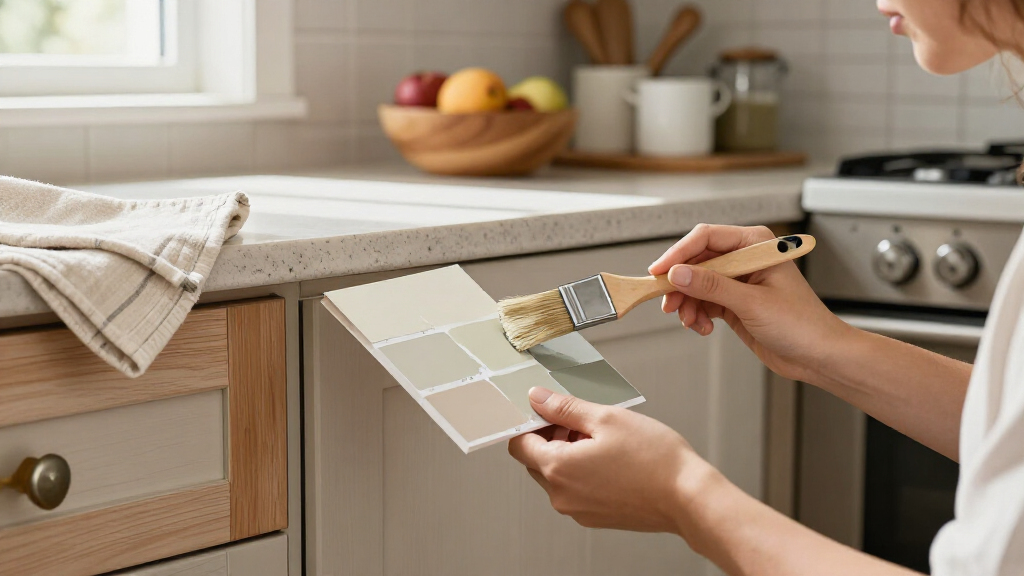
How We Picked
I compared these three options against the needs that make kitchen neutrals different from general-purpose wall colors: undertone, finish, cleanability, moisture suitability, and coverage clarity. Since the lineup contains three related EVOLVE paints rather than a broad range of manufacturers or paint technologies, I did not treat small wording differences as proof of a major performance gap. Instead, I used the stated specifications and descriptions to give each paint a distinct role based on the color code, finish information, and intended surfaces.
For ranking, I put the most versatile overall choice first, then separated the alternatives by the look they are likely to create. Natural Beige comes first because it combines a familiar mid-depth beige identity with an eggshell specification and an explicit description of use on walls, doors, and trim. Beach Beige earns a place for buyers who prefer a subtler-looking neutral, though I call out a listing inconsistency: its title says low sheen while its finish field says eggshell. Coconut Cream is an appealing light, warm option, but its narrower color character makes it more dependent on the kitchen’s existing finishes.
I also considered what the supplied evidence does not establish. The products list coverage ranges and one-coat coverage claims, but actual coverage depends on surface condition, color changes, and application. They are described as suitable for kitchens or high-humidity areas, yet that does not make them a substitute for correcting leaks, using suitable surface preparation, or following the manufacturer’s application and cure directions. My recommendations are therefore about choosing among these particular neutral colors, with practical cautions included rather than assumed away.
| kitchen neutral paint | Color | Color code | Finish | Intended use |
|---|---|---|---|---|
| Evolve Interior Paint & Primer | Natural Beige | #d9c6af | Eggshell | Interior; listed for walls, doors, and trim |
| Evolve Paint & Primer: Environ | Beach Beige | #E1D3C2 | Listed as eggshell; title describes low sheen | Interior and exterior surfaces |
| EVOLVE Interior Paint & Primer | Coconut Cream | #ece4d8 | Eggshell | Interior surfaces; described as suitable for moisture-prone areas |
Factors to Consider When Choosing Best Kitchen Neutral Paints
I would choose among these paints by deciding what kind of neutral the kitchen needs first, then checking finish and performance details against the room’s actual conditions. Their shared acrylic-latex, paint-and-primer format and similar coverage range make undertone and application expectations the most useful points of separation.Match the undertone to fixed kitchen finishes
Cabinets, counters, flooring, and backsplash are difficult or costly to change, so I start with those rather than with a paint name. Natural Beige is the deeper listed beige, Beach Beige is lighter on its stated color code, and Coconut Cream is the palest, cream-leaning option. These distinctions matter because a warm wall can make a cool countertop look bluer, while a creamy wall beside bright-white cabinetry can appear more yellow by contrast.
Before choosing a gallon, I would view a sample near the countertop and cabinet in both daytime and evening light. A code such as #ece4d8 can help compare listed shades, but it cannot show how the paint will read under a particular bulb or next to a wood floor. If I wanted the most conventional beige starting point, I would sample Natural Beige first; if the room needs a lighter wall, I would put Beach Beige and Coconut Cream side by side rather than assuming their names describe the difference precisely.
Choose sheen with the wall and cleaning routine in mind
Sheen affects how reflective a wall looks and how visible small surface flaws may be. An eggshell finish is the clear specification for Natural Beige and Coconut Cream, offering a soft appearance rather than a glossy one. Beach Beige is more complicated: its title calls it low sheen, but the supplied finish field says eggshell. I would verify the current product detail or container label before buying if sheen is a deciding factor.
Kitchen walls can collect cooking residue and fingerprints, so buyers often favor a finish that tolerates cleaning. The descriptions claim resistance to stains, scrubbing, scuffs, or water spots, but they do not provide a test method or guarantee that every mark will wipe away. If your walls are heavily used, smooth and sound preparation plus following care directions matter. I would also remember that a more reflective finish can reveal uneven patches, while a softer finish can be less forgiving when frequent scrubbing is needed.
Read coverage and one-coat claims as estimates
Each listing states 300–400 square feet per gallon, and the product descriptions promote one-coat coverage. That range is useful for an initial project estimate, not a promise that one gallon or one coat will finish every kitchen. Textured drywall, unsealed patches, a strong color change, and the application method can all affect how much paint a wall takes.
I would measure the paintable wall area and allow room for a second coat where the existing color is dark or the surface is uneven. Check the label for application instructions and drying times, then keep enough paint from the same batch for touch-ups when possible. This is especially relevant for Coconut Cream over a saturated wall and for any option going onto a porous or recently repaired surface. The shared coverage figures do not provide a clear reason to rank one paint above the others on quantity alone.
Treat kitchen moisture claims as one part of the plan
All three products are described as suitable for humid or moisture-prone spaces, and the listings mention forms of water or stain resistance. That makes them plausible candidates for ordinary kitchen walls, where cooking can add humidity and occasional splashes. It does not mean the paint can prevent water damage, handle persistent leaks, or replace ventilation.
Before painting, I would make sure the surface is clean, dry, and stable, and address any source of persistent moisture. Follow the product label for preparation, coats, and cure time before washing the finish. Natural Beige has the clearest supplied description for kitchens and bathrooms, while the other two also carry kitchen-suitability claims. I would not interpret those claims as proof that one formula is more water-resistant than another without a specific comparative test.
Resolve listing details before placing an order
The Beach Beige entry is the one I would double-check most carefully: the title says low sheen, but the finish field says eggshell. That inconsistency can affect the look and practical feel of a kitchen wall. Confirm the exact product variant, finish, and color on the current listing or can rather than relying on a shortened title alone.
For every option, check that the color and volume match what you intend to buy. A paint color shown on a screen may not reproduce the shade accurately, and product descriptions can change. I would save the identifying details—color name, code, and finish—alongside the sample decision, especially if I need more paint later. When coordinating walls and trim, remember that these listings do not establish that a single eggshell finish will provide the contrast or durability you want for every surface.
Pick based on the kitchen you actually have
For a broadly useful warm beige, I would start with Natural Beige. For a lighter beige that is not explicitly presented as cream, I would compare Beach Beige with a physical sample and confirm the finish discrepancy. For the brightest and warmest wall effect in this lineup, I would sample Coconut Cream, especially in a kitchen that benefits from a pale color and has warm finishes.
None is a universal neutral. The best fit depends on undertones, light, wall condition, and how much cleaning the surface will face. If your kitchen is mainly cool white and gray, test before committing to any of these warm shades. If it contains timber, beige stone, or warm metal accents, the three colors may be easier to coordinate, with their relative depth helping determine whether the walls should blend in or stand apart.
Frequently Asked Questions
Which of these three paints is the best overall kitchen neutral?
I rank Natural Beige as the best overall because it offers a familiar beige tone, a clearly listed eggshell finish, and an explicit description for interior walls, doors, and trim. That makes it the most straightforward starting point for a buyer who wants warmth without going as pale and creamy as Coconut Cream. It still needs to be sampled beside cabinets and counters, since a warm beige can look different under cool lighting or next to gray stone.
Which option is lightest?
Coconut Cream has the lightest-looking listed color code, #ece4d8, compared with Beach Beige at #E1D3C2 and Natural Beige at #d9c6af. The code is only a reference and not a substitute for a sample in the room. Coconut Cream also has the strongest creamy identity, so it may not be the best match if you want a cool or nearly invisible wall neutral.
Is Beach Beige actually low sheen or eggshell?
The supplied product information conflicts: the title describes Beach Beige as low sheen, while its finish specification says eggshell. I would check the exact listing variant or the finish printed on the container before ordering if sheen affects your decision. Until that detail is confirmed, Natural Beige and Coconut Cream have clearer finish descriptions because both are explicitly listed as eggshell.
Can I expect one coat to cover my kitchen?
I would not plan a kitchen project around a guaranteed one-coat result. Each option lists coverage of 300–400 square feet per gallon and promotes one-coat coverage, but the product information also notes that coverage can vary. A textured wall, patched area, dark existing color, or major color change may require additional paint or coats, so measure carefully and follow the label’s application directions.
Are these paints suitable for kitchen humidity and cleaning?
The supplied descriptions identify these paints as suitable for kitchens or other moisture-prone areas and claim resistance to stains, scuffs, water spots, or scrubbing. Those claims make them reasonable candidates for ordinary kitchen walls, but they do not establish that paint can address persistent dampness or withstand every cleaning method. I would prepare a clean, dry surface, maintain suitable ventilation, and follow the product’s care and curing instructions.
Conclusion
My recommendation depends on the look you want more than on the shared coverage range. Choose Natural Beige if you want the most balanced, clearly specified eggshell beige for a warm kitchen. Choose Beach Beige if a lighter beige appeals and you are willing to confirm whether the actual finish is low sheen or eggshell. Choose Coconut Cream if your priority is a pale, creamy wall color that suits warm finishes and your kitchen benefits from a lighter visual effect.
For any of them, I would sample before buying a full gallon and judge the color beside the fixed surfaces in both natural and artificial light. That simple comparison is the best way to avoid a neutral that turns too yellow, too beige, or too cool once it covers the whole room.
Halloween Picks
halloween
As an affiliate, we earn on qualifying purchases.