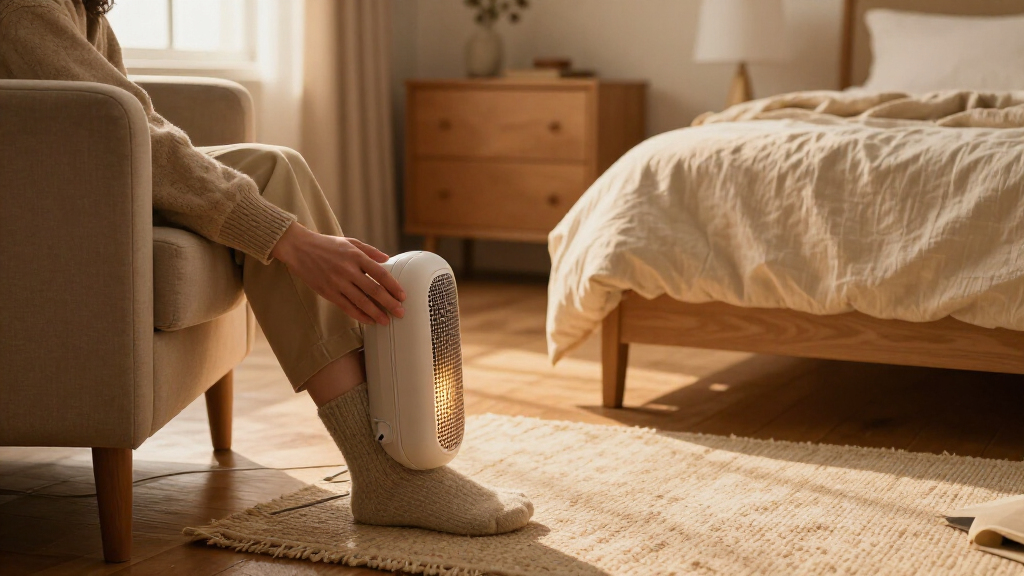

The best bedroom space heater is the one you forget is running — and for most sleepers, that means the DREO Quiet Space Heater, 1500W, with Remote, which pairs a genuinely quiet fan with an accurate thermostat and remote control for adjusting warmth without leaving the covers. Close behind are the DREO Atom One Portable Space Heater for smaller rooms and tighter budgets, and the Ballu Convection Heater with Digital Remote and Wi-Fi App for anyone who wants whole-night, set-and-forget heating. The main tradeoffs in this category come down to noise versus power, upfront cost versus energy efficiency, and whether a bulky tower or fireplace-style stove fits your floor space. Cheap ceramic boxes heat fast but cycle loudly; convection panels cost more and warm slowly, yet hold temperature steadily overnight. Keep reading for the full breakdown of all 15 models and which one fits your bedroom, budget, and sleep style.

Get furniture and decor delivered free with Prime
- Fast, free delivery on millions of items
- Prime Video, Amazon Music and more included
- Member-only deals all year
Complete the kit

Key Takeaways
- Quiet operation was the biggest differentiator in this lineup — the DREO Quiet and the MEPTY mica panel won for sleep because they avoid the loud fan whoosh and thermostat click that plague budget ceramic cubes like the Amazon Basics 1500W.
- Wi-Fi control (FLANUR, Ballu, SUNDATE) proved more useful in a bedroom than anywhere else in the house, letting you pre-warm the room from bed or schedule overnight setbacks — but only the Ballu pairs app control with convection heat that holds temperature evenly.
- Tower heaters (PELONIS 23-Inch, the 24-Inch Oscillating model) spread heat across wider rooms but need more clear floor space and tip over more easily than low-profile cubes — a real concern with kids or pets.
- The ROVSUN fireplace stove and WINNL oscillating heater serve niche roles: ambiance-first buyers and drafty corner bedrooms respectively, but neither is the efficient daily driver a typical sleeper needs.
- Five of fifteen models are DREO variants at different sizes and feature levels, so choosing within that brand comes down to room size and remote/app needs rather than raw heating performance.
| Amazon Basics Portable Ceramic Space Heater, 1500W, Black |  | Best Budget Pick | Heating type: Ceramic | Power settings: High (1500W), Low (900W), Fan Only | Weight: 3 lbs | VIEW LATEST PRICE | See Our Full Breakdown |
| DREO 1500W Ceramic Space Heater with Thermostat |  | Best Overall | Heating type: PTC ceramic | Power: 1000W or 1500W | Heating coverage: Up to 270 sq. ft. | VIEW LATEST PRICE | See Our Full Breakdown |
| 24-Inch Oscillating Ceramic Tower Space Heater with Remote |  | Best for Bedside Control | Form factor: Tower, 24 inches | Heating method: PTC ceramic | Power: 1500 watts | VIEW LATEST PRICE | See Our Full Breakdown |
| FLANUR 1500W Smart WiFi Ceramic Space Heater, Black |  | Best Smart Pick | Heating element: PTC ceramic | Power settings: High 1500W, Low 1000W, ECO, Fan Only | Temperature range: 41–95°F | VIEW LATEST PRICE | See Our Full Breakdown |
| ROVSUN Freestanding Electric Fireplace Stove Heater, 1400W |  | Best for Ambiance | Power: 1400W | Heat output: 4800 BTU | Heating coverage: 400 sq. ft. | VIEW LATEST PRICE | See Our Full Breakdown |
| DREO 16-Inch Ceramic Space Heater for Indoor Use |  | Best Overall | Heating power: 1500W | Heating technology: PTC ceramic | Height: 16 inches | VIEW LATEST PRICE | See Our Full Breakdown |
| Ballu Convection Heater with Digital Remote and Wi-Fi App |  | Best Smart Pick | Heating method: Convection, radiant | Heat output: 1500 watts | Primary heating coverage: 250 sq. ft. | VIEW LATEST PRICE | See Our Full Breakdown |
| DREO Atom One Portable Space Heater |  | Best Budget Pick | Power: Up to 1500W | Temperature range: 41°F to 95°F | Thermostat increments: 1°F | VIEW LATEST PRICE | See Our Full Breakdown |
| DREO Portable Electric Space Heater with Thermostat |  | Best for Nightstand Control | Heat output: 1500 watts | Heating method: Forced air, PTC ceramic | Heating coverage: 200 sq. ft. | VIEW LATEST PRICE | See Our Full Breakdown |
| MEPTY Mica Space Heater with Digital Thermostat and Safety Protection |  | Best for Large Bedrooms | Heating method: Mica convection | Heat output: 1500 watts | Coverage: Up to 400 sq. ft. | VIEW LATEST PRICE | See Our Full Breakdown |
| PELONIS 23-Inch Oscillating Ceramic Tower Space Heater, 1500W |  | Best for Medium Bedrooms | Brand: PELONIS | Type: Oscillating ceramic tower heater | Height: 23 inches | VIEW LATEST PRICE | See Our Full Breakdown |
| DREO Quiet Space Heater, 1500W, with Remote |  | Quietest Pick for Light Sleepers | Type: Ceramic tower space heater | Power: 1500 watts | Heating coverage: 200 sq. ft. | VIEW LATEST PRICE | See Our Full Breakdown |
| SUNDATE WiFi-Controlled Convection Space Heater, 1500W |  | Best for Smart Home Schedules | Heating type: Convection | Power settings: 750W and 1500W | Temperature range: 41°F to 99°F | VIEW LATEST PRICE | See Our Full Breakdown |
| Ceramic Space Heater with Thermostat and Remote Control |  | Best Value Flexibility | Heating technology: PTC ceramic | Power settings: 700W, 1000W, 1500W | Controls: Thermostat and remote control | VIEW LATEST PRICE | See Our Full Breakdown |
| WINHL Portable Electric Space Heater with 70° Oscillation |  | Best Budget Oscillating Pick | Heating technology: PTC ceramic | Heat output: 1500 watts | Maximum temperature: 95 °F | VIEW LATEST PRICE | See Our Full Breakdown |
| bedroom space heater | Safety features | Noise level |
|---|---|---|
| Amazon Basics Portable Ceramic | Overheat and tip-over protection | 43 dB |
| DREO 1500W Ceramic Space Heate | — | 34 dB |
| 24-Inch Oscillating Ceramic To | — | 32 dB |
| FLANUR 1500W Smart WiFi Cerami | Overheat, tip-over, dual fuse, child lock, 24-hour auto shutoff | — |
| ROVSUN Freestanding Electric F | — | — |
| DREO 16-Inch Ceramic Space Hea | Tip-over and overheat protection, 24-hour auto-off, V-0 flame-retardant materials | As low as 34 dB |
| Ballu Convection Heater with D | — | — |
| DREO Atom One Portable Space H | Tip-over and overheat protection; enhanced safety plug | As low as 37.5 dB |
| DREO Portable Electric Space H | — | 34 dB |
| MEPTY Mica Space Heater with D | Overheat protection, tip-over switch, V-0 flame-retardant housing | — |
| PELONIS 23-Inch Oscillating Ce | — | Less than 55 dB |
| DREO Quiet Space Heater | Child lock, tip-over and overheat protection, flame-retardant material, safety plug | As low as 34 dB |
| SUNDATE WiFi-Controlled Convec | Tip-over shutoff, overheat shutoff, child lock | — |
| Ceramic Space Heater with Ther | Tip-over and overheat protection | — |
| WINHL Portable Electric Space | Overheat protection and tip-over shut-off | — |
More Details on Our Top Picks
Amazon Basics Portable Ceramic Space Heater, 1500W, Black
For buyers who just want basic, dependable heat without frills, this is the entry point that makes the most sense. It delivers the same 1500W output as pricier picks like the DREO 1500W Ceramic Heater, but skips the oscillation, timer, and remote — so warm air only goes where it’s pointed. Compared with the FLANUR Smart WiFi Heater, there’s no app or scheduling, which means no pre-warming the bedroom from bed. What you get instead is simplicity: three settings, a workable thermostat, and genuine safety protections at a 3-lb weight that moves from dresser to nightstand in one hand. The tradeoff is directional heating and a fixed design, but for a small bedroom on a tight budget, that’s a fair exchange.
Pros:- Same 1500W heating power as more expensive models
- Extremely light at 3 lbs, easy to reposition nightly
- Overheat and tip-over protection included
- Fan-only mode doubles as a summer air circulator
Cons:- No oscillation, so heat is directional only
- Cannot be used in humid rooms like bathrooms
Best for: Budget-conscious shoppers heating a small bedroom who don’t need oscillation or smart features
Not ideal for: Larger or drafty bedrooms where heat needs to spread evenly — the non-oscillating design leaves cold spots
- Heating type:Ceramic
- Power settings:High (1500W), Low (900W), Fan Only
- Weight:3 lbs
- Noise level:43 dB
- Safety features:Overheat and tip-over protection
- Dimensions:7.5 × 6.3 × 9.5 in
Our verdict“A no-nonsense pick for anyone who wants affordable supplemental heat in a small bedroom and nothing more.”
DREO 1500W Ceramic Space Heater with Thermostat
This model earns the top spot because it balances every trait a bedroom heater needs without overreaching. At 34 dB, it’s quieter than the Amazon Basics heater (43 dB), and the 70° oscillation spreads warmth across the room instead of one corner. The 12-hour timer is the standout sleep feature: set it at bedtime and it shuts off on its own, something the cheaper Amazon Basics unit can’t do. With coverage up to 270 sq. ft., it handles larger bedrooms than the 24-inch tower heater’s 200 sq. ft. rating. The main constraint is placement — it must plug directly into a wall outlet, so bedrooms with inconveniently located sockets may need a furniture shuffle.
Pros:- Whisper-quiet at 34 dB, ideal for light sleepers
- 70° oscillation distributes heat evenly
- 12-hour timer for automatic overnight shutoff
- Heats rooms up to 270 sq. ft., more than most compact rivals
Cons:- Extension cords not recommended, limiting placement options
- No remote control — adjustments require reaching the unit
Best for: Sleepers in small-to-medium bedrooms who want quiet overnight operation with a set-and-forget timer
Not ideal for: Rooms where the only outlets sit behind furniture or require an extension cord
- Heating type:PTC ceramic
- Power:1000W or 1500W
- Heating coverage:Up to 270 sq. ft.
- Noise level:34 dB
- Oscillation:70°
- Timer:12 hours
- Certification:ETL-certified
Our verdict“The most complete package for a typical bedroom: quiet, oscillating, and timed, with only minor placement constraints.”
24-Inch Oscillating Ceramic Tower Space Heater with Remote
The remote-and-touchscreen combo is this tower’s whole reason for being: adjust temperature or set the 12-hour timer without leaving the covers, which neither the Amazon Basics nor the DREO 1500W offers. It’s also the quietest ceramic option here at 32 dB, edging out the DREO’s 34 dB. The tradeoff is coverage — at 200 sq. ft., it trails the DREO’s 270 sq. ft., so very large bedrooms will feel the difference. The elevated tower form spreads air from a higher point than boxy desktop models, which helps warmth reach a bed rather than your ankles. Small annoyances include a battery-less remote and conflicting cord-length specs, so plan outlet placement conservatively.
Pros:- Remote plus touchscreen control for bedside adjustments
- Quietest ceramic option at 32 dB
- 70° oscillation and ECO mode for efficient overnight use
- Flame-retardant materials and 24-hour auto shutoff
Cons:- Remote requires two AAA batteries that aren’t included
- Coverage limited to 200 sq. ft., less than comparable DREO models
- Cord length listed inconsistently (5 ft vs 6 ft)
Best for: People who want to adjust heat from bed without getting up, especially in medium bedrooms
Not ideal for: Buyers in rooms over 200 sq. ft. — the DREO 1500W covers more area for similar effort
- Form factor:Tower, 24 inches
- Heating method:PTC ceramic
- Power:1500 watts
- Coverage:200 sq. ft.
- Noise level:32 dB
- Controls:Touchscreen and remote
- Certification:ETL
Our verdict“Choose this if remote access from bed matters more to you than maximum room coverage.”
FLANUR 1500W Smart WiFi Ceramic Space Heater, Black
This is the choice for anyone building a connected bedroom: schedule the heater to warm the room before your alarm, or start it from your phone without leaving the bed, using Alexa or Google Assistant. The thermostat range of 41–95°F is the widest in this lineup, giving finer control than the tower heater’s fixed 76–84°F band. Compared with the 24-inch tower’s remote, app control works from anywhere and adds scheduling the remote can’t match. The tradeoff is the tech itself — it needs a 2.4GHz WiFi network, and there’s no physical remote as a fallback, so guests or anyone without the app is stuck using the onboard controls. A child lock and dual fuse protection make it a defensible pick for kids’ rooms too, provided the WiFi requirement fits your setup.
Pros:- App and voice control with scheduling and timers
- Wide 41–95°F thermostat range for precise comfort
- Child lock and dual fuse protection for family rooms
- Four modes including ECO and fan-only
Cons:- Requires 2.4GHz WiFi to unlock smart features
- No physical remote included
- Not recommended for soft carpets or bathrooms
Best for: Smart-home owners who want to pre-warm the bedroom on a schedule or control heat by voice
Not ideal for: Households without 2.4GHz WiFi, or anyone who prefers a simple remote over app-based control
- Heating element:PTC ceramic
- Power settings:High 1500W, Low 1000W, ECO, Fan Only
- Temperature range:41–95°F
- Oscillation:70°
- Connectivity:2.4GHz WiFi, Havaworks app
- Voice control:Alexa and Google Assistant
- Safety features:Overheat, tip-over, dual fuse, child lock, 24-hour auto shutoff
Our verdict“The smartest option here — worth it only if your home already runs on WiFi and voice assistants.”
ROVSUN Freestanding Electric Fireplace Stove Heater, 1400W
Where every other pick here is purely functional, this stove wins on mood: the flame effect runs with the heat off, so it works as year-round bedroom decor, not just a winter appliance. Coverage is a strong suit — 400 sq. ft. beats the DREO 1500W’s 270 sq. ft. — and the iron-and-glass cabinet feels more like furniture than plastic. But it makes real tradeoffs for the look: at roughly 50 dB it’s the loudest option in this roundup, a poor match next to a light sleeper’s pillow, and it’s strictly supplemental heat with no oscillation or timer. Compared with the FLANUR’s app scheduling, everything here is manual. Place it across the room as an accent piece and the noise matters far less.
Pros:- Flame effect operates independently of heat
- Covers up to 400 sq. ft., more than any ceramic pick here
- Sturdy iron-and-glass build looks like furniture
- Overheat and tip-over protection included
Cons:- Runs at 50 dB, the loudest in this lineup
- Supplemental heating only, no thermostat timer or oscillation
- Heaviest and largest footprint of the group at 17 × 9 × 20 in
Best for: Buyers who want a bedroom heater that doubles as cozy visual decor and can run without heat in summer
Not ideal for: Light sleepers — at 50 dB it’s noticeably louder than the 32–34 dB ceramic models
- Power:1400W
- Heat output:4800 BTU
- Heating coverage:400 sq. ft.
- Temperature range:68–95°F
- Dimensions:17 × 9 × 20 in
- Material:Iron and glass
- Certification:CSA
Our verdict“Buy it for the look and generous coverage, and skip it if quiet overnight operation is your priority.”
DREO 16-Inch Ceramic Space Heater for Indoor Use
This DREO model earns the top spot because it balances heating speed, quiet operation, and safety in a way no other compact heater in this lineup manages at once. Its 11.8 ft/s airflow and 70° oscillation warm a bedroom noticeably faster than the MEPTY mica heater, which relies on slow, fan-free convection. The ±1°F thermostat is more precise than most budget ceramic options, so the room doesn’t swing between too hot and too cold overnight. Safety is also a step above: a 24-hour auto-off, V-0 flame-retardant housing, and a safety plug make it a confident pick for carpeted bedrooms or homes with pets. The main compromise is convenience rather than performance — unlike the DREO Atom One’s sibling models, there’s no remote control, so adjusting settings from bed means getting up.
Pros:- Fast 11.8 ft/s airflow heats a room quickly
- 70° oscillation spreads warmth evenly across a bedroom
- ±1°F thermostat holds a stable sleeping temperature
- Layered safety kit: tip-over, overheat, auto-off, flame-retardant body
Cons:- No remote control
- No detailed timer options listed
Best for: Sleepers who want fast, quiet, precise heat in a 150–250 sq. ft. bedroom without babysitting the settings
Not ideal for: Anyone who wants to adjust temperature from bed without getting up, since there’s no remote
- Heating power:1500W
- Heating technology:PTC ceramic
- Height:16 inches
- Heating coverage:Up to 250 sq. ft.
- Oscillation:70°
- Thermostat range:41–95°F
- Noise level:As low as 34 dB
- Safety features:Tip-over and overheat protection, 24-hour auto-off, V-0 flame-retardant materials
Our verdict“The safest all-around choice for a typical bedroom where speed, quiet, and precise temperature control matter more than gadget conveniences.”
Ballu Convection Heater with Digital Remote and Wi-Fi App
Where most heaters in this roundup are boxes that blow hot air, the Ballu takes a different approach: a convection design that silently cycles warm air without a fan, making it one of the quietest overnight options here alongside the MEPTY. Its real draw is control. With Wi-Fi app scheduling and Alexa integration, you can pre-warm the bedroom before you walk in — something the FLANUN smart ceramic heater offers, but without wall-mounting flexibility. The Ballu can sit on the floor or mount on the wall, which frees up floor space in tight rooms. Compared with the 16-inch DREO, you trade instant forced-air warmth for slower, steadier heat; convection takes longer to change a room’s temperature. Coverage as a primary heater is capped at 250 sq. ft., so larger bedrooms will only get supplemental warmth.
Pros:- Whisper-quiet fan-free convection heating
- App, Alexa, and remote scheduling for pre-warming
- Freestanding or wall-mounted installation
- Child lock adds safety for households with kids
Cons:- Primary coverage limited to 250 sq. ft.
- Convection heat is slower than ceramic fan heaters
Best for: Smart-home users who want to schedule and pre-warm a bedroom via app or Alexa, and prefer silent convection heat
Not ideal for: People who need instant blast-of-heat warmth on demand, since convection heats a room gradually
- Heating method:Convection, radiant
- Heat output:1500 watts
- Primary heating coverage:250 sq. ft.
- Supplemental heating coverage:Over 500 sq. ft.
- Temperature range:40–86°F
- Controls:Digital remote, Wi-Fi app, Alexa
- Mounting:Floor-standing or wall-mounted
- Warranty:2 years
Our verdict“The pick for connected bedrooms where silent, scheduled, wall-mountable heat beats raw heating speed.”
DREO Atom One Portable Space Heater
The Atom One is the stripped-down version of DREO’s bigger 16-inch heater, and that’s exactly its appeal: it keeps the essentials — 70° oscillation, a wide 41–95°F thermostat, and tip-over/overheat protection — while cutting the extras that drive up cost. Where the 16-inch DREO pushes air at 11.8 ft/s, the Atom One heats a bit more gradually and runs slightly louder at 37.5 dB versus 34 dB, a difference light sleepers may notice in a silent room. The standout feature for a bedroom is ECO mode, which modulates output to hold a set temperature instead of cycling between full blast and off. That makes it a smarter overnight choice than basic ceramic cubes like the Amazon Basics heater, which typically lack a true thermostat. Don’t expect room-shaking power or a remote at this tier.
Pros:- ECO mode moderates output to save energy overnight
- 70° oscillation distributes heat across a bed area
- Wide 41–95°F thermostat range with 1°F increments
- ETL-listed with tip-over and overheat protection
Cons:- Slightly louder than other DREO models at 37.5 dB
- No remote control or listed coverage rating
Best for: Budget-conscious buyers who want thermostat-driven, energy-aware overnight heat without paying for smart features
Not ideal for: Very light sleepers or larger bedrooms, given the modest noise level and lack of stated coverage figures
- Power:Up to 1500W
- Temperature range:41°F to 95°F
- Thermostat increments:1°F
- Oscillation:70°
- Noise level:As low as 37.5 dB
- Safety features:Tip-over and overheat protection; enhanced safety plug
Our verdict“A sensible low-cost entry point for bedroom heating that doesn’t skip the thermostat or safety basics.”
DREO Portable Electric Space Heater with Thermostat
This model solves the exact problem the 16-inch DREO leaves open: adjusting heat without leaving the bed. The included remote, 12-hour timer, memory function, and mute button make it the most bedtime-friendly heater in this batch — you can silence beeps and dim your way through the night undisturbed. At just 3 pounds with a carry handle, it’s easier to shuttle between rooms than the MEPTY, which rolls on casters but is a full-size panel. Output is the standard 1500W ceramic forced air, matching the Atom One, but the feature set is richer: power heat, ECO, and fan-only modes cover year-round use. The tradeoff is coverage — it’s rated for 200 sq. ft., short of the 16-inch DREO’s 250, so master bedrooms near that upper limit may feel unevenly heated.
Pros:- Remote control with 12-hour timer and memory function
- Mute mode silences beeps for undisturbed sleep
- Lightweight 3 lb design with carry handle
- Three modes including ECO and fan-only for year-round use
Cons:- Coverage capped at 200 sq. ft.
- Forced-air fan may still be audible in a silent bedroom
Best for: Bedside users who want remote, timer, and mute controls for mid-night adjustments without leaving the covers
Not ideal for: Bedrooms larger than 200 sq. ft., where the limited coverage leaves cold spots
- Heat output:1500 watts
- Heating method:Forced air, PTC ceramic
- Heating coverage:200 sq. ft.
- Temperature range:41–95°F
- Noise level:34 dB
- Timer:12 hours
- Modes:Power heat, ECO, fan only
- Weight:3 lb
Our verdict“The best choice for small bedrooms when midnight remote adjustments and quiet-mode operation matter most.”
MEPTY Mica Space Heater with Digital Thermostat and Safety Protection
The MEPTY covers more ground than anything else in this batch — up to 400 sq. ft., versus 250 for the 16-inch DREO and just 200 for the compact DREO with remote. Because it heats by fan-free mica convection, it’s effectively silent, which makes it a compelling alternative to the Ballu for light sleepers, and its unusual built-in humidification box counteracts the dry-air complaint common with forced-air heaters. The caster wheels and tall panel format mean it’s a piece of semi-permanent furniture rather than something you toss on a nightstand, so it suits a master bedroom better than a guest room or office. It lacks smart-home integration — no Wi-Fi or Alexa like the Ballu — relying instead on a remote, timer, and child lock. Heat output is still the standard 1500W, so very large or drafty rooms may push its limits.
Pros:- Largest coverage in this batch at up to 400 sq. ft.
- Completely silent fan-free mica convection
- Built-in humidification box offsets dry air
- Caster wheels plus timer, remote, and child lock
Cons:- No smart-home or app integration
- Panel format takes up more floor space than compact heaters
Best for: Owners of large master bedrooms (up to 400 sq. ft.) who prioritize silent, non-drying heat and room-to-room mobility
Not ideal for: Smart-home enthusiasts or anyone wanting instant forced-air warmth, since it has no app control and heats slowly
- Heating method:Mica convection
- Heat output:1500 watts
- Coverage:Up to 400 sq. ft.
- Temperature range:50°F–95°F
- Timer:0–12 hours
- Modes:Low, high, ECO
- Mobility:Four caster wheels
- Safety features:Overheat protection, tip-over switch, V-0 flame-retardant housing
Our verdict“The strongest option for big bedrooms where silent, whole-room convection beats the speed of a small ceramic heater.”
PELONIS 23-Inch Oscillating Ceramic Tower Space Heater, 1500W
This PELONIS tower heater earns its spot by covering more floor area than most compact picks here — up to 220 square feet — while keeping the footprint slim enough for a nightstand corner. The ECO mode is the differentiator: instead of cycling between full blast and off like the WINHL, it modulates output to hold a set temperature, which matters for overnight use in a bedroom where constant fan noise wakes people up. Compared with the DREO Quiet, the PELONIS trades some silence (up to 55 dB versus the DREO’s 34 dB floor) for that extra 20 square feet of coverage and a fourth operating mode. The remote plus 12-hour timer combo means you can warm the room before bed and let it shut off after you fall asleep.
Pros:- ECO mode modulates output instead of full on/off cycling
- 220 sq ft coverage beats most picks in this roundup
- Remote control and 12-hour timer suit bedtime routines
- Overheat and tip-over protection add overnight peace of mind
Cons:- Noise up to 55 dB is louder than quieter competitors
- Coverage still tops out at 220 sq ft — large bedrooms will outgrow it
Best for: Sleepers in medium-sized bedrooms (150–220 sq ft) who want set-and-forget overnight heating with an ECO mode that throttles back automatically
Not ideal for: Light sleepers sensitive to fan noise — at up to 55 dB it’s noticeably louder than the DREO Quiet, which runs as low as 34 dB
- Brand:PELONIS
- Type:Oscillating ceramic tower heater
- Height:23 inches
- Power:1500W
- Coverage:Up to 220 sq ft
- Oscillation:75°
- Modes:High, Low, ECO, Fan
- Timer:Up to 12 hours
- Noise level:Less than 55 dB
Our verdict“The pick for medium bedrooms where coverage and ECO-mode efficiency matter more than near-silent operation.”
DREO Quiet Space Heater, 1500W, with Remote
Of everything in this roundup, the DREO Quiet is the one built around sleep. Operating as low as 34 dB, it runs roughly half as loud as the PELONIS tower, and that difference is the whole reason to choose it for a bedroom rather than a living room. The 1°F thermostat increments across a 41–95°F range let you dial in an exact sleeping temperature instead of settling for a vague dial setting, and five fan speeds give finer control than the WINHL’s similar feature set. Where it compromises is reach: 200 sq ft of coverage falls short of the PELONIS, and it lacks any scheduling beyond a 12-hour timer — the SUNDATE’s weekly programming does more if you keep a consistent routine. The child lock is a smart touch for homes with curious toddlers.
Pros:- Runs as low as 34 dB — the quietest operation in this batch
- 1°F thermostat precision across 41–95°F
- Child lock plus tip-over, overheat, and flame-retardant safety layers
- Five fan speeds for finer control than three-speed rivals
Cons:- Coverage caps at 200 sq ft
- No WiFi or scheduling beyond the basic timer
Best for: Light sleepers and parents who need near-silent overnight heat in bedrooms up to 200 sq ft, with precise temperature control
Not ideal for: Anyone wanting app control or scheduled heating — there’s no WiFi, and the 12-hour timer is the only automation
- Type:Ceramic tower space heater
- Power:1500 watts
- Heating coverage:200 sq. ft.
- Noise level:As low as 34 dB
- Thermostat range:41–95 °F, 1 °F increments
- Oscillation:70 degrees
- Speeds:5
- Timer:12 hours
- Safety features:Child lock, tip-over and overheat protection, flame-retardant material, safety plug
Our verdict“If fan noise is what ruins heater-run bedrooms for you, this is the model that solves it.”
SUNDATE WiFi-Controlled Convection Space Heater, 1500W
The SUNDATE stands apart by heating differently: convection rather than fan-driven ceramic. That means no oscillation and slower warm-up than the WINHL or PELONIS, but natural, blower-free warmth that many people find gentler for sleeping — closer to the MEPTY mica heater elsewhere in this roundup than to any tower. Its real hook is control: WiFi scheduling with a weekly calendar, so the bedroom warms before your alarm on weekdays and stays off on weekends. Neither the DREO Quiet nor the PELONIS can do that. The wide 41–99°F range beats the DREO’s top end by four degrees, and the child lock covers households with kids. The honest weakness: no stated coverage area, so buyers with larger bedrooms are guessing on fit.
Pros:- Weekly WiFi scheduling automates heating around your routine
- Blower-free convection heat is naturally quiet
- Triple control options: app, remote, and touch screen
- Wide 41–99°F temperature range with child lock
Cons:- No published coverage area makes sizing a gamble
- Slower to warm a room than ceramic fan heaters
Best for: Smart-home users with predictable routines who want scheduled, fan-free convection heat rather than blower-driven warmth
Not ideal for: Anyone who wants fast, directed heat — convection warms a room gradually and there’s no oscillation to push air toward the bed
- Heating type:Convection
- Power settings:750W and 1500W
- Temperature range:41°F to 99°F
- Controls:WiFi, remote control, touch screen
- Scheduling:24-hour timer and weekly schedule
- Safety features:Tip-over shutoff, overheat shutoff, child lock
- Dimensions:25.98 × 8.82 × 16.54 inches
Our verdict“The pick for routine-driven sleepers who value scheduling and gentle convection heat over quick blast warmth.”
Ceramic Space Heater with Thermostat and Remote Control
What separates this unbranded ceramic heater from the pack is its three-tier power ladder — 700W, 1000W, and 1500W. The PELONIS and DREO Quiet force you into their preset high/low splits, but here you can run a genuinely low 700W overnight setting that sips power while taking the chill off, which matters in a bedroom where you don’t need full output for eight hours. The thermostat-driven auto adjustment means it self-regulates rather than running flat out, and the 24-hour automatic power-off is a longer safety net than the standard 12-hour timers on the WINHL. Tradeoffs are real: there’s no oscillation to spread warmth, no stated coverage figure, and you’ll need to supply your own AAA batteries for the remote before it works from bed.
Pros:- Three power levels including a genuinely low 700W setting
- Thermostat automatically adjusts output to room temperature
- 24-hour auto power-off exceeds the typical 12-hour safety timer
- ETL certification and V0 flame-retardant plug
Cons:- No oscillation — heat doesn’t distribute around the room
- Remote batteries not included, so it’s not bedside-ready out of the box
Best for: Budget-conscious buyers who want fine-grained power control (especially a low 700W overnight setting) in a small bedroom
Not ideal for: Larger or oddly shaped rooms — without oscillation, heat stays concentrated in one direction
- Heating technology:PTC ceramic
- Power settings:700W, 1000W, 1500W
- Controls:Thermostat and remote control
- Timer:12-hour timer, 24-hour automatic power-off
- Safety features:Tip-over and overheat protection
- Power cord:6 ft flat cord, V0 flame-retardant 2-prong plug
- Certification:ETL-certified
Our verdict“The most flexible power control in this batch for buyers who don’t need oscillating coverage.”
WINHL Portable Electric Space Heater with 70° Oscillation
The WINHL delivers the core bedroom-heater checklist — oscillation, remote, timer, tip-over shutoff — at the accessible end of this lineup. Compared with the DREO Quiet, it matches the 70° sweep, five speeds, and 12-hour timer, but it skips the DREO’s precision thermostat and child lock, which is where the savings show up. Its 95°F maximum output is generous for a small room, and PTC ceramic heat warms fast, so a cold bedroom becomes comfortable within minutes rather than the slow build you get from the SUNDATE’s convection design. The tabletop tower format suits a dresser or nightstand, though it’s explicitly built for small spaces — a 250 sq ft bedroom will leave cold corners. Like the three-setting ceramic heater above, the remote arrives without batteries.
Pros:- Fast PTC ceramic heating with 95°F maximum output
- 70° oscillation spreads warmth at a budget price point
- Remote control and 12-hour timer cover the basics well
- Overheat protection and tip-over shut-off included
Cons:- Limited to small indoor spaces
- No child lock and no precision thermostat control
Best for: Budget-minded buyers furnishing small bedrooms, dorm rooms, or home offices who want oscillating warmth without paying for smart features
Not ideal for: Anyone with a larger bedroom or kids — coverage is small and there’s no child lock like the DREO Quiet offers
- Heating technology:PTC ceramic
- Heat output:1500 watts
- Maximum temperature:95 °F
- Oscillation:70°
- Speeds:5
- Timer:Up to 12 hours
- Form factor:Tabletop tower
- Safety features:Overheat protection and tip-over shut-off
Our verdict“A straightforward, affordable oscillating heater that covers the fundamentals for small bedrooms — nothing more, nothing less.”

How We Picked
Because these heaters are destined for bedrooms, I weighted noise level and thermostat accuracy above raw heating power. A 1500W heater that roars on high or cycles on and off all night is worse for sleep than a slightly slower model that runs steadily and quietly. I also weighed safety features — tip-over protection, overheat shutoff, and cool-touch housings — heavily, since bedrooms mean dark rooms, bedding, and groggy occupants. Control convenience mattered too: remote controls, accurate digital thermostats, and Wi-Fi scheduling all earn their keep at 2 a.m.
The ranking then followed value and fit. Budget cube heaters rank lower despite decent output because their loud fans and crude thermostats suit offices and garages better than sleep spaces. Convection and mica panels rank higher for overnight use thanks to silent, steady output, while towers and smart models earn their positions based on room size flexibility and app scheduling. Every pick has a defined buyer it serves best — and a clear reason someone else should skip it.
Factors to Consider When Choosing Bedroom Space Heaters
Choosing a bedroom heater involves different priorities than buying one for a living room or workshop. Below are the factors that actually change how warm and how well-rested you’ll be.Noise: The Factor That Ruins Most Cheap Heaters
Manufacturers rarely publish decibel figures honestly, and a heater that seems quiet in a bright showroom can be maddening at 3 a.m. Fan-driven ceramic heaters are the worst offenders — the noise comes from both the fan itself and the relay click when the thermostat cycles, which tends to happen every few minutes near your set temperature. If you’re a light sleeper, prioritize convection panels, mica heaters, or models specifically marketed as quiet, and run them on low or eco mode overnight. A common mistake is buying a powerful fan heater for a small bedroom and running it on high: you get to temperature fast, but the noise and temperature swings guarantee a restless night. Slower, steadier heat almost always beats bursts of hot air for sleep quality.
Room Size and Heater Type Matching
A 1500W heater is the standard maximum on a household outlet and comfortably covers a typical 150-square-foot bedroom — but bigger isn’t automatically better. Oversized heaters in small rooms short-cycle: they blast heat, overshoot the thermostat, shut off, and cool down, creating temperature swings that wake you up. Small cubes suit rooms under 120 square feet, oscillating towers suit 150–250 square feet, and convection or mica panels suit rooms you want held at a steady temperature all night. Ceiling height matters too; a vaulted bedroom needs more output than the floor area suggests. Measure before buying, and when in doubt choose the model with the better thermostat rather than the higher wattage.
Safety Features That Matter at Night
Bedrooms introduce hazards other rooms don’t: bedding that can drape over an intake, curtains near floor vents, and half-asleep occupants. The non-negotiables are tip-over shutoff and overheat protection, both of which every pick here carries. Beyond that, look for cool-touch exteriors if the heater sits near the bed, and be cautious with exposed-element heaters around kids or pets. Placement rules matter as much as features: keep at least three feet of clearance on all sides, never run an extension cord to a space heater, and avoid plug-in timer strips that weren’t designed for 1500W loads. A heater with a conservative safety design that you position sensibly will outperform a feature-rich one wedged behind a nightstand.
Smart Features: When Wi-Fi Is Worth Paying For
In a bedroom, app control solves a real problem — pre-warming the room before you get in, or dropping the setpoint after you fall asleep — but not all smart heaters use it well. Look for scheduling with temperature setbacks rather than just on/off toggling, since holding a lower overnight temperature saves energy without letting the room go cold. Voice assistant compatibility is convenient but adds little if the app itself is clunky, so check whether the app supports multiple scheduled periods per day. A mistake I see often: buyers pay extra for Wi-Fi on a heater whose thermostat is inaccurate anyway, so the app just automates the wrong temperature. If you already run a smart home, the convection Wi-Fi models in this lineup integrate far more usefully than a standalone smart cube.
Running Costs and Overnight Efficiency
Every 1500W heater costs the same per hour on high — the differences come from how quickly it reaches and holds your target temperature. Eco modes with digital thermostats typically cut overnight energy use by 30–50% because they modulate output instead of blasting full power. Convection panels and mica heaters excel at maintaining a steady temperature with low draw, which is why they rank highly for all-night use despite slower warm-ups. If you’re heating the bedroom every night for months, the efficiency gap between a crude cube heater and a thermostatically controlled model can outweigh the price difference within a season. If you only need occasional warmth, a basic cheap heater remains the rational buy.
Placement, Footprint, and Cord Reality
Before choosing a form factor, look at your bedroom’s outlet layout — you need a wall outlet within cord reach (typically six feet) without running the cord under rugs or furniture. Tower heaters need stable, level floor space away from foot traffic, while low cubes fit under desks and nightstands but sit closer to dust and bedding. Wall-adjacent placement is fine for convection panels, which can even be wall-mounted in some cases, freeing floor space entirely. Think about the oscillation arc too: a 70° sweep is useless if a dresser blocks half of it. Matching the heater’s shape to your room’s real geometry matters more than any spec sheet suggests.
Frequently Asked Questions
Is it safe to leave a space heater on all night in a bedroom?
Modern heaters with tip-over protection, overheat shutoff, and stable placement are designed for extended operation, but safety still depends heavily on how you use them. Keep at least three feet of clearance from bedding, curtains, and furniture, plug directly into a wall outlet, and never use an extension cord or power strip. Models with digital thermostats are safer overnight than basic ones because they modulate instead of running full-tilt, generating less internal stress. If you’re a deep sleeper or share the room with pets or small children, the convection and mica panels in this lineup are the most reassuring choices since their surfaces run cooler than ceramic elements. That said, many people prefer heating the room before bed and letting insulation carry it through the night.
Ceramic fan heater or convection panel — which is better for sleeping?
Ceramic fan heaters warm a room in minutes, which makes them great for pre-heating, but their fan noise and frequent thermostat cycling disturb light sleepers. Convection and mica panels are nearly silent and hold temperature remarkably evenly, but they need 20–30 minutes to bring a cold room up to comfort. The practical answer for many bedrooms is a hybrid approach: blast a ceramic heater while you brush your teeth, then let a silent convection unit maintain temperature overnight. If you can only buy one and sleep lightly, prioritize the quiet convection or mica option and accept the slower warm-up. If you sleep like a rock and hate cold sheets, a ceramic model with a good eco mode works fine all night.
Do I need Wi-Fi control on a bedroom heater?
Wi-Fi earns its cost in a bedroom more than in any other room because the main use cases — pre-warming before you get in, scheduling overnight setbacks, and adjusting the temperature without leaving the bed — all happen around sleep. The Ballu convection model and FLANUR cube show the two sides of this: app-controlled convection heat holds a schedule beautifully, while app control on a basic fan heater mostly just automates on/off. Skip Wi-Fi if you’d set the thermostat once and forget it, or if your bedroom’s Wi-Fi signal is weak. Also verify the app supports scheduled temperature changes, not just timers, since the setback schedule is where the real comfort and energy savings come from.
Why does my space heater keep turning on and off all night?
That short-cycling usually means the heater is oversized for the room or its thermostat sits too close to the heat output, so it reads ‘warm’ before the room actually is. Each click of the relay is what’s waking you, and the temperature swings make things worse. Fixes include running on low or eco mode, positioning the heater away from the bed’s direct airflow path, or upgrading to a model with a remote thermostat sensor or modulating convection element that adjusts output instead of fully shutting off. Mica and convection panels are the best at eliminating this behavior because they coast on stored heat between cycles. If a new heater still short-cycles in a small room, it’s simply too much wattage for the space.
How much does it cost to run a bedroom heater every night?
At 1500W on full power, a heater uses 1.5 kilowatt-hours per hour, which adds up quickly if run for a 10-hour night — but almost no well-set heater runs flat out that long. With an accurate digital thermostat holding a modest setpoint, actual overnight consumption typically drops to the equivalent of three to five hours of full-power use, since the heater modulates or cycles off once the room is warm. Convection panels and eco-mode ceramic heaters are the most efficient holders of temperature in this lineup. Insulation matters as much as the heater: sealing door drafts and using heavier curtains can cut the heater’s duty cycle dramatically. If your winter bills spike, a programmable setback schedule — cooler after you fall asleep, warmer before wake-up — is the single biggest saver.
Conclusion
For the best overall bedroom heater, the DREO Quiet Space Heater with Remote balances silent operation, accurate temperature control, and sensible sizing for typical bedrooms — it’s the model I’d put in most sleepers’ rooms. The best value pick is the DREO Atom One, which delivers the brand’s thermostat refinement at a lower price for smaller rooms. Best premium goes to the Ballu Convection Heater with Wi-Fi, whose steady, app-scheduled heat is ideal for nightly use in larger bedrooms, with the SUNDATE convection model as the value alternative in that style. Beginners who just want simple, effective warmth should start with the DREO 16-Inch Ceramic model — straightforward controls, no app to learn. For specific needs: light sleepers should look at the MEPTY mica panel, wide or shared bedrooms benefit from the PELONIS or 24-inch oscillating towers, smart-home owners get the most from the FLANUR, and anyone who wants ambiance as much as heat will enjoy the ROVSUN fireplace stove. Match the heater to your room size and sleep sensitivity first — that single decision narrows this list faster than any spec comparison.
Fall Picks
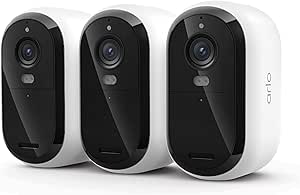
Arlo Essential Wireless Security Camera 2K (3rd Gen) – 3-Cam Kit with Yard Sign
As an affiliate, we earn on qualifying purchases.