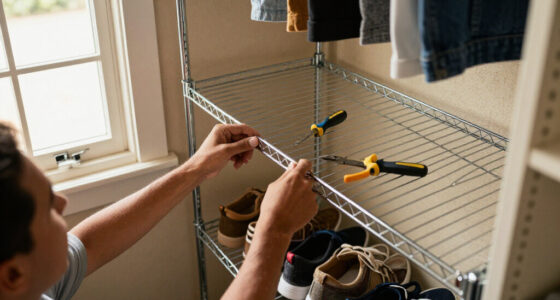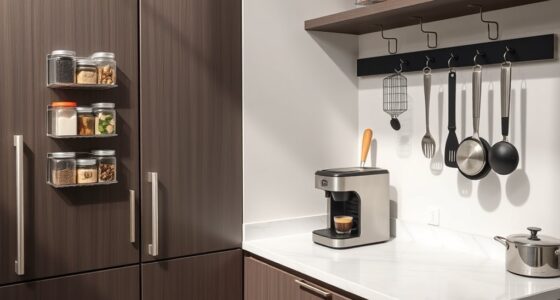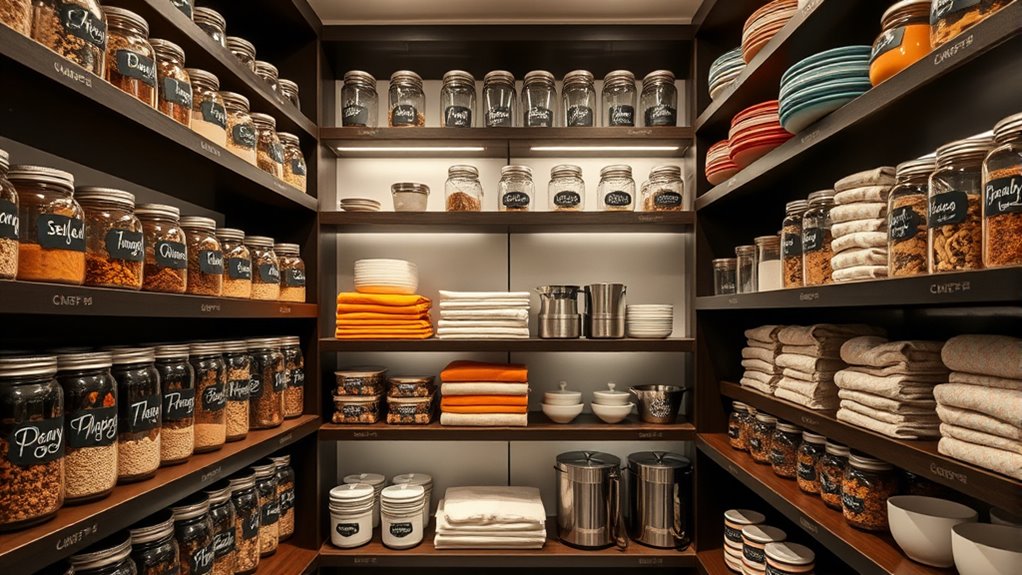

To organize your pantry like a chef, start by evaluating your current setup and decluttering unnecessary items. Categorize ingredients, using clear containers and labels for easy access. Maximize space by utilizing vertical storage, adjustable shelves, and hidden areas. Keep everything tidy with routine checks and refill containers as needed. Add stylish touches like matching jars or decorative trays for a polished look. Continue exploring for expert tips to turn your pantry into a culinary showcase.

Get furniture and decor delivered free with Prime
- Fast, free delivery on millions of items
- Prime Video, Amazon Music and more included
- Member-only deals all year
Key Takeaways
- Assess current inventory and space to create a strategic organization plan tailored to your pantry’s layout.
- Categorize ingredients and use clear, labeled containers for quick identification and easy access.
- Incorporate adjustable shelving and modular storage solutions to maximize space efficiency.
- Keep frequently used items at eye level and organize daily essentials for seamless cooking flow.
- Maintain the system with regular decluttering, labeling, and cleaning to ensure long-term order and functionality.
Assessing Your Current Pantry Setup
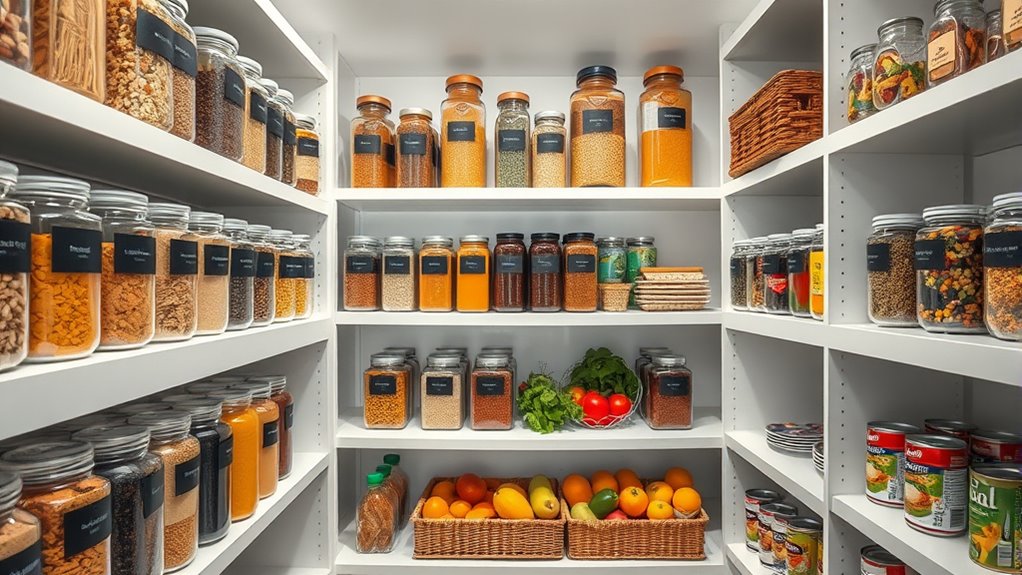
Before you can make meaningful changes to your pantry, you need to understand its current state. Start by taking stock of your pantry inventory—know what you have, how much, and where it’s stored. This helps you identify what’s essential and what’s just taking up space. Next, evaluate your storage capacity; assess how much room is available and how efficiently it’s being used. Are your shelves adjustable? Do you have enough containers or bins? Understanding your current setup allows you to spot any bottlenecks or underutilized areas. This step ensures you’re making informed decisions when reorganizing, so you can optimize both your space and accessibility. Incorporating self watering plant pots can be an excellent way to keep your plants healthy and reduce maintenance, making your pantry feel more organized and manageable. With a clear picture of your pantry’s status, you’ll be ready to plan your makeover effectively.
Clearing Out and Decluttering
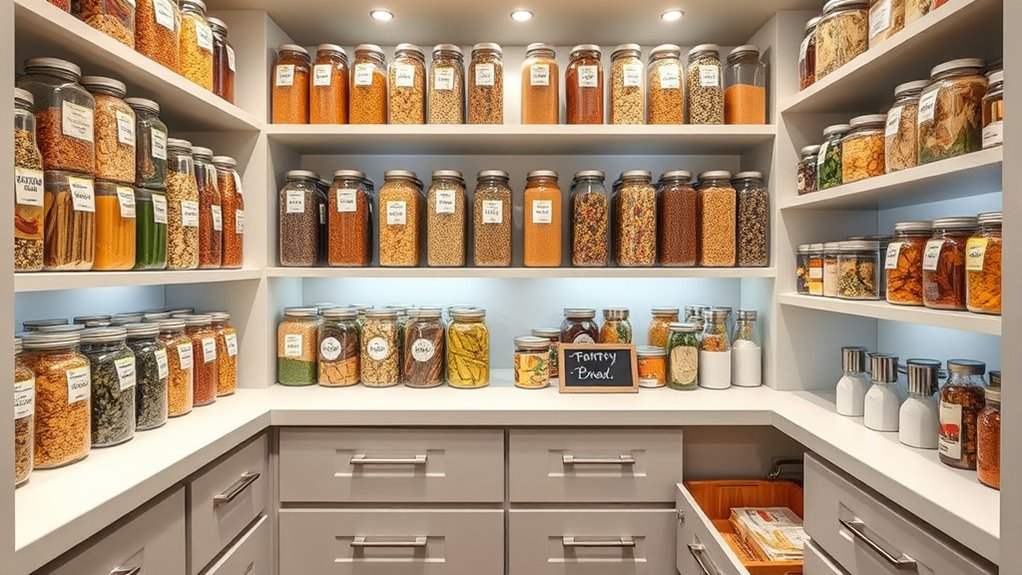
Start by sorting your pantry items into categories to see what you really need. As you do, get rid of anything you haven’t used in months. Removing unused items makes space and simplifies your future organization. Consider grocery savings strategies to maximize your budget and reduce clutter.
Streamline With Sorting Techniques
To effectively streamline your pantry, it’s essential to begin with sorting techniques that focus on clearing out and decluttering. Start by removing expired or unused items, then group similar products together—cans with cans, grains with grains. This not only improves food storage but also enhances pantry aesthetics, making it easier to find what you need. As you sort, consider donating unopened items you no longer want or need. Use clear containers for staples like pasta, rice, and snacks to keep everything visible and accessible. Label shelves and containers to maintain organization. Incorporating color accuracy considerations into your labeling and organization can further improve visibility and aesthetic appeal. Streamlining with these sorting techniques creates a functional space that’s easier to maintain, reduces waste, and makes your pantry a more inviting part of your kitchen.
Eliminate Unused Items
Clearing out unused items is a crucial step in creating a functional and organized pantry. Start by removing expired foods, which can take up space and pose health risks. Check labels carefully and toss anything past its expiration date. Next, look for duplicate items—multiple jars of the same sauce or spices you rarely use—so you can consolidate or donate extras. As you sort, set aside unopened or unused products for donation or future use. Removing these cluttering items makes it easier to see what you have and prevents waste. Be honest about what you genuinely use and need. Incorporating organized storage solutions can further enhance your pantry’s efficiency. Clearing out unused items not only frees up space but also helps you maintain a streamlined, chef-worthy pantry.
Categorizing Your Items for Better Organization

Organizing your pantry becomes much easier once you categorize your items into logical groups. Start by grouping similar ingredients together—like grains, snacks, or baking supplies—this is ingredient grouping. Next, consider container categorization, where similar containers hold related items, making retrieval simple. To visualize this, see the table below:
| Grains | Baking Supplies | Snacks |
|---|---|---|
| Rice, Pasta | Flour, Sugar | Chips, Nuts |
| Canned Goods | Spices | Granola |
| Baking Powder | Extracts | Cookies |
| Breakfast Cereal | Honey | Dried Fruit |
Categorizing your items helps you quickly locate what you need, reduces clutter, and improves overall pantry efficiency. Additionally, incorporating butter tips and tricks can help optimize your pantry storage for baked goods and cooking essentials.
Choosing the Right Storage Solutions
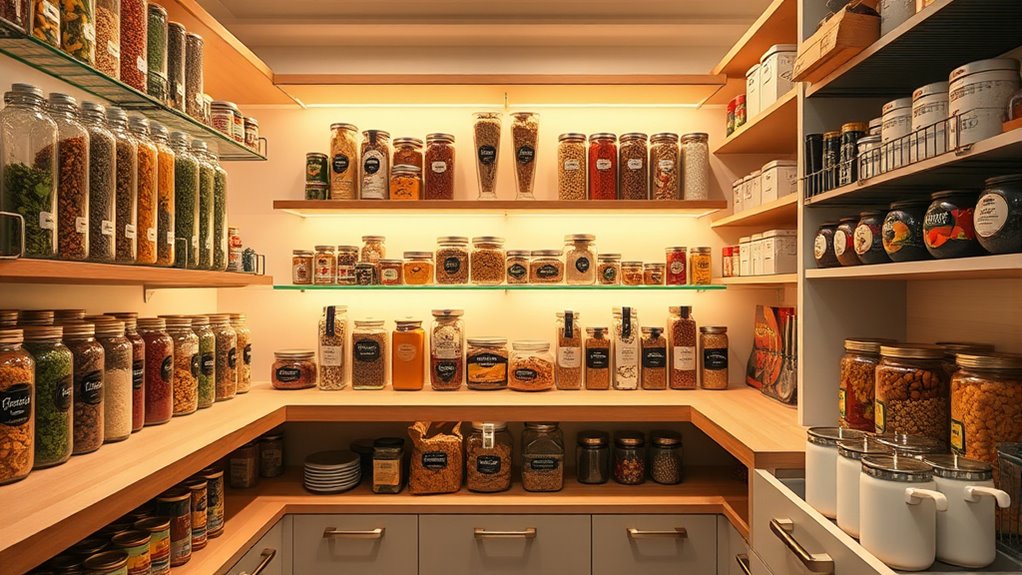
Choosing the right storage solutions is essential for maintaining an organized and accessible pantry. Custom storage options allow you to tailor your space to fit your needs, making everything easier to find. Consider using innovative containers that maximize space and keep ingredients fresh. Clear, stackable jars and bins help you see what’s inside at a glance, reducing clutter and waste. Adjustable shelves and modular organizers can adapt as your collection grows. Invest in airtight containers for dry goods to preserve freshness and prevent pests. Using a mix of custom storage and innovative containers helps you create a streamlined, functional pantry, saving you time and frustration. Well-chosen solutions keep everything in its place and make your pantry a true reflection of a chef’s organized approach. Additionally, understanding pinball machine weight is important if you plan to incorporate vintage or heavy-duty models into your space.
Labeling for Easy Identification
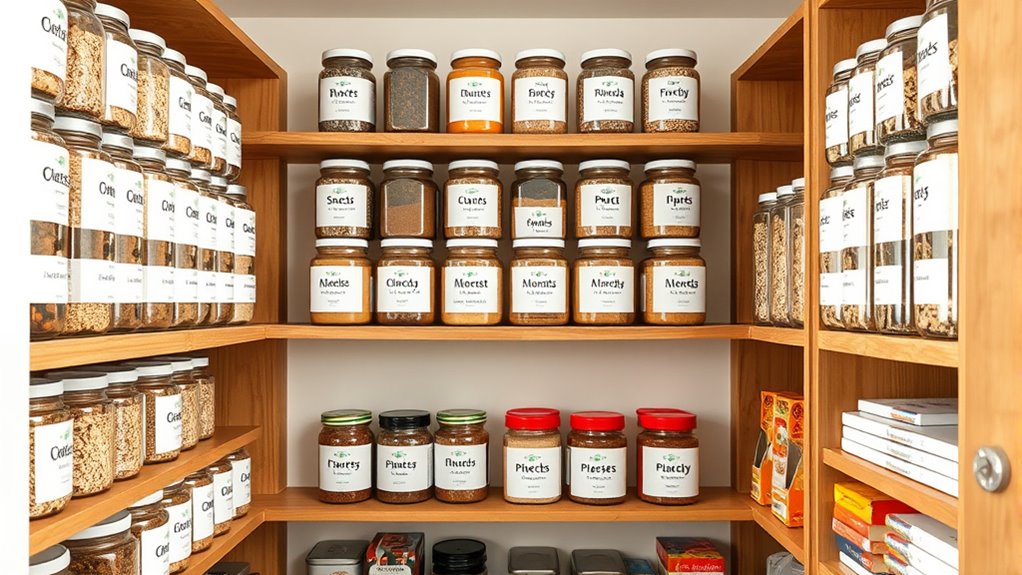
Labeling your pantry items is a simple yet powerful step toward maintaining an organized space. Clear labels help you quickly identify ingredients and prevent rummaging through jars or boxes. To achieve this, focus on labeling clarity—use large, legible fonts and high-contrast colors so labels are easy to read at a glance. Additionally, prioritize label durability; choose waterproof or laminated labels that withstand moisture, spills, and frequent handling. Properly labeled containers keep your pantry tidy and make it easier to find what you need without frustration. Consistent labeling also encourages better organization habits and ensures everyone in your household can contribute to maintaining order. With clear, durable labels, your pantry will stay neat, functional, and chef-worthy.
Implementing a System for Frequently Used Items
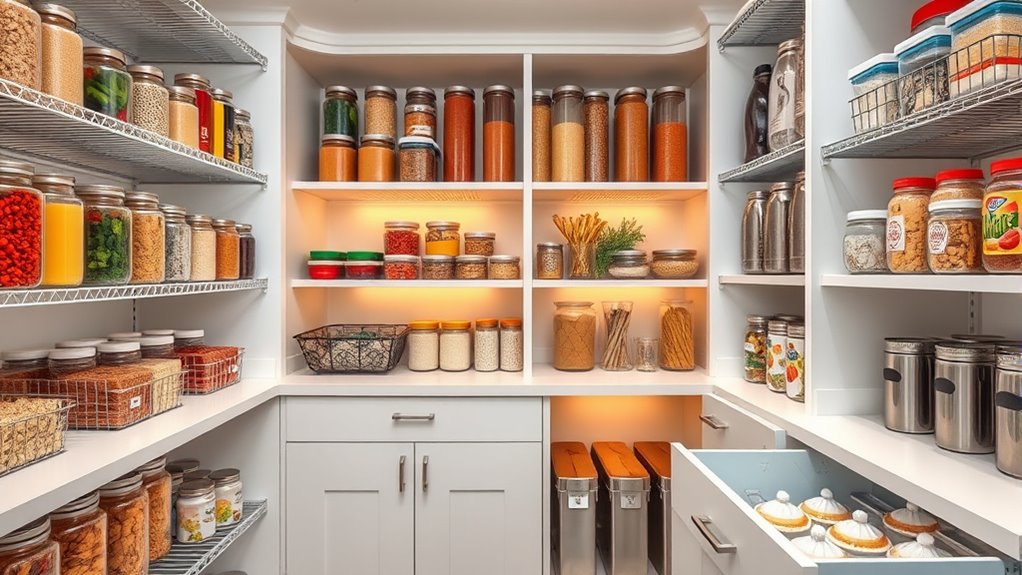
To keep your pantry efficient, place your most-used items within easy reach. Use a clear labeling system to quickly identify what you need without searching. This simple setup saves time and keeps your pantry organized. Incorporating functional storage solutions like baskets and bins can further enhance accessibility and tidiness.
Easy Access Placement
Ensuring that your most frequently used items are within easy reach can substantially streamline your pantry organization. Place these essentials at eye level or in the front of shelves to improve access and maintain pantry aesthetics. Using uniform storage containers helps create a tidy appearance and makes grabbing items quick and effortless. Incorporating easy-to-use storage options can further enhance the efficiency of your setup. Consider these placement ideas:
- Everyday snacks in clear jars near the pantry entrance
- Cooking staples like oils and spices at the front for easy grabbing
- Breakfast items such as cereals positioned at eye level
- Baking supplies stored together in accessible bins
This system minimizes clutter and keeps your countertops clear. Prioritizing easy access for daily items enhances your efficiency and keeps your pantry looking organized and inviting.
Clear Labeling System
Have you ever opened your pantry and struggled to find what you need quickly? A clear labeling system makes a huge difference. Use effective labeling techniques with durable labeling materials like chalkboard labels, printable labels, or plastic tags. For frequently used items, organize and label containers so you can identify contents at a glance. Keep labels consistent in style and font for a tidy look. Here’s a simple guide:
| Item Type | Labeling Technique | Labeling Material |
|---|---|---|
| Spices | Handwritten on tags | Chalkboard labels |
| Grains | Printed labels | Printable labels |
| Snacks | Color-coded labels | Plastic tags |
| Baking Supplies | Clear, large labels | Laminated labels |
| Oils & Vinegars | Small, adhesive labels | Vinyl labels |
This system saves time and keeps your pantry organized. Additionally, incorporating storage solutions can further optimize your space and improve accessibility.
Maximizing Vertical and Hidden Spaces

Maximizing vertical and hidden spaces in your pantry can dramatically increase storage without cluttering your countertops. Use shelf dividers to create separate zones on shelves, making it easier to organize snacks, cans, and spices. Stackable containers are perfect for maximizing vertical space inside cabinets and on shelves, helping you store dry goods efficiently. Consider adding hooks or pegboards inside cabinet doors for small items or utensils. Utilize unused gaps between shelves for narrow storage solutions or small baskets to hold miscellaneous items. Here are some ideas to get started:
- Install shelf dividers for better organization
- Use stackable containers for stacking dry goods
- Hang hooks inside cabinet doors for utensils
- Add risers to create additional levels within shelves
- Research trustworthy brands to ensure your storage solutions are reliable and safe.
Maintaining Your Organized Pantry
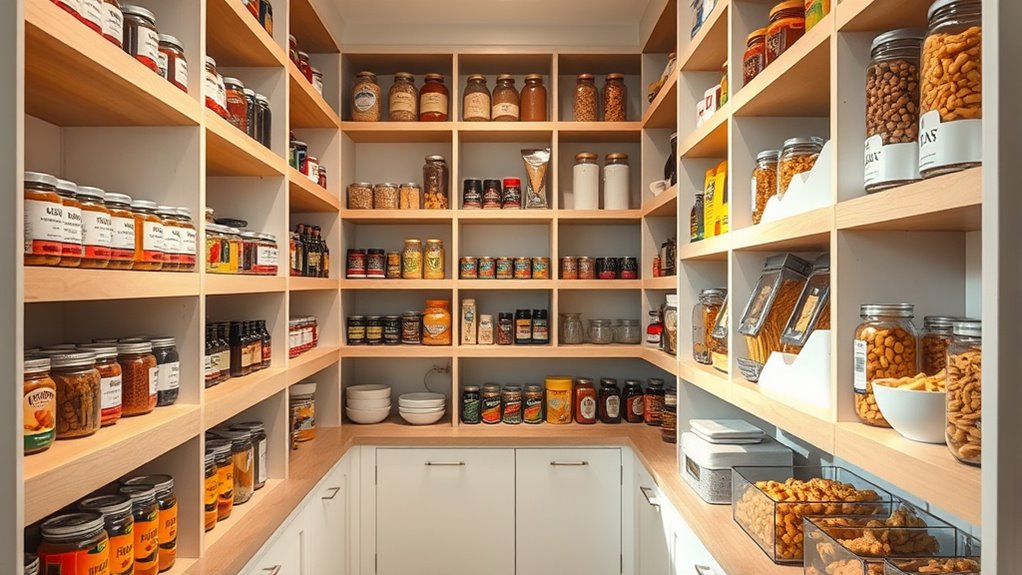
Once you’ve organized your pantry, maintaining its order requires regular attention and simple habits. Incorporate routine checks to keep your space tidy, discarding expired items and refilling jars or containers as needed. Consistent meal prep helps prevent clutter by planning meals around your stocked ingredients, reducing impulse purchases and waste. Keep pantry aesthetics in mind by returning items to their designated spots after each use, which makes finding ingredients quicker and maintaining visual appeal easier. Implement a weekly or bi-weekly cleaning schedule to wipe shelves and reorganize if necessary. Label containers clearly and consider using clear storage solutions to monitor supplies at a glance. These habits ensure your pantry stays functional, inviting, and aligned with your organized approach.
Incorporating Aesthetic Touches for Style

Adding aesthetic touches transforms your organized pantry into a visually appealing space that reflects your style. You can enhance its look by selecting a cohesive color scheme that ties everything together. Incorporate decorative accents like stylish jars or unique labels to add personality. To elevate the space further, consider these ideas:
- Use matching containers in complementary colors for a clean, uniform look
- Add decorative trays or baskets to organize small items elegantly
- Incorporate pops of color with vibrant storage bins or canisters
- Hang artwork or chalkboards for a personalized touch
These touches create a balanced mix of function and style, making your pantry both beautiful and inspiring.
Tips for Keeping Your Pantry Tidy Long-Term

To keep your pantry tidy long-term, establishing a regular maintenance routine is essential. Set aside a few minutes weekly to tidy up, check for expired items, and reorganize as needed. Incorporate meal prep sessions into your routine, so ingredients stay fresh and accessible, reducing clutter. Use clear containers and labels to maintain your pantry decor’s sleek look, making it easier to spot what you need. Rotate stock regularly to prevent items from pushing to the back and forgotten. Keep a shopping list to avoid overbuying, and stick to it. Consistency is key—by dedicating time to upkeep, your pantry remains organized and inviting, saving you time and stress when cooking or prepping meals.
Frequently Asked Questions
How Often Should I Reorganize My Pantry?
You should reorganize your pantry every three to six months to keep it efficient. During this time, update your shelf labeling and reassess container sizing to fit your current needs. Regular reorganization helps prevent clutter and makes it easier to find items quickly. If you notice spills or expired products, do it sooner. Consistent upkeep guarantees your pantry stays neat, organized, and functional, saving you time and stress.
What Are Eco-Friendly Storage Options?
You wonder about eco-friendly storage options, and you should consider sustainable containers made from glass, bamboo, or stainless steel, which are durable and reusable. Additionally, biodegradable bags are great for storing snacks or produce, reducing plastic waste. These options help you minimize your environmental impact while keeping your pantry organized and functional. Switching to sustainable containers and biodegradable bags makes your pantry greener and more stylish.
How Can I Prevent Pests in My Pantry?
To prevent pests in your pantry, you should keep everything sealed in airtight containers, which block pests from getting in and contaminating your food. Additionally, use natural repellents like bay leaves or peppermint oil near storage areas to deter insects. Regularly clean your pantry, discard expired items, and inspect for signs of pests. These steps create a hostile environment for pests and help keep your pantry fresh and pest-free.
What Are Budget-Friendly Organization Tips?
If you want budget-friendly organization tips, start by using simple storage solutions like clear jars and baskets. You can repurpose containers for meal prep and make labels with a marker to keep things organized. Label making helps you quickly identify items, saving time and money. Keep your pantry tidy by regularly checking for expired products and reorganizing as needed. These small steps make a big difference without breaking the bank.
How to Handle Expired or Spoiled Items Effectively?
Imagine finding moldy bread in your pantry; it’s a clear sign to handle expired items promptly. You should check for food safety risks, then properly dispose of spoiled goods in sealed bags to prevent contamination. Regularly reviewing your pantry helps catch expired items early, keeping your space safe and organized. Always prioritize proper disposal to protect your health and avoid attracting pests, making your pantry a safe, clean environment.
Conclusion
Now that you’ve organized your pantry like a pro, it’s smooth sailing from here. Keep it tidy by regularly updating and decluttering—think of it as tending a garden that’s always in bloom. With everything in its place, you’ll find what you need in a flash and avoid chaos. Remember, a well-kept pantry is the backbone of a stress-free kitchen, making your cooking experience as effortless as flipping a switch.
Halloween Picks
halloween
As an affiliate, we earn on qualifying purchases.