To keep your living room clutter-free with kids, allocate specific storage spaces for toys using durable, easy-to-clean bins and label them clearly. Create a kid-friendly zone for play, and rotate toys regularly to reduce mess and keep interest high. Establish a consistent tidy-up routine by involving your children and making it fun with games or rewards. Incorporate multi-functional furniture for extra storage, and continue exploring ways to cultivate neat habits effortlessly.
Key Takeaways
- Designate specific storage bins and label them clearly to encourage kids to return toys to their proper places.
- Create a dedicated play zone with low shelves and a play mat to contain clutter and define activity areas.
- Implement regular, fun clean-up routines using timers, music, or games to make tidying engaging for children.
- Use toy rotation strategies to limit accessible toys, keeping the space organized and stimulating for kids.
- Incorporate multi-functional furniture with built-in storage to maximize space and reduce visible clutter.
Designate Specific Storage Spaces for Toys and Items
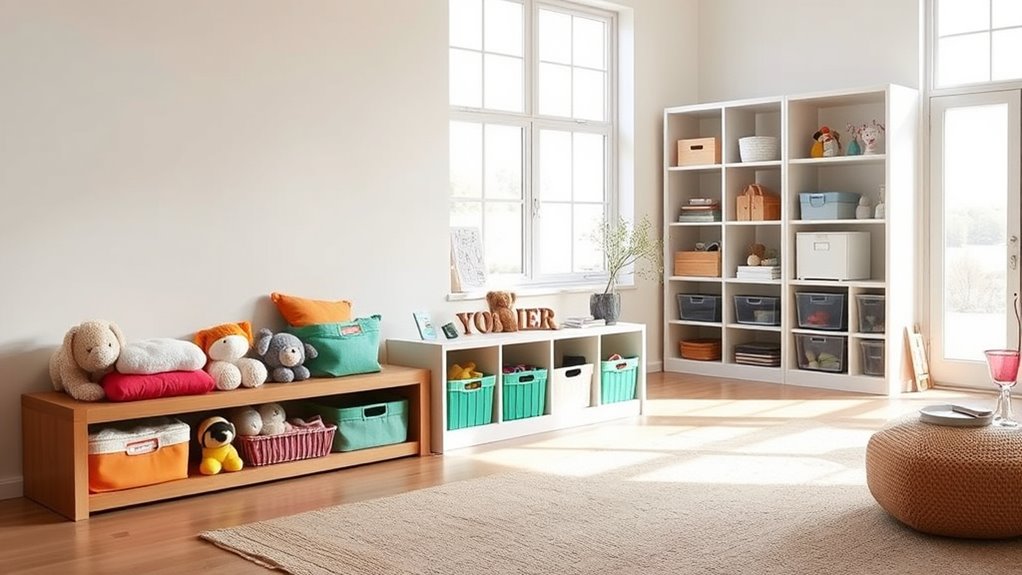
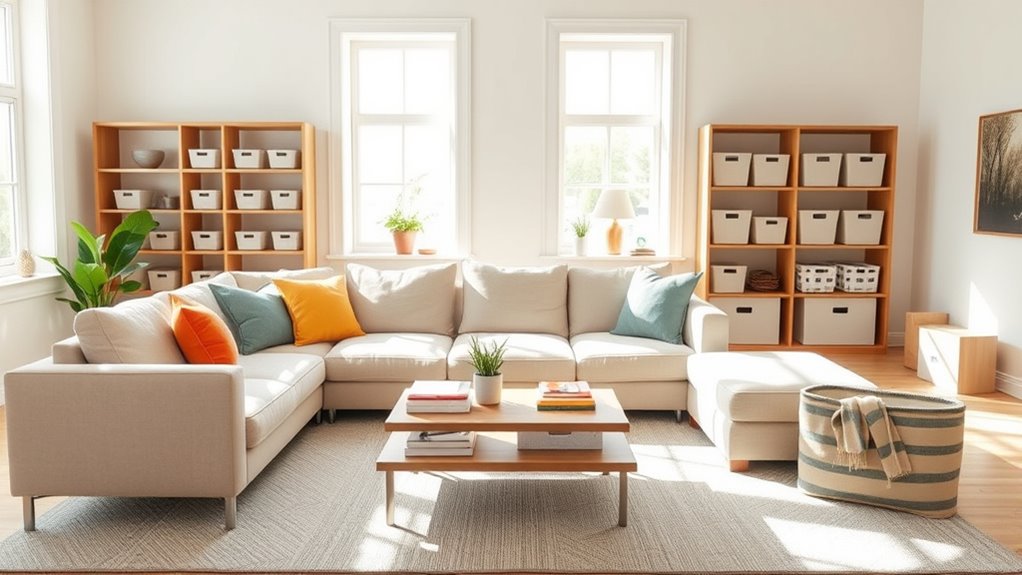
To keep your living room tidy, it is essential to assign designated storage spaces for toys and other items. Effective toy organization starts with clear, specific storage solutions that make it easy for everyone to put things away. Choose bins, shelves, or baskets that fit the size and type of toys, and label them so kids know where everything belongs. Designing designated zones for specific activities or items can further streamline organization. Designating a dedicated spot reduces clutter and encourages independence when tidying up. Consistency is key—always return toys to their designated storage after playtime. This approach not only keeps your living room looking neat but also helps kids develop good habits. With thoughtful storage solutions, clutter becomes manageable, and your living space stays welcoming and organized.
Use Durable and Easy-to-Clean Baskets or Bins
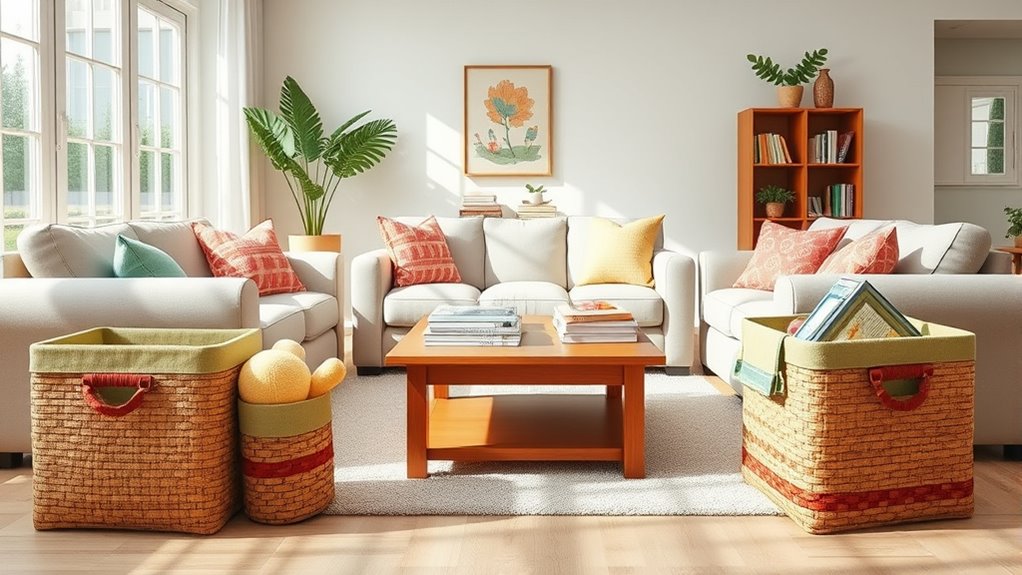
Choosing baskets and bins made from durable, easy-to-clean materials helps keep your living room tidy with less effort. Material quality directly impacts how long your storage solutions last and how simple they are to maintain. Opt for options that simplify your cleaning routine and resist wear and tear over time. Regular maintenance and selecting easy-to-clean materials can significantly extend the lifespan of your storage solutions, making your living space more manageable.
Material Matters Most
Since you want your living room to stay organized with minimal effort, selecting baskets or bins made from durable and easy-to-clean materials is essential. Material quality directly impacts furniture durability and how well your storage solutions hold up over time. Opt for options like plastic, resin, or coated fabric, which resist stains and moisture. These materials are not only sturdy but also simple to wipe down, minimizing your cleaning efforts. Choosing high-quality materials ensures your baskets or bins won’t crack, warp, or fray easily, keeping your space tidy longer. Remember, investing in durable, easy-to-maintain containers helps you prevent clutter from piling up and makes tidying up quick and stress-free, even with kids around. Additionally, selecting furniture materials that are easy to clean can significantly reduce the time you spend on maintenance and help maintain a fresh, clutter-free environment.
Simplify Cleaning Routine
Using durable, easy-to-clean baskets or bins makes tidying up your living room much simpler. They help you quickly gather toys, books, and clutter, making your cleaning schedule more manageable. Incorporate these baskets into your parenting strategies to teach kids responsibility and organization. To maximize efficiency, place baskets in strategic spots for easy access and quick cleanup. Additionally, selecting moisture-resistant materials for your storage solutions can further ease maintenance and prolong their lifespan. This approach streamlines your cleaning routine, minimizes mess, and keeps your living room clutter-free with less effort.
Implement a Regular Tidy-Up Routine

Establishing a regular tidy-up routine is key to maintaining a clutter-free living room. You need parental involvement to set expectations and lead by example, showing kids that tidying up is a shared responsibility. Consistency is essential—schedule tidy-up times at the same points each day or week, so it becomes a habit. Make it simple: allocate specific moments for quick clean-ups, like before dinner or bedtime. Involve your kids in the process, turning it into a fun activity rather than a chore. Reinforce the routine by praising their efforts and keeping supplies accessible. Over time, this consistency helps your children develop good habits, reducing clutter and keeping your living room neat without constant reminders. Recognizing patterns in angel numbers can also remind you to stay committed to your organization goals.
Incorporate Multi-Functional Furniture for Extra Storage
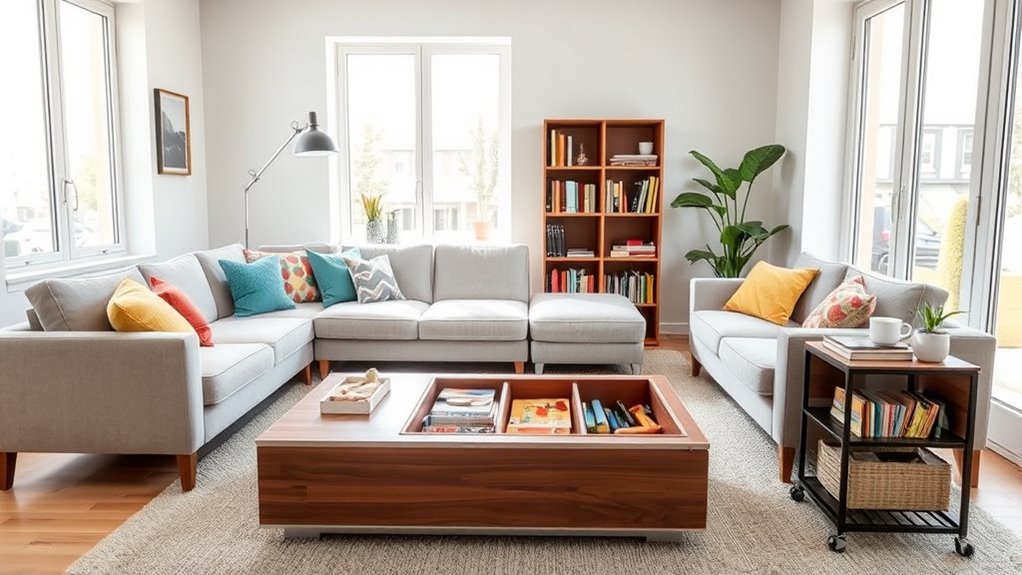
Multi-functional furniture helps maximize your living space by combining seating or tables with built-in storage. Look for pieces with space-saving designs that fit seamlessly into your room. Hidden storage compartments keep clutter out of sight, making your living room look tidy and organized. Additionally, choosing furniture with adjustable features can help adapt the space for different needs and occasions.
Space-Saving Designs
Maximizing your living room space is easier when you choose furniture that serves more than one purpose. Multi-functional pieces like modular furniture allow you to customize your setup while providing extra storage. Wall-mounted shelves create vertical space, keeping clutter off surfaces and within easy reach. These space-saving designs make your living room more open and organized, even with kids around. Opt for pieces that combine seating with hidden compartments or storage drawers to reduce clutter. Incorporating these elements not only saves space but also adds a sleek, modern look to your living area. With thoughtful planning, you can create a clutter-free environment that’s both functional and stylish. Remember, small changes in furniture choices can make a big difference in maintaining order. Additionally, space optimization techniques can further enhance your room’s organization and functionality.
Hidden Storage Compartments
Choosing furniture with hidden storage compartments can substantially reduce clutter in your living room. Multi-functional pieces like ottomans, coffee tables, and sofas often feature secret storage, providing a discreet space for toys, blankets, or remote controls. These hidden compartments keep everyday items out of sight, maintaining a tidy look. Look for furniture with built-in secret storage that blends seamlessly into your decor, avoiding bulky or obvious designs. Not only does this maximize space, but it also keeps clutter from piling up. Incorporate storage-friendly furniture into your living room to make organization effortless and keep your space feeling open and inviting. With hidden compartments, you turn everyday furniture into practical tools for a cleaner, more organized living environment.
Create a Kid-Friendly Zone to Contain Messes
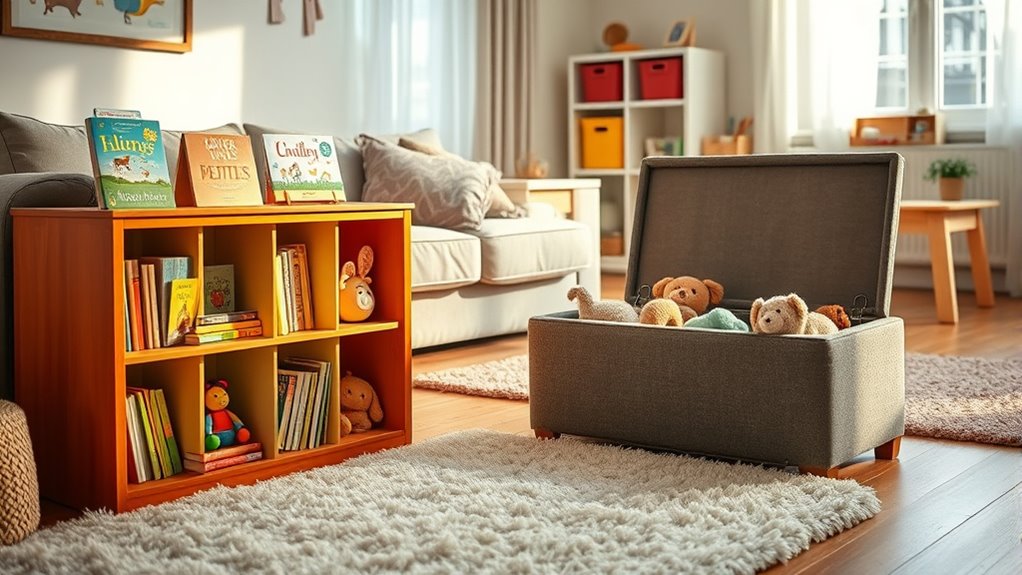
Creating a dedicated kid-friendly zone in your living room helps contain the mess and keeps the space organized. This area encourages creative play zones where kids can enjoy themselves without spreading clutter throughout the room. To make it effective, incorporate appropriate safety measures to prevent accidents and guarantee a secure environment. Designate a specific storage system for toys and art supplies, so everything has a place. Consider using low shelves or bins that are easy for kids to access and tidy up. Adding a comfortable, designated play mat can also define the zone clearly. These steps help contain the chaos while allowing your children to play freely, making your living room more organized and less stressful for everyone. Embracing limits and constraints can also inspire creative solutions for organizing and designing your kid-friendly space.
Rotate Toys to Keep Clutter Manageable
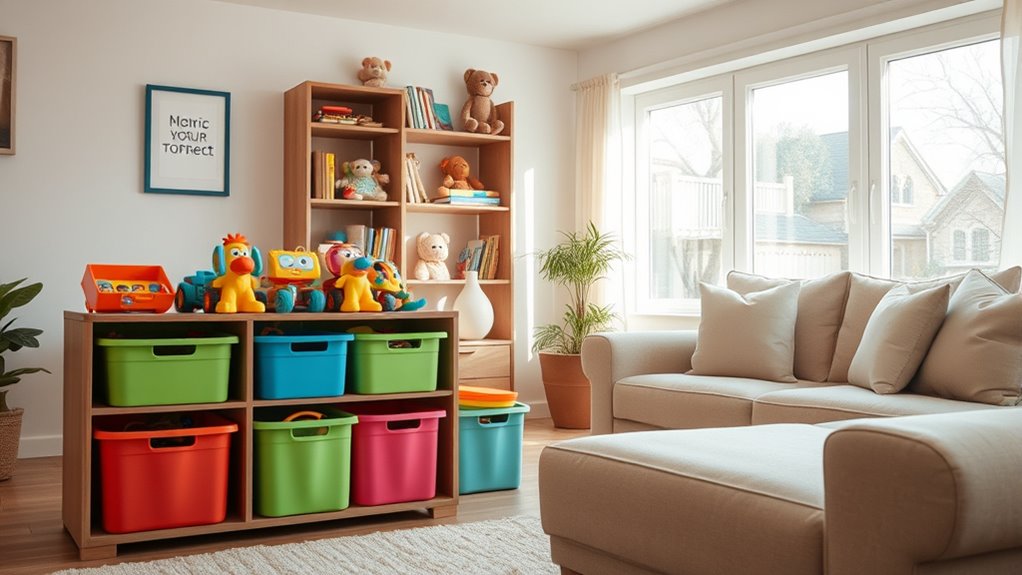
Rotating toys is an effective way to keep your living room organized and prevent clutter from piling up. Toy rotation involves periodically swapping out toys, so your kids always have a fresh selection to play with while reducing the number of items out at once. This simple strategy improves clutter management by limiting the number of toys accessible at any given time, making cleanup easier and faster. You can store the unused toys in bins or closets, then switch them out weekly or biweekly. Not only does this keep the space tidy, but it also sparks your child’s interest in their toys, making playtime more engaging. Regular toy rotation helps maintain a clutter-free living room, making your space more functional and enjoyable for everyone. Additionally, incorporating mental clarity and health practices, such as mindful organization, can further enhance your living environment.
Engage Kids in Clean-Up Time and Make It Fun
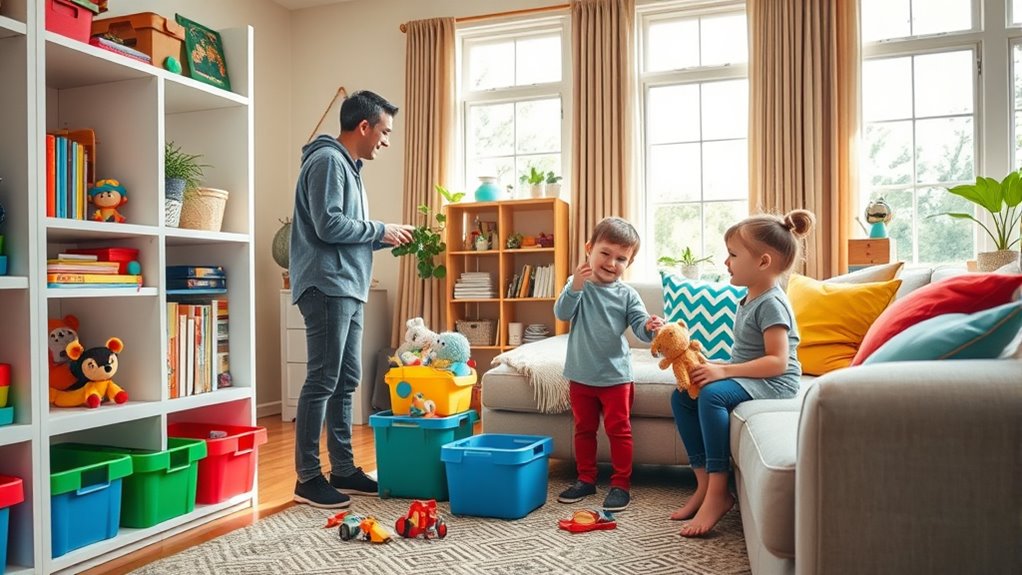
Getting kids involved in clean-up time is more effective when you turn it into a fun activity rather than a chore. Use creative game ideas to make tidying up engaging, like racing to see who can pick up the most toys or creating a scavenger hunt for specific items. Implement reward system strategies to motivate consistent participation, such as stickers or small treats for completing tasks. Making clean-up time playful encourages cooperation and reduces resistance. You can also set timers to challenge them to finish before the buzzer or play music to create a lively atmosphere. Incorporating essential oils for a calming environment can further enhance the experience, making it more pleasant and relaxing for everyone. These approaches transform a mundane task into an enjoyable experience, teaching kids responsibility while keeping your living room clutter-free.
Frequently Asked Questions
How Can I Encourage My Kids to Maintain Organized Spaces?
To encourage your kids to keep their spaces organized, start with behavior management by setting clear expectations and routines. Use reward systems like stickers or privileges to motivate them. Praise their efforts regularly, making organization a positive experience. Involve them in choosing storage solutions to give them ownership. Consistency is key—remind them gently and celebrate their progress, helping them develop good habits that last.
What Are the Best Materials for Child-Proof Storage Containers?
Did you know that 85% of parents prefer eco-friendly storage options? When choosing child-proof containers, prioritize durability considerations to withstand rough handling. Look for materials like BPA-free plastic or silicone, which are both safe and sturdy. Eco-friendly options, such as recycled plastic or bamboo, are great for sustainability. These materials guarantee your storage containers are tough enough for kids while keeping your home environmentally friendly.
How Often Should I Declutter the Living Room?
You should declutter your living room at least once a month to maintain an organized space. Regular decluttering allows you to evaluate your storage solutions and identify items you no longer need. If your kids generate more clutter, consider increasing the frequency to every two weeks. Consistent decluttering helps prevent mess buildup, making it easier to manage toys and other items, ensuring your living room stays neat and functional.
Are There Any Visual Cues to Help Kids Keep Areas Tidy?
To help your kids keep areas tidy, use visual cues like color coding to designate specific zones for toys, books, or art supplies. Brightly colored bins or shelves make it clear where everything belongs, encouraging kids to put items back in the right place. These visual cues simplify cleanup, reduce confusion, and foster independence, making it easier for you to maintain a clutter-free living room even with little helpers around.
How Do I Handle Toys That Are No Longer Used?
When handling toys that are no longer used, start by implementing toy rotation—you keep only a few toys accessible and store the rest. This reduces clutter and keeps playtime fresh. Use donation strategies for toys in good condition that your kids no longer want, teaching them about giving. Regularly sorting and rotating toys prevents buildup and encourages kids to appreciate what they have, making cleanup easier.
Conclusion
By implementing these tips, you’ll turn your living room into a well-organized oasis rather than a chaotic storm. Think of it as tending a garden—you’ll need to prune, nurture, and occasionally rearrange to keep everything flourishing. With a little effort and consistency, you’ll create a space where toys stay put, messes are manageable, and family time is more enjoyable. Soon, your living room will be a sanctuary you’re proud of, even with kids in tow.