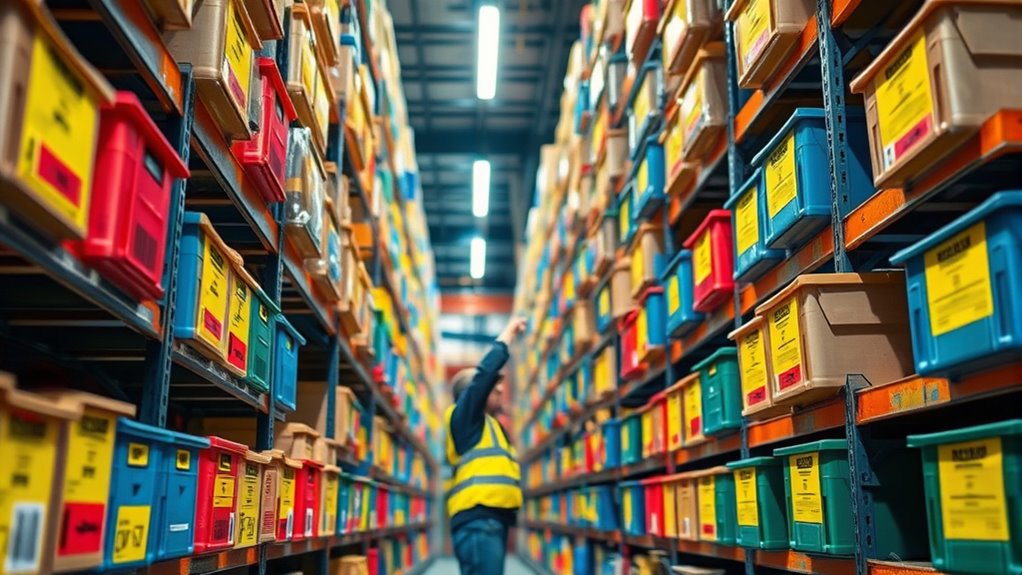

Effective labeling systems combine digital updates with ergonomic design, large fonts, and color coding to make inventory management easier. You can quickly identify products, reduce errors, and update information in real time, saving time and effort. Bright fonts and contrasting colors improve visibility, while organized color schemes help categorize items. When all these elements work together, your workspace becomes more efficient and visually appealing. Keep exploring to discover how these techniques can transform your labeling approach.

Get furniture and decor delivered free with Prime
- Fast, free delivery on millions of items
- Prime Video, Amazon Music and more included
- Member-only deals all year
Key Takeaways
- Digital labels enable real-time updates, reducing errors and ensuring accurate, current product information.
- Ergonomic design improves readability and ease of handling, enhancing user experience and efficiency.
- Large fonts increase visibility, facilitating quick recognition and reducing misreading in busy environments.
- Color coding groups items and indicates statuses, streamlining organization and inventory management.
- Combining digital labels, ergonomic features, large fonts, and color cues creates an effective, cohesive labeling system.

Have you ever wondered how products stay organized and easily identifiable on shelves? The secret lies in effective labeling systems that combine innovation and practicality. Digital labeling has revolutionized how businesses manage their inventory by providing dynamic, easily updateable labels. Instead of static paper tags, digital labels can display real-time information, making stock management more accurate and efficient. With digital labeling, you can instantly update prices, product details, or stock levels, reducing errors and saving time. This technology is especially useful in fast-paced environments where quick changes are necessary. When paired with an ergonomic design, digital labeling becomes even more user-friendly. Ergonomic design ensures that labels are accessible, easy to read, and straightforward to update, minimizing strain and confusion for staff. Whether you’re organizing a warehouse, a retail store, or a pantry, the combination of digital labeling and ergonomic design streamlines the entire process, making it more intuitive and less labor-intensive.
A well-thought-out labeling system also considers visibility and readability. Using large fonts is one of the simplest yet most effective strategies to ensure labels are noticed and understood at a glance. Larger text reduces the chance of misreading and helps people quickly identify products even from a distance. This approach is particularly beneficial in busy retail environments or for individuals with visual impairments. Clear, bold fonts combined with contrasting colors make labels stand out, catching attention immediately. Color coding further enhances this system by grouping similar items or indicating status, such as expiry dates or special offers. When color is used systematically, it helps your team or customers find what they need faster, reducing search times and increasing efficiency.
Incorporating these elements—digital labels, ergonomic design, large fonts, and color coding—creates a cohesive and effective labeling system. It simplifies inventory management, improves the customer experience, and reduces errors. When labels are easy to read and update, your staff spend less time deciphering information and more time focusing on service or restocking. Plus, a visually organized shelf with clear labels boosts the overall aesthetic, making your space look professional and inviting. The key is to think about how users will interact with your labels daily. By prioritizing ergonomic design and choosing the right visual cues, you set up a system that’s both practical and scalable. Ultimately, a good labeling system isn’t just about sticking labels on products—it’s about creating a seamless, accessible process that works efficiently for everyone involved. Proper labeling systems also help prevent errors and improve overall workflow efficiency.
digital labeling system for inventory
As an affiliate, we earn on qualifying purchases.
As an affiliate, we earn on qualifying purchases.
Frequently Asked Questions
How Do I Choose the Best Labeling System for My Industry?
To select the most suitable labeling system for your industry, consider how barcode scanning and tactile identification can improve efficiency and safety. You should evaluate your work environment, the types of items, and the needs of your team. For example, if quick identification is essential, opt for color coding combined with tactile markers. Confirm the system is durable, easy to read, and compatible with your existing processes for seamless operation.
What Are Cost-Effective Labeling Options for Small Businesses?
You can choose cost-effective labeling options like tactile labeling for easy identification and barcode scanning for quick inventory management. Tactile labels help visually impaired staff or those who prefer touch, while barcode labels streamline tracking and reduce errors. Both options are affordable and versatile for small businesses, allowing you to improve organization without overspending. Implementing these systems boosts efficiency and accuracy, making daily operations smoother and more cost-effective.
How Do Labels Withstand Extreme Temperatures and Conditions?
Think of your labels like a superhero facing extreme conditions. To guarantee they withstand harsh environments, choose labels with high temperature resistance and undergo durability testing. These labels are crafted from materials like polyester or vinyl, which resist heat, cold, and moisture. By selecting products designed for durability, you protect your labels from fading, peeling, or tearing, so your branding stays intact no matter the conditions your products face.
Can Digital or Electronic Labels Improve Efficiency?
Digital or electronic labels can considerably boost your efficiency by offering digital customization, making updates quick and easy. They also provide electronic durability, ensuring your labels stay functional in harsh environments. With real-time data access, you can streamline inventory management and reduce errors. Plus, electronic labels adapt to changing needs, saving you time and resources while improving overall workflow.
What Are the Legal Requirements for Product Labeling?
You’re on the right track to stay compliant. Legally, you must meet regulatory requirements and adhere to labeling standards set by authorities like the FDA or OSHA. These often include providing accurate product info, ingredients, safety warnings, and expiration dates. It’s a tightrope walk, but following these rules guarantees your labels are clear, truthful, and compliant, helping you avoid fines and legal trouble while keeping consumers safe.
As an affiliate, we earn on qualifying purchases.
Conclusion
Think of labeling systems as the guiding stars in your organizational sky. Just as celestial markers help travelers navigate the night, effective labels steer you effortlessly through clutter and confusion. Whether you choose vibrant colors or bold fonts, you’re charting a clear course. When you implement these systems wisely, you’ll find your space becomes a well-lit path, inviting productivity and ease—transforming chaos into a constellation of clarity.
As an affiliate, we earn on qualifying purchases.
As an affiliate, we earn on qualifying purchases.
Halloween Picks
halloween
As an affiliate, we earn on qualifying purchases.