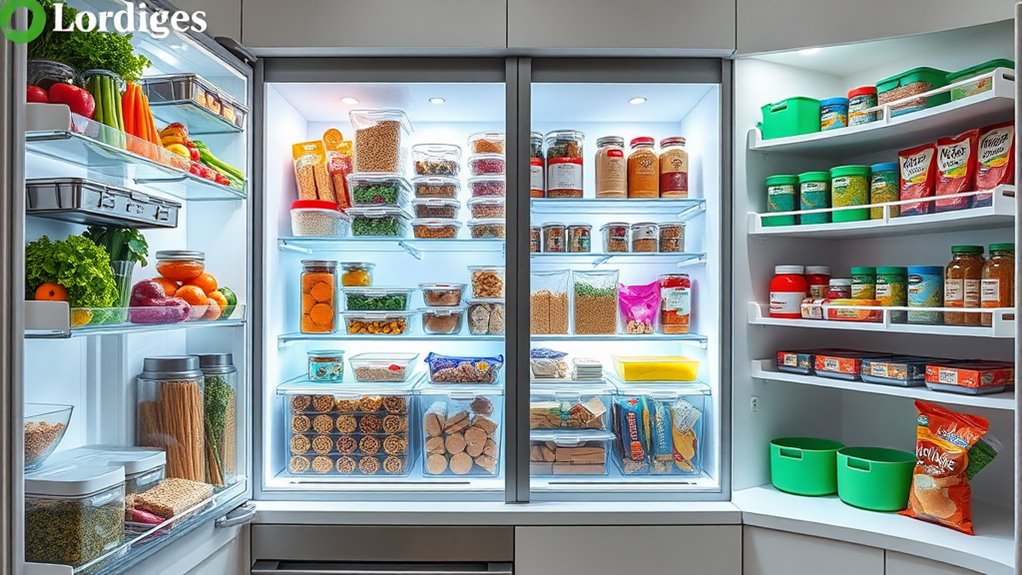

To organize your fridge and pantry for meal prepping, designate specific zones for vegetables, proteins, and leftovers. Use clear, stackable containers to keep ingredients visible and accessible, and label everything with dates to prevent spoilage. Store frequently used items at eye level and categorize pantry shelves with bins for grains, snacks, and canned goods. Regularly declutter and maintain your system; you’ll discover simple tips that make prepping faster and less stressful.
Key Takeaways
- Designate specific zones in the fridge and pantry for vegetables, proteins, dairy, and leftovers to streamline access.
- Use clear, stackable containers and bins to maximize space and improve visibility of ingredients.
- Label containers with dates to prevent spoilage and facilitate easy inventory management.
- Regularly declutter by discarding expired or unused items, maintaining an organized and efficient space.
- Incorporate routine cleaning and reorganization into weekly meal prep schedules to sustain order and accessibility.
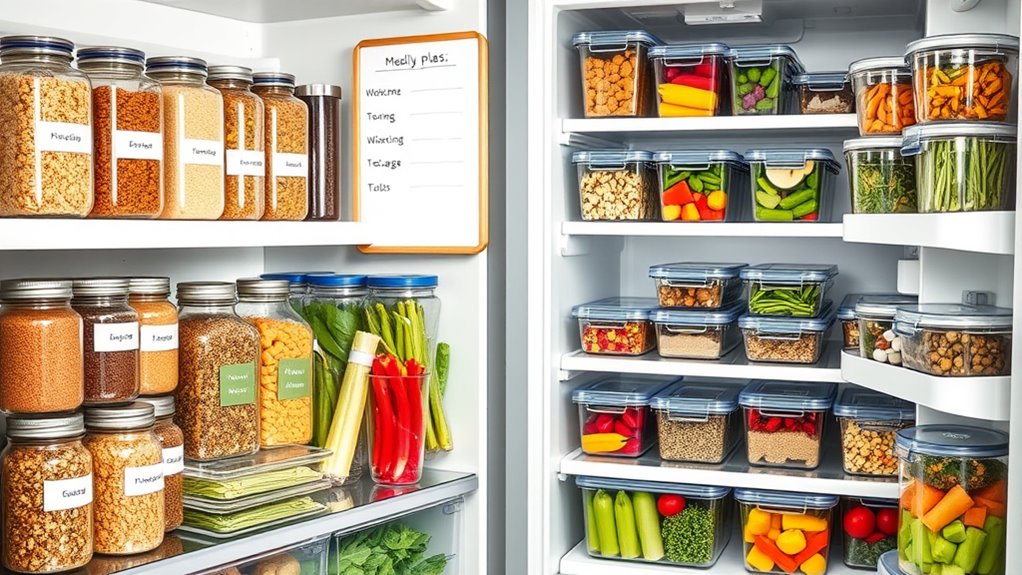
Organizing your kitchen is essential for efficient meal prepping, making it easier to plan, prepare, and store your weekly meals. When your fridge and pantry are well-organized, you spend less time searching for ingredients and more time focusing on cooking. One of the key ways to achieve this is by investing in good meal prep containers and effective storage solutions. These containers help you portion out ingredients and leftovers, keeping everything visible and accessible. Using clear, stackable meal prep containers allows you to easily see what’s inside without opening each one, which speeds up your workflow. Choose sizes that suit your typical meal portions to prevent waste and make reheat and serving straightforward.
Organize your kitchen with clear, stackable containers to speed up meal prep and reduce waste.
In your fridge, designate specific zones for different food groups—vegetables, proteins, dairy, and leftovers. Using storage solutions like adjustable shelves or clear bins can help keep items grouped together, reducing clutter and making it simple to grab what you need. Labeling your containers with dates guarantees you use up perishables before they spoil, preventing waste and maintaining freshness. When stacking containers, ensure they are airtight to keep food fresh longer and prevent spills. Consider using tiers or risers for condiments and small items to maximize space and keep everything organized. Regularly declutter your fridge by tossing expired items or those you no longer need, which makes space for fresh ingredients.
Your pantry benefits from similar organization strategies. Use storage solutions like wire baskets, pull-out drawers, or clear bins to categorize items such as grains, snacks, canned goods, and baking supplies. Group similar items together and arrange them in a way that allows you to see everything at a glance. Labeling shelves and containers helps you quickly identify where everything belongs, saving time during meal prep. Keep frequently used ingredients at eye level for easy access, and store less-used or bulky items on higher shelves or in the back. Regularly check for expired products and dispose of anything past its prime. This habit keeps your pantry tidy and ensures you’re always working with fresh ingredients.
In addition, incorporating rustic decor elements such as vintage signs or farmhouse-style shelving can create an inviting atmosphere that encourages you to maintain organization and enjoy your cooking space. Implement a routine to maintain your organized kitchen. Every week, give your fridge and pantry a quick tidy-up—rearrange items as needed, check expiration dates, and replenish supplies. This ongoing effort prevents clutter from building up and ensures your meal prep process remains smooth. By choosing the right storage solutions and meal prep containers, you create a system where everything has a designated place. Ultimately, a well-organized kitchen supports your meal prepping goals, making cooking more efficient, enjoyable, and less stressful.
Frequently Asked Questions
How Often Should I Reorganize My Meal Prep Storage?
You should reorganize your meal prep storage every few weeks to keep things fresh and efficient. Regularly scheduling fridge cleaning routines helps prevent spoilage and keeps your space tidy. By aligning your reorganization with your meal prep scheduling, you ensure everything stays accessible and organized, making meal prep easier and faster. This routine also helps you spot expired items early, reducing waste and maintaining a clean, functional kitchen.
What Tools Help Track Expiration Dates Effectively?
Stay on top of expiration dates by using clear expiration labels on your items and digital timers to track freshness. These tools help you identify what needs to be used first, prevent food waste, and guarantee safety. Keep labels visible and set timers immediately after storing perishable goods. By doing this, you create an organized, efficient system that keeps your meal prep fresh, safe, and stress-free.
How Can I Prevent Cross-Contamination in My Fridge?
To prevent cross-contamination in your fridge, you should prioritize food safety by storing raw meats separately on the bottom shelf to avoid drips. Regularly follow cleaning schedules to keep your fridge hygienic, wiping down shelves and drawers. Use sealed containers for leftovers and raw ingredients. Always wash hands before handling food, and keep fruits and vegetables away from raw meats to minimize contamination risks.
What Are Budget-Friendly Storage Solutions?
When looking for budget-friendly storage solutions, start with budget bins to keep your fridge and pantry organized without overspending. Use clear container labels to easily identify contents and maximize space. Repurpose old jars or boxes for storing snacks or dry goods. These simple, cost-effective options help you stay organized, reduce waste, and make meal prepping more efficient without breaking the bank.
How Do I Handle Leftovers for Future Meal Prep?
Ever wondered how to handle leftovers for future meals? Start with food labeling—write dates and contents clearly. Then, practice portion control by dividing leftovers into meal-sized containers, avoiding waste. This way, you stay organized and prevent spoilage. Keep your fridge tidy, and you’ll always know what’s ready to reheat. Don’t forget—proper storage and labeling make future meal prep easier and more efficient, saving you time and effort.
Conclusion
Think of your kitchen like a well-tuned orchestra—each item in its place creates harmony and efficiency. When I organized my fridge and pantry, meal prep became a breeze, saving me time and stress. A study shows that organized kitchens reduce prep time by 30%. So, start small, stay consistent, and watch your kitchen transform into a symphony of order. Before you know it, you’ll be conducting meal prep with confidence and ease.