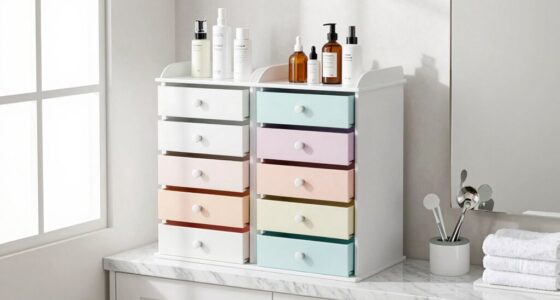
To manage toys and chaos in kids’ rooms, create designated zones for different types of toys and use clear, labeled storage containers that are easy for your child to access. Establish a regular cleanup routine, making it fun and simple to stick to, and regularly declutter by removing broken or unused items. Maximizing vertical space with shelves and involving your child in organizing can also make a big difference. Keep exploring for more practical tips to keep the room tidy and inviting.

Get furniture and decor delivered free with Prime
- Fast, free delivery on millions of items
- Prime Video, Amazon Music and more included
- Member-only deals all year
Key Takeaways
- Regularly declutter by removing broken, unused, or outgrown toys to prevent clutter accumulation.
- Create designated zones for different toy types to organize and simplify cleanup.
- Use clear, labeled containers and stackable storage to maximize space and visibility.
- Involve children in choosing storage solutions and routines to foster ownership and consistency.
- Establish a routine cleanup schedule to maintain an organized and clutter-free room.
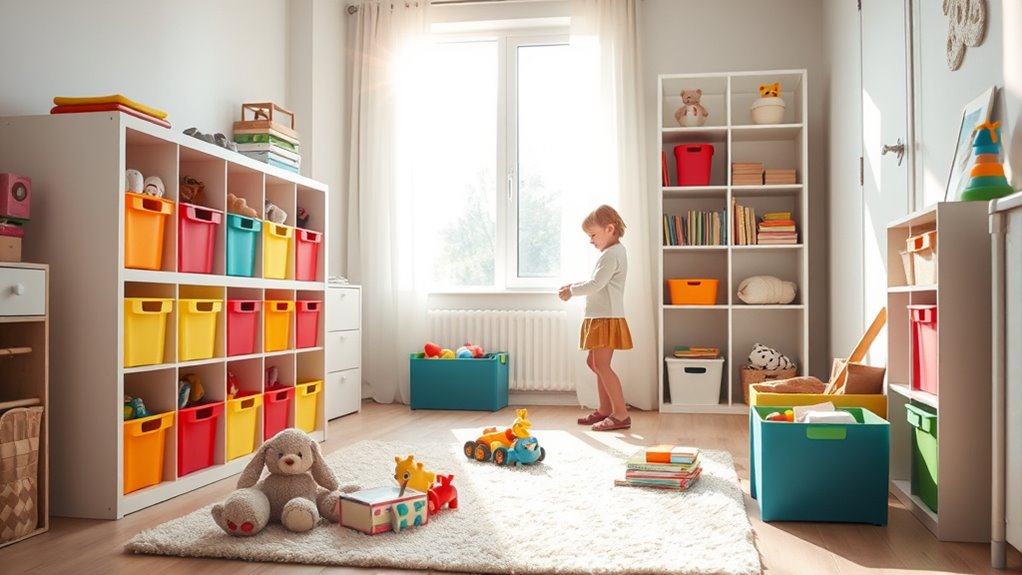
Ever wonder how to transform chaos into calm in your child’s room? It’s a common challenge, but the key lies in implementing effective storage solutions and organization tips that make tidying up easier and more manageable. First, assess the space you have and choose storage options that suit your child’s needs. Bins, baskets, and drawers are versatile tools that help contain toys and clutter, preventing items from spreading everywhere. Clear containers are especially helpful because they allow your child to see what’s inside without rummaging through everything. Labeling each container makes it simple for your kid to find and put away toys, fostering independence and responsibility. Consider using stackable bins or shelves to maximize vertical space, keeping the floor clear and making the room feel larger.
Incorporating organization tips into your routine can make a significant difference. Encourage your child to put things away after playtime by creating dedicated zones for different types of toys—like a basket for stuffed animals, a bin for building blocks, or a shelf for books. Consistency is key. Establish a regular cleanup schedule, perhaps at the end of each day or before bedtime, to reinforce the habit. Make organization fun by turning it into a game or challenge, motivating your child to keep their space tidy. Also, involve them in choosing storage solutions so they feel invested in maintaining their room. When they have a say in where things go, they’re more likely to keep their belongings organized.
Another effective tip is to declutter regularly. Set aside time every few months to go through toys and clothes, removing items that are broken, no longer used, or outgrown. This prevents accumulation of unnecessary clutter, making it easier to organize what remains. Additionally, understanding the importance of proper nutrition and maintaining a balanced diet can influence your child’s energy and motivation for tidying up, as a healthy diet supports overall well-being. Keep in mind that a clutter-free room isn’t about perfection but about creating a space that’s functional and inviting. It should be easy for your child to access their favorite toys and for you to keep the room neat without a constant battle. Remember, the goal is to foster good habits by making organization simple and accessible. With the right storage solutions and consistent organization tips, you’ll find that managing toys and chaos becomes less overwhelming, transforming your child’s room into a space that’s both fun and functional.
Frequently Asked Questions
How Often Should I Declutter My Child’s Room?
You should declutter your child’s room regularly to keep it organized and manageable. A good rule is to set a decluttering schedule, like every few months, and incorporate toy rotation to minimize clutter. This way, you prevent overwhelming buildup of toys and keep things fresh for your child. Consistent decluttering helps teach responsibility while maintaining a tidy space that’s easier to clean and enjoy.
What Are the Best Storage Solutions for Small Spaces?
Think of small spaces like a puzzle—you need the right pieces to fit perfectly. Use multi-purpose furniture to save space and keep things organized, like beds with drawers or storage ottomans. Wall-mounted storage is your best friend, offering vertical space for toys and books without cluttering the floor. These solutions maximize every inch, making your child’s room functional and tidy, even in tight spots.
How Can I Involve My Child in Decluttering?
You can motivate your kids to declutter by involving them in parent-child collaboration. Make it fun by setting a timer or turning it into a game. Encourage them to choose what to keep and donate, giving them a sense of control. Praise their efforts, and remind them how organized spaces make playtime easier. This approach helps kids feel responsible and motivated, making decluttering a positive experience for everyone.
What Should I Do With Toys That Are Broken or Missing Parts?
When you find broken or missing parts in toys, first decide if repair options are feasible; you might fix some or look for replacement parts online. If repair isn’t practical, consider donation possibilities—many charities accept gently used toys, but broken or incomplete ones should be recycled or discarded responsibly. This approach keeps your child’s space organized and teaches them about responsible toy management and giving back.
How Do I Handle Sentimental Items From My Child’s Childhood?
Don’t let sentimental keepsakes and childhood memorabilia overwhelm you; it’s a delicate balancing act. You should select a few meaningful items that truly capture special memories, then find a special box or display for them. Keep only what sparks joy and consider photographing other keepsakes before letting go. This way, you preserve memories without clutter, and you maintain a clutter-free space that still honors your child’s precious moments.
Conclusion
By tackling your kids’ rooms with a clear plan, you turn chaos into calm like a skilled conductor. Keep the clutter in check by involving your kids, setting regular tidying routines, and donating what no longer sparks joy. Remember, a tidy space isn’t just about order — it’s a sanctuary where your kids can grow, learn, and play freely. With a little effort, you’ll create a peaceful oasis amid the toy tornado.
Fall Picks
fall essentials
As an affiliate, we earn on qualifying purchases.