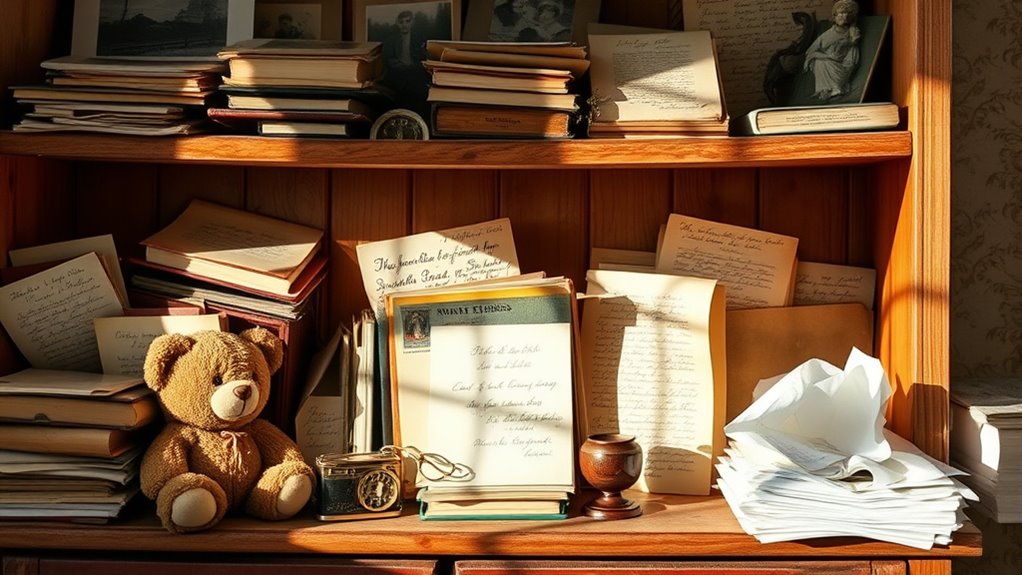

When deciding whether to keep or toss sentimental clutter, focus on what truly matters and sparks joy. Recognize your emotional attachments but be honest about what serves a meaningful purpose. Digitize photos and stories to save space, and choose only a few treasured items to keep physical copies. Balancing memory preservation with practicality helps prevent overwhelm and creates a space that reflects your meaningful moments. If you want to discover effective strategies, stay tuned.
Key Takeaways
- Assess emotional significance by asking why each item matters and if it truly reflects meaningful memories.
- Digitize or photograph keepsakes to preserve memories while reducing physical clutter.
- Create a dedicated memory box for items that evoke strong feelings, and let go of less meaningful objects.
- Focus on quality over quantity; keep items that spark joy or connection, and discard the rest.
- Recognize that memories are stored in your mind and heart, so physical items are optional for preserving sentiment.
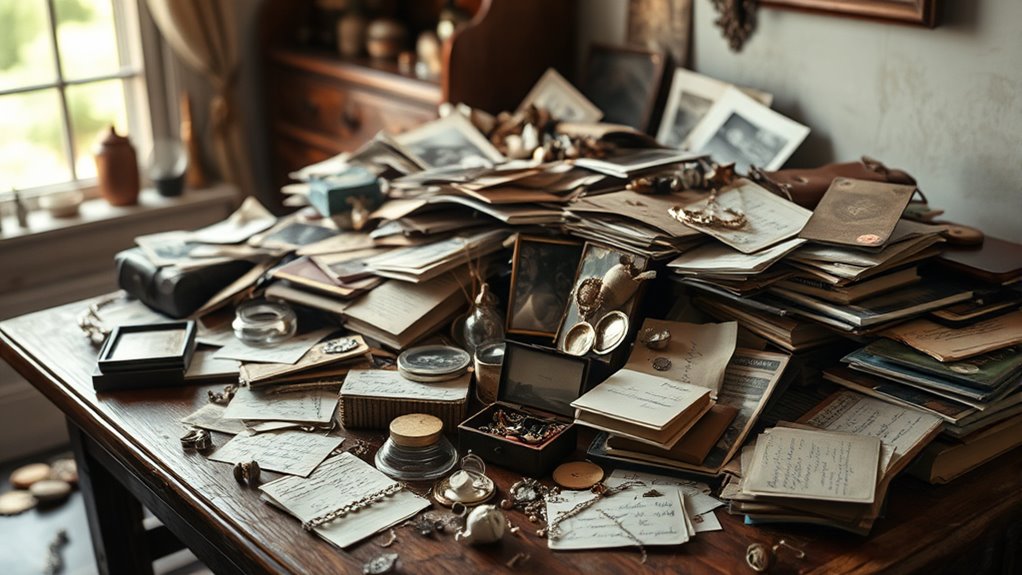
Sentimental clutter can be one of the most challenging types of clutter to tackle because it’s tied to memories and emotions. You might find yourself holding onto items because they represent important moments or people in your life, making it difficult to decide whether to keep or toss. The key here is understanding that these objects serve as physical reminders of your past, but they can also take up valuable space and create emotional overwhelm. When it comes to managing sentimental clutter, your goal should be to balance memory preservation with practicality. You don’t have to part with everything, but you do need a strategy to avoid feeling overwhelmed by every keepsake.
Your emotional attachment to certain items is natural, and it’s what makes these decisions hard. Instead of dismissing your feelings, acknowledge them. Ask yourself why a specific object holds significance. Is it because it reminds you of a loved one, a special event, or a personal achievement? Or is it because you’re afraid of losing the memory altogether? Recognizing the emotional value behind an item can help you decide if it truly deserves a place in your home or if it’s just taking up space without serving a meaningful purpose anymore.
Acknowledge your feelings and ask why an item holds significance to decide if it deserves a place.
To help preserve your memories without clutter, consider creating a designated memory box. Select only the most meaningful items—perhaps photos, letters, or small keepsakes—and store them neatly. This way, you keep the essence of your memories without letting clutter spiral out of control. Digitizing sentimental items, like photographs or letters, can also be a game-changer. It allows you to hold onto the memory while freeing up physical space. You might scan old photos and keep a digital album, or record stories associated with certain objects. This approach preserves the essence of your memories while reducing the physical clutter that can become overwhelming. Additionally, understanding DIY candle making techniques might inspire you to create a comforting keepsake, such as a candle scented with a favorite fragrance to evoke a cherished memory.
Another helpful tip is to be honest with yourself about what truly matters. If an item no longer sparks joy or connection, even if it’s tied to a significant memory, consider letting it go. Remember, memories aren’t solely stored in objects—they’re in your mind and heart. Keeping everything out of guilt or obligation can lead to unnecessary clutter and emotional strain. Ultimately, your goal should be to honor your past without allowing your possessions to weigh you down. By carefully selecting what to keep and what to let go, you create a space that reflects your life’s meaningful moments while maintaining a manageable, clutter-free environment.
Frequently Asked Questions
How Do I Start Sorting Through Sentimental Clutter?
When you start sorting through sentimental clutter, begin with a clear plan and specific organizing strategies. Break the task into manageable steps, like sorting items into keep, donate, or discard piles. Acknowledge your emotional attachment, but stay focused on your goals. Take your time, and consider asking yourself if each item truly adds value or memories. This approach helps you navigate emotional challenges while efficiently managing sentimental clutter.
What Are Creative Ways to Preserve Memories Without Keeping Everything?
You want to preserve memories without clutter, but how? Think of digital archiving: scan photos, letters, and keepsakes to create a virtual treasure chest. Then, try creative repurposing—turn those digital images into photo books, collages, or personalized gifts. This way, you hold onto the emotions and stories while keeping your space tidy. It’s a heartfelt balance between cherishing the past and embracing a clutter-free future.
How Can I Involve Family Members in Decision-Making?
When involving family members in decision-making, you can encourage family participation by hosting a casual chat or family meeting. Share your thoughts openly and invite their perspectives to foster shared decision making. Respect everyone’s opinions, and aim for consensus. This approach helps you understand each person’s feelings, making the process smoother and more inclusive, ensuring that sentimental items are handled with care and mutual agreement.
When Is It Time to Let Go of Sentimental Items?
Ever wonder when it’s time to let go of sentimental items? You’ll know it’s right when emotional attachment begins to cause more stress than joy. If keeping a keepsake no longer preserves meaningful memories or feels more like a burden, it’s a sign to release it. Letting go allows you to preserve important memories without clutter, making space for new experiences. Trust your feelings and focus on what truly brings you happiness.
How Do I Handle Guilt Associated With Discarding Sentimental Belongings?
When handling guilt associated with discarding sentimental belongings, remember that emotional attachment doesn’t mean you have to keep everything. You can manage guilt by honoring memories in other ways, like creating a photo album or writing about your experiences. Focus on what truly matters to you now, and give yourself permission to let go. This approach helps you balance emotional attachment with healthy guilt management, making the process easier.
Conclusion
Ultimately, deciding whether to keep or toss sentimental clutter isn’t just about decluttering; it’s about understanding how memories shape your identity. Some theories suggest that holding onto certain items helps preserve your sense of self, while others argue that letting go allows for growth and new experiences. Trust your intuition, but remember, research shows that intentionally choosing what to keep can lead to greater emotional well-being. Balance sentimentality with practicality to find true peace.