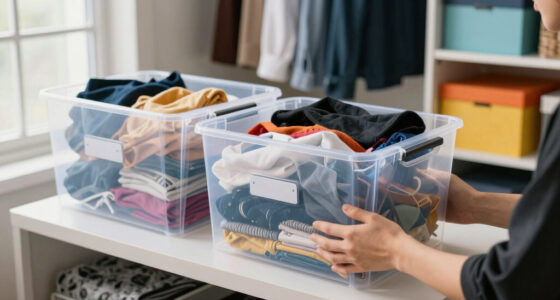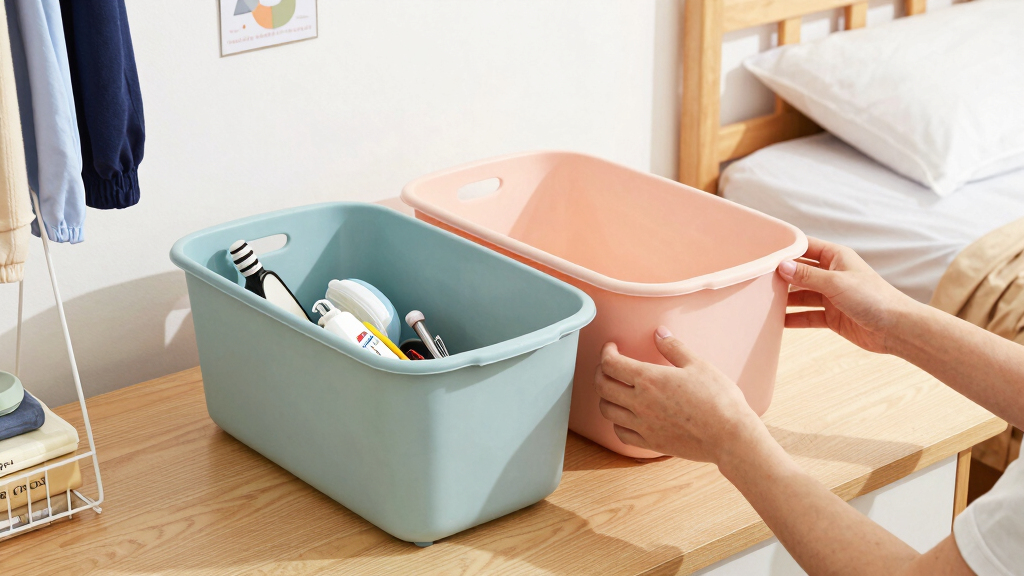

Choosing the right dorm room organization bins depends on your priorities for durability, style, space efficiency, and budget. Plastic stackable bins are known for their robustness and ability to maximize vertical space, making them ideal for students who value long-term durability. Fabric collapsible bins, on the other hand, offer a softer, more adaptable solution that can blend into decor and be easily stored away when not in use. This comparison helps students and parents decide which type aligns best with their needs, considering factors like cost, practicality, and style preferences. The main difference lies in their construction and how they serve different organizational styles, with one focusing on toughness and stacking stability, the other on flexibility and aesthetic integration.
At a Glance
| Criteria | Plastic Stackable Bins | Fabric Collapsible Bins | Winner |
|---|---|---|---|
| Durability | High durability, resistant to cracks and impacts | Moderate durability, may wear over time | A |
| Flexibility | Limited flexibility, rigid design | Highly flexible, collapsible and foldable | B |
| Aesthetic Appeal | Less aesthetic variety, utilitarian look | More aesthetic options, softer look | A |
| Ease of Use | Simple stacking and organizing | Easy to fold and store away | B |
| Storage Efficiency | Maximizes vertical space with stackability | Good for irregular spaces, less stacking stability | A |
| Cost | Higher initial cost | Lower cost | B |
| Cleaning & Maintenance | Easy to wipe clean, resistant to stains | Requires gentle cleaning, fabric may stain | A |
| Environmental Impact | Less eco-friendly, plastic production concerns | More eco-friendly, often made from recycled or natural fabrics | B |

Amazon Basics Collapsible Fabric Storage Cubes Organizer with Handles, Sturdy Storage Bins for Organization, 10.5" x 10.5" x 11", Beige, 6-Pack
INCLUDES SIX CUBES: Keep your home tidy and organized with this set of six cloth storage cubes
As an affiliate, we earn on qualifying purchases.
Amazon Basics Collapsible Fabric Storage Cubes Organizer with Handles, 6-Pack

This set of six fabric storage cubes stands out for its lightweight and flexible design, making it perfect for dorm rooms where space is at a premium. The handles add portability, allowing you to easily move items around, whether you’re tidying up or reorganizing. Compared with larger, rigid options, these cubes are more adaptable, though their support for only 5 lbs per cube means they’re best suited for lightweight items like clothing, accessories, or small supplies. They require compatible cube organizers for a streamlined look but excel at adding flexible storage options without bulk.
Amazon Basics Collapsible Fabric Storage Cubes Organizer with Handles, 6-Pack
- ✔ Dimensions: 10.5" x 10.5" x 11"
- ✔ Color: Beige
- ✔ Number of Pieces: 6

Budding Joy 90L Under Bed Storage Containers, Foldable Closet Organizers and Storage Bins, Grey
- ✔ Material: Non-woven fabric + PVC
- ✔ Capacity: 90 liters / 24 gallons
- ✔ Dimensions: 39 x 20 x 7 inches

YFXCVSL 4-Tier Plastic Storage Bins with Lid, 23QT, Stackable with Wheels
- ✔ Capacity: 23 quarts
- ✔ Number of Items: 4
- ✔ Item Dimensions: 32.87"L x 15.35"W x 11"H
Pros:
- Set of six versatile fabric cubes
- Lightweight yet sturdy construction
- Handles for easy portability
- Collapsible for compact storage
Cons:
- Supports only up to 5 lbs per cube
- Not suitable for heavy or bulky items
- Requires compatible cube organizers for a neat setup
Best for: Students needing flexible, lightweight storage for clothing, accessories, or small items
Not ideal for: Heavy textbooks, bulky supplies, or items requiring rigid support
Bottom line: A versatile, lightweight option ideal for flexible dorm storage but limited in supporting heavier items.
“A versatile, lightweight option ideal for flexible dorm storage but limited in supporting heavier items.”

Budding Joy 90L Under Bed Storage Containers, Closet Organizers and Storage Bins, Foldable Underbed Storage Bags for Linen Sheets, Blanket, Clothing, Comforter, Sweaters, Pillows, Wrapping Paper, Grey
Premium Material : The under bed storage containers are made from high-quality, odorless, three-ply composite non-woven thick fabric,...
As an affiliate, we earn on qualifying purchases.
Budding Joy 90L Under Bed Storage Containers, Foldable Closet Organizers and Storage Bins, Grey
This large-capacity storage solution is perfect for bulky or seasonal items. Made from breathable non-woven fabric, it features a clear PVC window for easy content identification and reinforced handles for durability. Compared with smaller, fabric-only options, this container offers a generous 90 liters of space, making it suitable for blankets, clothing, or linens. However, its collapsible design may reduce shape over time, and it lacks rigid support, meaning it’s less sturdy when fully loaded. Its size limits its use to under-bed or closet storage, but it excels at hiding away large items efficiently.
Pros:
- Large 90L capacity
- Breathable, odorless material
- Clear window for quick content identification
- Reinforced handles for durability
Cons:
- May lose shape over time
- Less sturdy when fully loaded
- Limited to under-bed or closet use due to size
Best for: Students needing large, breathable storage for seasonal clothing or bedding
Not ideal for: Items requiring rigid support or frequent access
Bottom line: A spacious, breathable storage container ideal for bulky items, with some tradeoffs in rigidity and shape retention.
“A spacious, breathable storage container ideal for bulky items, with some tradeoffs in rigidity and shape retention.”
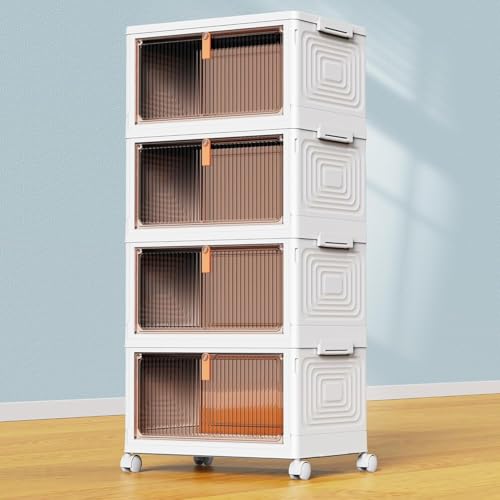
YFXCVSL 4 Tier Plastic Storage Bins with Lid 23QT, Stackable Storage Containers with Wheels, Folding Storage Boxes, Stackable Storage Bins, Organizers and Storage for Living Room,Office,Dorm
【92Qt Storage Boxes】With total volume of 92QT, the storage box measures 15.35in*11in*8.27in each tier.The Storage bins are good...
As an affiliate, we earn on qualifying purchases.
YFXCVSL 4-Tier Plastic Storage Bins with Lid, 23QT, Stackable with Wheels
This set of four stackable, 23-quart bins is designed for those who value easy access and mobility. Made of durable polypropylene, each bin features a lid, front doors, and lockable wheels, making it ideal for organizing craft supplies, clothes, or household essentials. The stackable design helps save space, and the wheels provide mobility for rearranging or cleaning. Compared to fabric or large under-bed options, these bins offer quick access and mobility, though their capacity is more limited, and assembly instructions can be less clear. Their aesthetic may also be less suited for those seeking a softer look.
Pros:
- Stackable and space-saving design
- Lids, front doors, and lockable wheels for easy access
- Durable polypropylene construction
- Mobility for flexible room arrangement
Cons:
- Limited capacity at 23 quarts
- Assembly instructions may be unclear
- Wheels may not support very heavy loads
Best for: Students needing accessible, mobile storage for frequently used items
Not ideal for: Heavy or bulky items that exceed capacity, or aesthetic preferences favoring softer materials
Bottom line: An excellent choice for accessible, mobile storage that keeps frequently used items within reach, with some capacity and aesthetic compromises.
“An excellent choice for accessible, mobile storage that keeps frequently used items within reach, with some capacity and aesthetic compromises.”
As an Amazon Associate we earn from qualifying purchases.
Key Differences
The core difference between plastic stackable bins and fabric collapsible bins revolves around their construction and intended use. Plastic bins are ideal for students who need a sturdy, long-lasting solution that can handle heavy items and provide stable stacking to maximize limited space. Their rigid form is less adaptable but offers superior durability. Fabric bins, by contrast, excel in flexibility and aesthetic appeal, making them suitable for students prioritizing style, ease of storage, or variable space requirements. While they may wear out faster, their softer, collapsible design allows for easier storage when not in use and a more personalized look in the room.
In practical terms, students living in tight spaces who need heavy-duty storage might lean toward plastic bins for their stability and durability. Those seeking a more stylish, adaptable option that can be tucked away easily may prefer fabric bins, especially if they want to match room decor or frequently change their organizational setup. The choice ultimately depends on whether durability and space efficiency outweigh flexibility and aesthetic considerations.
Detailed Comparison
Durability (Plastic Stackable Bins wins — major)
Plastic bins are significantly more durable, resisting cracks and impacts, making them suitable for long-term use and heavier items. Fabric bins tend to wear out faster, especially with frequent handling or weight, but offer enough durability for light to moderate use. This major difference impacts longevity and the ability to store heavier items without risk of damage.
Flexibility (Fabric Collapsible Bins wins — moderate)
Fabric bins are highly flexible, easily collapsible for storage or transport, fitting into irregular spaces. Plastic bins are rigid, offering stability but less adaptability. This moderate gap can be decisive if space configuration or portability is a priority for the user.
Aesthetic Appeal (Fabric Collapsible Bins wins — moderate)
Fabric bins typically come in various colors, patterns, and textures, allowing for better room matching and personal style. Plastic bins have a utilitarian look, often limited to neutral or transparent options. This difference is moderate but influences the overall room ambiance for style-conscious users.
Ease of Use (Fabric Collapsible Bins wins — moderate)
Fabric bins are lightweight, foldable, and easy to move or store when not in use. Plastic bins are heavier and stackable but less portable. For frequent reorganization or space-saving needs, fabric bins win in convenience, making this a moderate advantage.
Storage Efficiency (Plastic Stackable Bins wins — major)
Plastic bins stack securely, maximizing vertical space and keeping the room organized. Fabric bins, while stackable, may be less stable and less space-efficient when stacked high, especially if filled unevenly. The difference is major for tight spaces where maximizing storage is critical.
Cost (Fabric Collapsible Bins wins — minor)
Fabric bins are generally less expensive upfront, making them attractive for students on a budget. Plastic bins tend to cost more, especially for higher quality, durable options. This is a minor to moderate difference, but it matters for budget-conscious buyers.
Cleaning & Maintenance (Plastic Stackable Bins wins — moderate)
Plastic bins are easier to clean, requiring only wiping down with a cloth. Fabric bins may stain and are more difficult to clean thoroughly, often needing gentle hand washing. This is a moderate difference, affecting long-term hygiene and maintenance effort.
Environmental Impact (Fabric Collapsible Bins wins — moderate)
Fabric bins are typically more eco-friendly, especially if made from recycled or natural materials. Plastic bins have a higher environmental footprint due to manufacturing and difficulty recycling. This is a moderate to major factor for environmentally conscious users.
Plastic Stackable Bins: Pros and Cons
Pros:
- Very durable and resistant to impact
- Provides stable stacking for maximum space efficiency
- Easy to clean and maintain
- Long-lasting for heavy use
Cons:
- Heavier and less portable
- Limited aesthetic options
- Higher initial cost
- Less flexible in irregular spaces
Fabric Collapsible Bins: Pros and Cons
Pros:
- Flexible, collapsible, and portable
- More aesthetic options for room decor
- Lower initial cost
- Eco-friendly options often available
Cons:
- Less durable, wears out over time
- Less stable stacking, less space-efficient
- More difficult to clean thoroughly
- May stain or accumulate dirt
Who Should Choose What
Choose Plastic Stackable Bins if:
- You prioritize long-term durability and stable stacking for heavy or frequent use
- Maximizing vertical storage in a small space is critical
- You prefer easy cleaning and low-maintenance options
Choose Fabric Collapsible Bins if:
- You want a lightweight, flexible storage solution that can be easily stored away
- Aesthetics and matching room decor are important
- On a tight budget or environmentally conscious
Value for Money
Plastic bins tend to cost more upfront but offer longevity and stability, making them better value for students who need durable, long-term storage. Fabric bins are more affordable and eco-friendly, fitting well for temporary or aesthetic needs but may require replacement sooner. The decision depends on whether durability or flexibility provides greater overall value for the user’s specific needs.Final Verdict
For students seeking durable, space-maximizing storage that can handle heavy use, plastic stackable bins are the better choice despite their higher cost. They offer stability, ease of cleaning, and long-term durability. Conversely, students prioritizing aesthetic appeal, portability, or budget-friendly options should opt for fabric collapsible bins. They provide flexibility, style, and easier storage but at the expense of longevity and stability.
Frequently Asked Questions
Are plastic bins safe for storing food or perishable items?
Most plastic bins are not designed for food storage unless explicitly labeled food-safe. For perishable items, consider bins made from food-grade plastic or use dedicated containers.
Can fabric bins hold heavy items?
Fabric bins are generally suitable for lightweight to moderate items; heavy objects may cause them to sag or tear over time. Always check weight limits specified by the manufacturer.
How do I clean fabric storage bins?
Most fabric bins can be spot cleaned with a damp cloth or gently hand washed. Avoid machine washing unless specified, and allow them to air dry thoroughly.
Which type is better for eco-conscious students?
Fabric bins are typically more eco-friendly, especially if made from recycled or natural materials. Plastic bins have a higher environmental impact but may last longer, reducing replacement needs.