
TL;DR
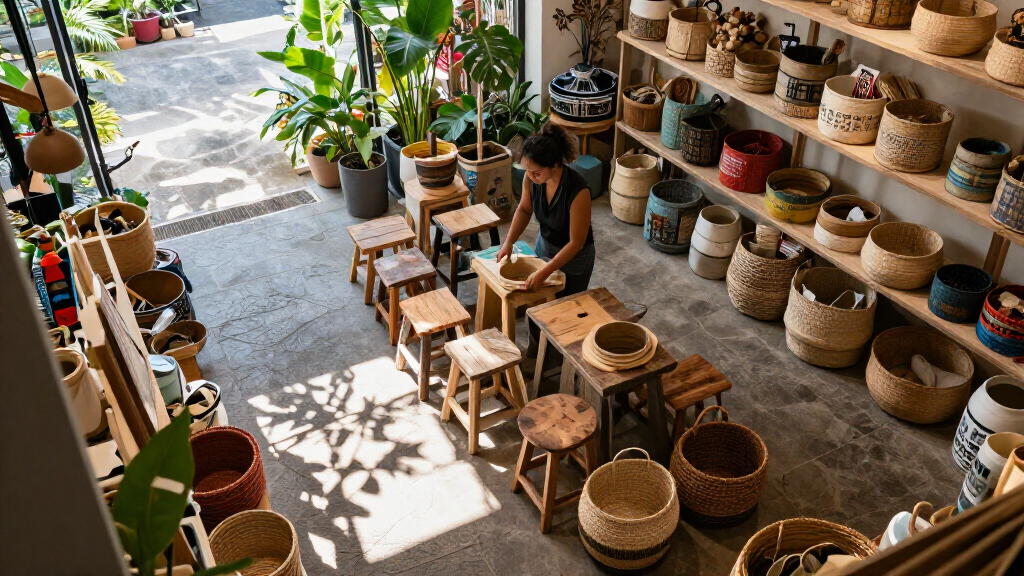
OMA and Desa Potato Head have created Good Times General Store, the hospitality brand’s first permanent retail space, in Bali. Its five connected bays combine Indonesian-made goods and apparel with a natural dye studio and a workshop, using locally sourced and reclaimed materials to foreground making and reuse.
OMA and Desa Potato Head have created the Good Times General Store, the Bali hospitality brand’s first permanent retail space, bringing shops, workshops and reclaimed-material displays together. The five-bay store is designed to make the materials and processes behind products part of the visitor experience, extending Potato Head’s “Good Times, Do Good” philosophy into its retail space.

Get furniture and decor delivered free with Prime
- Fast, free delivery on millions of items
- Prime Video, Amazon Music and more included
- Member-only deals all year
The store’s architecture pairs Balinese building techniques with a contemporary design. An outer façade of locally sourced alang-alang tropical grass sits alongside interior rammed-earth walls made from local clay. Bamboo is used in display elements and as an aggregate in terrazzo flooring. The design also incorporates reclaimed and locally sourced materials, whose variations in color, texture and shape were allowed to influence the finished details.
The five connected bays move from finished products toward production and participation. The first presents souvenirs and lifestyle objects by Indonesian craftspeople; the second carries the Potato Head Collection, an apparel line inspired by Bali. The third features Wasted by Potato Head, a collaboration with British designer Max Lamb that turns discarded materials into furniture and homewares.
The final two bays shift the focus to making. A working natural dye studio uses food and plant waste to produce pigments for workshops in dyeing, painting and pattern-making. The adjacent Workshop displays shredded HDPE plastic recovered from waste collectors across Bali and Java, using its colorful fragments as part of the architecture. The space is dedicated to experimentation, though no visitor schedule, workshop prices or operating hours were provided.
Retail built around making and reuse
Good Times General Store brings Indonesian-made goods, reclaimed materials and hands-on making together at Desa Potato Head in Bali.
A store shaped by local materials
Balinese building techniques meet contemporary design, with material variation guiding the details.
Alang-alang and clay
Locally sourced tropical grass covers the façade; local clay forms rammed-earth walls.
Bamboo and reclaimed materials
Bamboo appears in displays and terrazzo flooring, alongside reclaimed materials.
From products to participation
The connected bays shift the visitor experience from browsing finished goods toward making.
Souvenirs and lifestyle objects by Indonesian craftspeople.
The Potato Head Collection brings clothing into the retail mix.
Wasted by Potato Head, with Max Lamb, turns waste into furniture and homewares.
Food and plant waste become pigments for workshops; shredded HDPE plastic recovered across Bali and Java shapes the Workshop space.
What circular design means here
Reuse becomes part of the visit, through materials and activities visitors can encounter directly.
- Discarded plastic used as part of the architecture.
- Plant and food waste turned into dye pigments.
- Workshops explore dyeing, painting and pattern-making.
- The Waste Lab and Follow the Waste Tour extend the context at Desa Potato Head.
Retail Built Around Making and Reuse
The project offers a retail model in which shopping and hands-on activity share the same space. Instead of limiting sustainability to product descriptions or visual cues, the store puts material reuse on view through the plastic wall, the dye studio and workshops. Visitors can encounter discarded resources as building material or pigment, alongside objects made from them.
That approach matters because it makes circular design a part of a customer’s visit, rather than an abstract claim about a finished product. The design team says materials’ availability and natural variation shaped the project, implying a process less dependent on uniform inputs. The store is a single hospitality setting, however; details provided do not establish its environmental impact, how much waste it processes, or whether the approach will be adopted elsewhere.
Products Worth Considering

Dyson V15 Detect Cordless Stick Vacuum

Roborock Q10 S5+ Robot Vacuum and Mop with 10,000 Pa Suction

eufy C28 Robot Vacuum and Mop with 15,000 Pa Suction
As an affiliate, we earn on qualifying purchases.
A Decade of Work Between OMA and Potato Head
The store builds on a partnership between OMA and Potato Head that the project description says has lasted more than a decade. It is framed as an extension of the brand’s “Good Times, Do Good” philosophy and as a physical counterpart to the resort’s broader sustainability programming.
At Desa Potato Head, the Waste Lab and the Follow the Waste Tour introduce visitors to ways discarded materials can be recovered, processed and turned into new objects. OMA also connects the store to N*thing is Possible, a 2022 exhibition in Singapore about the potential of zero-waste hospitality. The store applies those themes through its architecture and activities; no opening date or detailed operational results were supplied.
““We wanted to reinterpret Balinese traditional architecture and craftsmanship in a contemporary way, rather than simply reproducing traditional forms or decorative elements.””
— Ade Herkarisma, Potato Head group head of architecture and development
Opening and Operating Details Still Missing
The project description calls the store new but does not give a specific opening date, hours, location details within Desa Potato Head, or information about workshop access and fees. It also does not quantify the amount of reclaimed material used, the volume of waste diverted, or the store’s emissions and environmental performance.
The design team’s statements describe intentions and methods, not independently measured outcomes. It is not clear how consistently reclaimed materials will be available, how often the workshops will run, or how the store will track the long-term effects of its circular-design approach.
Visitor Programs and Impact Measures
Visitors can encounter the store’s planned activities through its natural dye workshops and experimentation space, alongside the retail displays. The store also sits within a wider Desa Potato Head program that includes the Waste Lab and Follow the Waste Tour. The materials provided do not announce future events, a workshop calendar or a formal next milestone.
Further details on operating hours, participation and material use would help show how the concept works day to day. For now, the confirmed development is the opening of a permanent retail space designed around locally sourced and reclaimed materials, with making made visible alongside shopping.
Key Questions
What is Good Times General Store?
Good Times General Store is Desa Potato Head’s first permanent retail space, created with OMA. It combines product displays with spaces for workshops and material experimentation.
Where is the store?
The store is at Desa Potato Head in Bali. Further location details within the destination were not provided.
What materials does the design use?
The design includes alang-alang tropical grass, local clay, bamboo and reclaimed materials. A wall in the Workshop uses shredded HDPE plastic recovered from waste collectors across Bali and Java.
Can visitors take part in workshops?
The store includes a natural dye studio with workshops exploring dyeing, painting and pattern-making, as well as a space for experimentation. A schedule, booking process and fees were not specified.
What does circular design mean at the store?
In this project, circular design is expressed through reusing discarded materials, adapting the design to available resources and involving visitors in making. The project description does not provide measured environmental impact figures.
Source: design-milk.com