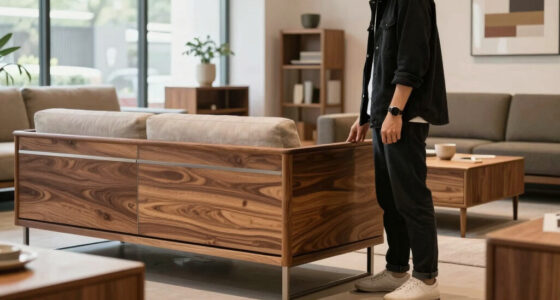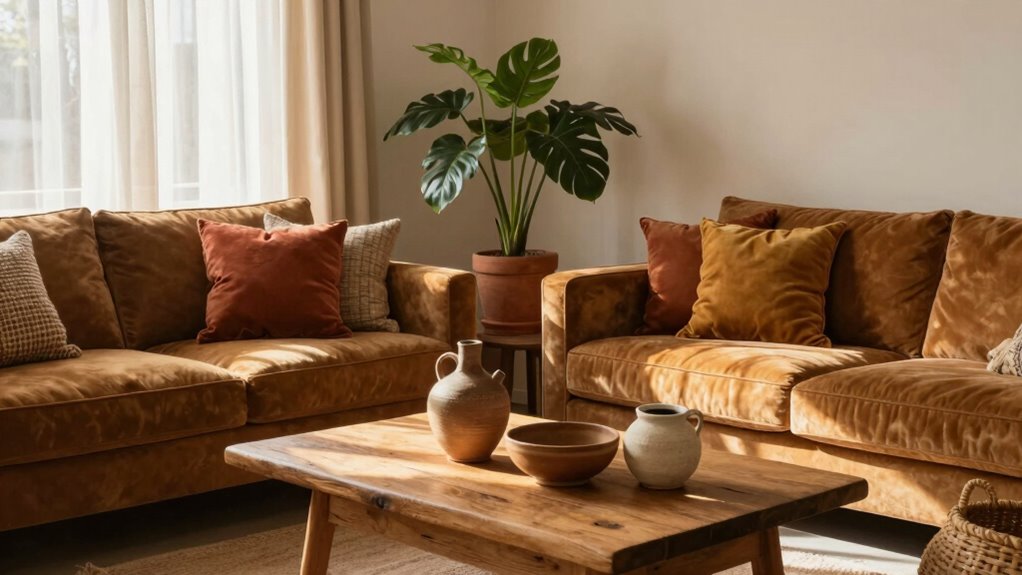

Design trends are shifting toward warmth because you now crave spaces that feel more personal and emotionally comforting. After minimalism’s sleek and sterile vibe, you’re drawn to cozy textures, inviting colors, and natural materials that foster connection. Warm hues like terracotta and buttery yellows create a relaxing atmosphere, making your space more welcoming. If you keep exploring, you’ll discover how these design choices help turn your home into a true sanctuary filled with personality and warmth.

Get furniture and decor delivered free with Prime
- Fast, free delivery on millions of items
- Prime Video, Amazon Music and more included
- Member-only deals all year
Key Takeaways
- People seek emotional connection and comfort, moving away from the cold, sterile feel of minimalism.
- Warm colors and textures promote relaxation, making spaces feel more inviting and personal.
- Natural materials and tactile surfaces enhance sensory engagement and authenticity in home design.
- The trend reflects a desire for spaces that nurture well-being and foster emotional nourishment.
- Design shifts prioritize coziness and approachability, balancing aesthetics with human need for connection.
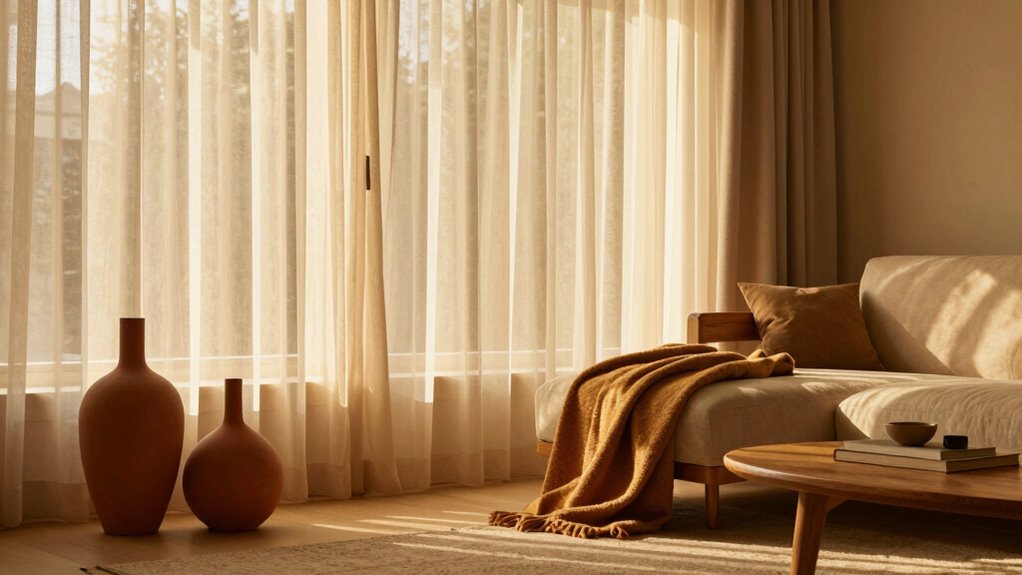
As design preferences evolve, there’s a noticeable shift toward warmer, more inviting interiors. After years of embracing minimalism’s clean lines and stark simplicity, people now seek spaces that feel cozy and personal. This change reflects a desire for comfort and emotional connection, which is why color psychology plays such a vital role. Warm hues like soft beige, terracotta, and buttery yellows evoke feelings of relaxation and happiness, making your space feel more welcoming. These colors don’t just look good—they influence your mood, creating an environment where you can unwind after a long day. As you incorporate warmer tones, you start to notice how they soften the overall aesthetic, replacing the cool, sterile vibe of minimalism with something more heartfelt and relatable. Additionally, incorporating seasonal color blends can further enhance this cozy atmosphere, making your space feel dynamic and alive throughout the year. Recognizing the importance of material textures helps deepen this emotional connection, as tactile surfaces invite touch and engagement. Material textures also become essential in this shift toward warmth. Instead of sleek, polished surfaces, you gravitate toward tactile materials that invite touch and add depth. Think plush fabrics, rough-hewn wood, and textured ceramics. These textures create visual interest and sensory appeal, making your space feel layered and rich rather than flat and sparse. Incorporating textural contrasts can amplify the tactile richness and create a more inviting environment. You might choose a chunky knit throw, a reclaimed wood coffee table, or woven baskets to add warmth through both look and feel. The contrast between smooth and rough textures enhances the cozy atmosphere, giving your home a tactile dimension that minimalism often lacks. This transition isn’t just about aesthetics; it’s a response to a deeper need for emotional nourishment in your environment. Minimalism, with its focus on decluttering and simplicity, can sometimes feel impersonal or cold. Moving toward warmth allows you to craft a space that reflects your personality and invites connection. This shift is also supported by the rising popularity of natural materials, which further emphasize sustainability and authenticity. You want your home to be a sanctuary, not just a showcase. The use of warm colors and textured materials helps you achieve that, making every room feel like a hug rather than a gallery. It’s about balancing beauty with comfort, sophistication with approachability. In essence, the shift toward warm interiors is a natural evolution driven by the human desire for connection and comfort. You’re choosing colors that uplift and materials that engage your senses, creating a space that’s both beautiful and deeply personal. This trend recognizes that homes aren’t just for aesthetic admiration—they’re for living, feeling safe, and expressing yourself. As you incorporate these elements, you transform your environment into a place that’s not only stylish but also emotionally enriching, giving you a sanctuary that truly feels like home.
Products Worth Considering

Philips Hue Bridge Pro Starter Kit with 4 A19 E26 Color Smart Bulbs

Ring Battery Doorbell Plus (2nd Gen) and Chime Plus Bundle, Nickel Silver and White

Dyson Cyclone V10 Origin Cordless Vacuum
As an affiliate, we earn on qualifying purchases.
Frequently Asked Questions
How Do Cultural Influences Impact Warmth in Design Trends?
You notice that cultural influences profoundly impact warmth in design trends. Cultural symbolism shapes color choices, evoking specific emotions or values, while color psychology guides you to select warm tones that foster comfort and connection. As these influences evolve, you adapt your designs to reflect cultural identities, making spaces feel more inviting and personalized. This shift toward warmth helps bridge global styles with local significance, creating designs that resonate deeply with people.
Are There Specific Materials Preferred for Warm Design Aesthetics?
You prefer materials with rich textures like wood, leather, and soft fabrics that add warmth and depth to your space. For color palettes, you choose earthy tones such as warm beige, terracotta, and deep browns, which create inviting, cozy atmospheres. These textures and colors work together to evoke comfort and intimacy, helping you move away from stark minimalism towards a more welcoming, warm design aesthetic that feels personal and lived-in.
How Do Climate Changes Influence Design Trend Shifts?
Imagine climate change as a whisper urging you to embrace comfort and sustainability. As temperatures rise, you naturally seek spaces that evoke warmth and coziness. Climate shifts influence design trends toward sustainable aesthetics by incorporating natural, eco-friendly materials that enhance sensory experiences, making homes feel inviting and resilient. You start prioritizing warmth and sustainability, creating environments that adapt beautifully to our changing world while nurturing your well-being.
What Role Does Technology Play in Evolving Design Preferences?
Technology shapes your evolving design preferences by enabling digital customization, allowing you to tailor spaces to your unique style. Virtual reality lets you experience designs before committing, making choices more personal and immersive. These tools empower you to experiment with warmth, texture, and color, influencing your aesthetic decisions. As technology advances, your ability to create cozy, inviting environments grows, driving trends toward warmth after the minimalism era.
Can Warmth in Design Improve Mental Well-Being?
Warmth in design can profoundly improve your mental well-being by providing emotional comfort and creating a cozy, inviting space. When you incorporate warm tones, soft textures, and ambient lighting, you enhance your sensory experience, making you feel relaxed and secure. This sense of comfort helps reduce stress and anxiety, fostering a positive environment where you can unwind and rejuvenate mentally.
Conclusion
As you embrace this shift toward warmth, remember that change is the only constant in design. Moving away from minimalism, you’re creating spaces that feel inviting and genuine. Trust your instincts, because sometimes, the trend isn’t just about style — it’s about making your space a true reflection of you. Keep in mind, the proof of the pudding is in the eating; your authentic touch will always outshine fleeting trends.