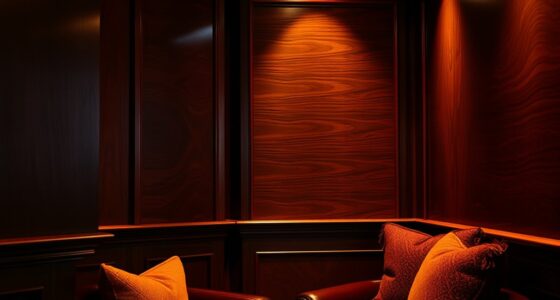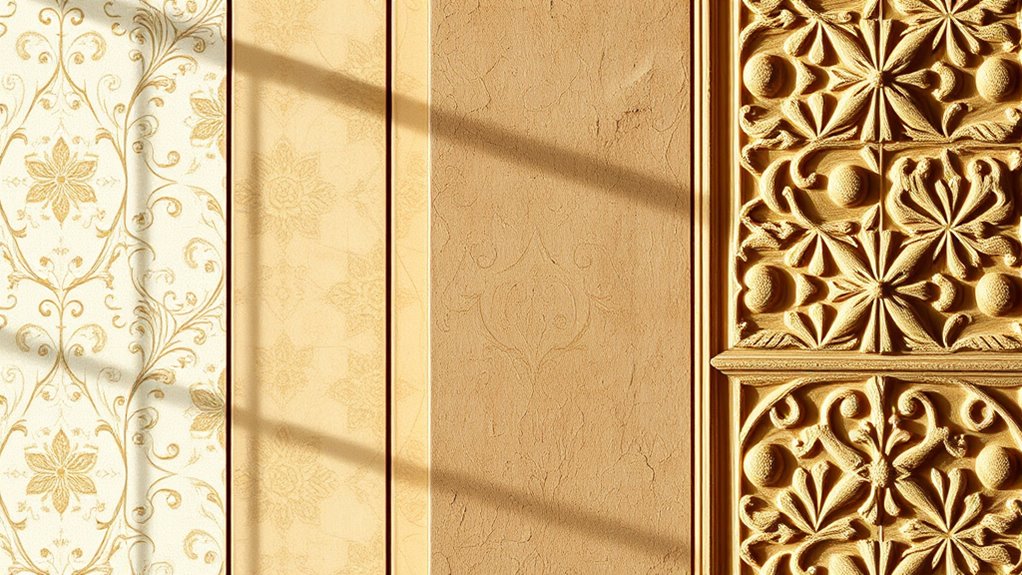
Textured walls can instantly elevate your space by adding depth and visual interest using wallpaper, plaster, or 3D panels. Wallpaper offers versatile, easy-to-install designs that mask imperfections, while plaster techniques like Venetian or stucco provide organic, handcrafted textures with timeless appeal. For a modern touch, 3D panels create striking focal points and conceal flaws. Exploring these options helps you personalize your décor—if you want to discover how to choose the right style for your home, keep exploring.
Key Takeaways
- Textured walls enhance interior depth, character, and visual interest through wallpaper, plaster, or 3D panels.
- Wallpaper offers versatile, easy-to-install textured patterns that hide imperfections and create seamless looks.
- Plaster techniques provide organic, handcrafted textures with customizable depth for timeless elegance.
- 3D wall panels add modern appeal and visual intrigue, suitable for feature walls and surface concealment.
- Choosing between these options allows for personalized style, aesthetic enhancement, and tactile interaction in interior design.
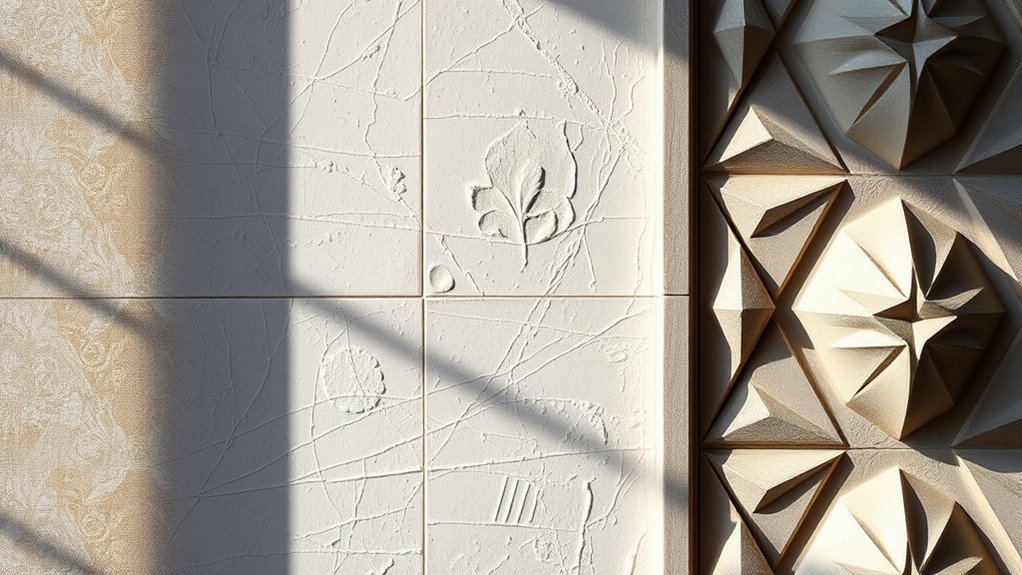
Textured walls can instantly add depth and character to any room, transforming a plain surface into a focal point. When you choose decorative finishes that feature wall textures, you create a striking visual impact that elevates your interior design. These textures add more than just aesthetic appeal—they also provide a tactile element, inviting touch and interaction. Whether you opt for wallpaper, plaster, or 3D panels, each offers unique ways to enhance your space with artistic flair and personality.
Textured walls add depth, character, and tactile charm to elevate your interior design.
Wallpaper with textured patterns is a popular choice because it’s versatile and easy to install. You can select from a wide range of designs—ranging from subtle linen-like finishes to bold geometric patterns—that bring dimension and visual interest. Textured wallpaper doesn’t just hide imperfections; it also introduces a layer of sophistication and style that can complement various decor themes. When applied carefully, wallpaper with decorative finishes creates a seamless, cohesive look that transforms a flat wall into a dynamic feature.
Plaster, on the other hand, allows you to craft more organic, handcrafted wall textures. You can choose from techniques like Venetian plaster, stucco, or textured coats to achieve different effects. These finishes are highly customizable, letting you control the depth and pattern to suit your aesthetic preferences. Applying plaster might require more skill, but it results in a rich, tactile surface that exudes timeless elegance. It’s an excellent choice if you want a more artistic or rustic vibe, as it adds warmth and character that can’t be easily replicated with other materials.
3D wall panels are an innovative way to introduce modern wall textures into your space. Made from materials like MDF, foam, or PVC, these panels come in various patterns—ranging from geometric shapes to natural motifs—that instantly create visual intrigue. Installing 3D panels is straightforward, and they can be painted or finished to match your color scheme. Their three-dimensional aspect makes them ideal for feature walls, giving your room a contemporary edge. They also serve as a practical solution to conceal imperfections or uneven surfaces, all while elevating your interior style.
Ultimately, incorporating textured walls through decorative finishes offers a powerful way to personalize your home. Whether you prefer the subtle elegance of plaster, the versatility of wallpaper, or the bold statement of 3D panels, wall textures give you the opportunity to craft a space that reflects your personality. By choosing the right technique and finish, you enhance not only the look but also the feel of your rooms, creating a warm, inviting atmosphere that’s uniquely yours.
Frequently Asked Questions
How Do I Choose the Right Textured Wall Material for My Space?
To choose the right textured wall material, consider your space’s function and style. If you want low maintenance, wallpaper might be best, but for durability, plaster or 3D panels could suit better. Think about texture maintenance—some materials are easier to clean and repair. Match the material’s durability with your lifestyle, ensuring it withstands daily wear. Ultimately, select a texture that complements your decor while fitting your practical needs.
What Are the Best Cleaning Methods for Textured Wall Surfaces?
To clean textured wall surfaces, use gentle cleaning techniques like a soft brush or vacuum with a brush attachment to remove dust and debris. For stains, lightly dampen a microfiber cloth with water or mild soap, avoiding excessive moisture. Always prevent damage by testing cleaning methods in inconspicuous areas first. Regular maintenance helps preserve the texture, ensuring your walls stay attractive without risking damage or wear over time.
Can Textured Walls Be Removed or Replaced Easily?
Ever wondered if textured walls are easy to remove or replace? They can be challenging due to removal difficulty, especially if glued or embedded deeply. You might need professional help or specialized tools, making the process more involved than plain walls. Luckily, replacement options exist, like new drywall or paneling, which can be installed over existing textures if removal proves too tough. Are you ready to tackle the project?
How Do Textured Walls Impact Room Acoustics?
Textured walls can substantially impact your room’s acoustics by enhancing sound absorption and reducing noise. The uneven surfaces of wallpaper, plaster, or 3D panels break up sound waves, minimizing echo and reverberation. This creates a quieter, more comfortable space. If you want better noise reduction, textured walls are a smart choice, as they improve sound quality by diffusing and absorbing sound more effectively than flat surfaces.
Are Textured Wall Options Suitable for High-Humidity Areas?
Textured wall options are like chameleons, adapting to their environment, making them suitable for high-humidity areas. You’ll find many designs offering excellent humidity resistance, preventing mold and damage. This versatility allows you to maintain style without sacrificing durability. Whether you choose waterproof wallpaper, moisture-resistant plaster, or 3D panels with protective coatings, textured walls can enhance your space’s look while standing strong against humid conditions.
Conclusion
textured walls can truly transform your space, adding depth and personality. For example, imagine a living room where a bold 3D panel creates a striking focal point, making the room feel more inviting and stylish. Whether you choose wallpaper, plaster, or panels, these textures reflect your personality and elevate your home’s design. Don’t be afraid to experiment—your walls are the perfect canvas to showcase your unique style and make a lasting impression.