
Sustainable design focuses on eco-friendly trends that last by prioritizing renewable materials like bamboo, cork, and recycled wood, which reduce reliance on finite resources. Incorporating biophilic principles connects your spaces with nature, promoting well-being and energy efficiency. Practical strategies include using local materials, maximizing natural light, and choosing durable, eco-conscious products. If you want to discover how these approaches can create resilient, environmentally friendly environments, there’s much more to explore.
Key Takeaways
- Incorporating renewable materials like bamboo, cork, and recycled wood ensures eco-friendly, durable design with long-term sustainability.
- Biophilic principles, integrating natural elements and light, promote healthier spaces that foster human well-being and environmental harmony.
- Locally sourced materials and natural lighting reduce carbon footprint and energy consumption, supporting resilient and responsible design.
- Emphasizing long-term impacts over aesthetics encourages sustainable practices that maintain relevance and effectiveness over time.
- Embedding sustainability into every project phase cultivates eco-conscious development with lasting environmental and social benefits.
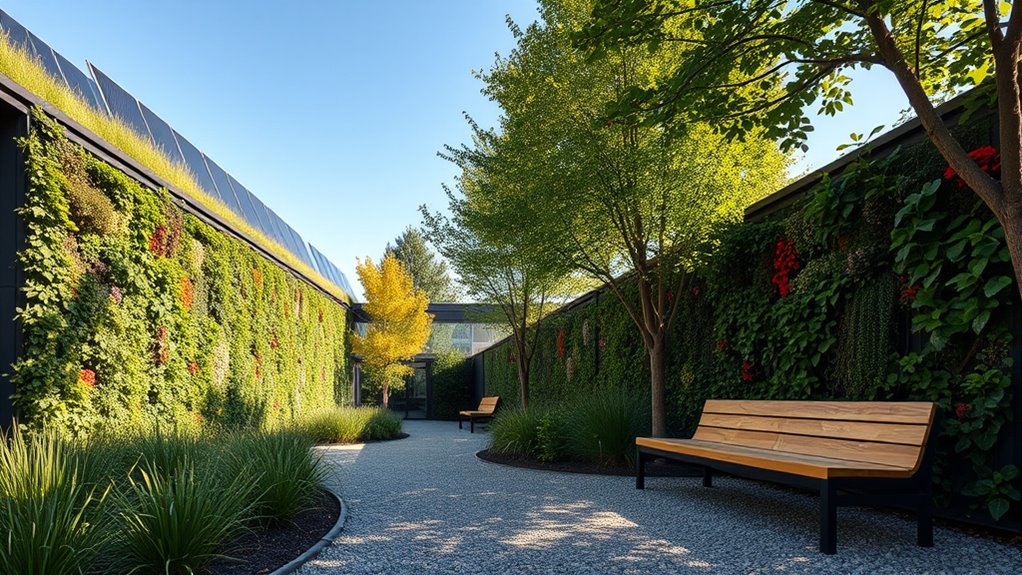
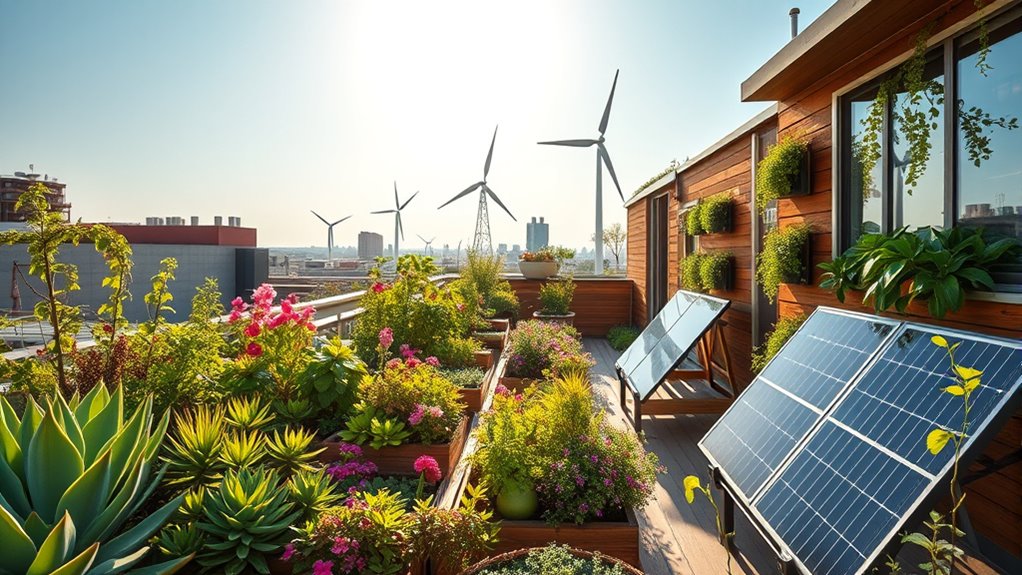
Have you ever wondered how design can help protect the environment? It’s a powerful question because your choices as a designer or consumer can influence sustainability on a broad scale. One of the most impactful ways to do this is by prioritizing renewable materials. These materials, like bamboo, cork, or recycled wood, are sourced responsibly and regenerate quickly, reducing reliance on finite resources. When you incorporate renewable materials into your projects, you’re not only lowering your carbon footprint but also promoting eco-friendly practices that can be maintained over time. These choices make a tangible difference, especially when combined with thoughtful design strategies that emphasize longevity and minimal environmental impact.
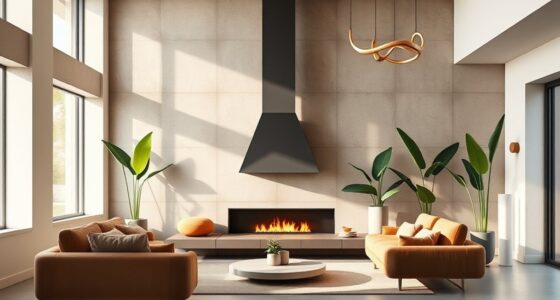
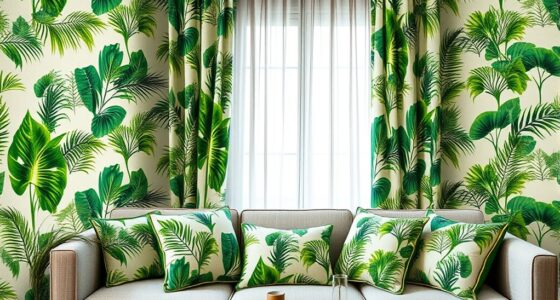
Another essential element of sustainable design is embracing biophilic principles. This approach encourages you to connect built environments with the natural world, fostering harmony between people and nature. By integrating natural elements like plant life, natural light, and views of greenery, you create spaces that are healthier and more restorative. When you design with biophilic principles in mind, you’re helping to reduce stress, improve air quality, and enhance overall well-being. Incorporating natural patterns, textures, and materials also supports the use of renewable sources, making your designs more sustainable. The harmony created through biophilic design isn’t just aesthetically pleasing—it actively contributes to environmental protection by reducing energy consumption and encouraging a sense of stewardship for nature. Additionally, staying informed about emerging sustainable materials can further enhance your projects’ eco-friendliness and longevity.
Embracing biophilic design fosters harmony, reduces energy use, and supports sustainability through natural elements and patterns.
Sustainable design isn’t just a passing trend; it’s a mindset rooted in understanding the importance of conserving resources and respecting the planet’s limits. Using renewable materials and applying biophilic principles are practical ways to achieve this. These methods encourage you to think beyond immediate aesthetics and consider the long-term impacts of your choices. For instance, choosing materials that are locally sourced reduces transportation emissions, while designing spaces that maximize natural light decreases reliance on artificial lighting. Both strategies exemplify how sustainability can be embedded into every phase of design, ensuring that your projects stand the test of time and serve as models for eco-conscious development.
Ultimately, sustainable design is about creating environments that serve people while protecting the planet. When you prioritize renewable materials and integrate biophilic principles, you’re taking concrete steps toward a more sustainable future. It’s about making smarter, more responsible choices that benefit both current and future generations. By doing so, you’ll help foster a built environment that’s resilient, beautiful, and respectful of the natural world—proof that eco-friendly trends can indeed have staying power when rooted in thoughtful, sustainable practices.
Frequently Asked Questions
How Can Small Businesses Implement Sustainable Design Practices Effectively?
You can implement sustainable design practices by focusing on resource management and community engagement. Start by choosing eco-friendly materials and optimizing energy use to reduce costs. Engage your community through local partnerships and transparency, building support and awareness. Incorporate sustainable habits into your daily operations, like waste reduction and water conservation. These steps not only benefit the environment but also enhance your business reputation and customer loyalty, ensuring long-term success.
What Are the Most Cost-Effective Eco-Friendly Materials for Home Renovation?
When choosing eco-friendly materials for your home renovation, you should consider recycled materials like reclaimed wood or glass, which cut costs and reduce waste. Low VOC paints are also a smart choice, as they’re affordable and improve indoor air quality. By selecting these materials, you save money and support sustainability. You’ll enjoy a healthier living space while making a positive environmental impact, all without breaking your budget.
How Does Sustainable Design Impact Long-Term Property Value?
Sustainable design boosts your property’s long-term value by creating a green property that appeals to eco-conscious buyers, reduces operational costs, and enhances durability. It encourages energy efficiency, water conservation, and healthier living spaces, making your home a smart long-term investment. By prioritizing eco-friendly features, you increase appeal, establish market competitiveness, and future-proof your property, ensuring it remains valuable and relevant in a changing world.
Are There Specific Certifications to Look for in Eco-Friendly Building Products?
When choosing eco-friendly building products, you should look for certifications that meet strict Eco label standards and are recognized by reputable Green certification programs. These labels confirm the products are sustainably sourced, energy-efficient, and environmentally safe. By selecting items with trusted certifications, you can confidently contribute to greener construction practices and ensure your building meets high sustainability benchmarks. Always verify the specific eco labels and program credentials for the best results.
What Are Emerging Technologies Shaping Future Sustainable Design Trends?
Imagine you’re planting a garden where each new technology is a seed. Emerging trends like smart windows act like leaves that adapt to sunlight, reducing energy use. Biophilic design is the roots connecting your space to nature, boosting well-being. These innovations are shaping future sustainable design by enhancing efficiency and harmony with the environment, making your building both smarter and more connected to the natural world.
Conclusion
Embracing sustainable design isn’t just a trend; it’s a proven way to protect our planet for the future. Studies show eco-friendly choices often save you money in the long run and boost your well-being. By making conscious decisions today, you’re part of a movement that truly makes a difference. So, before dismissing these trends, ask yourself: could adopting sustainable design really be the smartest move you make for your home and the environment?