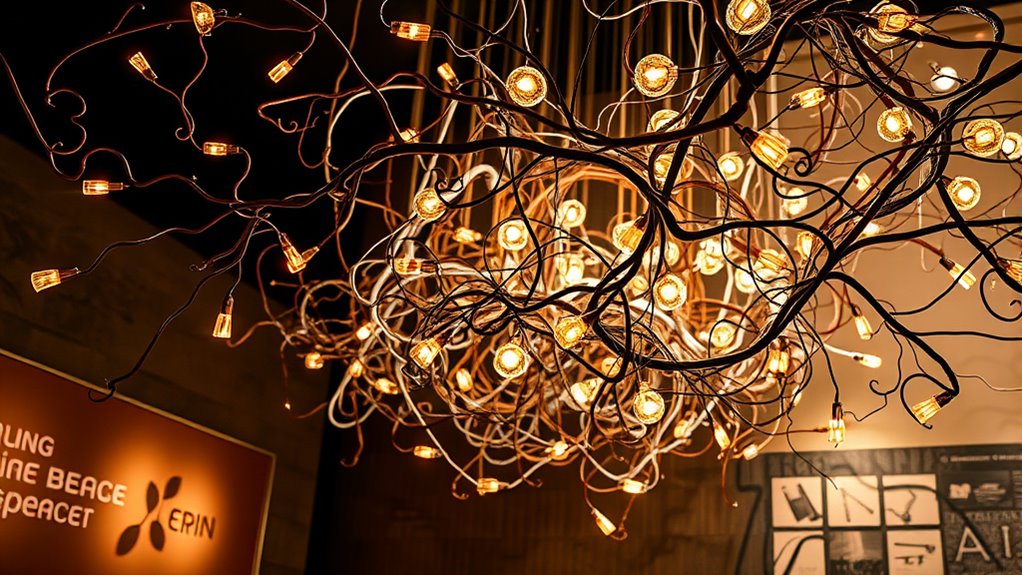

Sculptural lighting as art transforms public spaces with innovative forms, vibrant illumination, and cultural messages. It merges shape, light, and shadow to create immersive environments that engage your senses. These installations encourage interaction and reflection, turning static objects into dynamic visual statements. With modern materials and cutting-edge technology, sculptural lighting elevates the atmosphere and symbolizes artistic expression. To discover how these mesmerizing designs influence urban creativity and community identity, keep exploring this fascinating field.
Key Takeaways
- Sculptural lighting transforms functional illumination into striking visual art, enhancing public spaces and creating immersive environments.
- It employs innovative forms, materials, and programmable lighting to produce dynamic, adaptable artistic installations.
- These sculptures encourage viewer interaction, changing appearance based on perspective and time of day, blurring the line between art and environment.
- Often conveying cultural or social messages, sculptural lighting fosters community identity and artistic dialogue.
- Emphasizing modern design principles, it uses light as a versatile medium to evoke emotion and elevate public aesthetic experiences.
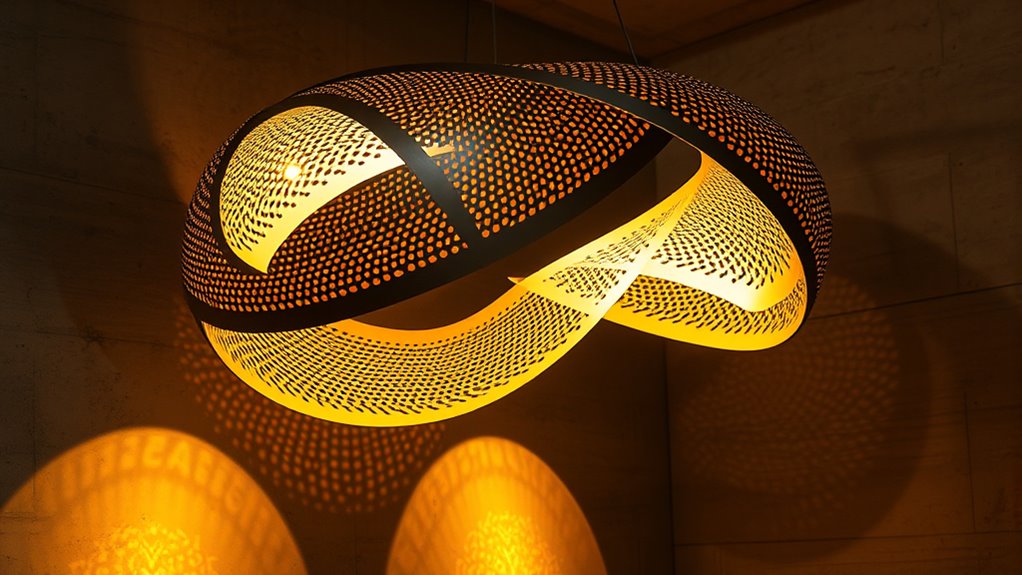
Sculptural lighting transforms everyday illumination into striking works of art that captivate and inspire. When you encounter a public installation that features sculptural lighting, you’re not just seeing a source of light—you’re experiencing a piece of modern aesthetics brought to life. These installations redefine how you perceive public spaces, turning ordinary areas into immersive environments that invite interaction and reflection. You find yourself drawn to the interplay of form, light, and shadow, appreciating how these elements merge to create a dynamic visual statement.
In public settings, sculptural lighting serves more than just functional purposes; it acts as a centerpiece that elevates the entire atmosphere. When you walk through a city square or park, you might notice how thoughtfully designed lighting sculptures serve as landmarks, guiding your movement while also contributing to the area’s visual identity. These installations often blend innovative materials and design techniques, making them stand out as modern aesthetics at their finest. The goal is to craft an experience where light becomes a sculptural element, shaping the environment and eliciting emotional responses from viewers like you.
You’ll observe that many public sculptures employ abstract and organic forms, emphasizing fluidity and movement. This approach allows the light to cast intricate patterns and textures, transforming static objects into living, breathing works of art. When you stand beneath or beside these structures, you’re not just observing—they seem to interact with you, changing with the angle of your view or the time of day. The use of LEDs, programmable lighting, and innovative hardware enables artists and designers to create installations that are both visually stunning and adaptable. These features ensure the sculpture remains relevant, continually evolving with new lighting schemes or programming.
Beyond their aesthetic appeal, these sculptural lighting pieces often carry cultural or social messages, making your experience more meaningful. As you engage with them, you become part of a larger dialogue about art, innovation, and community identity. The modern aesthetics of these installations reflect contemporary design principles—clean lines, minimalism, and emphasis on materiality—yet they also push the boundaries of traditional sculpture. This fusion of form and function invites you to see light not just as illumination but as a versatile artistic medium capable of transforming public spaces into vibrant, memorable environments. When you encounter such installations, you’re reminded that lighting can be more than practical—it can be powerful, evocative, and deeply inspiring.
Frequently Asked Questions
What Are the Origins of Sculptural Lighting Design?
You might find that the origins of sculptural lighting design trace back to the historical evolution of art and architecture, where form and function merged creatively. Material innovations, like new metals and plastics, propelled its development, allowing designers to craft more expressive and dynamic pieces. You’ll notice that over time, this approach emphasizes artistic expression through lighting, blending utility with aesthetic appeal, shaping modern design by continuously evolving influences and technologies.
How Does Sculptural Lighting Influence Interior Aesthetics?
Sculptural lighting enhances your interior aesthetics by creating a captivating ambient ambiance that draws attention and sets the mood. You’ll notice how it acts as a focal point, transforming ordinary spaces into extraordinary ones. By combining form and function, sculptural lighting adds visual interest and depth, making your environment more dynamic. It’s an elegant way to showcase artistry while enriching the overall look and feel of your space.
Can Sculptural Lighting Be Customized for Individual Spaces?
Like Da Vinci’s masterpieces, sculptural lighting can be customized for your space. You can choose personalized fixtures and bespoke designs that reflect your style and complement your interior. By tailoring shapes, materials, and lighting effects, you create a unique ambiance that transforms your environment. Whether aiming for modern minimalism or ornate elegance, custom sculptural lighting guarantees your space stands out, making it truly one-of-a-kind.
What Maintenance Is Required for Sculptural Lighting Fixtures?
You should regularly perform cleaning routines on your sculptural lighting fixtures to keep them looking their best, using a soft, damp cloth to remove dust and fingerprints. Additionally, you’ll need to replace bulbs when they burn out, ensuring you turn off the power before doing so. Checking for loose connections and cleaning any dust buildup on the fixtures helps maintain peak performance and prolongs the lifespan of your sculptural lighting.
Are There Sustainable Options in Sculptural Lighting Design?
Yes, you can choose sustainable options in sculptural lighting design by opting for energy-efficient fixtures and recyclable materials. These choices help reduce your environmental impact while maintaining artistic integrity. You’ll find that LED lights and fixtures made from recycled metals or plastics not only look stunning but also save energy and resources. By prioritizing these sustainable options, you contribute to eco-friendly design without sacrificing the sculpture’s aesthetic appeal.
Conclusion
When you embrace sculptural lighting as art, you don’t just illuminate a space—you transform it into a breathtaking masterpiece that defies imagination. Every curve, shadow, and glow becomes a testament to your creativity and vision, elevating your environment to a domain where ordinary disappears and wonder takes over. In this moment, you realize that lighting isn’t just functional; it’s an unstoppable force that shapes emotions, dreams, and the very essence of art itself.