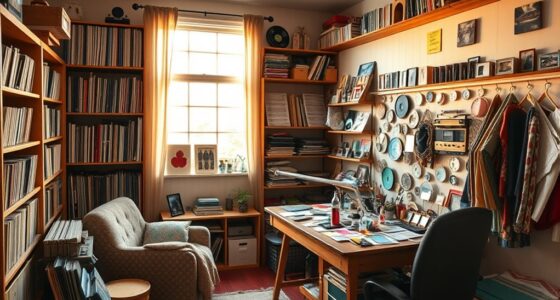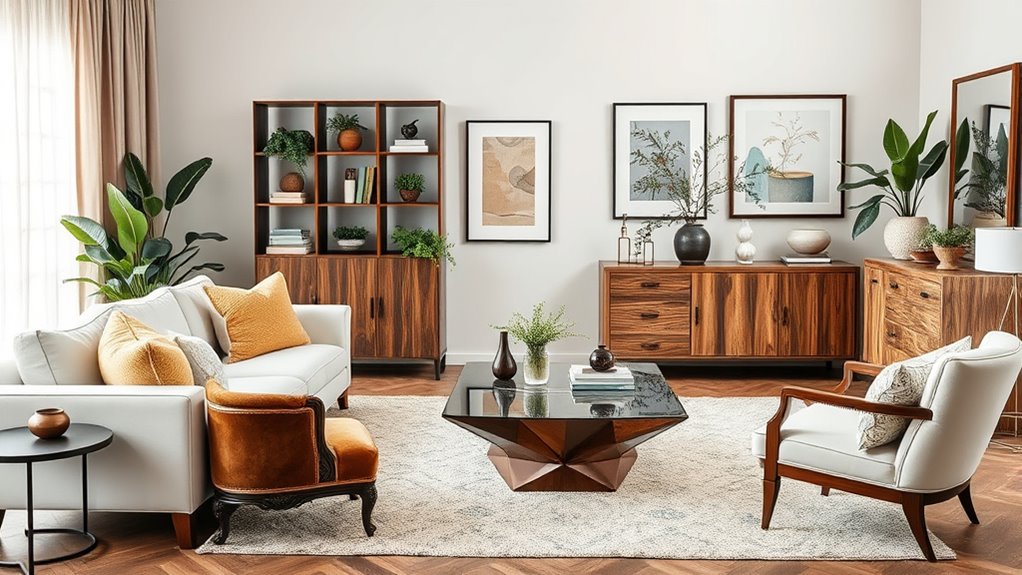

To mix different interior styles successfully, start by understanding your personal preferences and set a neutral base with versatile colors like beige or gray. Incorporate statement pieces and accents to bring personality and interest, balancing bold hues with neutral shades. Focus on creating visual flow and cohesion by blending textures and materials thoughtfully. Experiment with different elements and make adjustments along the way—this approach helps develop a unique, harmonious space that truly reflects your style.
Key Takeaways
- Start with a neutral base to unify diverse styles and create a cohesive foundation.
- Identify and blend complementary color schemes to ensure visual harmony.
- Use statement pieces and accent items to introduce personality without overwhelming space.
- Balance bold and neutral elements through strategic placement and lighting for a harmonious look.
- Experiment and adjust decor over time to maintain authenticity and ensure the space feels curated.
Understanding Your Personal Style Preferences

Have you ever wondered what interior style truly speaks to you? It all begins with personal style exploration. Think about what environments make you feel comfortable, inspired, or energized. Do you prefer clean lines and modern aesthetics, or are you drawn to cozy, vintage vibes? Your interior design preferences reveal a lot about your personality and lifestyle. Take note of colors, textures, and furniture you gravitate toward. Are you more minimalist or eclectic? Reflecting on these elements helps clarify what styles resonate most. This self-awareness is essential before mixing styles, ensuring your space truly reflects your unique taste. Understanding your personal style preferences acts as a foundation for creating a harmonious, personalized interior that feels authentic to you. Exploring different design elements can also help you discover new interior styles that complement your existing tastes.
Starting With a Neutral Base
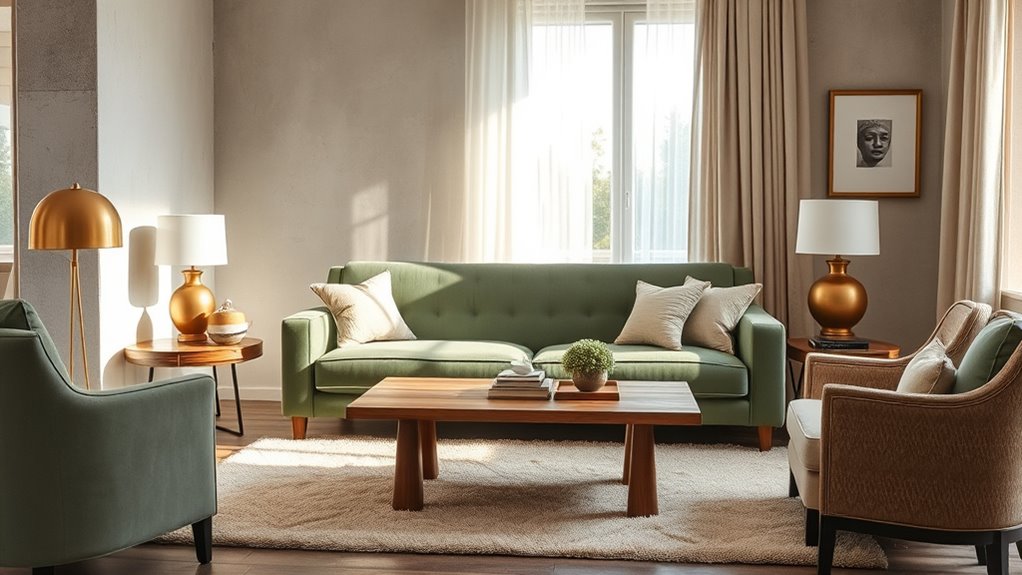
Starting with a neutral base makes mixing styles easier and more cohesive. Choose a versatile color palette that complements various design elements, and stick with consistent materials to unify the space. This foundation allows you to blend different styles seamlessly without feeling overwhelming. Incorporating rustic decor and natural textures further enhances the harmony between diverse design influences.
Choose a Versatile Color Palette
Choosing a versatile color palette begins with selecting a neutral base that sets a balanced foundation for your interior. Neutral tones like beige, gray, or taupe work well because they’re flexible and timeless. These colors allow you to experiment with different styles and accent pieces later. When choosing your neutrals, consider color psychology—calmer shades promote relaxation, while warmer tones can energize a space. Pay attention to paint finishing, opting for matte or eggshell finishes to add subtle texture and depth without overwhelming the room. A neutral base also makes it easier to incorporate bold or patterned elements without clashing. Additionally, understanding environmental considerations helps ensure your choices support sustainability and eco-friendliness. This approach creates a cohesive look that’s adaptable, letting you mix styles effortlessly while maintaining harmony throughout your space.
Maintain Consistent Materials
Maintaining consistent materials throughout your space helps create a cohesive and harmonious look, especially when mixing different styles. Material consistency guarantees that your design feels unified, even with diverse elements. Start with a neutral base to anchor your room, then incorporate textures that complement each other. This approach enhances texture harmony and prevents the space from feeling disjointed. Use similar finishes or materials across furniture, flooring, and accessories to tie everything together. Here’s a simple guide:
| Material Type | Example Use |
|---|---|
| Wood | Furniture, flooring |
| Metal | Fixtures, decorative accents |
| Fabric | Upholstery, curtains |
| Glass | Tables, decor accents |
Stick to these principles for a balanced, stylish mix of styles. Incorporating material types that are durable and timeless can further ensure a harmonious design.
Choosing Complementary Color Palettes
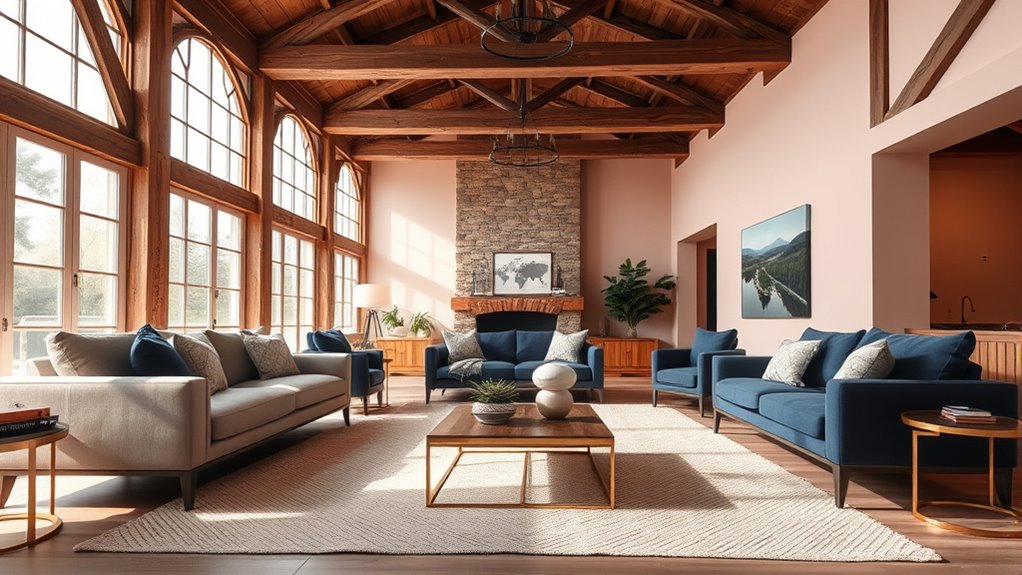
When selecting color palettes, focus on harmonizing your schemes to create a cohesive look throughout your space. Balance bold hues with neutral tones to keep the environment lively without feeling overwhelming. Don’t forget to incorporate accent colors to add pops of interest and tie different elements together effectively. Additionally, understanding color harmony can help in choosing palettes that complement each other naturally.
Harmonizing Color Schemes
Harmonizing color schemes is essential for creating a cohesive and visually appealing interior. By understanding color psychology and how colors interact, you can choose palettes that enhance your space’s mood and style. Complementary color palettes, which combine opposite hues, create vibrant color contrast that adds energy without clashing. To help guide your choices, consider this chart:
| Color Pair | Effect | Best Use |
|---|---|---|
| Blue & Orange | Vibrant, energetic | Living rooms, accents |
| Green & Red | Balanced, lively | Dining areas, focal walls |
| Yellow & Purple | Bold, dynamic | Statement pieces, artwork |
Select colors thoughtfully to evoke the desired atmosphere and ensure your design flows seamlessly. Understanding color interaction can further refine your palette choices and create harmony in your interior.
Balancing Bold and Neutral
Balancing bold colors with neutral tones is key to creating a harmonious and versatile interior. When you choose a bold hue, like a vibrant blue or rich emerald, anchor it with neutral shades such as beige, gray, or white. This prevents the space from feeling overwhelming. To enhance this balance, consider how artificial lighting interacts with your color palette; warm lighting can soften bold shades, while cooler light emphasizes them. Proper furniture placement also plays a role—arranging pieces to highlight accent colors or neutral backgrounds ensures visual coherence. Keep in mind that the right mix allows your bold choices to stand out without overpowering the room. Ultimately, a well-balanced palette creates an inviting, stylish environment that feels both lively and calming.
Using Accent Colors
Ever wondered how to make your interior colors pop without clashing? Using accent colors is a smart way to achieve this. By selecting a color palette based on color psychology, you can evoke specific moods—calm blues for relaxation or energetic reds for vibrancy. An accent wall is a perfect canvas for this, providing a focal point that complements your overall design. When choosing accent colors, consider their relationship to your main hues; complementary palettes create visual harmony, while contrasting shades add excitement. Keep in mind that subtle accents can be just as impactful as bold ones. Additionally, understanding color contrast can help you select accent colors that stand out or blend seamlessly, depending on your desired effect. With thoughtful application, accent colors and an accent wall can tie your mixed styles together, making your space feel cohesive and lively.
Balancing Different Textures and Materials
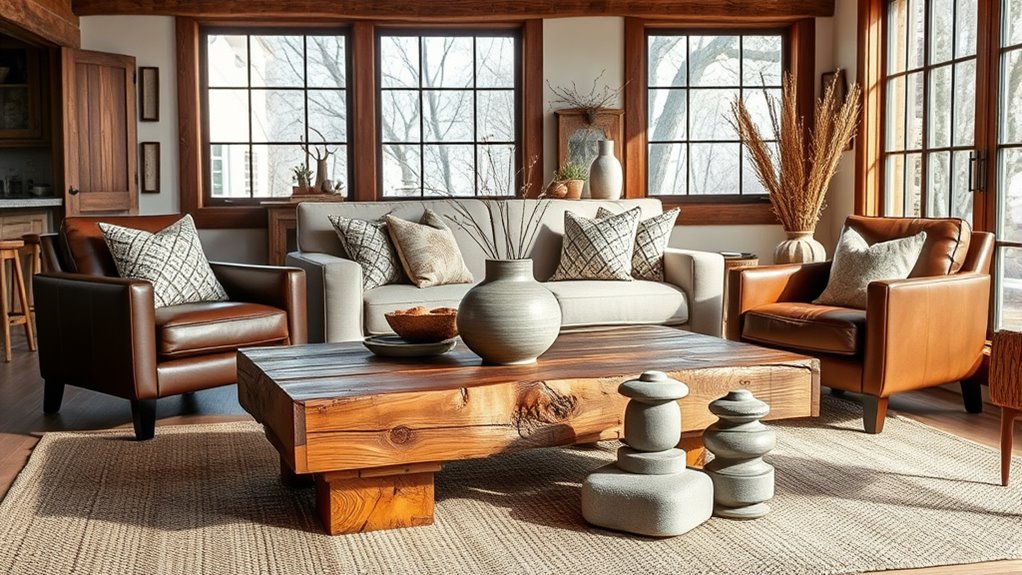
Mixing different textures and materials can add visual interest and depth to your space, but it requires a thoughtful approach to avoid clutter or chaos. Focus on creating a balanced textural contrast by pairing smooth surfaces with rougher ones, like a sleek leather sofa with a woven rug. Material layering helps you add dimension, so combine hard surfaces such as glass or metal with soft fabrics like velvet or linen. To keep the design cohesive, repeat similar textures or materials throughout the room, creating visual harmony. Avoid overdoing it—select a few key textures to highlight, and let them stand out. When balanced well, mixing textures and materials enhances your space’s personality while maintaining a polished, inviting look. Additionally, understanding core personality traits can help guide your choices in creating a space that reflects your individual style and preferences.
Incorporating Statement Pieces and Accent Items
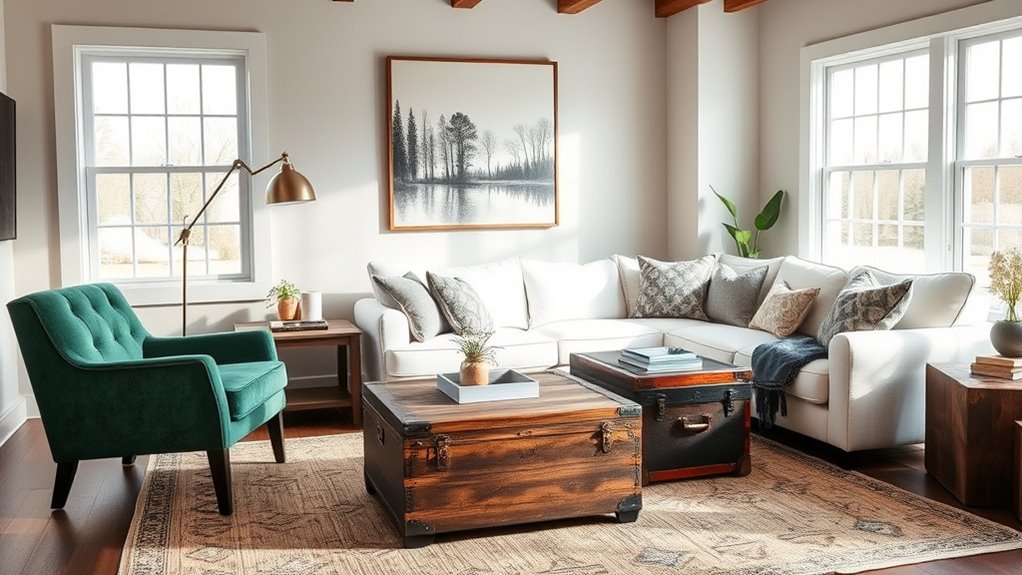
Adding statement pieces and accent items is a powerful way to infuse personality into your space and draw attention to key design elements. To do this effectively, consider how artificial lighting can highlight these pieces, making them stand out even more. Proper space planning guarantees your statement items don’t overwhelm the room but rather complement other design features. For example, a bold art piece or an eye-catching sculpture can serve as a focal point, while accent items like decorative pillows or unique vases add layers of interest. Place them strategically within your layout to create visual balance and harmony. Remember, the goal is to showcase your style without cluttering the space, allowing each statement piece to shine naturally. Incorporating design principles such as balance and harmony can further enhance the overall aesthetic of your interior.
Creating Visual Flow and Cohesion
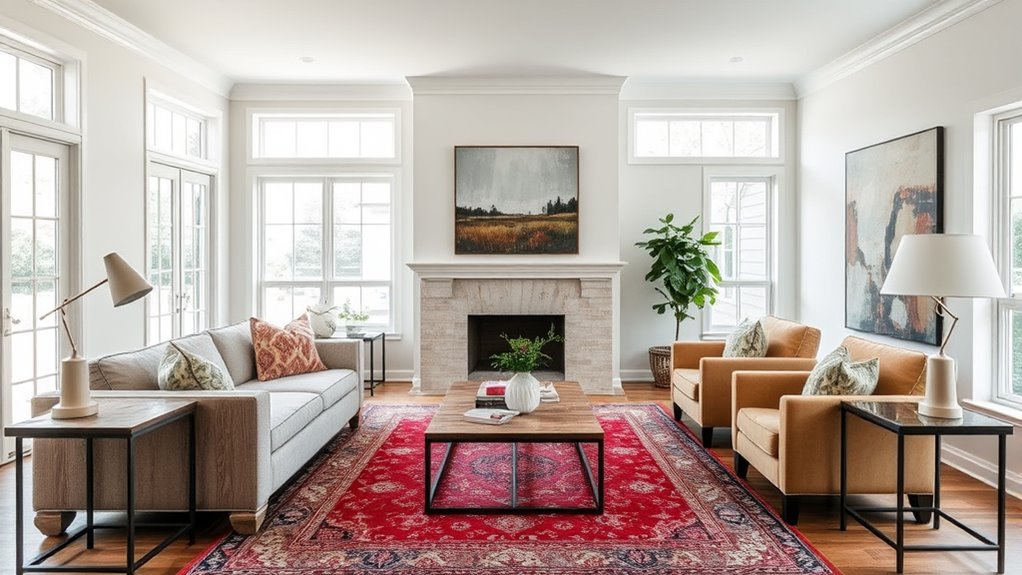
Creating visual flow and cohesion guarantees your interior design feels unified and harmonious. To achieve this, focus on balancing artistic expression with functional design. Use consistent color schemes, textures, and furniture styles to connect different styles smoothly. Incorporating a shared element, like metallic accents or natural woods, can tie various pieces together. Here’s a simple way to visualize this:
| Style 1 | Style 2 |
|---|---|
| Bright colors | Neutral tones |
| Modern shapes | Vintage details |
| Soft textiles | Sleek surfaces |
This table highlights contrasting yet complementary elements. By blending these features intentionally, you create a seamless flow that reflects your unique style while maintaining harmony throughout your space. Paying attention to interior details enhances the overall cohesion and ensures your decor feels thoughtfully curated.
Experimenting and Adjusting as You Go
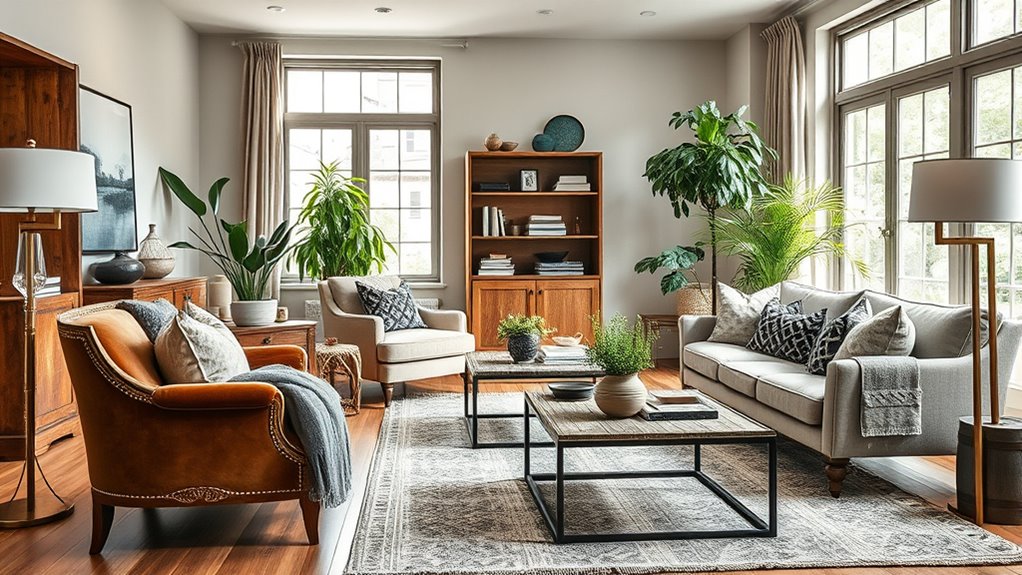
As you experiment with different design elements, be open to making adjustments along the way. Mixing styles is a form of artistic expression, so trust your instincts and refine as needed. Pay attention to how each element works together, balancing visual appeal with functional considerations. You might find that a piece you love doesn’t quite fit or that colors need tweaking to enhance harmony. Don’t be afraid to swap out furniture, change accessories, or reposition decor until the overall look feels right. Flexibility is key—your space should reflect your personality while remaining livable. Remember, successful mixing isn’t about perfection but about creating a space that feels authentic and comfortable for you. Keep experimenting and adjusting until your design feels just right.
Frequently Asked Questions
How Can I Mix Vintage and Modern Styles Effectively?
To mix vintage accents with modern furniture effectively, start by choosing a neutral base to balance the styles. Incorporate vintage accents through accessories like mirrors, lamps, or artwork, and pair them with sleek, modern furniture. Keep a consistent color palette to unify the space. Avoid clutter by selecting statement vintage pieces that complement the modern elements, creating a cohesive, stylish look that feels both fresh and nostalgic.
What Are Common Mistakes to Avoid When Blending Styles?
When blending styles, avoid common mistakes like poor color coordination, which can make spaces clash instead of harmonize. Also, pay attention to furniture scale; mixing oversized pieces with petite ones without balance can feel awkward. Don’t overlook consistency in accessories and textures. Keep these in mind, and you’ll create a cohesive look that celebrates your unique style without feeling chaotic or mismatched.
How Do I Ensure My Space Doesn’T Look Cluttered?
To keep your space from looking cluttered, focus on strategic use of decorative accessories and color coordination. Limit accessories to a few meaningful pieces, and arrange them thoughtfully to avoid overcrowding. Stick to a cohesive color palette that ties everything together, creating a sense of harmony. Regularly declutter and evaluate each item’s purpose, ensuring your space feels curated and balanced instead of chaotic or cluttered.
Can Small Rooms Handle Multiple Design Styles Successfully?
Yes, small rooms can handle multiple design styles successfully if you focus on space optimization and color coordination. Use furniture and decor that serve dual purposes to maximize space, and choose a cohesive color palette to unify diverse styles. Keep accessories minimal and stick to a few accent colors to prevent clutter. This approach creates a balanced, stylish look without overwhelming the room’s limited space.
How Do Lighting Choices Impact Mixed Interior Design Styles?
Think of lighting choices as the conductor of an orchestra, guiding the mood and harmony. Your lighting ambiance sets the tone, while fixture selection acts as the instrument that enhances or clashes with your styles. Well-chosen lights unify diverse design elements, highlighting textures and colors. By balancing warm and cool tones and selecting fixtures that complement each style, you create a cohesive, inviting space that celebrates your eclectic vision.
Conclusion
Mixing different interior styles might seem intimidating at first, but remember, variety is the spice of life. Trust your instincts and don’t be afraid to experiment—sometimes you have to go with your gut to find what works best. Keep an eye on balance and cohesion, and you’ll create a space that’s uniquely yours. After all, beauty is in the eye of the beholder, so embrace your creative journey and enjoy the process.