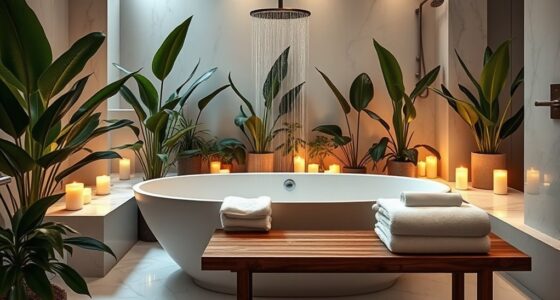
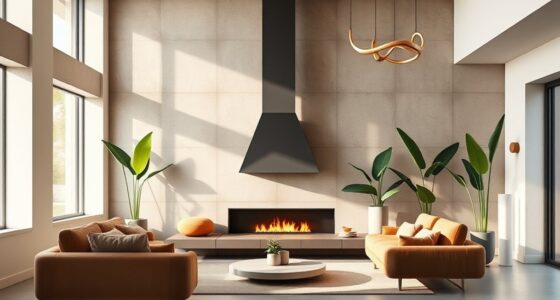
Choosing between maximalist and minimalist styles depends on what best reflects your personality and how you want to feel in your space. If you love bold colors, layered textures, and eclectic accessories, maximalism might suit you by creating a lively, expressive environment. If you prefer calm, clean lines with neutral tones, minimalism offers tranquility and order. Exploring both styles can help you find what makes you feel most comfortable and authentic—discover more to craft your perfect space.
Key Takeaways
- Maximalism emphasizes bold colors, layered textures, and eclectic accessories, ideal for expressive, lively environments.
- Minimalism focuses on neutral tones, clean lines, and purposeful simplicity, creating tranquil, uncluttered spaces.
- Your personal style reflects your personality; choose maximalism for self-expression or minimalism for calm and order.
- Preferences may evolve or blend styles over time, allowing flexibility to create a space that nurtures well-being.
- Consider your lifestyle and aesthetic goals to determine whether a vibrant maximalist or serene minimalist environment suits you best.

When it comes to design and style, the debate between maximalism and minimalism often boils down to personal preference and what best reflects your personality. If you’re drawn to bold, expressive environments, maximalism might resonate with you. This approach encourages vibrant color palettes, mixing patterns, and layering textures to create a rich, immersive space. You’re not afraid to combine contrasting hues or add a pop of color where others might see chaos. Your accessory choices are likely to be eclectic, featuring statement pieces, oversized artwork, or vintage finds that tell a story. Maximalism celebrates individuality, so you emphasize personal touches and daring combinations that showcase your unique taste. It’s about filling your space with objects and colors that make you feel alive, ensuring nothing feels sparse or sterile.
On the other hand, if you prefer clean lines, neutral tones, and a sense of calm, minimalism might suit you better. Your color palettes tend to be subdued—think whites, grays, and earth tones—creating a tranquil, uncluttered environment. Instead of an abundance of accessories, you opt for carefully selected pieces that serve a purpose and contribute to the overall harmony. Your accessory choices lean toward simplicity: a single sculptural lamp, a sleek vase, or a piece of modern artwork that adds interest without overwhelming the space. You value quality over quantity and focus on creating a sense of order and balance. Minimalism isn’t about starkness but about intentionality—every item has a reason to be there, and negative space is used deliberately to give your surroundings room to breathe.
Deciding between these styles involves understanding what makes you feel most comfortable and authentic. Maximalism allows you to express your personality boldly through vibrant color combinations and layered accessories, turning your space into a reflection of your lively spirit. Conversely, minimalism offers a peaceful retreat, emphasizing simplicity and restraint, which can foster clarity and focus. You might find that your preferences shift depending on your mood or life circumstances, or maybe you blend elements from both styles to craft a space that feels uniquely you. Ultimately, whether you lean toward maximalist exuberance or minimalist serenity, the key is creating an environment that nurtures your well-being and aligns with your sense of style.
Frequently Asked Questions
Can You Mix Both Maximalist and Minimalist Styles Effectively?
You can definitely mix maximalist and minimalist styles effectively. Use layering techniques to combine bold pieces with simple ones, creating visual interest. Focus on accessory choices to balance the look—pair a statement necklace with a clean, streamlined outfit. This approach lets you express your unique style without overdoing it, blending the energy of maximalism with the simplicity of minimalism for a versatile, balanced wardrobe.
How Do I Transition From One Style to the Other?
Think of your wardrobe as a garden. To shift styles, start with wardrobe decluttering—remove what no longer fits your vision. Experiment with pieces combining minimal and maximal elements, like planting new flowers among familiar ones. This style experimentation helps you find harmony between the two. Over time, you’ll cultivate a unique look that reflects your evolving taste—making style shifts natural and enjoyable, just like tending a beautiful garden.
What Personality Traits Align With Each Style?
When you explore personality traits for maximalist style, you often find you’re bold, expressive, and love to make statements. You enjoy mixing patterns and vibrant colors. For minimalist style, personality traits include being organized, calm, and appreciating simplicity. You prefer clean lines and neutral tones. Recognizing these traits helps you identify which style resonates with your natural tendencies, making it easier to embrace a look that truly reflects who you are.
Are There Specific Colors Associated With Maximalist or Minimalist Styles?
You might notice that colors play a big role in expressing style, guided by color psychology and style symbolism. Maximalists often favor bold, vibrant hues like reds, purples, and golds to make a statement, while minimalists prefer neutral tones like whites, blacks, and grays for a clean, understated look. These color choices help communicate your personality and aesthetic, making your style uniquely yours.
How Does Lifestyle Influence Style Choice?
Your lifestyle habits greatly influence your style choice because they shape what feels practical and personal comfort. If you lead a busy, active life, you might prefer versatile, easy-to-maintain outfits that support movement. On the other hand, if your days are more relaxed, you may opt for comfortable, expressive styles that reflect your personal taste. Ultimately, your style should adapt to fit your daily routines and personal comfort needs.
Conclusion
Ultimately, your style reflects who you are. Did you know that 65% of people feel more confident when their surroundings match their personality? Whether you lean towards bold maximalism or sleek minimalism, embracing what feels authentic boosts your confidence. Trust your instincts, experiment freely, and remember, your personal style is a journey, not a destination. So go ahead—make your space and wardrobe uniquely yours, and enjoy the confidence that comes with it.