
Layered lighting combines task, ambient, and accent lighting to make your space both practical and inviting. Ambient light sets the overall mood, while task lighting focuses on specific activities like reading or cooking. Accent lighting highlights artwork or architectural features, adding visual interest. By blending these layers, you create a balanced atmosphere that’s adaptable to different needs and moods. Keep exploring to discover how selecting the right fixtures enhances your space even further.
Key Takeaways
- Layered lighting combines ambient, task, and accent fixtures to create a balanced, versatile space.
- Proper fixture selection ensures even illumination for ambient light, focused tasks, and feature highlights.
- Strategic placement avoids harsh shadows and glare while enhancing room functionality and aesthetic appeal.
- Adjusting light levels across layers allows for customizable atmospheres suitable for different activities.
- Understanding core lighting principles enhances space design, emphasizing focal points and visual interest through effective layering.
Have you ever wondered how to create a truly inviting and functional space? The secret lies in mastering layered lighting, which involves combining different lighting fixtures to serve various purposes. To do this effectively, you need to understand the core design principles behind lighting and how to select the right fixtures for each role. When you layer your lighting, you enhance both the ambiance and practicality of a room, making it more comfortable and visually appealing.
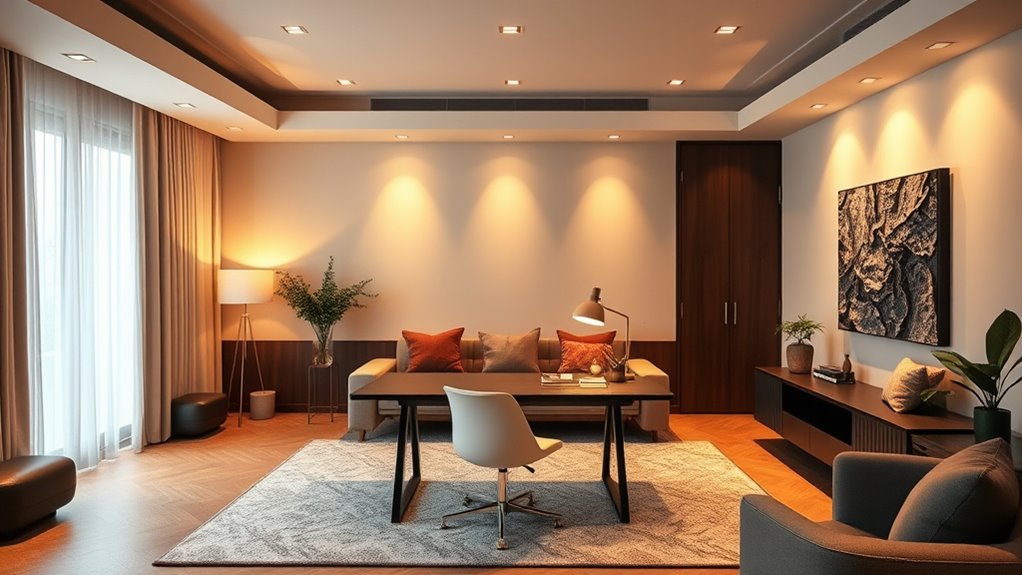
Start by considering the key lighting principles that guide good design. Ambient lighting provides the overall illumination, setting the mood and ensuring the space isn’t too dark or glaring. Task lighting, on the other hand, is focused and functional, helping you perform specific activities like reading, cooking, or working at a desk. Accent lighting adds visual interest by highlighting artwork, architectural features, or decorative objects. When you combine these layers thoughtfully, your space becomes more dynamic and versatile.
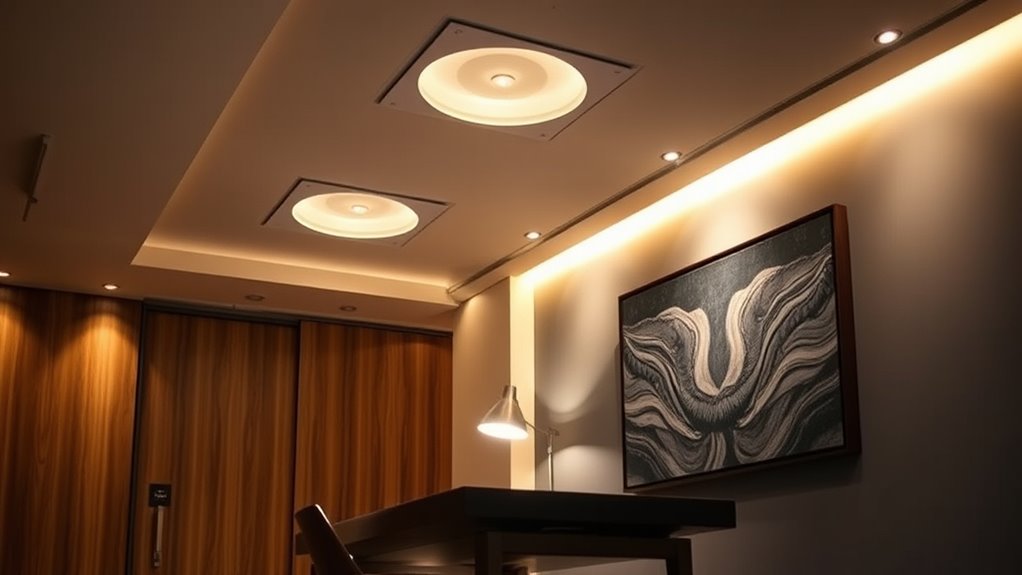
Choosing the right lighting fixtures is vital. For ambient lighting, ceiling-mounted fixtures like chandeliers, flush mounts, or recessed lights work well. They distribute light evenly across the room and serve as the foundation for your layered approach. For task lighting, consider adjustable or directional fixtures such as pendant lights, under-cabinet lights, or desk lamps. These allow you to focus light precisely where you need it, reducing eye strain and improving functionality. Accent lighting often involves spotlights, wall sconces, or track lighting that can be aimed to highlight specific areas or objects, creating focal points that add depth and character to your space.
Incorporating the correct lighting fixtures based on these design principles helps you avoid common pitfalls like harsh shadows or overly bright spots. For example, placing recessed lights strategically can provide even ambient coverage, but adding table lamps or floor lamps ensures softer, more inviting zones. Similarly, accent lights should be carefully aimed to highlight features without overpowering the room’s overall lighting scheme. Layering light allows you to adjust the atmosphere easily—bright during active tasks and softer when relaxing. Additionally, understanding lighting principles can help you make more informed choices that enhance your space’s ambiance and functionality.
Frequently Asked Questions
How Do I Choose the Right Lighting Layers for Small Spaces?
To choose the right lighting layers for small spaces, start with warm color temperatures for a cozy feel. Use decorative fixtures as accent lighting to add style, while ambient lighting provides general brightness. Incorporate task lighting in key areas like the kitchen or desk. Keep fixtures proportional to the space, avoiding clutter. Combining these layers creates a balanced, inviting environment that maximizes your small space’s functionality and aesthetic appeal.
What Are the Best Bulbs for Layered Lighting Setups?
Think of your layered lighting as a symphony—choose versatile bulb types like LEDs or halogens for bright, efficient light. Opt for a warm color temperature around 2700K to create cozy ambiance, or go cooler (3000K-4000K) for clearer task lighting. These bulbs give you control over mood and functionality, ensuring your space feels inviting yet practical. Adjust your bulbs to match each layer for a perfectly balanced environment.
How Can I Control Multiple Lighting Layers Effectively?
You can control multiple lighting layers effectively by installing dimming controls for each layer, allowing you to adjust brightness levels easily. Use smart switches or app-based controls for better flexibility. Consider the color temperature of your bulbs—warmer tones for ambient, cooler for task lighting—to create the desired atmosphere. These adjustments help you customize your space and optimize layered lighting for any activity or mood.
What Are Common Mistakes to Avoid in Layered Lighting Design?
You should avoid lighting overuse, which can create a cluttered, overwhelming space. Mismatched fixtures also pose a problem, disrupting the harmony and balance of your layered design. Be mindful of balancing task, ambient, and accent lighting to prevent one layer from overpowering others. Always test your lighting setup before finalizing, ensuring your fixtures complement each other and create a cohesive, inviting atmosphere.
How Does Layered Lighting Impact Energy Efficiency?
You might think layered lighting is a energy hog, but it actually boosts energy savings when used wisely. By combining task, ambient, and accent lighting, you optimize each space, reducing unnecessary wattage. This approach enhances sustainability benefits, as you use only what’s needed, avoiding over-illumination. Proper layering allows you to enjoy well-lit environments while conserving energy, proving that smart design can be both effective and eco-friendly.
Conclusion
By blending task, ambient, and accent lighting, you create a symphony of light that transforms your space into a canvas of comfort and style. Think of layered lighting as the brushstrokes that bring your room to life—each layer adding depth and dimension. When you master this balance, your environment becomes a sanctuary of warmth and purpose, where every corner whispers its own story. Ultimately, layered lighting is your key to illuminating not just a room, but your entire experience.