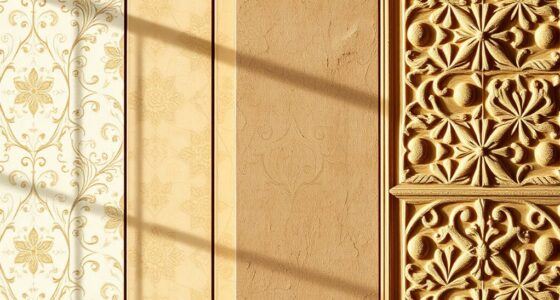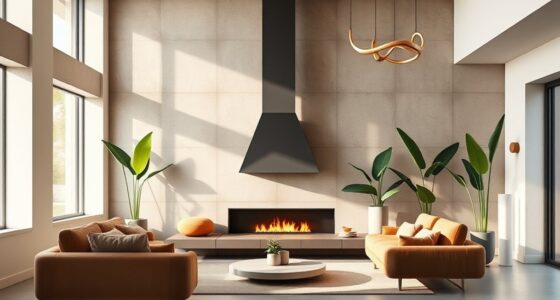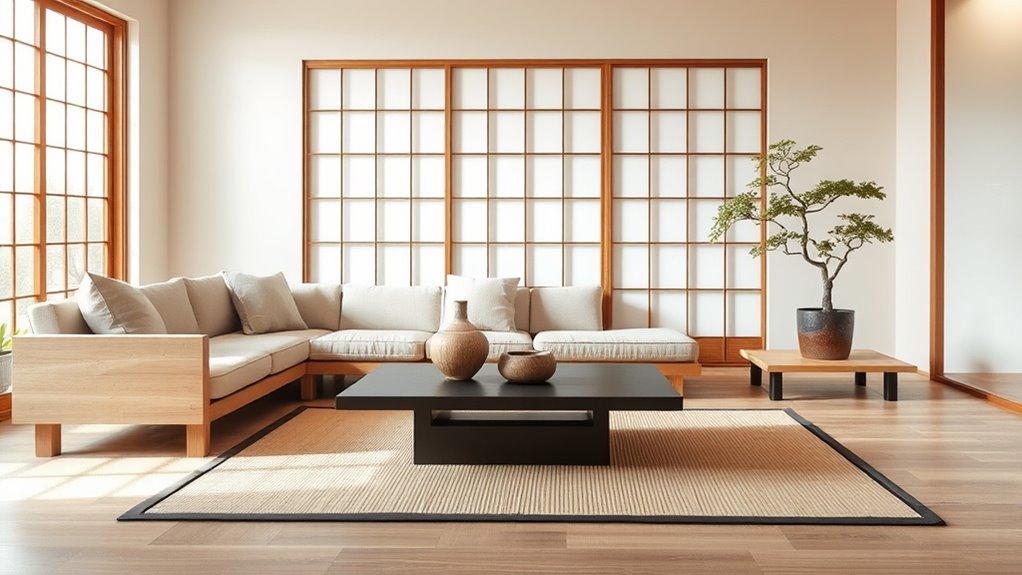

Japandi combines Scandinavian minimalism with Japanese simplicity to create calming, functional spaces. It emphasizes neutral tones, natural materials like wood and bamboo, and sleek, handcrafted furniture. This style promotes tranquility and mindfulness while balancing practicality with aesthetic appeal. You’ll find it popular in living rooms, bedrooms, and outdoor areas. To discover how to incorporate this serene, balanced look into your space, keep exploring these key design principles and inspirations.
Key Takeaways
- Japandi combines Scandinavian minimalism with Japanese simplicity to create calm, functional, and serene living spaces.
- It emphasizes natural materials, neutral tones, clean lines, and handcrafted accents for a balanced aesthetic.
- The style promotes minimal clutter, mindful organization, and the use of soft lighting to enhance tranquility.
- Popular in living rooms, bedrooms, and outdoor patios, Japandi fosters relaxation and understated elegance.
- Future trends focus on sustainable sourcing, eco-friendly materials, and integrating smart home technology.
The Origins and Evolution of Japandi Style
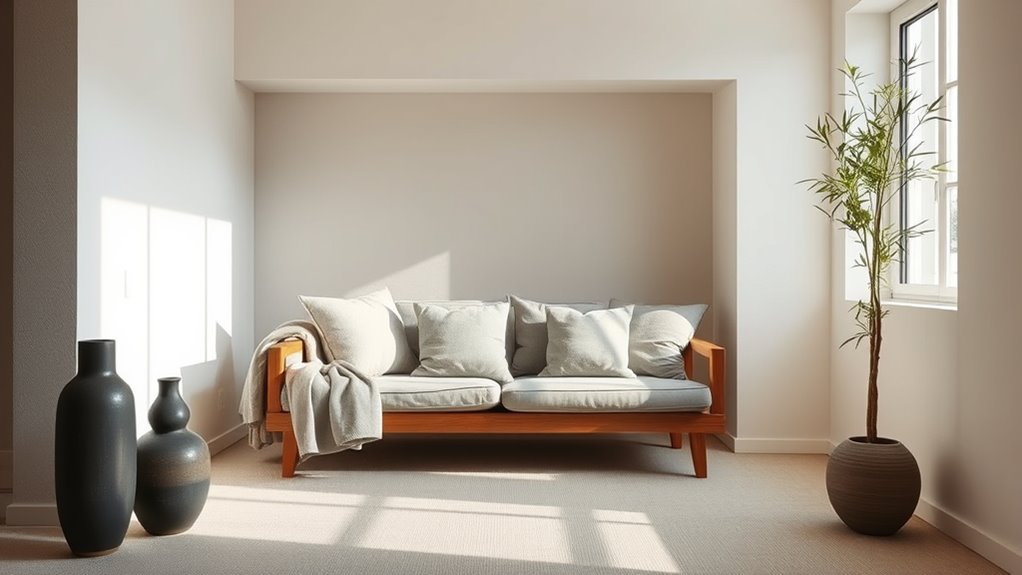
Japandi style combines the best of Scandinavian minimalism with Japanese simplicity, and its origins trace back to a desire for calm, functional spaces. You’ll notice the strong Scandinavian influences in clean lines, neutral palettes, and practical design, emphasizing comfort without clutter. Simultaneously, Japanese minimalism contributes a sense of serenity, natural materials, and understated elegance. This fusion emerged as a response to modern life’s chaos, seeking harmony through simplicity and balance****. Over time, Japandi evolved from individual movements into a cohesive aesthetic that values craftsmanship, tranquility, and mindful living. You can see this blend in furniture choices, color schemes, and decorating philosophies that prioritize utility and beauty. Ultimately, Japandi reflects a lifestyle that promotes peace and mindfulness through thoughtful design.
Core Elements That Define Japandi Interiors
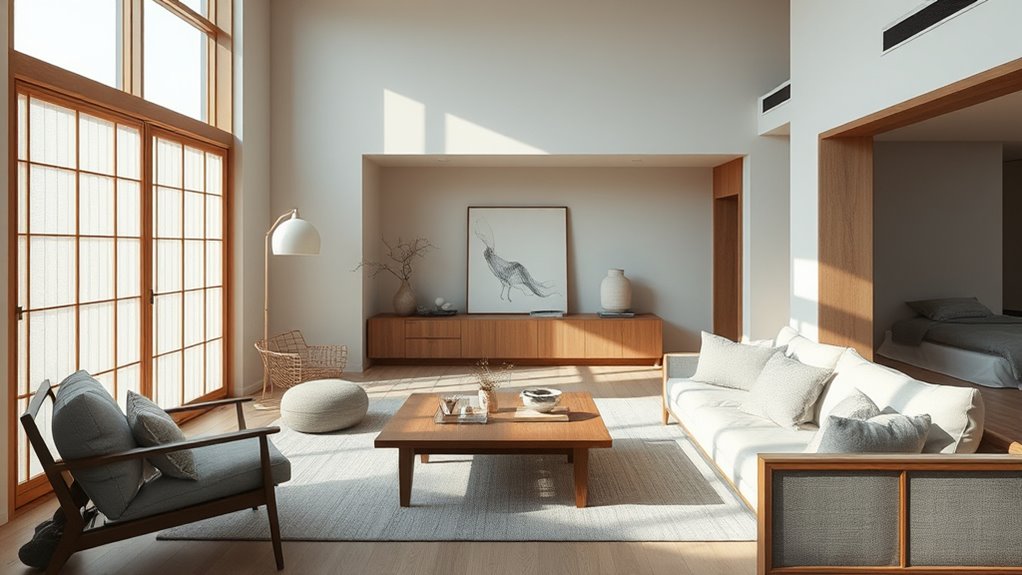
At the heart of Japandi interiors are elements that seamlessly blend minimalism with warmth, creating spaces that feel both serene and functional. You’ll notice modern art pieces that emphasize simplicity and craftsmanship, adding personality without clutter. The design also features clean, efficient kitchen layouts that maximize space and promote calmness, often using natural materials and subtle textures. Furniture is sleek yet inviting, with low-profile silhouettes and organic shapes that encourage relaxation. Lighting is soft and natural, highlighting the beauty of understated decor. These core elements work together to foster a balanced environment where functionality meets aesthetic appeal. Emphasizing active listening and empathy in the space can enhance connections and harmony within the interior environment. By focusing on minimalism, quality materials, and thoughtful layouts, Japandi interiors achieve a harmonious, clutter-free ambiance that’s both practical and soothing.
Color Palettes and Material Choices in Japandi Design
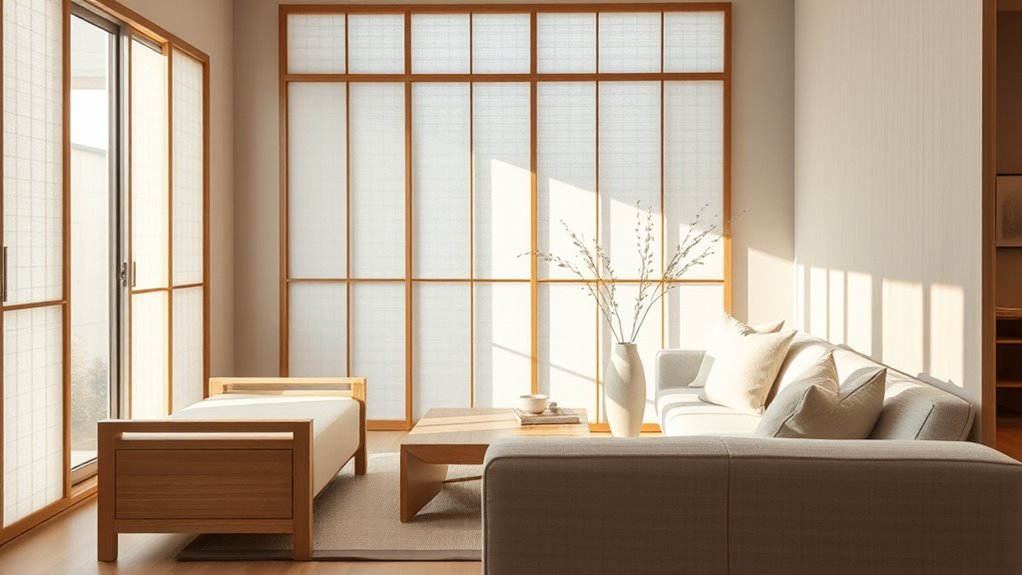
In Japandi design, you’ll notice a focus on neutral tones and subtle accents that create a calming atmosphere. Natural materials like wood, bamboo, and stone bring warmth and texture to the space. These choices help blend Scandinavian simplicity with Japanese elegance seamlessly. Incorporating performance cookies can also enhance the user experience by analyzing how visitors engage with design inspiration content.
Neutral Tones and Accents
Neutral tones serve as the foundation of Japandi design, creating a calming and harmonious atmosphere. They evoke tranquility and simplicity, allowing your space to feel balanced and inviting. To enhance this serenity, incorporate soft beiges, warm greys, and off-whites that set a peaceful mood. Accentuate these tones with carefully chosen statement lighting that highlights your space’s elegance and adds subtle warmth. You can also introduce bold patterns sparingly—like a textured throw or patterned ceramics—to create visual interest without overwhelming the calm. These accents draw your eye and bring personality to your room. Remember, the key is to keep contrasts minimal, letting your neutral palette and elegant accents work together seamlessly. Embracing attention in your design choices ensures a mindful and cohesive aesthetic.
Natural Materials and Textures
Natural materials and textures are essential to achieving the authentic, earthy feel of Japandi design. You’ll want to prioritize sustainable sourcing, choosing materials like reclaimed wood, bamboo, and organic cotton to emphasize eco-friendliness. Texture layering plays a crucial role, so combine smooth surfaces with rougher, tactile finishes—think woven baskets against sleek furniture or linen curtains paired with matte ceramics. These variations create visual interest while maintaining a calming, cohesive look. Opt for natural fibers and materials that bring warmth and authenticity, avoiding overly synthetic or shiny finishes. By thoughtfully selecting sustainable, textured materials, you enhance the serene, minimalist aesthetic that defines Japandi style, making your space feel both stylish and environmentally conscious. Incorporating sound design techniques, such as ambient textures and subtle audio layers, can further elevate the sensory experience of your space.
Furniture and Decor: Merging Functionality With Aesthetics

In Japandi design, furniture and decor focus on minimalist materials that create a calm, uncluttered space. You’ll find pieces that balance practicality with elegant aesthetics, making everyday living both functional and beautiful. This approach guarantees your home feels serene without sacrificing style.
Minimalist Material Choices
To achieve the sleek simplicity characteristic of Japandi design, selecting the right materials for furniture and decor is essential. Focus on minimalist material choices that emphasize natural beauty and sustainability. Opt for eco friendly fabrics that feel soft yet durable, creating a calming atmosphere. Incorporate handcrafted accents to add unique texture and craftsmanship, highlighting authenticity. Use light woods like oak or ash for furniture, blending warmth with clean lines. Keep decor simple with matte finishes and natural fibers, avoiding clutter. These choices not only promote eco-conscious living but also foster a serene, balanced environment. Embrace the harmony of form and function, allowing your space to radiate understated elegance and mindful design. Additionally, considering color accuracy in your decor can enhance the overall visual harmony and contribute to a cohesive, tranquil aesthetic.
Practical yet Stylish Elements
Balancing style with practicality is key to achieving the Japandi look, where furniture and decor serve both aesthetic and functional purposes. Focus on choosing pieces that blend clean lines with natural materials to keep your space simple yet inviting. Accessory styling plays a pivotal role—opt for minimal decor that adds personality without clutter. Incorporate versatile furniture that doubles as storage, reducing visual noise. Lighting solutions should be both beautiful and functional; think soft, warm lighting with sleek fixtures that complement your overall design. By carefully selecting these practical yet stylish elements, you create a harmonious environment that feels calm, organized, and effortlessly elegant—perfectly embodying the essence of Japandi style.
Tips for Creating a Japandi-Inspired Space
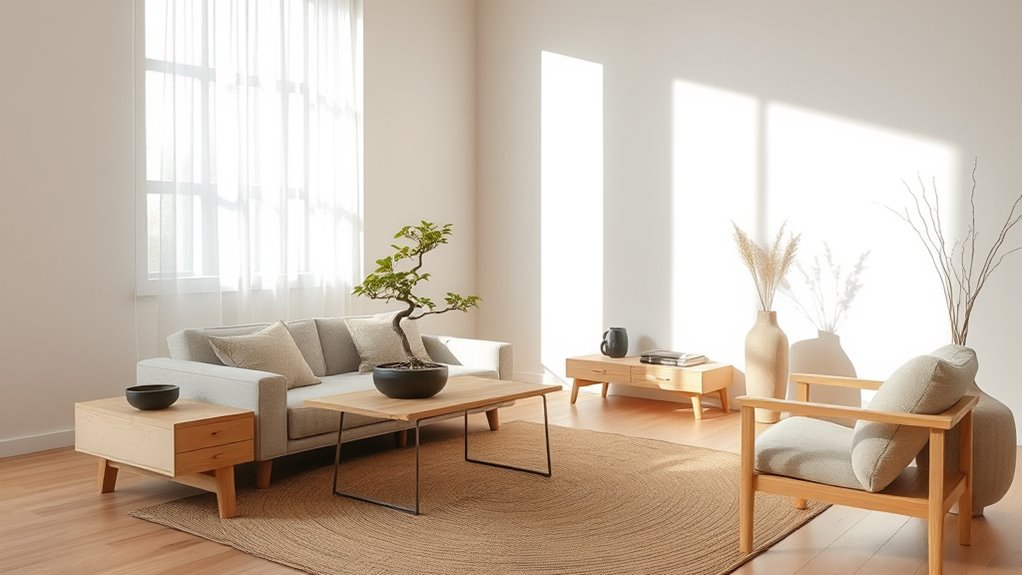
Creating a Japandi-inspired space starts with choosing a neutral color palette that combines warm Scandinavian tones with the cool simplicity of Japanese design. Focus on natural materials, clean lines, and minimal clutter to create tranquility. Enhance the ambiance with art gallery lighting to highlight subtle textures and craftsmanship. Incorporate urban balcony gardening to add freshness and life, blending nature seamlessly into your home. Keep your decor simple yet intentional, emphasizing functionality over excess. Use soft lighting to create cozy, inviting atmospheres. Incorporate elements like low furniture and textured textiles for warmth. Remember, balance is key—strive for harmony between serenity and practicality. These tips help you craft a space that feels both calming and inspiring, embodying the true essence of Japandi style. Additionally, paying attention to interior design tips can further refine your space and ensure a cohesive aesthetic.
Popular Rooms and Spaces for Japandi Styling

Living rooms and bedrooms are the most popular spaces to adopt Japandi style because they serve as your sanctuary for relaxation and daily activity. In these areas, you can create cozy corners with minimalist furniture, soft textiles, and simple decor that promote calmness. Incorporate natural materials like wood and bamboo to enhance the serene atmosphere. Don’t forget outdoor patios, which are perfect for extending your Japandi aesthetic outdoors. Keep the design clean and uncluttered, using neutral tones and subtle textures to blend Scandinavian simplicity with Japanese elegance. These spaces become your retreats, where you can unwind, reflect, and connect with nature. Using appropriate storage solutions can help maintain the minimalist aesthetic by reducing clutter and keeping surfaces tidy. Whether indoors or outside, Japandi styling transforms your spaces into peaceful, functional havens.
Future Trends and Inspirations in Japandi Design

As Japandi design continues to evolve, emerging trends are blending traditional aesthetics with innovative elements to keep the style fresh and relevant. You’ll see a strong focus on sustainable sourcing, where eco-friendly materials and responsible craftsmanship become central. Technological integration also plays a key role, with smart home features seamlessly embedded into minimalist designs, enhancing functionality without clutter. Future Japandi spaces will feature natural, locally sourced materials combined with cutting-edge tech for a harmonious balance. Expect more personalized touches, such as handcrafted decor and eco-conscious furniture, reflecting a commitment to sustainability. These trends evoke a sense of calm, connection, and innovation—making your space truly forward-thinking and rooted in mindful design. Incorporating elements inspired by South – These Fifty States, like regional craftsmanship and local materials, can add unique character to your space.
Frequently Asked Questions
How Can I Incorporate Japandi Style Into Small Apartments?
To incorporate japandi style into your small apartment, focus on space-saving furniture that maximizes your limited area. Use neutral color palettes like soft beiges, grays, and earth tones to create a calm, harmonious vibe. Keep the decor minimal, emphasizing clean lines and natural materials. This approach helps your small space feel open and peaceful while embracing the sleek, functional aesthetic characteristic of japandi design.
What Budget-Friendly Options Exist for Japandi Decor?
Ever wondered how to achieve a chic Japandi look without breaking the bank? You can find affordable accessories like minimalist vases, textured throws, and simple artwork that add that serene vibe. Plus, DIY decor ideas—like repurposing wood or creating your own wall art—can transform your space without overspending. With a little creativity, you’ll bring that perfect blend of Scandinavian simplicity and Japanese tranquility into your home on a budget.
Are There Specific Lighting Tips for Japandi Interiors?
For your Japandi interior, focus on ambient lighting to create a calm atmosphere. Use minimalist fixtures like simple pendant lights or sleek floor lamps to keep the space uncluttered. Opt for warm, soft light to enhance the natural materials and neutral color palette characteristic of Japandi style. Avoid overly ornate fixtures, and aim for a balanced, serene glow that complements the clean, functional aesthetic you’re aiming for.
How Does Japandi Style Adapt to Modern Technology?
Imagine your Japandi space transforming into a tech wonderland—it’s that easy! You can seamlessly integrate smart home technology, making everything from lighting to climate control effortlessly stylish. Use tech-friendly furnishings that blend sleek, minimalist design with innovative features. With a little creativity, your Japandi interior stays serene and functional, embracing modern technology without losing its tranquil charm. It’s about balancing simplicity and smart solutions for a truly harmonious home.
Can Japandi Design Be Mixed With Other Styles?
You can definitely mix Japandi design with other styles through fusion decor and eclectic combinations. It’s flexible enough to blend with bohemian, industrial, or minimalist elements, creating a personalized space. To do this successfully, focus on maintaining balance and harmony, using neutral tones from Japandi to unify diverse textures and patterns. This approach lets you craft a unique aesthetic that reflects your personality while embracing the calm, functional feel of Japandi.
Conclusion
Embracing Japandi means you’re blending simplicity with elegance, creating spaces that are both calming and stylish. By understanding its roots and core elements, you can craft a sanctuary that’s as functional as it is beautiful. Remember, sometimes less is more—so don’t be afraid to keep things minimal. With a little insight and a keen eye, you’ll find that Japandi truly proves that beauty lies in simplicity. Your perfect harmony awaits.