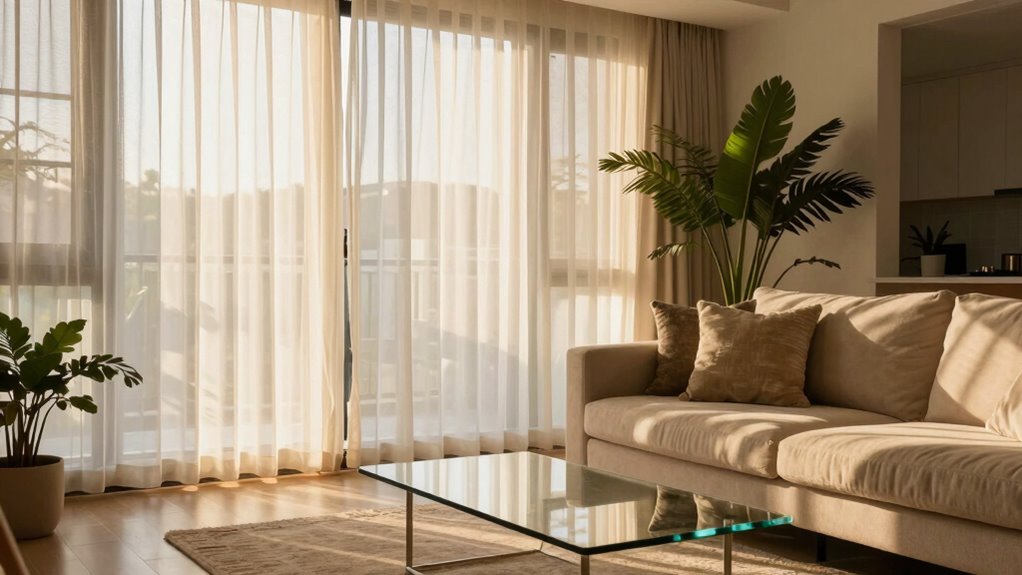

To design around natural light in every room, strategically place windows and choose treatments like sheer curtains or frosted glass to soften sunlight and reduce glare. Position furniture near windows to maximize daylight and use reflective surfaces like mirrors to bounce light around. Incorporate layered artificial lighting to complement natural brightness, adjusting for seasonal changes and mood. By balancing these elements, you create inviting, well-lit spaces that work seamlessly day and night—discover how to optimize every space effectively.

Get furniture and decor delivered free with Prime
- Fast, free delivery on millions of items
- Prime Video, Amazon Music and more included
- Member-only deals all year
Key Takeaways
- Strategically position windows and furniture to maximize natural light flow and reduce dark spots.
- Use window treatments like sheer curtains or frosted glass to diffuse sunlight and control glare.
- Incorporate reflective surfaces and mirrors to bounce natural light and enhance brightness.
- Layer artificial lighting with natural light for consistent illumination throughout the day.
- Adjust design elements seasonally to maintain optimal daylight exposure year-round.

Harnessing natural light is one of the most effective ways to enhance your space’s aesthetic and functionality. When you design around natural light, you create a bright, inviting environment that feels both warm and lively. To do this effectively, you need to understand how light moves through your space and how to maximize its impact. While natural light is your primary source, it’s essential to consider how artificial illumination can complement it, especially during cloudy days or late evenings. Thoughtfully placed lighting fixtures can fill in shadows, highlight architectural features, and guarantee your room remains functional at all hours.
Light diffusion plays a pivotal role in how natural light affects your space. You want to soften harsh sunlight that can create glare or uneven lighting. Using sheer curtains, diffusing window films, or installing frosted glass allows sunlight to spread more evenly across a room. This not only enhances the beauty of your space but also reduces reliance on artificial lighting during the day. When selecting window treatments, think about how much light you want to filter in and how to control it as the sun’s position shifts throughout the day. Additionally, understanding how natural light moves across your space can help you optimize its placement and impact. Incorporating knowledge about window placement can further improve your design strategy. Recognizing how natural light affects mood can also guide your choices to create a more uplifting environment. Being aware of seasonal changes in sunlight can help you adapt your design for different times of the year, ensuring consistent comfort and brightness.
Softening harsh sunlight with sheer curtains or frosted glass enhances beauty and reduces daytime artificial lighting needs.
Designing around natural light also involves strategic furniture placement. Position your main seating or work areas near windows to take full advantage of daylight. Avoid blocking light sources with bulky furniture, which can create dark corners and undermine your room’s illumination. Instead, choose pieces that complement the flow of light, allowing it to bounce around the room naturally. Reflective surfaces like mirrors or glossy finishes further amplify this effect by bouncing light into darker areas, making your space feel larger and more open.
Incorporating artificial illumination thoughtfully is essential for balancing your space. Use layered lighting—ambient, task, and accent—to enhance the natural light. For example, soft overhead lights can provide general brightness, while task lighting is perfect for reading or working near windows. Accent lighting can highlight artwork or architectural details, adding depth and visual interest. When artificial lighting mimics the warmth and tone of natural light, it creates a seamless transition from day to night, guaranteeing your space remains inviting at all hours.
sheer curtain panels for windows
As an affiliate, we earn on qualifying purchases.
As an affiliate, we earn on qualifying purchases.
Frequently Asked Questions
How Does Climate Affect Natural Light Design Choices?
Climate influences your natural light design choices because different climate zones have varying sunlight intensities and angles. In hot, sunny climates, you might opt for shading devices or smaller windows to reduce heat gain, while cooler zones can benefit from larger windows to maximize warmth and light. Understanding your climate zone helps you select the right window placement, glazing, and shading to optimize natural light, comfort, and energy efficiency.
What Are Budget-Friendly Ways to Maximize Natural Light?
Ironically, boosting natural light doesn’t have to break the bank. You can DIY window treatments like sheer curtains or blinds, which are affordable and easy to install. Reflective surface ideas, such as mirrors or glossy paint, bounce sunlight deeper into your space. These simple tricks brighten your room without costly renovations, making natural light your budget-friendly friend. Just a few clever touches can turn dull spaces into luminous retreats.
How to Balance Natural Light With Privacy Concerns?
You can balance natural light and privacy by installing privacy screens or frosted window films that let in light but obscure views. Use light diffusion methods like sheer curtains or diffusing window decals to soften bright sunlight while maintaining privacy. Strategic placement of furniture and plants also helps block direct sightlines without sacrificing natural illumination, creating a comfortable, private space that’s filled with inviting natural light.
What Are Common Mistakes When Designing Around Natural Light?
Imagine your room as a canvas, but poor window placement or curtain selection can turn it dull. Common mistakes include blocking natural light with heavy drapes or misplacing windows, which limits sunlight and creates shadows. You might also forget to take into account the direction of sunlight, causing glare or heat issues. To avoid these, choose lightweight curtains and plan window placement thoughtfully, allowing sunlight to dance freely without overwhelming or underlighting your space.
How Can Smart Technology Enhance Natural Light Usage?
Smart technology enhances natural light usage through smart automation and light sensors. By installing light sensors, you can automatically adjust blinds or curtains to optimize daylight, reducing reliance on artificial lighting. Smart automation systems learn your preferences and modify window coverings based on natural light levels, saving energy and creating a comfortable environment. This seamless integration guarantees you make the most of natural light, improving both your mood and energy efficiency.
As an affiliate, we earn on qualifying purchases.
Conclusion
As you master the art of designing with natural light, remember—there’s always more to discover. The perfect balance can transform any space, but the true secret lies in what you haven’t yet explored. Will your next project reveal a new way to harness sunlight, or will it challenge your expectations? Keep experimenting, stay curious, and the brilliance of natural light will continually surprise you—waiting just beyond the next design decision.
reflective wall mirrors for living room
As an affiliate, we earn on qualifying purchases.
As an affiliate, we earn on qualifying purchases.
As an affiliate, we earn on qualifying purchases.
Fall Picks
fall essentials
As an affiliate, we earn on qualifying purchases.