
TL;DR
Start your Thanksgiving table decor with a palette and a head count, then build with washable linens, comfortable place settings, and low decorations. Leave room for serving dishes, keep candles and greenery apart, and move fresh or edible details to the table close to dinner.
A gorgeous Thanksgiving centerpiece can become the most inconvenient guest at the table. If it blocks your view of the person across from you or leaves no room for the gravy boat, it has taken up too much space.

Get furniture and decor delivered free with Prime
- Fast, free delivery on millions of items
- Prime Video, Amazon Music and more included
- Member-only deals all year
Good Thanksgiving table decor makes the meal feel special while keeping plates, glasses, and conversation within easy reach. You can get there with a clear palette, a few layered textures, and a centerpiece that fits the actual table—not just the inspiration photo.
This guide walks you through choosing a style, arranging decorations, setting places, and keeping the setup safe and affordable. You’ll also find simple fixes for small and long tables, plus ideas for making the details feel personal without buying a matching set of everything.
Choose two or three main colors before gathering linens, dishes, and decorations.
Use low, narrow, or movable centerpiece pieces to preserve sightlines and serving space.
Measure the table, count seats, and account for serving dishes before setting places.
Keep candles away from napkins and foliage; consider battery-operated candles around children, pets, or busy serving areas.
Reuse linens and dishes, and pick produce or natural accents you can eat, compost, or use again.
Choose a palette before you pull out the decorations
Start your Thanksgiving table decor by choosing one style and a small color palette; that decision makes linens, dishes, and centerpiece pieces feel like they belong together. Pick two or three main colors, then add one texture or metallic accent. You don’t need every item to match: repeating a few colors creates a visual thread, while leaving some pieces plain keeps the table from feeling overly arranged.
Popular approaches include rustic and natural, traditional autumn, modern minimalist, farmhouse, and elegant or formal. A traditional table might pair rust, cream, and gold. For a quieter look, use ivory linens, deep green leaves, and a few terracotta pumpkins. The choice affects the mood as well as the colors: a restrained palette gives patterned dishes room to stand out, while stronger contrasts make simple everyday pieces feel more festive. The room will still feel like fall without turning every surface orange.
Choosing a palette also helps when your dishes come from different sets. If one plate has a thin blue rim and another is plain white, repeat a shared element elsewhere—perhaps a green napkin or clear glass—to make the mix feel intentional. At a family dinner, cream plates, wood chargers, and handwritten place cards can look relaxed and polished together. Repeating one color or material draws the eye across the table; adding too many competing accents can make mismatched pieces look accidental instead.
Before shopping, look at what you already own and lay it out on the table. A 15-minute test arrangement can show you whether a runner, napkin, and bowl of pears work as a group. It also lets you judge the colors in the room’s actual light and see whether the arrangement leaves enough space for dinner. That quick check helps prevent buying another set of decorations that the cupboard will swallow after the holiday.
Products Worth Considering

Dyson Cyclone V10 Origin Cordless Vacuum

Philips Hue Play Gradient Light Tube, Large, Black

Samsung 85-Inch QN70F Neo QLED 4K Smart TV (2025)
As an affiliate, we earn on qualifying purchases.
Build a centerpiece guests can see across
Keep your centerpiece low, narrow, and easy to move so guests can see one another and still pass food. Sightlines matter because conversation is part of the meal; when a tall or dense arrangement sits between people, they have to lean around it or speak across it. Several small pieces usually work better than one tall arrangement: they spread autumn color along the table without creating a wall between seats, and they can be moved individually as serving dishes arrive.
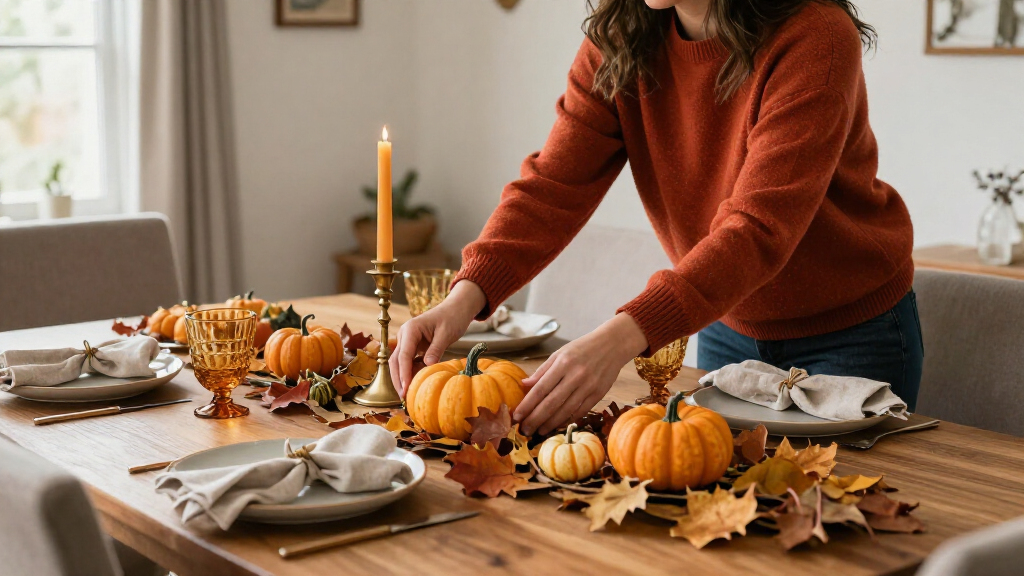
For example, place three small pumpkins, two short jars of greenery, and a bowl of pears down the middle of a six-person table. The pieces add color and texture, but you can lift them away in seconds when the turkey and serving dishes arrive. A single vase of flowers can work too, as long as its shape stays below the guests’ sightline. The tradeoff is between a fuller display and usable table space: leave gaps between objects so plates and platters have somewhere to land.
Think of the center of the table as a shared lane. Guests need that space for platters, water, and the dishes that make dinner a meal. On a narrow table, a slim runner and a few sprigs of rosemary may be all the decoration you need; a broad garland can crowd plates before anyone sits down. Planning for the serving lane early also avoids having to dismantle a carefully arranged centerpiece while guests are waiting to eat.
Fresh produce can double as decoration, but wash it before it goes near food and keep decorative objects away from dishes and serving surfaces. If you use fresh flowers, trim their stems and keep the water in a stable container. Natural pieces can make a table feel lively and seasonal, but they require more attention to cleanliness and stability than reusable ornaments. That way the display looks lively without making dinner service awkward.
Layer linens, dishes, and place settings without crowding seats
Layer a few useful pieces—a cloth or runner, a placemat, a plate, a napkin, and the utensils people need—rather than stacking every decorative item you own. Each layer should either help define a guest’s space or make the meal easier to eat. A simple place setting gives each guest a clear spot and leaves room for a glass and shared food; extra layers may look polished, but they take up the same limited area as a drink or serving dish.
Measure the table and count the seats before you set out chargers or extra plates. If six people are sitting elbow to elbow, wide chargers may steal space they need for their water glasses. A folded napkin on top of a dinner plate can provide a finished look without another layer underneath. The right balance depends on the table: more decoration can make a large table feel welcoming, while on a small one it can turn a comfortable place setting into a cramped one.
For a personal touch, write each guest’s name on a small card and tuck it under a napkin ring or tie it around a sprig of rosemary. At one crowded dinner, that little card can also settle the “where should I sit?” shuffle before people arrive. If you have children at the table, keep small favors sturdy and age-appropriate rather than using tiny pieces that can roll onto the floor. Personal details work best when they solve a small hosting problem or invite conversation without becoming another item guests have to move.
Mixed dishes can look coordinated when they share a color or finish. White plates with a few blue bowls, for instance, feel connected if you repeat blue in a ribbon or napkin. Clear place settings matter as much as decoration: guests should be able to reach their plate, glass, and utensils comfortably. A cohesive look is useful, but ease of use should guide which pieces earn their space.
Plan the table around the food, not just the photo
A practical Thanksgiving table plan reserves room for serving dishes before you add decorations. Count the turkey platter, sides, bread, gravy, drinks, and hot cookware, then decide what belongs on the table and what can sit on a nearby counter or sideboard. This matters because the dining surface has to support both place settings and shared dishes; decorating first can leave guests balancing hot food in the little space that remains.
Here’s a simple setup process you can follow before guests arrive:
- Measure the table and note how many people will sit there.
- Place empty serving dishes where you expect them to go, leaving each guest room for a plate and drink.
- Add the runner and centerpiece only in the space that remains.
- Set plates, utensils, and glasses, then check that guests can pass food without moving decorations.
- Move flexible decor aside when dinner is served.
Say you have a small dining table and a generous sideboard. Keep the table to plates, drinks, and one low bowl of apples; set extra sides and serving utensils on the sideboard. The room still feels festive, and people won’t have to balance hot dishes over place settings. Serving from the sideboard does mean guests make an extra trip, but it frees the table for eating and passing food safely.
For a long table, repeat a few small arrangements instead of using one oversized centerpiece. That rhythm looks deliberate and lets you lift each piece out of the way. Make sure hot cookware sits on a heat-safe surface, and keep table linens clear of hot pans. Placing dishes in advance also reveals whether guests can reach the food without stretching across candles or hot cookware, giving you time to adjust the layout before dinner.
Make candles and natural decorations safe around dinner
Keep open flames in stable holders with clear space around them, and place foliage, napkins, and paper cards well away from candle wicks. At a busy meal, hands and dishes move through the table repeatedly, so a small gap that seems adequate before dinner can disappear when people serve themselves. Battery-operated candles provide a soft glow without an open flame, which can suit a busy table with children, pets, or frequent serving trips. They trade the flicker and warmth of a real flame for less concern about a candle being bumped or catching nearby material.
Natural pieces—branches, leaves, pinecones, gourds, and seasonal fruit—bring texture and a just-gathered look. A bowl of apples or small pumpkins can work beautifully at the center, but wash produce and keep decorative items separate from food prepared for the meal. Avoid letting foliage touch plates or serving dishes. Using edible decorations also means deciding whether they are for display or eating; keeping them apart from prepared food makes that distinction clear and helps keep the serving area clean.
Think about the people who will use the table, too. A guest who uses a mobility aid may need more room to pull in a chair; someone with allergies may prefer unscented greenery over fragrant flowers. Clear sightlines and uncluttered paths help everyone settle in, not just the people closest to the centerpiece. Scented flowers can be attractive, but a strong fragrance may compete with the meal or bother a guest, so unscented options are a considerate choice when preferences are uncertain.
One easy check: sit in each chair before guests arrive. Look for a flame near a dangling napkin, a branch at eye level, or a decoration blocking a serving path. If something feels awkward from the seat, move it. This check catches problems that aren’t visible while standing over the table, and small adjustments make a festive table safer and more comfortable.
Decorate on a budget with items that earn their place
You can make a warm Thanksgiving table on a budget by reusing linens and dishes, adding seasonal produce, and choosing decorations you can use again. A few well-placed natural details often do more than a cart full of single-use accents. Reuse also makes planning easier: familiar pieces are already sized for your table, while a new purchase may look good in a shop but take up more room than expected.
For example, a cream tablecloth, everyday white plates, and grocery-store pears can create a simple base. Add leaves or branches from your yard if they’re clean and safe to bring indoors, then finish with napkins you already own. If you buy small pumpkins, choose ones you can cook, compost, or display elsewhere afterward. These choices add color without creating much extra storage, though natural items may need washing or replacing if they wilt or become damaged.
Skip purchases that only fill space. If the table already has patterned plates, a busy runner and elaborate napkin rings may fight for attention. Reusable candleholders, neutral dishes, and durable cloth napkins can return for birthdays or winter dinners, while dried foliage may last longer than fresh flowers. Reusable items cost more upfront in some cases, but they can serve many meals; fresh details may cost less initially and bring more variety, with the tradeoff of a shorter life.
Put the savings toward something guests will use, like a serving bowl or an extra set of glasses. The goal is a table that feels cared for, not one that proves how much you spent. A handwritten name card beside a clean plate often feels more welcoming than a pile of matching decorations because it shows attention to the people coming, while leaving space for the meal itself.
Frequently Asked Questions
How do I decorate a Thanksgiving table on a budget?
Reuse linens and dishes, then add a few seasonal items you already have or plan to serve, such as pears, apples, or small pumpkins. A clean runner and handwritten name cards can make everyday plates feel special without a large purchase.
What colors work best for Thanksgiving table decor?
Rust, burgundy, gold, brown, cream, and deep green are classic autumn choices. For a quieter look, pair neutrals with one accent such as terracotta, dusty blue, or green, and repeat that accent in napkins or small decorations.
How do I make a centerpiece that does not block conversation?
Use low flowers, small pumpkins, greenery, or several short arrangements spread along the table. Sit in the chairs to check sightlines, and choose pieces you can move when serving dishes arrive.
How should I decorate a small Thanksgiving table?
Keep the centerpiece narrow and the place settings simple, with only the plate, napkin, utensils, and glass each guest needs. Serve extra food from a counter or side table so the table stays comfortable rather than crowded.
How early can I set the Thanksgiving table?
You can set out clean, nonperishable decorations, linens, and place settings ahead of time. Add fresh flowers, washed produce, and other perishable elements closer to dinner so they look fresh and stay separate from meal preparation.
What can I use as a centerpiece besides flowers?
Try gourds, fruit, herbs, branches, foliage, pinecones, or a row of small pumpkins. Keep the arrangement low and make sure natural items are clean and do not touch serving dishes or prepared food.
Conclusion
The best Thanksgiving table is the one where the room feels warm and everyone can reach the food. Choose a palette, set out only the layers your guests need, and leave the center flexible enough for platters and passing hands.
Before dinner, sit down in every chair and make one final adjustment. If you can see the people you came to share the meal with, your table is ready.