
To pick the perfect rug size, start by measuring your room accurately and consider how much space you want around your furniture. Think about furniture placement—whether all or just some pieces will sit on the rug—and select a size that creates balance. Match the rug’s color and style to your decor for harmony. For detailed tips on measuring and choosing the right fit for each room, keep exploring these easy guidelines.
Key Takeaways
- Measure your room’s dimensions accurately to determine the appropriate rug size and shape.
- Consider furniture placement to ensure the rug complements and balances the space.
- Choose a rug size that allows furniture legs to sit fully or partially on it for visual harmony.
- Use painter’s tape or paper to visualize different rug sizes before purchasing.
- Match the rug size and style to the room’s function, traffic level, and decor for cohesive design.
Assessing Your Room’s Dimensions and Layout

Before choosing the right rug size, you need to understand your room’s dimensions and layout. Measure the length and width of your space accurately, noting any architectural features or furniture placements that could influence size. Consider whether you want a large area rug to anchor the entire room or a smaller one to define a specific area. Keep in mind that rug padding is essential; it adds comfort, prevents slipping, and helps the rug stay in place. When selecting an area rug, account for the space around the edges—leaving enough room for furniture legs or a border of visible flooring. Proper assessment guarantees your rug complements your room’s proportions, creating a balanced and inviting environment. Additionally, understanding the appropriate rug size for your space ensures a harmonious and well-designed room.
Considering Furniture Placement and Style

Your furniture placement plays a crucial role in determining the right rug size, as it helps define the space and creates visual balance. Consider how your furniture interacts with the rug to enhance style and comfort. Pay attention to color coordination, choosing a rug hue that complements your existing decor and adds visual harmony. Material durability is also key—opt for sturdy fabrics if you have high foot traffic or pets. When arranging furniture, think about whether pieces will sit entirely on the rug or partially overlap its edges. This can make a room feel more cohesive and inviting. Keep these points in mind:
Furniture placement shapes rug size, defining space and boosting style and comfort.
- Match rug size to furniture grouping
- Use color to tie the room together
- Prioritize durable materials for longevity
- Ensure furniture placement accentuates style
- Incorporate space and organization principles to optimize layout and create a balanced, inviting environment
Choosing the Right Rug Size for Different Rooms

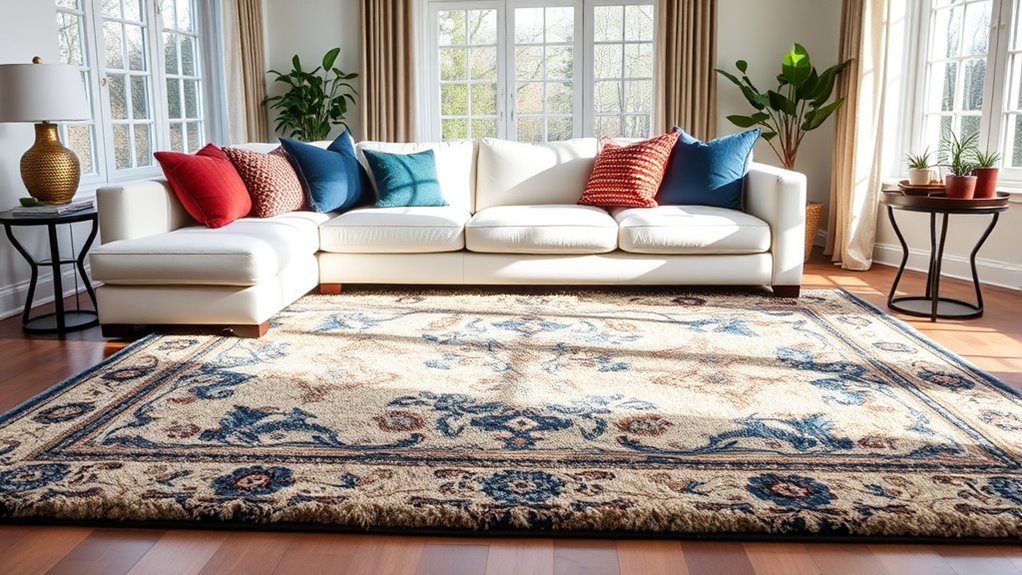
Selecting the right rug size depends on the specific room you’re decorating, as each space has unique needs and layout considerations. For living rooms, choose a rug that fits beneath your furniture, ensuring all front legs are on the rug for harmony. In dining rooms, opt for a rug large enough to extend beyond the table edges, so chairs stay on it when pulled out. Bedrooms benefit from rugs that frame the bed, with enough size to place bedside tables comfortably. When choosing colors, aim for color coordination that complements your room’s palette, creating a cohesive look. Rug material also matters; plush materials add comfort in living areas, while durable options suit high-traffic spaces. Correct sizing and thoughtful choices in color and material transform your rooms effortlessly. Additionally, considering interior design tips can help in selecting the perfect rug to enhance your overall decor.
Measuring and Visualizing Your Rug Fit

Accurately measuring your space is essential to visualize how a rug will fit and enhance your room. Use a tape measure to determine the length and width of the area where you want to place your rug. Visualize the rug’s position by marking the measurements on the floor with painter’s tape or paper. Consider the size and shape of your room to choose the right dimensions that complement your furniture. Keep in mind that different rug materials can influence how your rug fits and feels underfoot. To help you decide, think about:
- The overall dimensions needed for your space
- How much of your furniture should sit on the rug
- The visual impact of different rug materials
- How the size affects the room’s balance and flow
Tips for Balancing Proportions and Style

Achieving a balanced look with your rug involves paying close attention to proportion and style. Start by ensuring your rug’s color coordination complements your room’s palette—use colors that harmonize or create intentional contrast. Texture blending also plays a key role; mix smooth and textured surfaces to add visual interest without overwhelming the space. Keep proportions in mind: a rug should anchor the furniture, not dwarf or get lost beneath it. For example, in a living room, try to have the front legs of furniture on the rug for balance. Combining well-chosen colors with varied textures creates cohesion and style, making your room feel unified and inviting. This careful balance elevates your decor without sacrificing comfort or practicality.
Frequently Asked Questions
How Do I Choose a Rug That Complements My Existing Decor?
Your decor coordination skills are truly legendary, and choosing a rug that complements your existing decor is no exception. Focus on color harmony by selecting a rug that echoes or accents your current palette. Consider patterns and textures that blend seamlessly with your furnishings, creating a cohesive look. By paying attention to these details, you’ll craft a space that feels effortlessly stylish and beautifully unified, showcasing your impeccable taste.
What Are the Best Rug Materials for High-Traffic Areas?
When choosing rug materials for high-traffic areas, you want durability and stain resistance. Opt for synthetic fibers like nylon or polyester, which stand up well to wear and spills. Wool is also a good choice because it’s naturally durable and resistant to stains. Avoid delicate materials like silk or viscose, as they won’t last long under constant foot traffic. Prioritize these qualities to keep your rug looking great over time.
How Can I Make a Small Room Appear Larger With a Rug?
Think of your small room as a canvas waiting to be expanded. To make it appear larger, choose a rug that extends beyond your furniture’s edges, anchoring the space. Use furniture arrangement to create flow, and opt for light, neutral colors to reflect more light. Coordinating your rug’s color with the room’s palette helps blend everything seamlessly, giving your space an airy, open feel that feels much bigger than it is.
Should I Opt for Patterned or Solid-Colored Rugs?
When choosing between patterned or solid-colored rugs, think about how they enhance your space. Patterned rugs add texture contrast, making a room lively and dynamic, while solid colors create a calm, cohesive look. If you want to highlight certain furniture or decor, a patterned rug works well. For seamless color coordination or a minimalist vibe, go with a solid rug. Your choice should balance your room’s style and your personal taste.
How Often Should I Rotate or Clean My Area Rug?
Did you know that regular cleaning can prolong your rug’s lifespan by up to 30%? You should vacuum your rug at least once a week to prevent dirt buildup and reduce the need for deep cleaning. Rotate your rug every 6 to 12 months to ensure even wear. Regular cleaning and rotation help prevent stains and keep your rug looking fresh and vibrant longer.
Conclusion
Choosing the right rug size really transforms a room, making it feel cozy or spacious. Some say a rug should anchor all your furniture, but studies suggest that balanced proportions often create the most inviting space. Trust your eye—if it feels right, it probably is. When you pick a rug that complements your room’s size and style, you’ll turn any space into a stylish sanctuary you’ll love to walk into every day.