
TL;DR

Get furniture and decor delivered free with Prime
- Fast, free delivery on millions of items
- Prime Video, Amazon Music and more included
- Member-only deals all year
A homeowner shares how off-centering a canopy bed, combined with vintage decor and wallpaper, transforms a bedroom into a whimsical, spacious retreat. The simple hack adds charm and a cozy atmosphere.
Move the canopy. Change the whole room.
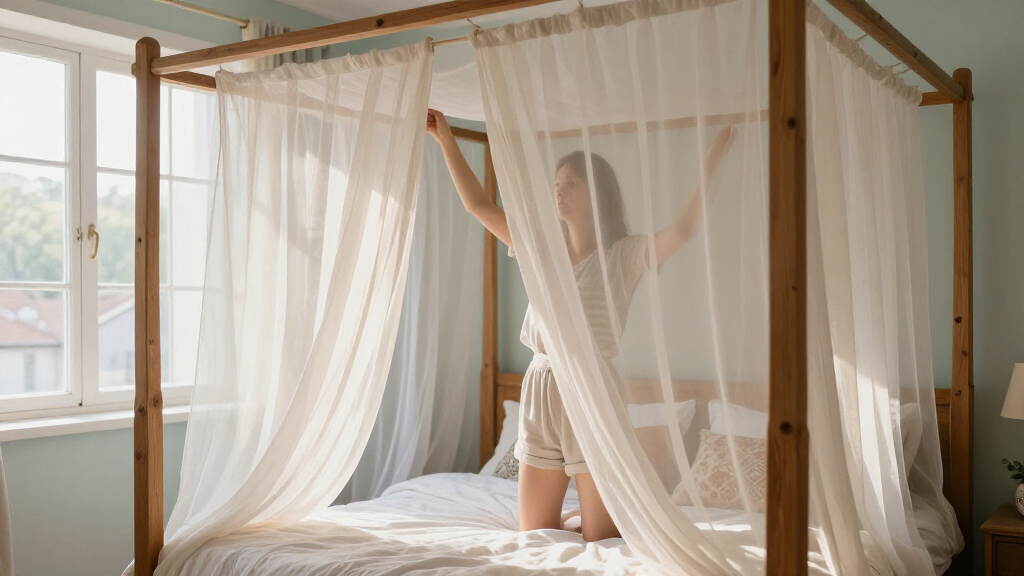
A simple corner placement turns a traditional canopy bed into a whimsical, cocoon-like retreat—opening sightlines, creating a reading nook, and adding personality without a major renovation.
From centered formality to a cozy corner
The makeover breaks with the expected centered placement. Moving the lightweight canopy toward a corner reshapes the room visually while preserving the bed’s fairy-tale character.
Choose the quiet corner
Identify a bed-side corner that opens the room’s main sightline and avoids doors, fans, and fixtures.
Shift the canopy off-center
Mount the canopy toward the corner so the fabric falls diagonally around part of the bed.
Control the fabric
Use secure ties to keep draping away from sleeping areas and reduce tangling or pulling.
Layer in the story
Add wallpaper, vintage objects, warm lighting, and soft textiles to complete the retreat.
One small shift, three visible effects
These directional scores illustrate the hack’s strongest design benefits. They represent qualitative impact, not laboratory measurements.
More perceived space
An off-center focal point frees the middle of the composition and makes the room feel less crowded.
Whimsy without clutter
The unexpected placement supplies movement and character while keeping the floor plan largely unchanged.
A dedicated retreat
The draped corner becomes a defined zone for bedtime stories, reading, quiet play, or relaxing.
The charm comes from the layers
Cori Sears paired the repositioned canopy with Erie Petite, Rose wallpaper by Wallism and nostalgic accessories that made the room feel collected rather than themed.
A four-part design recipe
Keep each layer distinct, then repeat a restrained palette to connect the room.
- Whimsical backdrop: Vintage-inspired botanical wallpaper supplies pattern and a timeless rose-toned base.
- Airy architecture: A lightweight canopy introduces height, softness, and a sense of enclosure.
- Collected details: Brass figurines, a princess castle print, and a rose-themed lamp support the fairy-tale mood.
- Tactile comfort: Layered bedding, cushions, and soft floor textiles turn visual charm into everyday coziness.
Centered canopy vs. corner canopy
Both arrangements can work. The corner approach is most useful when the goal is to introduce asymmetry, preserve open sightlines, or define a compact nook.
| Design factor | Traditional centered canopy | Off-center corner canopy | What to verify |
|---|---|---|---|
| Visual symmetry | ✓ Strong | ~ Playfully asymmetric | Balance with art or lighting |
| Open-room impression | ~ Layout dependent | ✓ Often enhanced | Check the doorway sightline |
| Defined reading nook | ✗ Less distinct | ✓ Naturally created | Add task lighting safely |
| Installation simplicity | ✓ Familiar placement | ~ Requires testing | Confirm drape and anchor points |
| Small-room adaptability | ~ Can feel formal | ✓ Flexible focal point | Preserve walking clearance |
How the transformation connects
Placement starts the change; supporting layers turn it into a coherent and useful bedroom experience.
Key questions, answered
The approach is adaptable, but room shape, canopy weight, mounting surfaces, and household activity all influence the final result.
Can it be safe for children?
Yes, when securely anchored, kept clear of hazards, and checked regularly. Avoid loose ties, cords, and heavy fittings above the bed.
Will any canopy work?
Lightweight, flexible canopies are easiest to adapt. Rigid four-poster systems may not support the same placement strategy.
Does it reduce functionality?
Usually not. Thoughtful corner placement can create a reading zone while preserving most floor space and circulation.
What is still being tested?
Long-term stability, performance in highly active rooms, and compatibility across different ceilings and canopy styles need more user evidence.
Where could the trend go next?
More modular canopy kits, flexible mounting systems, and room-specific DIY tutorials could make off-center arrangements easier to adopt.
Why Repositioning a Canopy Bed Matters for Bedroom Design
This simple hack demonstrates how small changes in furniture placement can dramatically alter a room’s atmosphere, making it more inviting and whimsical. Repositioning the canopy creates an illusion of increased space, enhances aesthetic appeal, and offers a personalized, cozy retreat. For homeowners and decorators, this approach provides an affordable, DIY-friendly method to refresh bedrooms without extensive renovations, aligning with current trends favoring charm and individuality in interior spaces.As an affiliate, we earn on qualifying purchases.
Background on Canopy Bed Trends and DIY Room Makeovers
Canopy beds have long been associated with fairy-tale aesthetics and luxury decor. Recently, interior design trends have favored playful, whimsical elements that evoke nostalgia and comfort. The repositioning of furniture, especially in small or old homes, has gained popularity as a practical way to enhance space and style. This specific trend of off-centering canopy beds to create cozy corners is part of a broader movement toward personalized, DIY bedroom updates that emphasize charm over formality. The use of vintage-inspired wallpaper and decor further supports a nostalgic, timeless feel that appeals to modern homeowners seeking warmth and character in their spaces.“By flipping the positioning of the canopy, I made the room feel more open and inviting, creating a cozy nook that feels both magical and functional.”
— Cori Sears
vintage-inspired wallpaper for bedroom
As an affiliate, we earn on qualifying purchases.
As an affiliate, we earn on qualifying purchases.
What Aspects of the Hack Are Still Being Tested?
It is not yet clear how well this repositioning holds up over time, especially with active children or in different room layouts. Long-term safety and stability of the canopy when secured with ribbons are also still being evaluated, and there is limited data on how this hack performs in various types of rooms or with different canopy styles.whimsical bedroom decor accessories
As an affiliate, we earn on qualifying purchases.
As an affiliate, we earn on qualifying purchases.
Future Trends and Broader Adoption of the Canopy Hack
Homeowners and interior designers are likely to experiment further with furniture positioning to maximize space and charm. The trend could expand as more DIY tutorials and before-and-after examples circulate online, prompting wider adoption. Additionally, manufacturers may develop more versatile, easy-to-install canopy options tailored for this off-center approach. Further studies or user feedback will determine the longevity and safety of this hack, influencing its popularity in the coming months.As an affiliate, we earn on qualifying purchases.
Key Questions
Is repositioning a canopy bed safe for children?
Repositioning a canopy bed in a corner and securing it with ribbons can be safe if done carefully. It’s important to ensure the canopy is securely fastened and regularly checked for stability, especially in homes with active children.
Can this hack work with any canopy bed?
Most canopy beds can be repositioned in a similar manner, but the success depends on the design and materials. It’s advisable to choose a lightweight, easy-to-secure canopy for best results.
Does off-centering the canopy affect the room’s functionality?
Positioning the canopy in a corner creates a cozy nook without sacrificing much floor space, often enhancing room functionality by providing a dedicated reading or relaxing corner.
What other decor tips complement this canopy hack?
Pairing with vintage-inspired wallpaper, charming decor items, and layered textiles can enhance the whimsical effect and make the space feel more personalized and inviting.
Will this trend suit small or modern apartments?
Yes, especially in small or older spaces where maximizing perceived size is important. The hack’s simplicity and low cost make it adaptable to various interior styles and room sizes.
Source: rss
Fall Picks
fall essentials
As an affiliate, we earn on qualifying purchases.