TL;DR
A design roundup presents window-treatment ideas for different rooms, from woven shades and sheer curtains to patterned drapes and simple blinds. The examples show how choices can balance daylight, privacy and interior style, but the source provides no product pricing, performance testing or broader design-industry findings.
A design roundup highlights window-treatment ideas for bedrooms, kitchens, dining areas and living spaces, showing how curtains, blinds and woven shades can affect both a room’s appearance and its control of light and privacy. The roundup credits examples to named interior design firms and photographers, and shows a range of approaches, from earth-toned woven materials to bold patterns and clean, light-filtering shades.

Get furniture and decor delivered free with Prime
- Fast, free delivery on millions of items
- Prime Video, Amazon Music and more included
- Member-only deals all year
In examples credited to Danielle Rose Design Co., woven shades appear with rattan chairs and pendant lighting in an earthy scheme using greens, browns and beige. The roundup also shows the firm using simple curtains that recede into a living room when not in use, and gold-rod, cafe-style drapery as a metallic accent in another space.
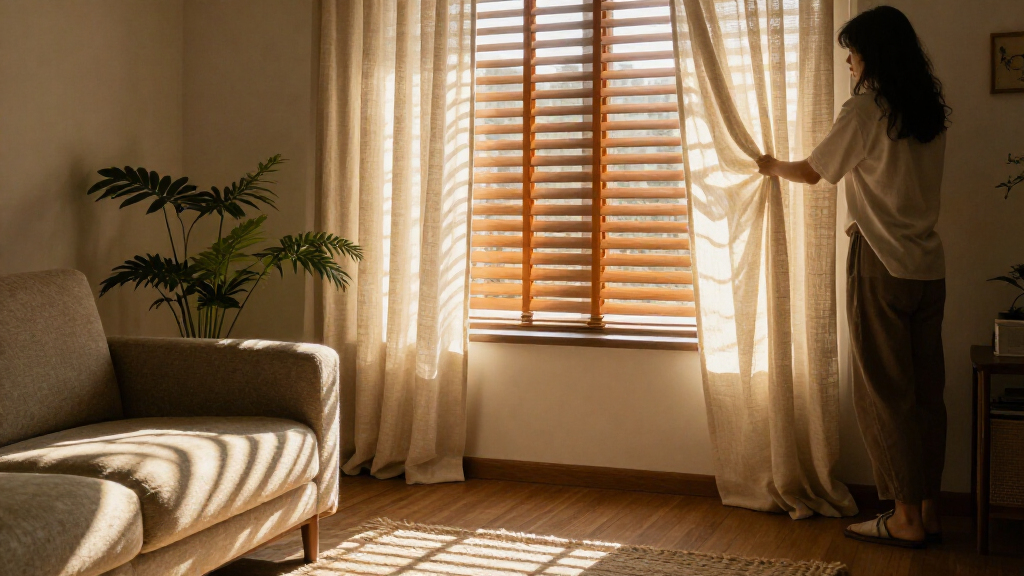
Several examples focus on adjusting daylight. The roundup describes Kate Hartman’s bedroom curtains as able to admit morning light and be wrapped around for a cozier setting at night. It also features House of One’s panel curtains at floor-to-ceiling glass doors to block early-morning light in a bedroom. A coastal-style room credited to the same firm pairs blue and white with blinds that can be closed at bedtime.
Other examples treat coverings as part of a room’s color and pattern scheme. The roundup shows Inside Stories matching curtains to a living-room wall color and contrasting light, sheer drapery with dark dining-room walls. It credits Phillip Harrison Interiors with patterned curtains alongside bright magenta walls and rugs, and colorful blinds with striped walls and teal seating in a nook. Allison Handler Design is shown coordinating shades with throw pillows and combining woven blinds with curtains in an adjoining area.
From Cozy to Modern Window ideas for every space
A design roundup shows how curtains, blinds and woven shades can shape a room while helping manage daylight and privacy.
Choose by room and need
The examples pair different treatments with bedrooms, kitchens, dining areas and living spaces.
Woven shades
Earth-toned materials complement greens, browns and beige in a living room.
Sheer curtains
Light-filtering drapery softens a room with dark walls.
Blinds and shades
Examples show blinds used for privacy while allowing some light through.
Light control changes by time
Bedroom examples show curtains used to welcome morning light or block it when needed.
- Sheer curtains soften incoming light.
- Some bedroom curtains admit morning light.
- Panel curtains can block early-morning light.
- Blinds can be closed at bedtime.
Make the treatment part of the room
Color, pattern and furnishings help set the visual direction.
Some examples match curtains or shades to walls, pillows and room accents.
Plaid and bold prints add character alongside colorful walls and furnishings.
Adjustable curtains can respond to changing daylight and privacy needs.
What the roundup cannot tell you
| Question | Evidence provided |
|---|---|
| Price and product details | Not provided |
| Measured light control | Not provided |
| Insulation, durability or maintenance | Not tested |
Balancing Light, Privacy and Style
The design roundup illustrates a practical choice facing homeowners and renters: a window covering can serve a visual purpose while helping manage daylight, privacy and comfort. Its examples include sheer curtains to soften a dark room, blinds that provide privacy while allowing some light through, and heavier or panel curtains used to darken bedrooms when needed.
The roundup also shows different treatments alongside varied finishes and furnishings, rather than suggesting one style for an entire home. In an example credited to Aha Interiors, curtains in a dining area that opens into a living room can be adjusted for daylight or privacy, showing how a treatment may respond to shared spaces and changing household routines.
These are design examples, not product tests. The source does not report measured light reduction, insulation, costs, durability or consumer outcomes. Readers can use the credited images as inspiration, but the roundup does not establish that a particular style will perform the same way in every window or home.
Products Worth Considering

Philips Hue Bridge Pro Smart Lighting Hub, 1-Pack

Philips Hue Play Floor Lamp, RGBWWIC LED, 53 Inch, Black

Blueair Blue Pure 211i Max Smart Air Purifier for Large Rooms
As an affiliate, we earn on qualifying purchases.
Room-by-Room Design Examples
The source is a visual roundup rather than a report on a new product, policy or study. It credits examples to design firms and photographers, including Arterberry Cooke, whose interiors feature simple kitchen shades and clean white shades elsewhere. In the kitchen example, wooden cabinetry, white countertops and red stools accompany a restrained window treatment, while gold sconces add light.
The roundup also features tailored treatments for bathrooms and smaller seating areas. It credits Marian Louise Design with baby-blue blinds that echo birds in bathroom wallpaper, and Kristyn Harvey Interiors with blinds coordinated with pendant lights near a tub. A black-and-white plaid curtain example from Forge & Bow gives a living room a cabin-like look. HCO Interiors is credited with color-coordinated shades that pick up greens, blues and yellows elsewhere in a room.
Across the examples, the roundup presents coverings in relation to each room’s light, privacy needs, colors and materials. It offers no single recommended style or ranking, and does not say that the showcased rooms represent a wider market trend.
Performance and Costs Not Provided
The source does not provide a publication date, prices, product brands or specifications for the curtains, shades and blinds shown. It also gives no measurements for how much light each treatment blocks or filters, or how well the options perform for insulation, noise reduction, maintenance or durability.
The examples are attributed to designers and photographers, but the source includes no direct interviews or quoted statements explaining why each selection was made. It is also unclear whether the images show products available for purchase or custom installations. The design descriptions should not be read as independent recommendations or verified performance claims.
Choose Treatments for Your Windows
The roundup does not announce a follow-up, launch or scheduled next step. For readers applying the ideas, the practical next step is to identify what each window needs: more privacy, less early light, filtered daylight or a stronger decorative feature. Then compare materials and styles against the room’s existing colors and furnishings.
Before buying or installing a covering, check the window’s dimensions, how it opens and whether the chosen treatment can be operated safely and conveniently. The roundup offers visual inspiration, but specific fit, costs and performance remain unverified in the material provided.
Key Questions
What is the main development in this article?
The source presents a design roundup of window treatments in different rooms, including woven shades, curtains, blinds and patterned options. It is not a product launch or a report of new research.
Which window treatments appear in the examples?
The roundup features woven shades, sheer drapery, panel curtains, pull-down blinds, white shades, cafe-style curtains and patterned treatments such as plaid. Some examples mix blinds and curtains in neighboring areas.
How do the examples address light and privacy?
Some curtains are shown admitting morning light or blocking early light in bedrooms. Other examples use blinds that allow some light through while providing privacy, or curtains that can be opened for daylight and closed when privacy is needed.
Does the roundup compare cost or performance?
No. The supplied material gives no pricing, product specifications or measured performance data for light control, insulation, durability or maintenance.
Are the featured styles presented as universal recommendations?
No. They are examples from named design firms, not a ranking or a tested set of recommendations. The source suggests varied approaches but does not establish that one treatment suits every room or window.
Source: goodhousekeeping.com