TL;DR
Interior designers interviewed by Veranda say mixed metal finishes can add contrast and a collected feel when they work with a room’s wider palette. Their advice includes choosing a dominant finish, coordinating undertones, and varying sheen or patina rather than using equal amounts of every metal.
Interior designers interviewed by Veranda recommend mixing metal finishes in a room when the choices relate to its broader palette, rather than matching every fixture and piece of hardware. Their advice focuses on using a dominant finish, coordinating warm or cool tones, and varying surface sheen or patina to add contrast without making a space feel visually scattered.

Get furniture and decor delivered free with Prime
- Fast, free delivery on millions of items
- Prime Video, Amazon Music and more included
- Member-only deals all year
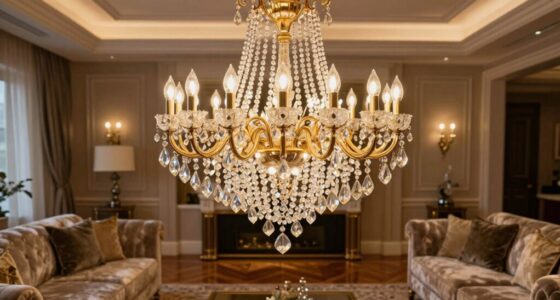
Luba Libarikian, founder of Libarikian Interiors, says brass, bronze and black are common combinations. Brass and bronze share warm tones, she says, while black can work as an accent alongside other finishes. Silver-toned metals such as polished nickel can also be paired with brass, but Libarikian advises letting one finish lead so the contrast feels intentional.
Marea Clark, founder of Marea Clark Interiors, says she considers metals alongside paint, flooring and fabrics. In her view, finishes do not need to match, but they should make sense within the room’s overall scheme. She describes keeping plumbing fixtures and cabinet hardware consistent while using a different finish for lighting, such as polished nickel or antique brass with oil-rubbed bronze sconces or pendants.
Lisa Staton, founder of Lisa Staton Interior Design, recommends varying not only the type of metal but also its sheen and patina. A polished surface can sit beside an aged or softly patinated one, she says, and a small amount of a secondary finish may be enough. Renée Gaddis, founder of Renée Gaddis Interiors, identifies bathrooms as another place where mixed finishes can soften a uniform look and add a more personal, layered effect.
Pair metal finishes with intention
Designers interviewed by Veranda say mixed metals can add contrast and a collected feel when they relate to the room’s wider palette.
Start with the room
Consider metals alongside paint, flooring and fabrics so different finishes feel connected.
Let one metal dominate, with another playing a smaller supporting role.
Relate warm or cool metals to the room’s colors and materials.
Use differences in sheen or patina to add contrast without visual clutter.
Pairings designers suggest
These are examples from designers, not a universal formula.
Brass and bronze
Their warm tones can work together; black can serve as an accent.
Polished nickel and brass
A dominant finish can help this silver-and-warm-metal pairing feel intentional.
Polished and aged
Mixing sheen or patina can bring variety without using equal amounts of each metal.
Where to introduce contrast
- Keep plumbing fixtures and cabinet hardware consistent.
- Use lighting to bring in another finish.
- Mixed finishes can soften a uniform bathroom look.
- Subdued bar lighting can help metals and textures feel cohesive.
How Finish Choices Shape a Room
The advice addresses a practical decision in rooms with several visible metal elements: whether every faucet, handle, light and accessory needs to share a finish. The designers say strict matching is not necessary, but that does not mean every combination will work. Relating finishes to the surrounding colors and materials gives homeowners a way to introduce contrast while keeping the room coherent.
The approach can also help when a renovation or furnishing project brings together existing and new items. Rather than replacing every fixture to create a uniform set, a homeowner may be able to retain some pieces and introduce another finish in a smaller role. That is an application of the designers’ guidance, not a guaranteed result; the article does not provide cost estimates or test particular combinations.
Products Worth Considering

Philips Hue Bridge Pro Smart Lighting Hub, 1-Pack

TCL 85-Inch QM64L QD-Mini LED 4K Smart Fire TV

Philips Hue Bridge Pro Starter Kit with 4 A19 E26 Color Smart Bulbs
As an affiliate, we earn on qualifying purchases.
Where Designers Use Mixed Metals
The designers identify kitchens, bathrooms and bar areas as settings where mixed finishes can work. Libarikian says subdued lighting in a bar area can help different metals and textures feel cohesive. For kitchens, she says hardware does not all have to match if the materials share similar undertones.
Clark’s approach offers one way to limit the number of competing finishes: keep plumbing and cabinet hardware consistent, then use lighting to introduce a contrast. Gaddis points to bathrooms as a place where combining finishes can make a space feel less uniform. These are individual designers’ preferences, not rules that every room must follow.
“Mixing metals in a room is a good way to add variety and contrast, and a way for a room to feel like it was collected over time.”
— Luba Libarikian, founder of Libarikian Interiors
No Universal Finish Formula
The guidance is based on the designers’ professional preferences and examples; the article does not establish a universal formula for which metals work together. It gives no fixed limit on the number of finishes, measurements for how much of each to use, or detailed room-by-room specifications. The advice to choose a dominant metal is one designer’s recommendation, not a requirement shared as a formal standard.
Whether a specific pairing feels balanced will depend on the room’s existing palette, lighting, and materials, according to the designers. The article does not compare particular products or finishes in controlled tests, and it does not claim that any pairing will suit every home.
Apply the Advice to Your Palette
The article describes design guidance rather than a scheduled announcement, product launch or policy change, so no follow-up milestone is identified. For readers planning a room, the designers’ suggestions point to a practical sequence: look at the metals beside the paint, flooring and fabrics; decide which finish should be most prominent; then consider whether a contrasting sheen, patina or accent finish supports the overall scheme.
In a kitchen, that could mean keeping hardware finishes related while introducing contrast through lighting; in a bathroom or bar area, it could mean combining finishes in a way that suits the room’s materials and atmosphere. The designers offer these as options, not prescribed outcomes. The final choice remains dependent on the specific room and the finishes selected.
Source: rss
Key Questions
Do metal finishes in a room have to match?
No. The designers interviewed by Veranda say finishes can differ, provided they relate to the room’s palette and do not make the overall scheme feel scattered.
Which metal finishes do designers commonly combine?
Luba Libarikian identifies brass, bronze and black as common choices. She says polished nickel and brass can also work together when one finish is dominant.
How can mixed finishes look cohesive?
Consider the metals alongside the room’s paint, flooring and fabrics, coordinate undertones, and use differences in sheen or patina deliberately. The designers also suggest that a secondary finish can appear in a small amount.
Where can mixed metal finishes work?
The designers discuss kitchens, bathrooms and bar areas. Their recommendations vary: one suggests using lighting for contrast in a kitchen, while another says a bar’s subdued lighting can help different finishes feel cohesive.
Source: veranda.com