Many new homeowners make common decorating mistakes like overmatching décor, ignoring scale, cluttering spaces, choosing poor lighting, sacrificing functionality for style, skipping a cohesive color palette, and not planning for future needs. These errors can make your home feel impersonal, unbalanced, or less practical. To create a space that feels inviting, stylish, and functional, it is crucial to focus on personalization, harmony, and long-term planning. Keep these tips in mind to transform your home; you’ll discover more insights to help refine your space.
Key Takeaways
- Overmatching decor creates a sterile environment; add personal accents and mix textures for visual interest.
- Inconsistent color schemes disrupt flow; establish a cohesive palette for harmony and emotional balance.
- Ignoring scale and proportion leads to awkward furniture placement; choose appropriately sized pieces for comfort and balance.
- Cluttering spaces with excess items diminishes appeal; adopt minimalism and effective storage solutions.
- Poor lighting choices make spaces dull; incorporate layered lighting for warmth, functionality, and ambiance.
Overmatching and Lack of Personal Touch
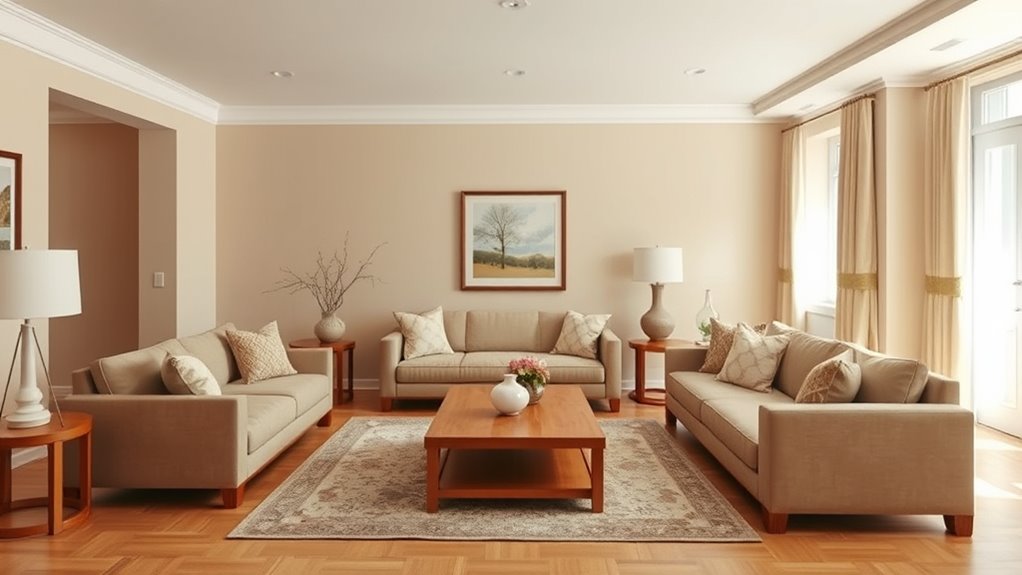
When your decor becomes too matchy-matchy, it can make your home feel sterile and impersonal. Overmatching strips away your personal expression, making your space feel cookie-cutter rather than uniquely yours. Instead of uniform sets, add unique accents that reflect your personality—think vintage finds, colorful artwork, or quirky accessories. These touches create visual interest and tell your story. Mix different textures, patterns, and styles to break the monotony and make your space feel lively. Remember, it’s not about perfection but about showcasing what makes you, well, you. Incorporating personal touches makes your home inviting and authentic, turning a generic space into a true reflection of your style. Don’t be afraid to showcase your individuality through carefully chosen accents. A well-curated selection of decorative elements can elevate your space and prevent it from feeling too staged or impersonal.
Ignoring Scale and Proportion
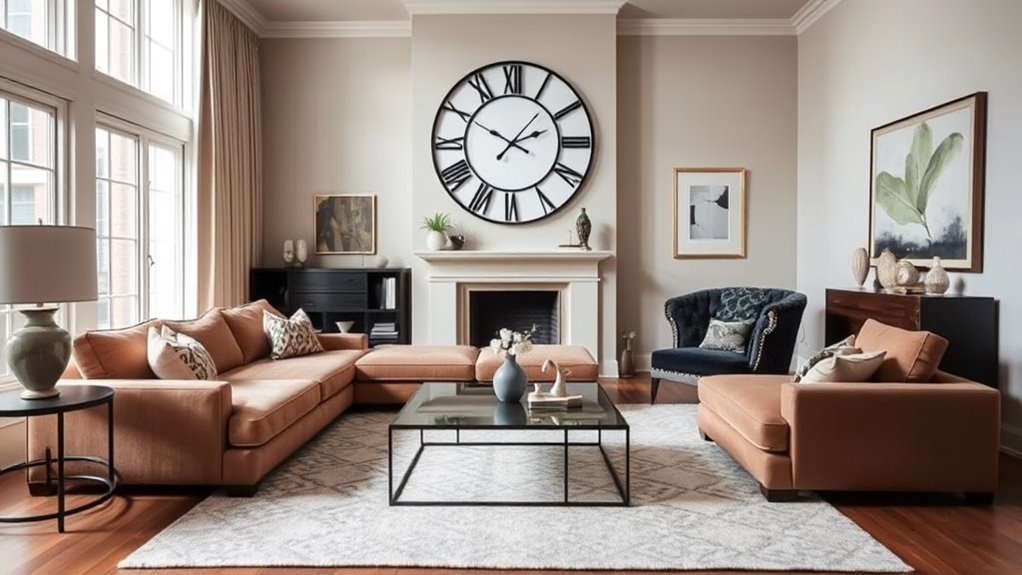
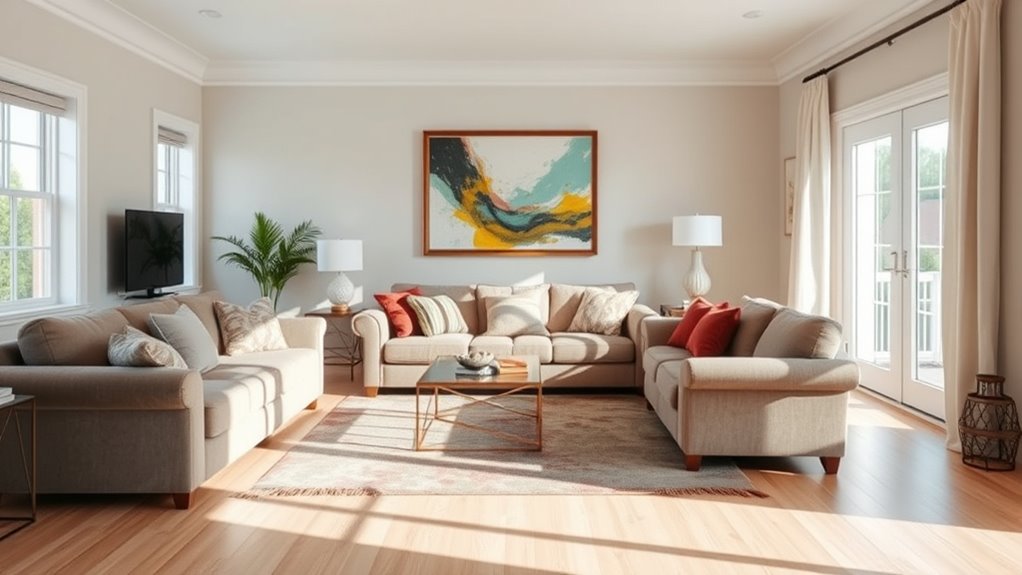
Ignoring scale and proportion can quickly make your space feel off-balance and uncomfortable. When furniture and décor don’t match the size of your room, it disrupts the sense of scale harmony you want to achieve. Oversized pieces in small rooms can feel overwhelming, while tiny furniture in large areas can seem lost and sparse. To create proportion balance, choose items that complement the room’s dimensions. Consider the height, width, and depth of each piece in relation to the space. Proper scale ensures your furniture fits comfortably without crowding or feeling underwhelming. When you pay attention to scale and proportion, your décor will flow naturally, making your home feel harmonious, inviting, and thoughtfully designed. Additionally, incorporating Halloween-themed decorations with appropriate scale can enhance the festive atmosphere without overwhelming your space.
Cluttering Spaces With Too Many Items

While choosing appropriately sized furniture helps create balance, filling your space with too many items can quickly undo that harmony. Cluttering your home with excess decorative accessories or furniture overwhelms the room and diminishes its appeal. Adopting a minimalist approach can help you focus on quality over quantity, creating a clean, calming environment. To avoid clutter, consider:
- Limiting decorative accessories to a few meaningful pieces
- Removing excess furniture to open up space
- Using storage solutions to hide unnecessary items
- Keeping surfaces clear and organized
- Drawing inspiration from creative communities like fan trailer creators, who experiment with visual storytelling, can help you develop a distinctive yet uncluttered style.
Poor Lighting Choices
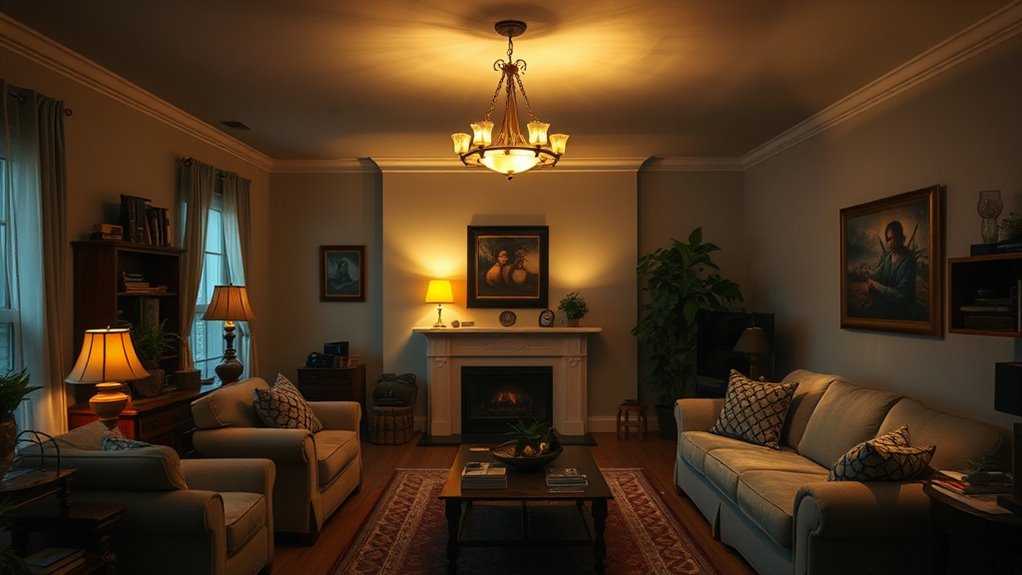
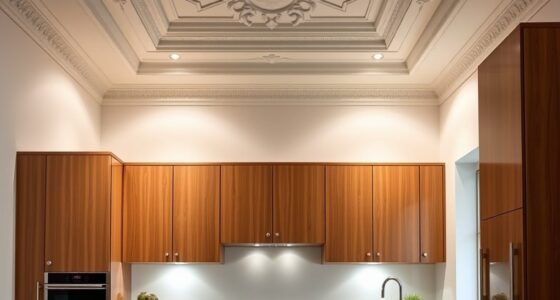
Poor lighting choices can make even the most beautiful spaces feel dull and uninviting. Without proper lighting, your rooms lack ambient ambiance, making them feel flat and unwelcoming. Relying solely on harsh overhead lights can create glare and discomfort, so balance your lighting with softer, layered options. Incorporate task illumination in areas like the kitchen and workspace to ensure you have enough light for specific activities. Use a mix of ceiling fixtures, table lamps, and accent lights to add depth and warmth. Avoid the mistake of installing one-size-fits-all lighting; instead, tailor your lighting plan to each room’s purpose. Thoughtful lighting enhances mood, highlights your décor, and creates a comfortable, inviting atmosphere for you and your guests. Additionally, selecting the right lighting can also help highlight your interior design elements and improve overall home vitality.
Neglecting Functionality for Style

When decorating, you might focus on looks and forget how you’ll actually use the space daily. It’s essential to balance aesthetics with comfort and plan for practical storage solutions. Prioritizing functionality ensures your home stays both beautiful and livable. Incorporating efficient storage strategies can further enhance the usability of your space, making it easier to maintain an organized and peaceful environment.
Prioritize Daily Use
Focusing solely on style without considering daily functionality can turn your home into a space that looks great but becomes frustrating to live in. To avoid this, prioritize furniture and layouts that serve your daily needs. Consider how often you use certain spaces and choose items that support those activities. Incorporate unique focal points by selecting versatile pieces that double as conversation starters. Use creative display techniques to keep clutter at bay and make storage practical. Remember, style should enhance your life, not hinder it. Pay attention to functional elements like lighting and storage solutions to ensure your space remains practical. Opt for multi-purpose furniture like storage ottomans or fold-out beds. Arrange furniture for easy movement and accessibility. Highlight functional areas with eye-catching yet practical decor. Keep frequently used items within reach, but visually appealing. This approach ensures your home is both stylish and livable, making daily routines smoother.
Balance Aesthetics and Comfort
While prioritizing style can make your home look stunning, neglecting comfort often results in spaces that are beautiful but impractical for everyday use. To achieve true visual harmony, balance your artistic expression with functional furniture and layouts. Incorporate cozy seating, supportive chairs, and inviting rugs that invite relaxation without sacrificing style. Remember, comfort enhances your home’s usability and reflects your personality through thoughtful choices. Avoid the trap of sacrificing practicality for striking aesthetics; instead, blend both to create a space that’s visually appealing and livable. Utilizing tuning techniques to optimize your home’s layout can also help improve its functionality and comfort. When you focus on this balance, your home becomes a true reflection of your taste and lifestyle, ensuring that beauty doesn’t come at the expense of comfort.
Plan for Practical Storage
Have you ever prioritized stylish storage solutions that look great but don’t actually hold your belongings? It’s easy to focus on aesthetics and overlook functionality. To avoid this mistake, plan for practical storage options like hidden compartments in furniture or modular pieces that can be reconfigured. These solutions maximize space without sacrificing style. Consider incorporating:
- Hidden compartments in coffee tables or beds
- Modular furniture that can be reconfigured
- Multi-purpose pieces with built-in storage
- Clever shelving that keeps clutter out of sight
Additionally, integrating wall organization systems can create visual interest while maintaining order and accessibility.
Skipping a Cohesive Color Palette

Skipping a cohesive color palette can make your home feel disjointed and chaotic. Without a unified scheme, your rooms may clash, creating visual confusion. Monochromatic schemes simplify this by using varying shades of one color, offering harmony and sophistication. This approach makes decorating easier and ensures a seamless flow from room to room. Be cautious with inconsistent accents—bright, bold decor in one space and muted tones in another can disrupt the overall look. When you choose a consistent color palette, your furnishings, walls, and accessories work together, making your home feel thoughtfully designed. Avoid jumping between random colors without a plan. A cohesive palette ties everything together, creating a calm, inviting environment that reflects your style. Maintaining visual harmony can also enhance your emotional well-being, fostering a sense of peace and balance in your living space.
Not Planning for Future Needs

Failing to plan for future needs can lead to costly and inconvenient renovations down the line. To avoid this, focus on futureproofing plans and incorporate adaptable design elements into your decorating. Think about how your space might change over time—whether you’ll need a home office, additional bedrooms, or accessible features. By considering these factors now, you save time and money later. Using versatile designs that can evolve with your needs is also highly beneficial.
Frequently Asked Questions
How Can I Incorporate My Personality Into My Home Decor?
You can incorporate your personality into your home decor by adding personal touches that reflect your style. Choose color schemes that resonate with you, whether bold or subtle, to set the mood. Display meaningful artwork, photos, or collectibles that tell your story. Use unique furniture pieces or accessories that showcase your interests. This way, your space becomes a true reflection of who you are, making it warm and inviting.
What Are Quick Ways to Fix Scale Issues in a Room?
Your room’s scale might be off, but don’t let it throw you for a loop. To quickly fix scale issues, focus on proportion adjustments—swap out small furniture for larger pieces or add taller accessories to balance the space. Use scale corrections like rugs, artwork, and lighting to create harmony. Remember, sometimes it’s just a matter of putting the right pieces in the right places to make everything feel right.
How Do I Choose the Right Lighting for Different Spaces?
When choosing lighting for different spaces, consider lighting layers—ambient, task, and accent—to create a balanced atmosphere. Select fixture styles that complement your room’s decor, whether modern or traditional. You want enough light without overwhelming the space, so mix and match fixtures like chandeliers, wall sconces, or recessed lights. Think about each room’s purpose, and adjust lighting accordingly, ensuring functionality and style work harmoniously.
What’s the Best Way to Balance Style and Functionality?
To balance style and functionality, focus on artistic expression through your decor choices while ensuring practicality. Use color coordination to create a cohesive look that reflects your personality without sacrificing comfort. Select pieces that serve a purpose but also enhance your space’s aesthetic. Mix textures and patterns to add visual interest, and prioritize versatile furniture that combines form and function, so your home feels stylish yet livable every day.
How Can I Create a Flexible, Adaptable Home Design?
Imagine transforming your living space into a versatile hub by incorporating modular furniture, which guarantees to adapt to your needs. For example, a sofa bed in a multi-purpose room combines seating and sleeping areas seamlessly. To create a flexible, adaptable home design, prioritize multifunctional furniture and designate zones for different activities. This approach ensures your home evolves with your lifestyle, offering comfort and practicality without sacrificing style.
Conclusion
Avoiding these common decorating mistakes is like tending a garden—you need patience, balance, and attention to detail. When you fix overmatching, clutter, or poor lighting, your space blossoms into a true reflection of you. Think of your home as a canvas; with thoughtful planning and a personal touch, you’ll craft a space that’s both beautiful and functional. Nurture it wisely, and it’ll flourish for years to come.