To choose the right color scheme for your home, start by evaluating your space’s natural light and how different areas are used. Define the mood you want—calm, energetic, cozy—and select colors that support that feeling. Explore color combinations based on color theory, gather inspiration, and test samples in your space. Balance bold accents with neutral tones, ensuring everything feels cohesive. Keep exploring these steps to create a truly harmonious and personalized interior.
Key Takeaways
- Assess natural light, room function, and furniture placement to select colors that enhance space and mood.
- Define the desired atmosphere and style inspiration to choose colors that evoke the intended emotions.
- Use color theory and psychology to create harmonious schemes that support your mood and space perception.
- Test samples in different lighting conditions and observe how colors interact with textures and decor.
- Balance bold accents with neutral tones, ensuring cohesive color coordination throughout your home.
Assess Your Space and Lighting Conditions
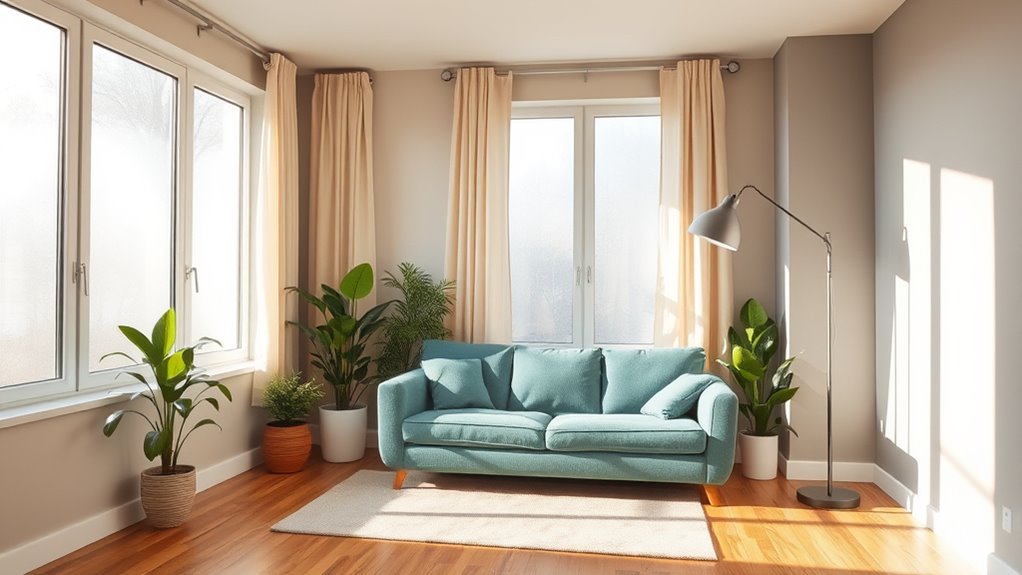
Have you ever noticed how the natural light in your space affects the way colors appear? The direction and amount of sunlight influence your color choices and how they look throughout the day. When evaluating your space, consider how natural light interacts with different areas and how you utilize the space with furniture placement. Proper furniture placement can optimize light flow and highlight your preferred colors. If a room gets lots of sunlight, you might choose lighter, reflective shades to brighten the space. Conversely, darker or shaded rooms benefit from warm, inviting tones. Understanding your lighting conditions helps you select colors that enhance your space’s natural qualities. Adjust your furniture arrangement accordingly to maximize light and create a cohesive, well-utilized environment. Recognizing the impact of inspirational quotes about fatherhood can also inspire thoughtful design choices that reflect your personal style.
Define the Mood and Style You Want to Create
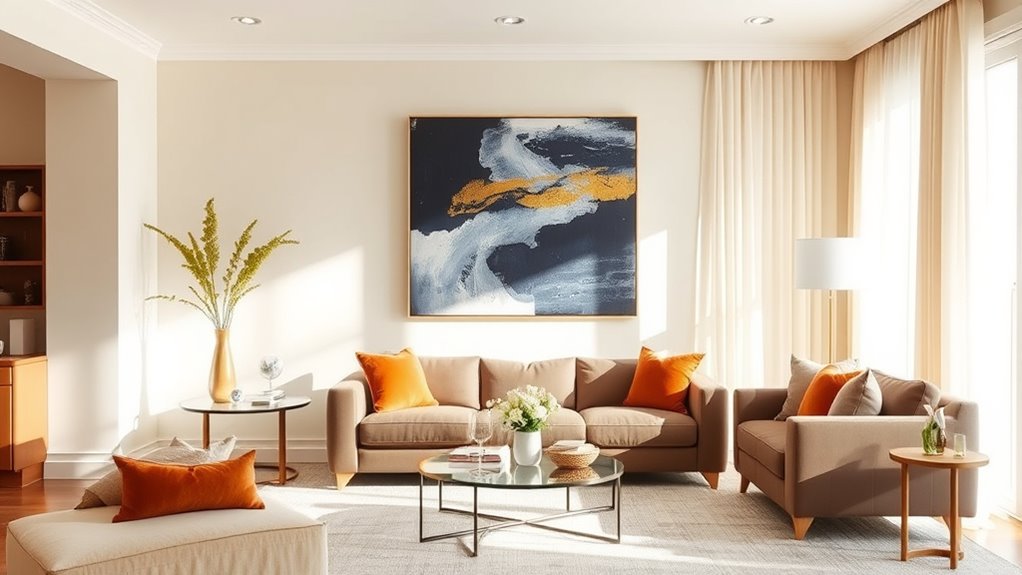
Think about the atmosphere you want to feel in each room—calm, energetic, cozy, or sophisticated. Look for style inspiration and themes that match your vision, whether modern, rustic, or eclectic. Keep in mind how different colors can evoke specific emotions and set the overall tone you desire. For example, incorporating Ice Cream Flavors can inspire playful and vibrant color schemes that reflect fun and creativity.
Desired Atmosphere and Feel
Choosing the right color scheme starts with visualizing the mood you want to create in your space. Think about the atmosphere you desire—calm, energetic, cozy, or sophisticated. Your choice of color temperature influences this: warm tones evoke comfort and intimacy, while cool tones promote calmness and focus. Additionally, consider cultural preferences, as certain colors carry specific meanings across different backgrounds. To clarify your vision, ask yourself:
- Do I want a lively or tranquil environment?
- Which colors resonate with my cultural background?
- How will the chosen colors influence the overall feel of my home?
- Incorporating natural materials like wood and linen can enhance the rustic charm and authenticity of your farmhouse bedroom.
Style Inspiration and Themes
How you envision your home’s style sets the foundation for selecting a color scheme that complements your desired look. If you’re aiming for a modern, minimalist vibe, monochrome schemes with varying shades of a single color can create a sleek, cohesive feel. For a bold, energetic space, incorporate bold accents like vibrant cushions, artwork, or furniture pieces to add personality without overwhelming the room. Consider your inspiration—whether it’s Scandinavian simplicity, industrial edge, or bohemian charm—and choose colors and accents that reflect that theme. By defining your style, you guide your choices for color harmony and contrast, ensuring your home feels intentional and stylish. Remember, the right theme sets the mood and shapes how colors work together throughout your space. Understanding color psychology can also help you select hues that evoke the desired emotions and atmosphere in your home.
Emotional Impact of Colors
Colors have the power to evoke specific emotions and set the overall mood of your home. Understanding color symbolism and emotional associations helps you define the style you want to create. For instance, choosing blue can promote calmness and productivity, while red can energize and stimulate. To define the mood, consider these steps:
- Identify the emotional associations you want—peace, excitement, warmth, or sophistication.
- Match colors to your desired atmosphere, like soft pastels for serenity or bold hues for vibrancy.
- Use color symbolism to reinforce your style, such as green for growth or yellow for happiness.
Explore Color Theory and Color Combinations

Understanding the color wheel helps you see how different hues work together, making your choices more intentional. You’ll want to contemplate complementary schemes for bold contrasts or analogous schemes for harmony. Remember, colors also influence mood, so think about how color psychology aligns with the atmosphere you want to create. Additionally, considering color combinations used in various contexts can help you achieve a balanced and appealing interior design.
Color Wheel Fundamentals
The color wheel serves as a fundamental tool for understanding how different hues relate to one another, making it easier to create harmonious and visually appealing interior designs. By mastering the color wheel basics, you’ll grasp hue relationships and how colors interact. Here’s what to remember:
- Primary colors (red, blue, yellow) form the foundation for all other hues.
- Secondary colors (green, orange, purple) are created by mixing primary colors.
- Tertiary colors result from blending primary and secondary hues for more nuanced options.
- Recognizing how color relationships influence mood and space perception helps you select colors that complement or contrast effectively. The color wheel is essential for developing balanced schemes and avoiding clashing colors, ensuring your home interior feels cohesive and vibrant.
Complementary and Analogous Schemes
Complementary and analogous color schemes are powerful tools for creating visually appealing interiors. They help you achieve color harmony while adding visual contrast to your space. Complementary schemes, using colors opposite each other on the color wheel, create striking contrasts that energize a room. For instance, blue and orange bring vibrancy without overwhelming. On the other hand, analogous schemes, which incorporate colors next to each other, produce a more harmonious and cohesive look. Combining shades like blue, teal, and green offers a soothing progression. Understanding how these schemes work allows you to balance boldness and subtlety, ensuring your interiors are both dynamic and comfortable. By exploring color harmony and contrast, you can craft spaces that feel intentional and visually balanced. Additionally, considering color psychology can help you select schemes that influence the mood and atmosphere of your home.
Impact of Color Psychology
Colors influence how you feel in a space, often more than you realize. Your choices tap into color symbolism and cultural associations that shape your emotions. To harness this, consider these key points:
- Red can energize and stimulate, but in some cultures, it symbolizes luck or danger.
- Blue promotes calmness and trust, often linked to stability across many traditions.
- Yellow energizes and lifts spirits, yet in certain cultures, it represents caution or envy.
- Recognizing the color psychology behind different hues allows you to intentionally craft an atmosphere that aligns with your personal and cultural preferences.
Gather Inspiration and Create a Mood Board

Gathering inspiration is a crucial first step in designing your home’s interior, as it helps you visualize the overall look and feel you want to achieve. Creating a mood board brings together your ideas, favorite decorative accents, and color schemes, guiding your decisions. Use images, fabric swatches, and paint samples to explore different combinations. Pay attention to color psychology to understand how hues influence mood and atmosphere. Incorporate elements like textures and patterns that reflect your style. Organizing your inspiration with this simple table can help clarify your choices:
| Inspiration Source | Favorite Colors | Decorative Accents |
|---|---|---|
| Magazines | Soft blues | Throw pillows |
| Warm neutrals | Wall art | |
| Nature | Earth tones | Rugs |
Additionally, understanding the resources and tools available, such as color psychology and regional influences, can enhance your selection process.
Test Colors With Swatches and Samples

Once you’ve assembled your mood board and identified the palettes you like, it’s time to see how those choices look in real life. Testing colors with swatches and samples helps you evaluate how paint finishes affect the overall look, especially regarding color durability. To do this effectively:
- Apply small patches of each sample on your walls, considering different paint finishes like matte, satin, or gloss to see their impact.
- Observe how the colors appear in various lighting conditions throughout the day.
- Live with the samples for a few days to notice any changes in color or sheen, ensuring they meet your expectations.
- Remember that home décor inspiration can evolve once you see how colors interact with your unique space and lighting.
This hands-on approach ensures you select the right hue and finish for long-lasting beauty in your home.
Consider the Function of Each Room
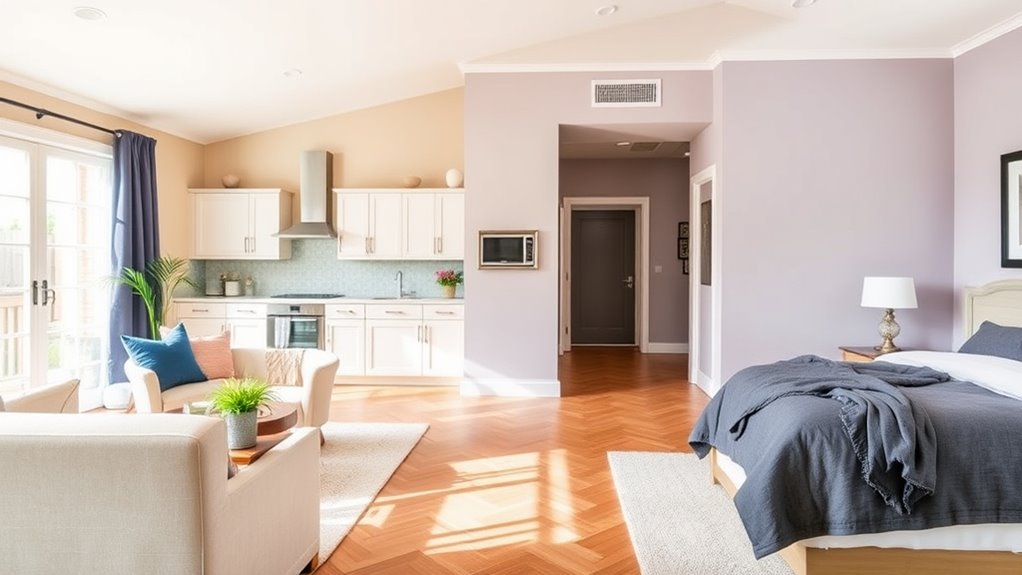
Understanding the purpose of each room is essential when choosing a color scheme because different spaces require different atmospheres. For example, a living room for relaxation benefits from calming, neutral tones, while a workspace might need energizing colors. Consider the room layout and furniture placement when selecting colors; a small room with furniture against the walls can feel more open with light shades, while an open-concept space allows for bold or contrasting hues. Think about how the room functions daily—if it’s a playroom, vibrant colors can boost energy; for a bedroom, soothing shades promote rest. Tailoring your color choices to each room’s function guarantees the space feels appropriate and inviting, enhancing its usability and comfort.
Balance Your Color Palette With Neutrals and Accents

Balancing your color palette with neutrals and accents creates a cohesive and inviting space. Neutral tones, like beige, gray, or white, serve as a foundation that keeps your room feeling calm and versatile. To add personality, incorporate accent colors that pop against these basics. Here are three tips to achieve this balance:
Neutral tones create a calm foundation, while accents add personality and visual interest.
- Use neutral tones on large surfaces—walls and major furniture—to set a calming background.
- Introduce accent colors through accessories like throw pillows, artwork, or rugs, creating visual interest.
- Limit bold accent colors to a few focal points to avoid overwhelming the space, ensuring harmony with your neutrals.
This approach helps your room feel both balanced and lively, making your interior truly inviting.
Make Final Decisions and Plan Your Implementation
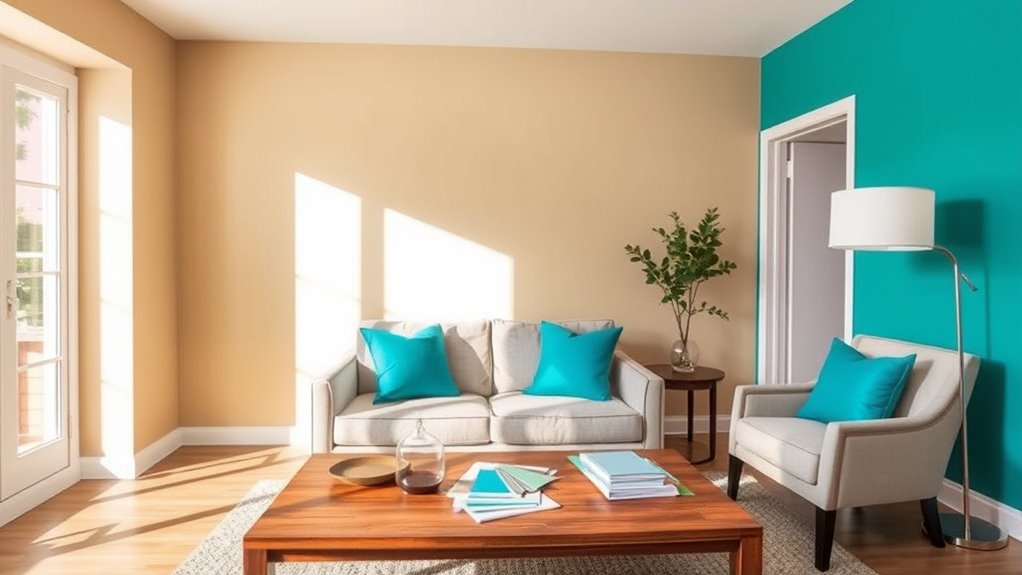
After selecting your ideal color scheme, it’s important to make clear final decisions and develop a detailed plan for implementing them. Begin by focusing on color coordination to ensure your chosen hues work harmoniously throughout each space. This involves selecting the right paint shades, finishes, and application techniques to achieve a cohesive look. When making paint selection, consider factors like lighting and room function to ensure colors appear as intended. Create a timeline for painting, gather all necessary supplies, and decide whether you’ll do it yourself or hire professionals. Document your plan with sketches or mood boards to visualize the outcome. Clear decisions and strategic planning will help you execute your interior design smoothly, resulting in a beautifully coordinated space.
Frequently Asked Questions
How Do I Choose Colors That Last Over Time?
When choosing colors that last over time, focus on timeless color palettes like neutral shades or classic hues that won’t quickly go out of style. Opt for durable paint finishes, such as matte or satin, which resist wear and can be easily refreshed. You should also consider how the colors fit with your lifestyle and future updates, ensuring your choices remain appealing and functional for years to come.
What Are Common Mistakes to Avoid When Selecting a Color Scheme?
Did you know that 60% of homeowners regret their color choices? When selecting a color scheme, avoid common mistakes like color clashing, which can create visual chaos, or overmatching, making spaces feel dull. You skip testing paint samples or ignore the room’s natural light, it worsens. To get it right, balance bold and neutral tones, and consider how colors work together before committing.
How Can I Incorporate Trends Without Sacrificing My Style?
To incorporate trends without sacrificing your style, focus on trend integration that complements your existing decor. Choose trendy colors or patterns as accents rather than main features, ensuring your overall style stays intact. Mix current trends with timeless pieces, balancing fresh looks with your personal taste. This way, you stay stylish and true to your aesthetic, effortlessly blending new trends while preserving your unique home interior style.
What Are Budget-Friendly Options for Testing Colors Effectively?
When testing colors on a budget, start with paint chip testing by collecting various paint chips from your local store. Use budget paint samples to paint small sections on your wall, so you see how the colors look in different lighting. This approach helps you make confident choices without overspending, ensuring the colors complement your style and fit your space perfectly.
How Do I Coordinate Colors With Existing Furniture and Decor?
Imagine your furniture and decor screaming for harmony, like a symphony waiting for the perfect conductor. To achieve color matching, pick shades that complement your existing pieces, considering undertones and styles. Think of your decor as a puzzle—coordinate colors to create a seamless flow. Use neutral tones as a bridge or pick accent colors that pick up hues from your furniture. Prioritize furniture harmony for a cohesive, inviting space that feels just right.
Conclusion
Choosing the right color scheme transforms your home into a reflection of your personality. Think of it as painting your own masterpiece—you hold the brush. Trust your instincts, experiment boldly, and let your space tell your story. Remember, color is the language of emotion; speak it wisely. With patience and confidence, you’ll create a home that not only looks beautiful but feels truly yours. Your perfect palette awaits—now, go make your masterpiece come alive!