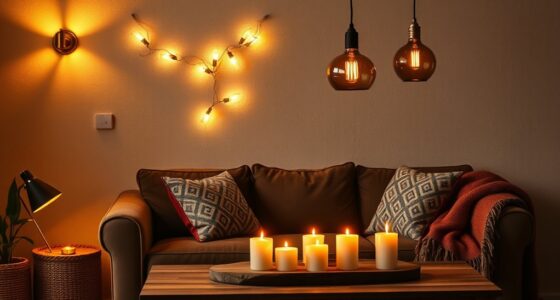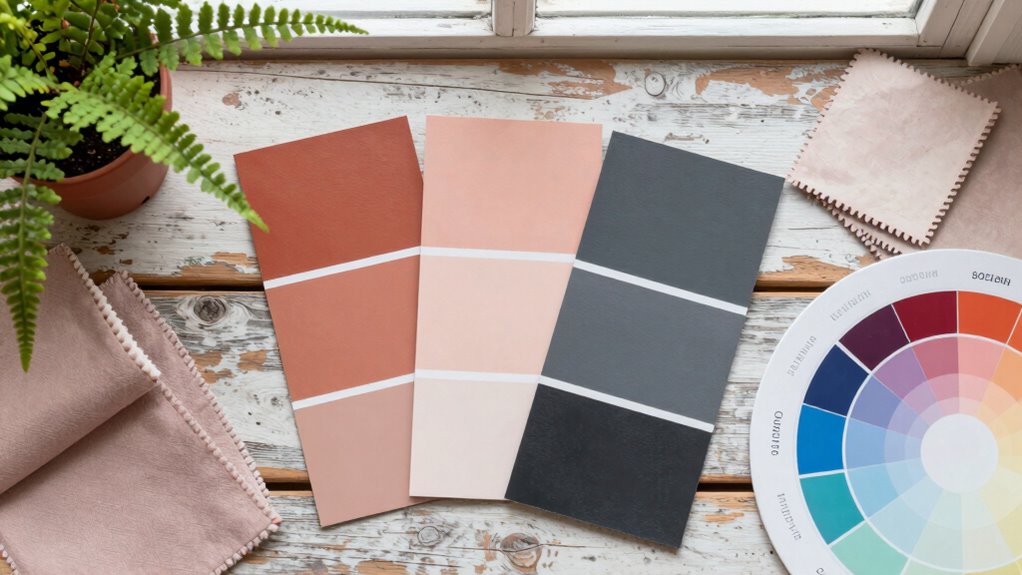

To build a better color palette for your home, start with a neutral base like whites, creams, or grays for versatility. Choose two or three main colors inspired by your mood, culture, or favorites, and use these on walls and larger furniture. Add accents and accessories with complementary hues to create layering and interest. Consider how each color impacts the room’s atmosphere and observe how lighting affects their appearance. Keep exploring more tips to craft a cohesive, inviting space.
Key Takeaways
- Start with neutral base colors to ensure flexibility and balance in your palette.
- Choose 2-3 main hues to maintain cohesion and avoid visual clutter.
- Incorporate accents and secondary colors through accessories for added depth.
- Consider cultural meanings and psychological effects when selecting colors.
- Test color swatches in various lighting conditions to ensure they work in your space.
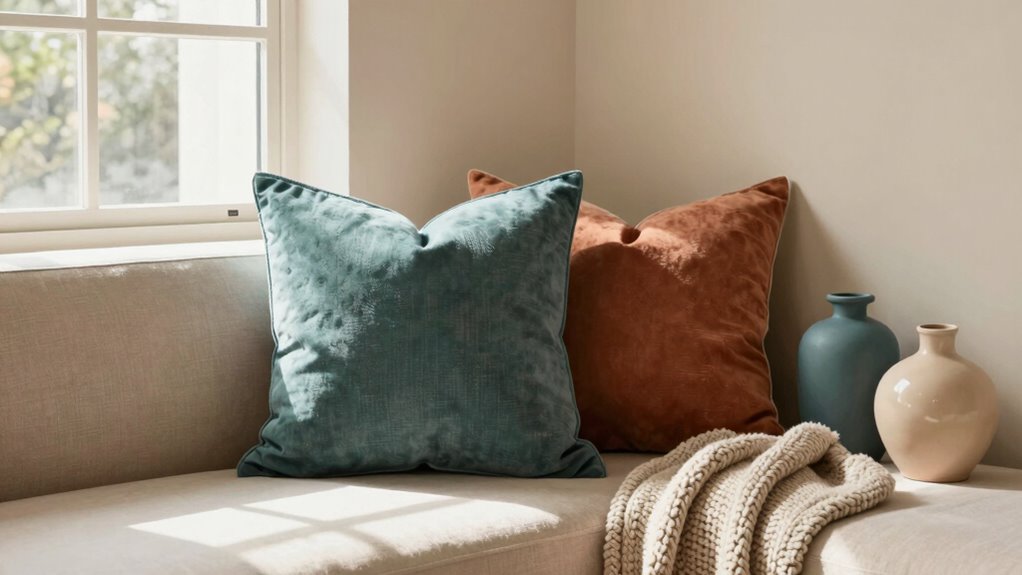
Creating a cohesive color palette is vital for transforming your home into a stylish and comfortable space, and luckily, it doesn’t have to be complicated. The key is understanding how colors influence mood and perception, which is where color psychology comes into play. For example, soft blues and greens tend to create calm, relaxing environments, perfect for bedrooms or quiet corners. Bright reds and yellows can energize a space, ideal for kitchens or lively gatherings. When selecting your colors, think about how you want each room to feel and what emotions you want to evoke. This intentional approach helps guarantee your palette supports your lifestyle and personal taste.
Creating a harmonious home starts with understanding how colors influence mood and perception.
Cultural influences also greatly shape color choices. Different cultures associate specific colors with particular meanings or traditions, so consider your background or the cultural context that resonates with you. For instance, white often signifies purity and cleanliness in Western cultures, while it can symbolize mourning in some Asian countries. Red is a color of luck and celebration in Chinese culture, but it might be associated with danger or warning elsewhere. Being mindful of these cultural connotations allows you to select colors that feel authentic and meaningful to you. It can also help you avoid unintended associations that might clash with your intentions for a space.
When building your palette, start with a neutral base — think whites, creams, or grays — to provide flexibility and balance. From there, add accent colors inspired by your preferred mood, cultural influences, or personal favorites. Limit your primary color choices to two or three, so your space feels cohesive without overwhelming. Use these main hues in larger furniture pieces or walls, then incorporate secondary and accent colors through accessories, artwork, or textiles. This layered approach creates visual interest while maintaining harmony. Additionally, understanding color interactions can help you select shades that work harmoniously together, enhancing the overall aesthetic.
Pay attention to how different colors interact. Some shades complement each other naturally, while others might clash or create tension. Testing small swatches or samples before committing helps you see how colors look under various lighting conditions. Remember, lighting plays a vital role in how colors appear, so observe your palette during different times of day. By considering both color psychology and cultural influences, you can craft a thoughtfully curated palette that reflects your personality and enhances your home’s atmosphere. Building a deliberate, well-rounded color scheme ensures your space feels both inviting and uniquely yours.

ALL-IN-ONE Paint by Heirloom Traditions, Almond (Neutral White), 8oz Sample – Durable cabinet and furniture paint. Built in primer and top coat, no sanding needed. Includes our 30 featured color card.
- Color Card Included: 30 featured and new colors with sample spray
- All-in-One Paint: No sanding, priming, or top coat needed
- Versatile Use: Suitable for interior and exterior hard surfaces
As an affiliate, we earn on qualifying purchases.
As an affiliate, we earn on qualifying purchases.
Frequently Asked Questions
How Do I Choose Colors That Match My Personal Style?
To choose colors that match your personal style, start by exploring color psychology to identify shades that evoke the feelings you want your space to convey. Stay updated with trend forecasting to incorporate current color trends that resonate with you. Trust your instincts and select hues that reflect your personality, making your space uniquely yours. Balancing your preferences with these insights guarantees a harmonious, stylish home that truly represents you.
What Are Common Mistakes to Avoid When Selecting Colors?
Avoid choosing colors without considering color psychology and harmony; it’s a common mistake that can clash or overwhelm your space. Don’t pick hues just because they look good together on the color wheel—think about how they make you feel and whether they complement each other. Also, steer clear of overly bold or mismatched tones that disrupt balance. Instead, aim for a cohesive, calming palette that reflects your style and promotes harmony.
How Can I Test Colors Before Committing to Them?
You can test colors effectively by doing color swatch testing and digital visualization. Use paint swatches on your walls to see how they look in different lighting conditions throughout the day. Complement this with digital visualization tools or apps that let you preview how the colors will appear in your space. This approach helps you make confident decisions before committing, ensuring your chosen palette truly suits your home.
Do I Need to Consider Lighting When Choosing a Palette?
Think of your space as a stage, where lighting shapes the mood. Yes, you need to take into account natural light and artificial lighting when choosing a palette. Natural light reveals true colors during the day, while artificial lighting can cast warm or cool tones at night. To see how your colors will look, test paint swatches in different lighting conditions, ensuring your palette stays stunning around the clock.
How Can I Make Small Spaces Look Bigger With Color?
To make small spaces look bigger, you should use light, neutral colors based on color psychology, which create an airy, open feel. Coordinate your color palette with subtle contrasts to avoid cluttered visuals. Keep walls, ceilings, and furniture in similar shades to create a seamless flow. This approach visually expands the room, making it feel more spacious and inviting, while maintaining a cohesive, balanced look.

ANRODUO Pack of 4 Decorative Throw Pillows for Couch Orange Teal 18×18 Inch Boho Cozy Soft Corduroy Cushion Covers Farmhouse Accent Pillowcases for Mid Century Summer Home Decor Sofa Bed Living Room
- Material: Premium soft corduroy fabric
- Color Options: Mustard yellow, teal, burnt orange, cream
- Design Style: Boho, farmhouse, mid-century
As an affiliate, we earn on qualifying purchases.
As an affiliate, we earn on qualifying purchases.
Conclusion
As you experiment with your color choices, you’ll find that the perfect palette often emerges when different shades unexpectedly come together, like a happy coincidence. Trust your instincts and let your space reflect your personality. Sometimes, the best decor decisions happen when you’re not overthinking. So go ahead, mix those colors, and enjoy the serendipitous moments that make your home uniquely yours. After all, great design is often just a happy accident waiting to happen.

RINBOOOL Hair Swatches for Testing Color, 6 Different Levels, Sample Kit for Salon, Natural Remy Human Hair, 8 Inch 30 Pieces per Pack
- Six Natural Hair Colors: Light Blonde to Dark Brown
- Remy Human Hair: Healthy, Strong, Natural Strands
- Boost Color Sales: Show Customers Suitable Shades
As an affiliate, we earn on qualifying purchases.
As an affiliate, we earn on qualifying purchases.

Indmird 2 Pack 50W RGB Wall Washer, Stage Wash Light Bar, RGB Light Bar for Hotel, Billboard, Building, Commercial, Birthday Party, Garden, Stage Lighting, Wall Display
- High Brightness and Energy Efficient: 24 LED beads with 16 million colors
- Multiple Lighting Modes: Flash, strobe, fade, smooth modes
- Music Synchronization: Color changes with music and sound
As an affiliate, we earn on qualifying purchases.
As an affiliate, we earn on qualifying purchases.