

If you’re looking to boost your DIY skills in 2025, I recommend checking out some of the top home improvement books. From guides on home repair and wiring to carpentry and outdoor projects, these resources offer step-by-step instructions, clear visuals, and expert tips for all skill levels. Whether you’re repairing, renovating, or tackling new projects, these books will give you the confidence to succeed. Keep going to discover more ways to become a DIY pro.
Key Takeaways
- Focus on comprehensive guides with step-by-step instructions and visual aids for beginner and intermediate DIY projects.
- Prioritize books covering essential skills like wiring, framing, carpentry, and outdoor design.
- Select resources updated with current codes, safety practices, and modern techniques for 2025.
- Look for titles that include troubleshooting tips, professional insights, and practical project advice.
- Consider books tailored to your skill level, project scope, and specific interests in home improvement.
Ultimate Guide to Home Repair and Improvement, 3rd Updated Edition

If you’re a DIY enthusiast or a homeowner enthusiastic to handle repairs yourself, the “Ultimate Guide to Home Repair and Improvement, 3rd Updated Edition” is an invaluable resource. This 608-page book offers 3,400 photos and illustrations that simplify complex tasks, making them accessible even for beginners. It features clear, step-by-step instructions and practical tips, helping you understand tools and avoid costly mistakes. Many users have successfully tackled projects like fixing faucets or replacing switches using this guide. Its focus on budget-friendly solutions empowers you to improve your home efficiently and confidently, saving money and time in the process.
Best For: DIY homeowners and enthusiasts seeking a comprehensive, visual, and budget-friendly guide to home repair and improvement projects.
Pros:
- Extensive coverage with 3,400 photos and illustrations for easy understanding
- Clear step-by-step instructions suitable for beginners and novices
- Emphasizes cost-effective solutions to save money on home repairs
Cons:
- Some sections assume prior knowledge or are briefly covered
- Complex or unfamiliar tasks may require supplementary online tutorials or videos
- Certain topics may lack in-depth detail, requiring additional research for advanced projects
Ultimate Guide to Wiring: DIY Home Electrical Installations & Repairs
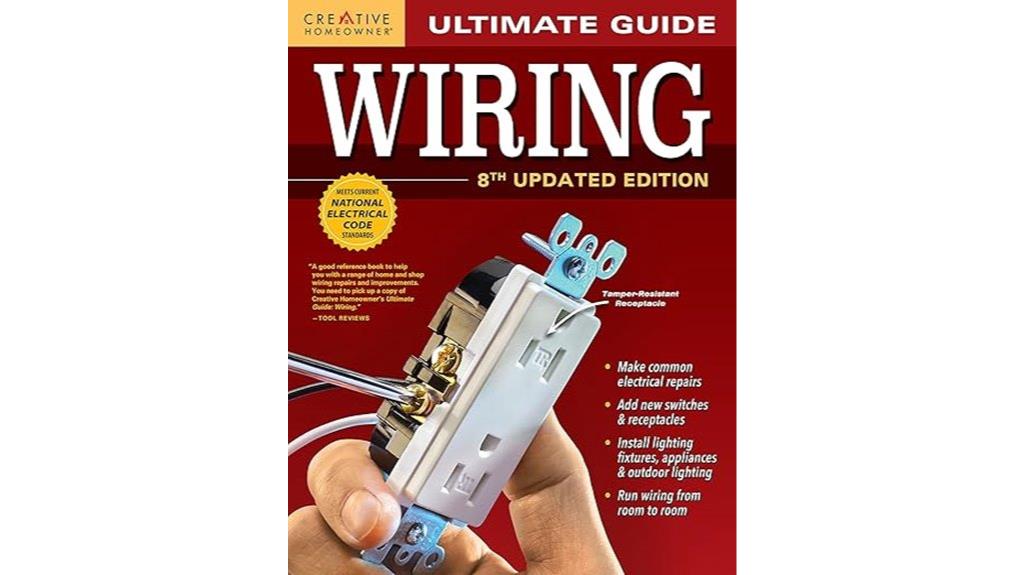
The “Ultimate Guide to Wiring: DIY Home Electrical Installations & Repairs” stands out as an excellent choice for homeowners and DIY enthusiasts who want a clear, step-by-step approach to electrical projects. I appreciate how it simplifies complex tasks like wiring switches, lighting, and circuit overhauls with easy-to-follow instructions and helpful photos. While it’s somewhat outdated on modern components like LED lighting and AFCI outlets, the fundamentals remain solid. I’ve used it to build confidence for various repairs, and it’s been invaluable for understanding safety and code compliance. Just remember to supplement with current online resources for the latest electrical standards and devices.
Best For: homeowners and DIY enthusiasts seeking a clear, easy-to-understand guide for basic electrical wiring projects and repairs.
Pros:
- Highly praised for its step-by-step instructions and clear illustrations.
- Builds confidence for beginners while serving as a useful reference for experienced DIYers.
- Focuses on safety procedures and code compliance, making it practical for real-world applications.
Cons:
- Outdated in terms of current electrical components like LED lighting and AFCI outlets.
- Some wiring diagrams are insufficient for complex or international wiring standards.
- Contains shipping damage issues and organization that may be confusing for some readers.
Ultimate Guide Wiring, 10th Edition: Home Electrical Installations and Repairs
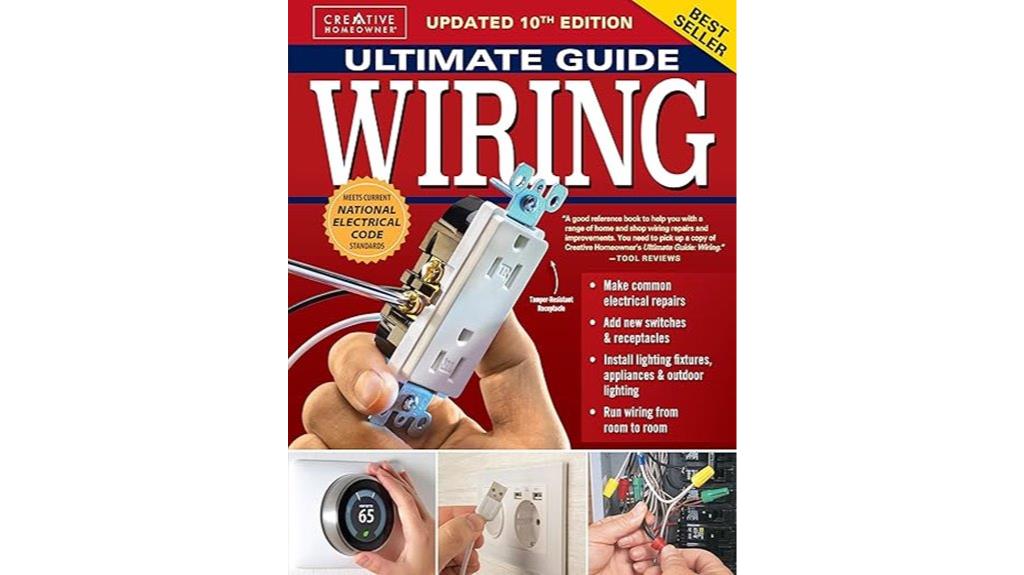
Ultimate Guide Wiring, 10th Edition stands out as an ideal resource for DIY enthusiasts and homeowners enthusiastic to handle electrical projects safely and confidently. I’ve found it incredibly helpful for understanding everything from switches to outdoor wiring and LED lighting. The book’s straightforward language, clear photos, and practical tips make complex concepts accessible, even for beginners. It aligns with current electrical codes, giving me peace of mind that my work is up to standard. I’ve successfully replaced switches and installed ceiling fans using this guide, and it’s boosted my confidence to take on more projects. Overall, it’s a reliable, user-friendly manual that keeps safety front and center.
Best For: DIY homeowners and beginners seeking a clear, practical guide to safely perform electrical installations and repairs in their homes.
Pros:
- User-friendly with simple language and helpful photos that make complex concepts accessible.
- Aligns with current electrical codes, ensuring safe and compliant work.
- Boosts confidence by providing step-by-step guidance for common projects like switches and ceiling fans.
Cons:
- Lacks detailed instructions on main panel selection, amperage, and circuit planning.
- Some editions have physical damage such as scratches or missing pages, which can hinder use.
- May not cover advanced electrical topics for more complex or professional-level projects.
Trim Complete: Expert Advice from Start to Finish (Tauntons Complete)

For DIYers and homeowners enthusiastic to improve their trim projects, “Trim Complete: Expert Advice from Start to Finish” by Tauntons provides detailed guidance with a strong emphasis on visual learning. The book features numerous photos that help clarify complex steps, making it easier to avoid mistakes and save money. It covers a wide range of projects like door casings, baseboards, wainscoting, and beams, focusing on practical skills such as miters and angle cuts. While some instructions may require multiple readings, the visual aids and tips make even challenging tasks more manageable. Overall, it’s a valuable resource for beginners and intermediate DIYers seeking professional-looking results.
Best For: DIYers and homeowners seeking comprehensive, visual guidance for installing and finishing trim projects to achieve professional results.
Pros:
- Extensive use of detailed photographs enhances understanding of complex steps.
- Covers a wide range of trim projects with practical tips and tricks.
- Helps reduce mistakes and save money through clear, step-by-step instructions.
Cons:
- Some instructions may require multiple readings for full comprehension.
- Lacks advanced techniques for complex or uneven wall installations.
- Technical explanations can be confusing for absolute beginners without prior woodworking experience.
Black & Decker Carpentry Guide for Homeowners
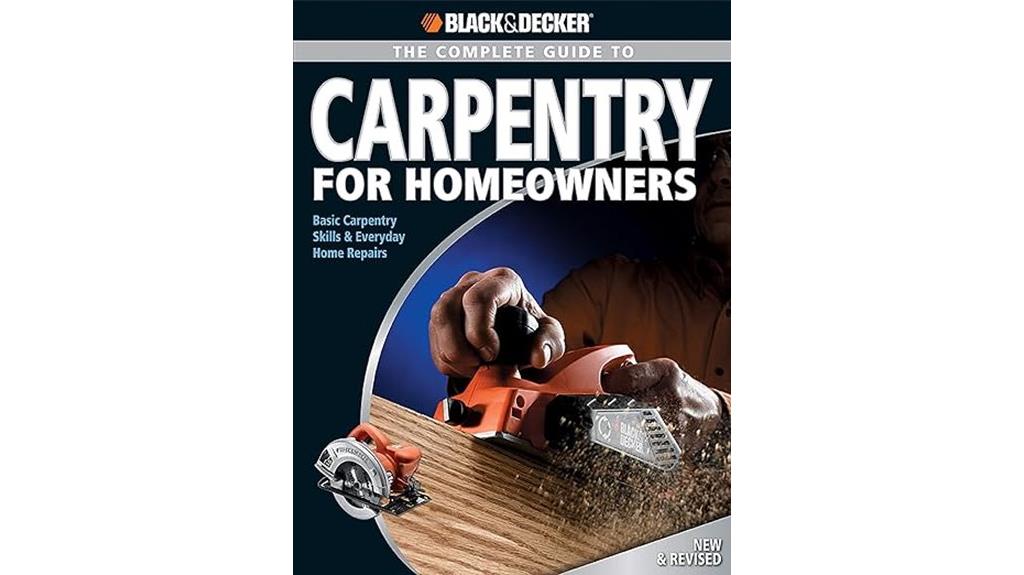
If you’re a beginner or homeowner enthusiastic to tackle simple carpentry projects yourself, the Black & Decker Carpentry Guide for Homeowners is an excellent starting point. It offers clear, step-by-step instructions on basic projects like building workbenches, sawhorses, and making simple repairs. The book covers essential tools, safety tips, and fundamental techniques, making it perfect for those new to carpentry. Its detailed photos and easy-to-follow plans help build confidence and skills without feeling overwhelming. While not for advanced carpenters, it’s a practical resource to learn the basics and get started on your DIY home improvement journey.
Best For: beginners, homeowners, and DIY enthusiasts seeking straightforward guidance for simple carpentry projects and home repairs.
Pros:
- Clear, step-by-step instructions with helpful photographs make complex tasks approachable.
- Covers a wide range of basic projects and essential tool knowledge tailored for novices.
- Builds confidence and skills for DIY home improvement without requiring prior experience.
Cons:
- The physical glue-bound format may be inconvenient during hands-on projects; re-binding might be needed.
- Some content, especially electrical wiring, is tailored to the American market and may not be directly applicable internationally.
- It focuses on basic and light carpentry; more advanced or specialized tasks may require additional resources or professional help.
Ultimate Guide: Walks, Patios & Walls Design Ideas with DIY Instructions and Photos

Looking to transform your outdoor space with confidence? The “Ultimate Guide: Walks, Patios & Walls” by Creative Homeowner is a fantastic resource. It offers clear, step-by-step DIY instructions, detailed design ideas, and over 500 photos covering brick, mortar, concrete, flagstone, and tile projects. The book breaks complex tasks into manageable steps, with tips from professionals to boost your skills. Whether you want a simple walkway or a stunning patio, this guide helps you visualize and execute your vision. It’s perfect for beginners, providing practical advice and inspiration to create beautiful, durable outdoor features with confidence.
Best For: DIY homeowners and gardening enthusiasts seeking detailed, step-by-step guidance and inspiration for creating beautiful outdoor walks, patios, and walls.
Pros:
- Comprehensive, easy-to-follow instructions suitable for beginners and experienced DIYers alike
- Rich selection of over 500 photos and detailed design ideas for various materials and styles
- Practical tips and techniques from professionals that enhance project success and confidence
Cons:
- Some users may find the volume of information overwhelming or too detailed
- Lacks extensive troubleshooting guidance for common issues encountered during projects
- Less suitable for high-end, luxury outdoor projects with large budgets or highly specialized needs
Great Book of Woodworking Tips
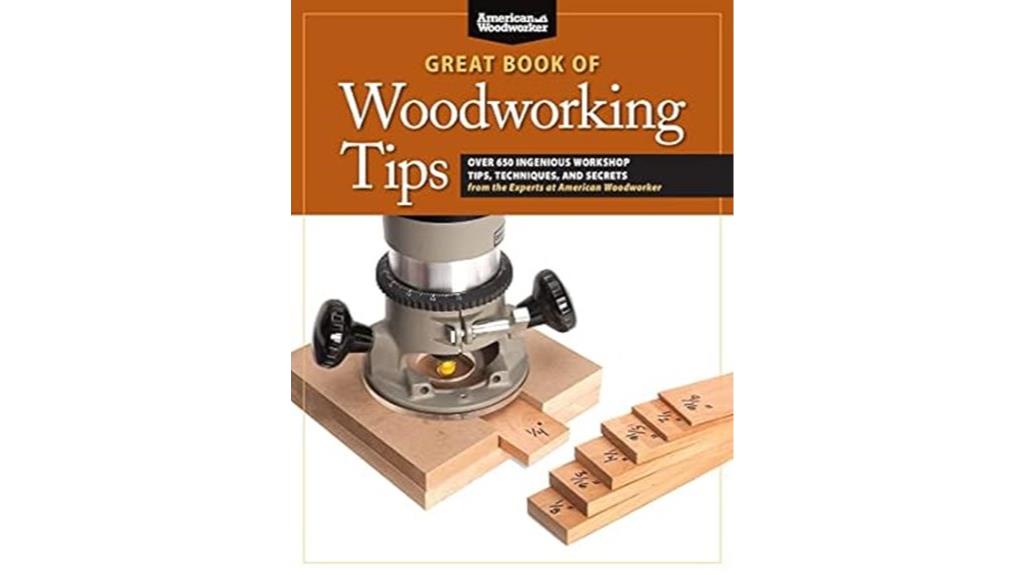
The Great Book of Woodworking Tips stands out as an essential resource for woodworkers of all skill levels, from beginners just starting out to seasoned professionals seeking to refine their craft. It offers over 650 shop-tested tips, techniques, and secrets from American Woodworker experts, all illustrated with clear photos. The practical guidance helps improve efficiency, accuracy, and craftsmanship, making it a highly regarded and engaging addition to any woodworking library. Many users say it saves time, prevents errors, and sparks new ideas. Whether you’re building jigs or tackling home repairs, this book is a valuable, easy-to-navigate reference that inspires confidence and skill.
Best For: woodworkers of all skill levels who want a comprehensive, practical guide filled with tested tips and techniques to enhance their craftsmanship and efficiency.
Pros:
- Over 650 shop-tested tips from experienced experts providing reliable advice
- Clear illustrations and photos that make complex concepts accessible
- Broad coverage suitable for beginners and seasoned professionals alike
Cons:
- Some tips may be repetitive or overlap in content
- Lack of an index can make locating specific advice more difficult
- Could benefit from more detailed diagrams for complex projects
Step by Step Guide Book on Home Wiring

This Step by Step Guide Book on Home Wiring is an excellent choice for DIY enthusiasts and beginners who want clear, practical instructions they can follow confidently. The book offers detailed, easy-to-understand diagrams and step-by-step instructions for wiring outlets, switches (including 3-way), and lighting fixtures. It’s perfect for rewiring entire homes or tackling specific projects. At just 48 pages, it’s compact yet all-encompassing, making complex wiring tasks manageable for amateurs. Many users have successfully completed projects and passed inspections by following this guide. It’s a valuable resource that simplifies home wiring, giving you the confidence to handle electrical work safely and effectively.
Best For: DIY homeowners, beginners, and amateur electricians seeking clear, practical guidance for wiring or rewiring entire homes confidently and safely.
Pros:
- Very detailed, easy-to-follow diagrams and step-by-step instructions
- Suitable for complete rewiring projects and specific wiring tasks
- Helps users pass inspections with confidence and achieve professional results
Cons:
- Only 48 pages, which may require supplementary resources for advanced wiring scenarios
- Some buyers have received used copies despite advertising as new, affecting perceived value
- Limited to black-and-white illustrations, which might be less clear for some users
Wiring Complete 3rd Edition Book

Are you a DIY enthusiast or a beginner looking to understand modern wiring techniques? The Wiring Complete 3rd Edition Book is a great resource that covers the latest in Wi-Fi, smart-house tech, and high-tech wiring equipment. It emphasizes explanations, examples, and code references over circuit diagrams, making complex concepts more accessible. The book is well-illustrated, easy to follow, and practical for projects like basement wiring. I bought it to help my son-in-law avoid mistakes and ensure safety, especially when working with different breakers. While it doesn’t focus much on Wi-Fi devices, its clear guidance and up-to-date info make it a valuable addition to your DIY library.
Best For: DIY enthusiasts and beginners seeking an accessible, up-to-date guide on modern wiring techniques and electrical safety.
Pros:
- Emphasizes explanations, examples, and code references over complex circuit diagrams, making concepts easier to understand.
- Well-illustrated, clear, and practical, ideal for projects like basement wiring and ensuring code compliance.
- Updated content covering Wi-Fi, smart-house tech, and high-tech wiring equipment, keeping readers current with modern electrical installations.
Cons:
- Contains fewer circuit diagrams compared to other wiring books, which may be a drawback for visual learners.
- Doesn’t focus extensively on Wi-Fi devices or advanced smart-home integrations.
- Being an American publication, it may not be fully suitable for UK or other international electrical standards without clarification.
Learn to Weld: MIG Welding & Metal Fabrication Basics
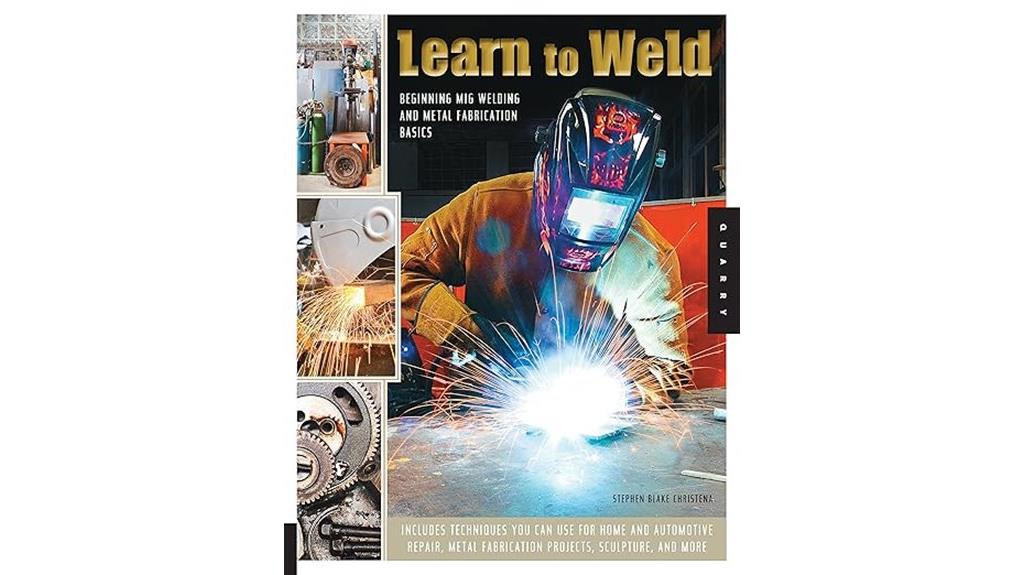
If you’re a beginner enthusiastic to learn MIG welding and metal fabrication, this book is an excellent choice because it focuses on practical, hands-on instruction tailored for hobbyists and DIY enthusiasts. It covers safety, tools, materials, and step-by-step exercises, making complex concepts accessible. The clear visuals, including photographs and diagrams, help you understand techniques and build confidence. While it’s not for pros, it offers solid foundational skills to start welding projects safely and effectively. The emphasis on safety and practical advice makes it ideal for anyone eager to learn welding through doing, ensuring you gain skills and confidence quickly.
Best For: hobbyists and DIY enthusiasts new to MIG welding who want practical, step-by-step guidance with clear visuals and safety tips.
Pros:
- Accessible language and easy-to-follow instructions ideal for beginners
- Comprehensive coverage of safety procedures, tools, and materials
- High-quality photographs and diagrams that enhance understanding and confidence
Cons:
- Limited in-depth information on specialized topics like aluminum or stick welding
- Some organization issues that could improve the flow of topics
- Occasional promotional appearance of brand logos and safety concerns regarding tool guards
The Very Efficient Carpenter: Basic Framing for Residential Construction
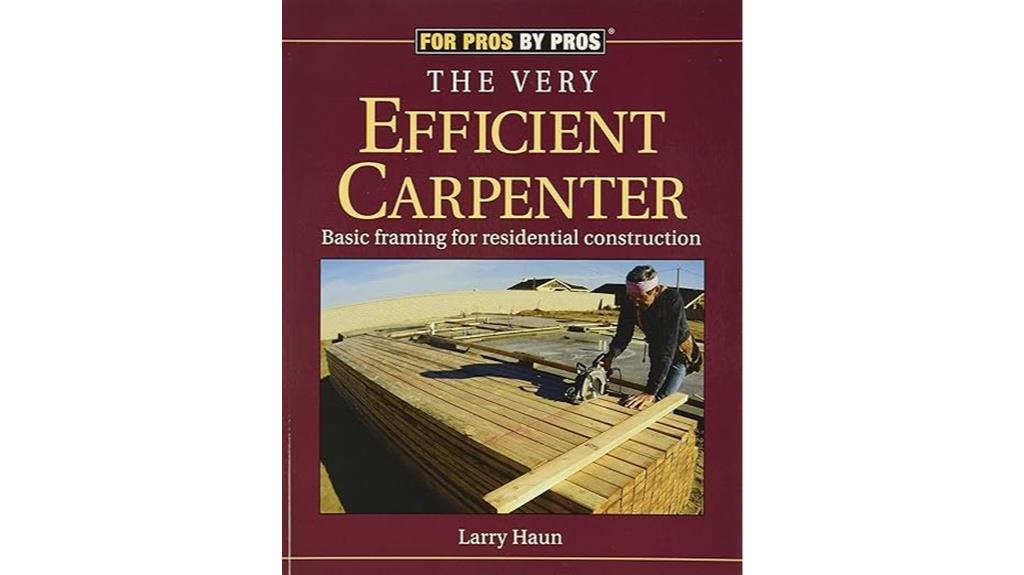
Looking to master residential framing? “The Very Efficient Carpenter: Basic Framing for Residential Construction” is a must-have. It offers clear, detailed explanations with step-by-step instructions, covering tools, materials, and techniques for framing walls, floors, and roofs. The book’s illustrations and photos make complex concepts easy to understand, whether you’re a beginner or experienced. Readers find it boosts their skills, confidence, and project quality by breaking down tricky ideas into simple language. Practical tips and professional insights make it invaluable for DIYers and pros alike. I highly recommend it as a reliable reference to elevate your framing know-how.
Best For: DIY enthusiasts, beginner to intermediate carpenters, and homeowners looking to improve their framing skills and execute residential construction projects confidently.
Pros:
- Clear, detailed explanations with step-by-step instructions and visual aids.
- Suitable for a wide range of skill levels, from beginners to experienced carpenters.
- Practical tips and professional insights that enhance project efficiency and quality.
Cons:
- May require supplementary resources or videos for more complex techniques.
- Some readers might find the level of detail overwhelming without prior basic knowledge.
- Focused primarily on framing, so less useful for other carpentry or construction aspects.
The Complete Photo Guide to Sheds, Barns & Outbuildings

The Complete Photo Guide to Sheds, Barns & Outbuildings stands out as an ideal resource for DIY enthusiasts who want clear, detailed instructions backed by high-quality photos and blueprints. It’s perfect for both beginners and seasoned woodworkers, offering a wide range of designs and practical guidance for building outdoor structures. The book covers site prep, measuring, cutting, and assembly, with helpful diagrams to simplify complex steps. While some instructions may need adaptation, the straightforward blueprints and visual aids make organizing materials and planning projects easier. Overall, it’s a thorough, user-friendly guide that helps turn your building ideas into reality.
Best For: DIY enthusiasts of all skill levels seeking a comprehensive, visually guided resource for building sheds, barns, and outbuildings with practical, easy-to-follow instructions.
Pros:
- Detailed construction techniques with high-quality photos and blueprints
- Suitable for both beginners and experienced woodworkers
- Covers a wide range of designs and practical project guidance
Cons:
- Some instructions may require adaptation or additional calculations
- Focuses heavily on specific designs, limiting general guidance
- Lacks detailed formulas for certain structural elements like roof rafter dimensions
Wiring a House: 5th Edition (For Pros By Pros)
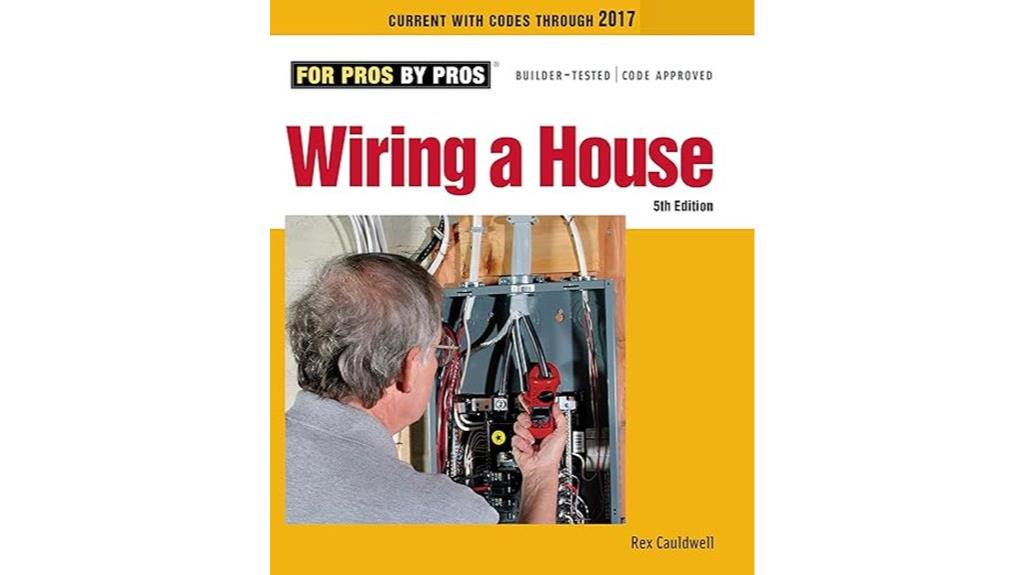
Wiring a House: 5th Edition (For Pros By Pros) stands out as an essential guide for homeowners, DIY enthusiasts, and beginners enthusiastic to learn residential electrical wiring. It offers clear, illustrated instructions that balance practical steps with in-depth explanations of key concepts like grounding, circuit planning, and code compliance. The book emphasizes safety, proper tools, and future-proofing your wiring. Updated to the 2014 NEC, it ensures you understand current standards, including AFCI and GFCI requirements. While some areas could use more recent updates, it remains a reliable resource for re-wiring projects, understanding electrical theory, and avoiding common pitfalls.
Best For: homeowners, DIY enthusiasts, and beginners seeking a comprehensive yet practical guide to residential electrical wiring aligned with the 2014 NEC standards.
Pros:
- Clear, illustrated instructions that make complex topics accessible
- Emphasizes safety, grounding, circuit planning, and code compliance
- Includes practical tips and real-world examples from experienced professionals
Cons:
- Some sections may be outdated, lacking coverage of recent advancements like LED lighting and drywall steel studs
- Focused primarily on US wiring standards, possibly less relevant for international users
- Certain detailed code updates, such as AFCI/GFCI requirements in specific areas, could be more comprehensive
Complete Wiring
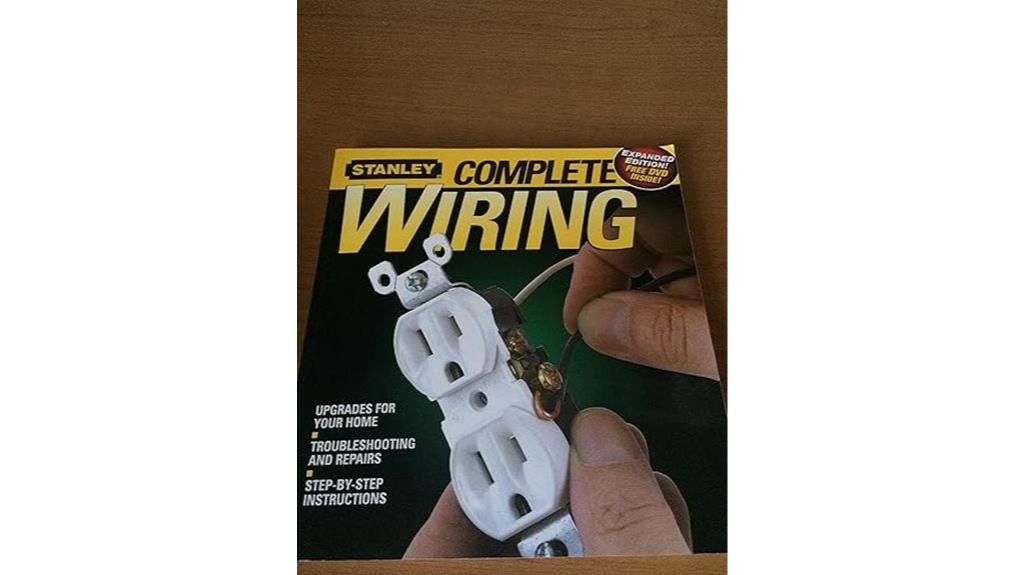
Are you a homeowner with basic electrical knowledge seeking a reliable guide for your wiring projects? Complete Wiring is a user-friendly, detailed reference that makes DIY electrical work accessible. Despite its age, it covers installing circuits, fixtures, outdoor wiring, GFCI protection, and troubleshooting. With hundreds of photos, clear diagrams, and step-by-step instructions, it simplifies complex tasks. The book explains fundamental concepts like wire gauges, safety, and switch wiring, helping you feel confident tackling small projects or upgrades. It’s perfect for routine repairs, fixture installations, and ensuring your work meets safety standards. Many DIYers find it an invaluable resource for handling electrical projects safely and effectively.
Best For: homeowners and DIY enthusiasts with basic electrical knowledge seeking a comprehensive, user-friendly guide for small-scale wiring projects and troubleshooting.
Pros:
- Clear step-by-step instructions complemented by hundreds of photos and diagrams
- Covers essential topics like circuits, fixtures, outdoor wiring, and GFCI protection
- Emphasizes safety and proper techniques, boosting user confidence
Cons:
- Does not address complex topics like service entrance wiring or meter installation
- May be insufficient for entire house wiring or major electrical system overhauls
- Being an older publication, some content may not reflect the latest code updates
Foundations & Concrete Work

Looking to tackle foundational or concrete projects around your home but unsure where to start? Foundations & Concrete Work is an excellent resource that offers clear, step-by-step guidance perfect for beginners and DIYers. It covers essential tasks like pouring footings, finishing surfaces, and setting up forms, with helpful photos and illustrations. The book emphasizes soil prep, curing, waterproofing, and drainage—key for long-lasting results. Practical tips help you avoid common mistakes and boost confidence. While it doesn’t plunge into advanced techniques, it provides a solid foundation for basic projects like repairs, decks, and small builds, making concrete work approachable and manageable.
Best For: DIY homeowners and beginners seeking straightforward, practical guidance on basic concrete and foundation projects around the home.
Pros:
- Clear, step-by-step instructions suitable for beginners.
- Includes helpful photos and illustrations to aid understanding.
- Emphasizes essential processes like soil prep, curing, and waterproofing for durable results.
Cons:
- Lacks detailed diagrams for complex or advanced construction techniques.
- Limited coverage of professional-level or intricate form setup methods.
- Not comprehensive for experienced builders seeking in-depth technical guidance.
Factors to Consider When Choosing Home Improvement Books for DIYers

When choosing home improvement books, I look for ones that match my skill level and clearly outline the project scope. I also pay attention to the quality of visuals and step-by-step instructions, which make learning easier. Finally, I favor books with current information on tools and materials to guarantee I’m working with the latest techniques.
Skill Level Compatibility
Choosing a home improvement book that matches your skill level is essential for building confidence and avoiding frustration. If you’re new to DIY, look for beginner guides that clearly explain foundational concepts and techniques without being overly technical. Books that include step-by-step instructions and visual aids are especially helpful, as they make complex tasks more approachable and help you understand your current skill level. Also, check if the book offers practical tips and safety advice tailored to novices to prevent mistakes and work safely. Make sure the content provides enough depth to allow gradual skill development—avoiding books that are too simple or too advanced. Finding the right match ensures you can learn comfortably and progress at a steady pace.
Project Scope Clarity
A clear project scope in a home improvement book is essential because it helps you understand exactly what tasks are covered, preventing confusion and misuse of instructions. When the scope is well-defined, I can quickly determine if the book suits my project, saving me time and effort. It also guarantees that the techniques and materials included are relevant to what I want to accomplish. Books with a focused scope usually offer step-by-step guidance tailored to specific projects, which increases my chances of success. On the other hand, vague or broad descriptions can lead to frustration, as I might need multiple resources for different parts of the project. Understanding the scope helps me pick books that match my skill level and project complexity, setting clear expectations from the start.
Visual Instruction Quality
Clear visual instructions are a key factor in making home improvement books effective for DIYers. Well-crafted images and illustrations should clearly depict each step, avoiding ambiguity. Multiple angles or close-ups help clarify complex techniques, ensuring you understand exactly how to execute each task. Diagrams that illustrate spatial relationships and measurements make it easier to visualize the process and avoid mistakes. Consistent visual cues like arrows or labels guide you through each step, reducing guesswork and increasing confidence. The best books balance detailed visuals with concise written explanations, reinforcing understanding without overwhelming you. Overall, high-quality visual instructions empower DIYers to follow projects accurately, boosting success and safety while making the learning process more engaging.
Up-to-Date Content
Ever wondered if the home improvement book you’re using is up-to-date? Ensuring your guide reflects the latest industry standards, codes, and safety regulations is vital for accurate advice. Look for editions that incorporate recent technological advances, new materials, and tools to stay relevant. Check if the content has been regularly updated or revised, which indicates ongoing maintenance and inclusion of new techniques. It’s also helpful to find sections covering recent trends like energy efficiency, smart home features, or eco-friendly materials, ensuring thorough insights. Finally, review publisher notes and reviews to confirm the publication date and update history. An up-to-date book not only enhances safety but also keeps you aligned with current best practices for successful DIY projects.
Tool and Material Guidance
When selecting home improvement books for DIY projects, it’s crucial to find resources that offer detailed guidance on tools and materials. I look for books that provide clear instructions and visuals to ensure I understand proper tool use and safety measures. Good guides include extensive descriptions of tools, safety tips, and maintenance advice tailored for DIYers. They should also cover a wide range of materials, explaining properties, applications, and compatibility with various tasks. Troubleshooting tips are essential to prevent mistakes and reduce waste. I prefer books that include practical project examples with specific tool and material recommendations, which help me apply skills confidently in real-world situations. Choosing resources with these features ensures I’m well-equipped to complete projects efficiently and safely.
Safety and Code Focus
Choosing home improvement books that emphasize safety and code compliance helps me avoid accidents and legal issues during my projects. I look for resources that prioritize safety procedures, proper tool use, and protective measures to prevent injuries. It’s crucial they cover current electrical, plumbing, and building codes so I can stay compliant and avoid fines or legal trouble. The best books also detail safety standards, inspection requirements, and common hazards specific to each task. Clear warnings and safety tips tailored to different repairs or installations are essential for practicing safe work habits. I ensure the content is regularly updated to reflect the latest safety regulations and code amendments. This focus keeps me confident and protected as I tackle DIY home improvements.
Budget and Cost Tips
How can I guarantee my home improvement projects stay within budget? The key is choosing books that focus on practical, money-saving tips and cost-effective solutions. Look for guides with detailed, step-by-step instructions and visual aids—these help reduce errors and prevent costly mistakes. Prioritize resources that emphasize affordable materials, tools, and techniques so I can complete projects with minimal expenses. It’s also essential to find books that provide guidance on planning and budgeting for materials, helping me avoid overspending. The best guides include tips for repurposing items or sourcing inexpensive supplies, maximizing savings without sacrificing quality. By selecting books with these features, I can confidently manage costs and stay within my budget while tackling home improvement projects.
Supplementary Resources
Have you ever found yourself stuck on a tricky DIY step that a book just doesn’t fully explain? Supplementary resources like online tutorials, videos, and forums can make all the difference. They offer visual guidance and real-time advice that books might lack. Combining books with digital content gives you access to updated techniques, tips, and troubleshooting for modern trends like smart home wiring or LED lighting. Many all-inclusive home repair books recommend these extras to clarify complex steps or demonstrate skills hard to capture in text and images. Online resources can also fill gaps if a book’s diagrams are outdated or unclear. Interactive features like quizzes, project calculators, and community support further reinforce your learning and boost confidence during your DIY projects.
Frequently Asked Questions
Which Books Cover Eco-Friendly and Sustainable Home Improvements?
You’re asking about books on eco-friendly and sustainable home improvements. I recommend “The Green Home” by Alex Wilson, which offers practical tips on energy efficiency and sustainable materials. “Eco House” by Sophie Putnam is another great resource, focusing on eco-conscious design and renovation strategies. These books are perfect for DIYers looking to make environmentally responsible upgrades, and I’ve found them incredibly inspiring and easy to follow.
Are There Beginner-Friendly Books for Electrical Wiring and Plumbing?
Did you know that over 60% of DIYers start with electrical wiring or plumbing? I’ve found that beginner-friendly books like “Electrical Wiring for Dummies” and “Pipe Fitting Made Simple” are perfect for getting started. They break down complex tasks into easy steps, so you feel confident tackling projects around your home. I recommend these because they’re straightforward, practical, and designed specifically for those new to DIY electrical and plumbing work.
Do These Books Include Safety Tips and Risk Assessments?
You’re wondering if these books include safety tips and risk assessments. I can tell you that reputable DIY home improvement books emphasize safety throughout. They typically cover essential safety tips, proper procedures, and risk assessments to keep you safe while working on projects. I always recommend reading these sections carefully, as they help prevent accidents and ensure you’re working confidently and responsibly. Safety first always!
Are There Specific Titles Focused on Cost-Effective DIY Home Upgrades?
Imagine walking through a cluttered toolbox, each tool representing a different way to upgrade your home without breaking the bank. I’ve found that books like “The Complete Guide to Budget DIY Home Repairs” and “Affordable Home Improvement Ideas” focus specifically on cost-effective projects. They’re packed with practical tips, step-by-step instructions, and clever tricks to save money while transforming your space. These titles are perfect for anyone enthusiastic to upgrade smartly and affordably.
Which Books Provide Step-By-Step Projects for Small Renovation Tasks?
If you’re looking for books with step-by-step projects for small renovations, I recommend starting with “The Complete Visual Guide to Home Repair” by Black & Decker. It offers clear instructions and illustrations for various tasks. “Home Repair and Improvement” by Sunny S. offers detailed, easy-to-follow steps for everything from painting to minor plumbing. These books give practical guidance, making small projects manageable and even enjoyable.
Conclusion
As you turn the pages of these books, I envision your home transforming, every nail driven and wire connected with confidence. Imagine the satisfaction of seeing your vision come to life—walls sturdy, lights shining bright, and a space that truly feels like yours. These guides are your roadmap through the chaos, guiding you step by step. Embrace the journey, and soon, your dream home will be standing strong, a proof to your skill and determination.