
TL;DR
Joanna and Chip Gaines used chocolate-colored artisan clay tiles in the game room kitchen of their Colorado mountain home, as featured in “Fixer Upper: Colorado Mountain House—Part 2.” The choice reflects the project’s European cottage-inspired direction, but the design does not establish that subway tile has fallen out of favor industrywide.
Joanna and Chip Gaines chose chocolate-toned artisan clay tiles for the game room kitchen in their Colorado mountain home, offering a warmer alternative to the familiar subway-tile backsplash. The design appears in “Fixer Upper: Colorado Mountain House—Part 2” and reflects the couple’s effort to connect the renovation with its Rocky Mountain setting.

Get furniture and decor delivered free with Prime
- Fast, free delivery on millions of items
- Prime Video, Amazon Music and more included
- Member-only deals all year
The Gaineses described the renovation as a departure from the modern farmhouse style associated with many of their earlier projects. For the Colorado home, they said they wanted “European cottage-inspired colors, textures, and patterns for an all-around cozy feel,” according to the Magnolia blog post about the project. The stated aim was to “specifically blend with the surroundings.”
The backsplash is identified as Tiles of Ezra Amano Caja in chocolate. Its ivory base and light-brown geometric pattern bring color and decoration to the kitchen without the glossy, uniform appearance often associated with standard subway tile. The tiles were installed in a game room kitchen area, including a spot for a hot cocoa and coffee bar mentioned in the episode.
The design account presents artisan tile as one option for homeowners seeking a more handmade, lived-in look. It suggests combining patterned tile with wood, complementary stone counters, rustic-finish hardware and accessories, and warm cream shades. A small piece of art or retro-style appliances can add further character, but these are styling suggestions rather than details that define every part of the Gaineses’ renovation.
A Fresh Kitchen Look A Warmer Backsplash
Joanna and Chip Gaines chose chocolate-toned artisan clay tile for their Colorado mountain home. The choice shows one way a backsplash can add warmth and regional character.
The tile choice
The decorative tile appears in the game room kitchen featured in “Fixer Upper: Colorado Mountain House—Part 2.”
Artisan clay tile
Tiles of Ezra Amano Caja in chocolate has an ivory base and light-brown geometric pattern.
Mountain home kitchen
The backsplash is in a game room kitchen with a hot cocoa and coffee bar.
A shift in design direction
The Colorado renovation departs from the modern farmhouse style associated with many of the couple’s earlier projects.
- Modern farmhouse direction
- Associated with earlier projects
- European cottage-inspired colors, textures, and patterns
- Chosen to blend with the surroundings
Ideas for homeowners
A patterned backsplash can help connect a kitchen to its wider palette and setting.
See how tile looks with your counters, cabinetry, and lighting.
Get current product and installation quotes; handcrafted tile can add expense.
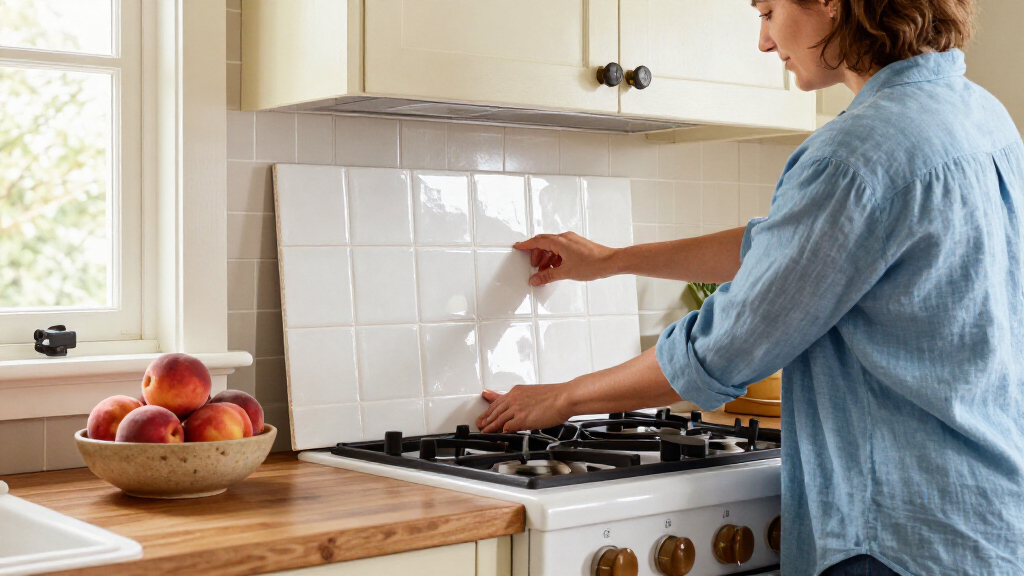
Peel-and-stick products or painted tiles may offer a lower-cost decorative effect. Check suitability and instructions.
What the example tells us
The design offers a specific alternative for one home, not evidence of a broad market shift.
| Question | What the available details show |
|---|---|
| Is subway tile out of favor? | No market data establishes that. |
| Is the project cost known? | No. The article mentions installation can average up to $1,500, but gives no project scope or pricing survey. |
| Are alternatives equally durable? | Durability and maintenance are not compared. |
A Warmer Direction for Kitchen Tile
The renovation offers a concrete example of how a kitchen backsplash can support a room’s wider design rather than function only as a practical surface. In this home, the patterned ivory-and-brown tile helps tie the game room kitchen to the project’s cozy, mountain-inspired palette. The choice also fits a kitchen that serves as a gathering place, including a dedicated hot cocoa and coffee bar.
For readers planning a renovation, the practical takeaway is less that subway tile is definitively out than that a backsplash can carry more color, texture and regional character. Handmade or artisan-style tile may offer a distinct look, but the source material gives no comparative survey showing how widely homeowners or designers are moving away from subway tile. The trend claim should be treated as a design perspective, not a measured shift in the market.
Cost is another consideration. The supplied article says backsplash installation can average up to $1,500 and notes that handcrafted tiles add expense; it does not specify the project scope, location, or a pricing survey behind that figure. Homeowners should compare tile, labor and preparation costs for their own kitchens before treating it as a budget estimate.
Products Worth Considering

eufy C28 Robot Vacuum and Mop with 15,000 Pa Suction

Levoit Vital 100S-P Air Purifier with Washable Pre-Filter

Sonos Era 100 SL Compact Microphone-Free Speaker, Black
As an affiliate, we earn on qualifying purchases.
From Texas Farmhouse to Colorado
The Colorado project is described as the Gaineses’ first makeover outside Texas. That setting gave the couple a reason to adjust their familiar design approach: the Magnolia post says they chose cottage-inspired colors, textures and patterns to suit the surroundings rather than repeat a modern farmhouse look.
Subway tile remains a recognizable backsplash choice, but the article’s opening dismissal of it as past its peak is an editorial characterization, not a finding supported by sales data or a broad industry study. The confirmed detail is narrower: the Gaineses selected a decorative artisan tile for this particular home. The tile’s chocolate color and geometric pattern provide the specific visual link to the renovation’s warm palette.
For a lower-cost alternative, the article points to peel-and-stick products, including Red Barrel Studio’s Brooklyn Delft Ivy peel-and-stick wallpaper. It also describes a do-it-yourself approach: creator Macey Merlak has made Delft-style tiles using white squares and porcelain paint. That route involves baking and installing the tiles, so it calls for skill and careful attention to product instructions and safe handling.
““specifically blend with the surroundings””
— Magnolia blog post about the Colorado mountain home
What the Tile Choice Shows
The available details do not give the episode’s air date or the Magnolia blog post’s publication date. They also do not state the project’s tile quantity, total backsplash cost, installation method, or whether the selected product is still available at the same price.
It is also unclear how common artisan tile has become compared with subway tile. The claim that subway tile has lost appeal is not backed here by consumer polling, sales figures or statements from multiple designers. The Gaineses’ choice confirms a design decision for one home; it does not establish an industrywide trend or mean that subway tile is no longer a suitable option.
The suggested alternatives carry different trade-offs. Peel-and-stick finishes may reduce cost, while making and installing painted tiles requires time, suitable materials and careful work. The details provided do not compare their durability, maintenance needs or suitability for every kitchen surface.
How Homeowners Can Apply It
Viewers can see the finished kitchen in “Fixer Upper: Colorado Mountain House—Part 2” and consult the Magnolia blog post for the couple’s stated design intent. Anyone considering a similar backsplash can first compare artisan tile samples with their counters, cabinetry and lighting, then request current product and installation quotes before setting a budget.
Those looking for a lower-cost decorative effect can investigate peel-and-stick options, checking that a product suits the intended surface and following its installation instructions. A DIY painted-tile project should be attempted only with materials and baking instructions appropriate to the tiles and paint being used. The project’s broader next chapter, including further details about costs or future renovations, is not specified in the available information.
Key Questions
What backsplash tile did Joanna and Chip Gaines use?
They used Tiles of Ezra Amano Caja in chocolate, described as having an ivory base with light-brown geometric accents.
Where was the tile installed?
The tiles were installed in the game room kitchen of the Gaineses’ Colorado mountain home, around an area used as a hot cocoa and coffee bar.
Does this mean subway tile is no longer popular?
No. The project shows the Gaineses choosing an artisan-style alternative for one renovation. The available information does not include market data establishing that subway tile has broadly lost popularity.
What are less expensive ways to get a similar look?
The article suggests considering a peel-and-stick option, such as Red Barrel Studio’s Brooklyn Delft Ivy peel-and-stick wallpaper, or painting white tiles with porcelain paint. Check product suitability and instructions before installation; the DIY approach involves baking and fitting the tiles.
Source: hunker.com