
TL;DR
Seven eco-friendly shower curtains and liners for 2026 have been identified as top sustainable options. They are made from natural fibers or recycled materials, offering durability without harmful chemicals. These choices aim to reduce plastic waste and improve bathroom safety.
Seven eco-friendly shower curtains and liners for 2026 have been identified as top choices for sustainable bathroom upgrades. Check out the 15 best shower curtains to upgrade your bathroom. These products are made from natural fibers and recycled materials, offering durability without the use of harmful chemicals. The development reflects growing consumer demand for non-toxic, environmentally conscious home products, especially in bathroom environments where moisture and heat can exacerbate chemical off-gassing. You might find it helpful to explore our top eco-friendly shower curtains and liners for 2026.

Get furniture and decor delivered free with Prime
- Fast, free delivery on millions of items
- Prime Video, Amazon Music and more included
- Member-only deals all year
The list was compiled by The Good Trade editors, who personally tested and researched various options to find those that are both durable and eco-conscious. The selected curtains include options made from organic cotton, OEKO-TEX certified fabrics, and recycled materials such as EVA vinyl with lower VOC emissions. Notably, Quiet Town’s translucent liner, made from 30% recycled cooking oil and EVA vinyl, can double as a liner, combining function with sustainability.
Most of the tested curtains are designed to be water-resistant or water-repellent, with some requiring a separate liner to prevent moisture buildup. If you’re considering eco-friendly options, see the best shower curtains in 2026. The focus was on products that avoid virgin plastics, heavy metals, and toxic dyes, aiming to reduce environmental impact and indoor chemical exposure. The testing process involved evaluating durability, ease of cleaning, and aesthetic appeal, ensuring these options meet everyday bathroom needs without compromising sustainability.
7 Eco-Friendly Shower Curtains & Liners For 2026
A practical shortlist of natural-fiber, certified, and recycled-material options designed to reduce virgin plastic, limit unwanted chemicals, and still handle the realities of a humid bathroom.
Curtains and liners for different moisture, care, and style needs.
Favor natural fibers, recycled content, and products without PVC or BPA.
Certification, availability, and material claims should be checked before purchase.
Material profiles worth comparing.
Material, certification, and care.
Recycled cooking-oil content reported for Quiet Town’s translucent liner.
Longer use with fewer virgin-plastic replacements.
Seven smarter material routes
There is no single perfect material for every bathroom. Match the curtain or liner to ventilation, washing habits, water exposure, and the level of documentation supplied by the manufacturer.
Organic cotton curtain
A soft, washable natural-fiber option that avoids a plastic curtain body. Best in well-ventilated bathrooms and often paired with a separate liner.
Hemp-blend curtain
A durable plant-fiber route with a relaxed woven look. Fabric weight, blend composition, shrinkage, and drying instructions deserve close attention.
Linen curtain
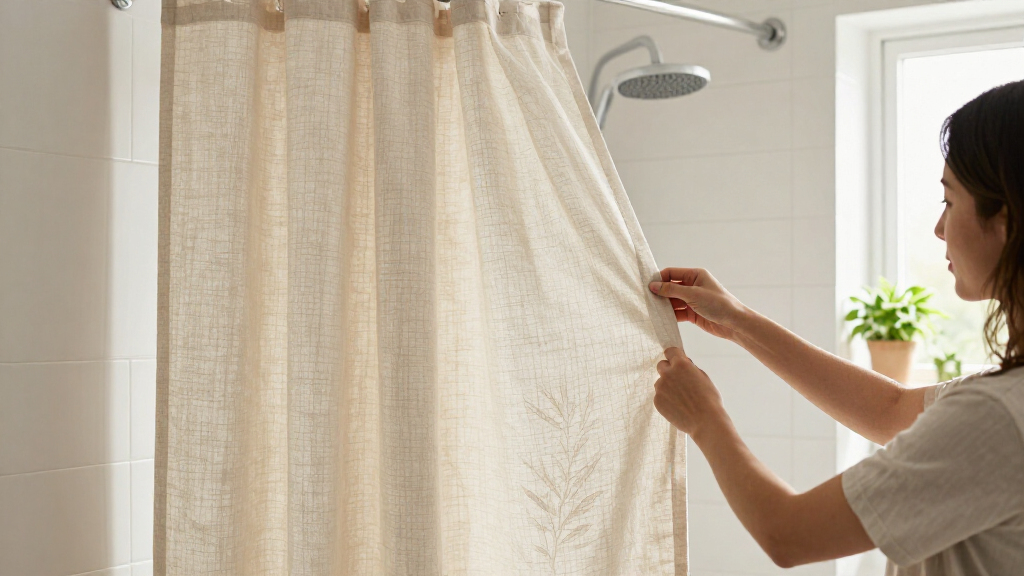
A breathable, elevated option for bathrooms with good airflow. Linen can develop a lived-in texture and may need a liner in splash-heavy setups.
OEKO-TEX certified fabric
A certification-led choice for shoppers prioritizing tested textile chemistry. Confirm the precise certification, product scope, and current validity.
Recycled polyester curtain
A water-manageable fabric using recycled feedstock. It can reduce demand for virgin material, though microfiber shedding remains a consideration.
Recycled EVA liner
A flexible liner route that can incorporate recovered content while avoiding PVC. Look for clear composition, odor, cleaning, and replacement guidance.
Quiet Town translucent liner
A highlighted dual-purpose option reported to combine EVA with 30% recycled cooking-oil content. Its translucent finish can function as either a liner or a minimalist curtain.
Recycled feedstock, practical water protection, and a design intended to work without hiding behind another curtain.
Choose by bathroom reality
Performance depends on construction and care, not material name alone. Ratings below are directional buying cues rather than universal product guarantees.
| Option | Natural or recycled input | Direct splash role | Machine-wash potential | Separate liner likely? | Primary watchpoint |
|---|---|---|---|---|---|
| Organic cotton | ✓ Natural fiber | ~ Limited | ✓ Often | ~ Usually | Drying speed |
| Hemp blend | ✓ Plant-based share | ~ Limited | ~ Check label | ~ Often | Blend disclosure |
| Linen | ✓ Natural fiber | ~ Limited | ~ Check label | ~ Often | Moisture retention |
| Certified fabric | ~ Varies | ~ Varies | ✓ Often | ~ Product-specific | Certificate scope |
| Recycled polyester | ✓ Recycled share | ✓ Water-manageable | ✓ Often | ~ Sometimes | Microfiber shedding |
| Recycled EVA | ✓ Recycled share | ✓ Liner function | ✗ Usually wipe-clean | ✓ It is the liner | Composition detail |
| Quiet Town liner | ✓ Reported 30% | ✓ Dual-purpose | ~ Follow brand care | ✓ Not required | Regional availability |
Five checks before checkout
A credible eco-friendly claim should survive a simple evidence chain—from material disclosure to the product’s useful life in your bathroom.
Read the material list
Look for exact fibers, plastic type, blend ratios, and recycled percentages.
Verify the claim
Check current certificates and whether they apply to the finished product.
Screen exclusions
Prioritize clear PVC-free, BPA-free, heavy-metal, and dye information.
Match the moisture load
Decide whether the material can serve alone or needs a separate liner.
Plan for long use
Confirm cleaning, drying, repair, replacement, and disposal guidance.
What buyers still need to know
The 2026 market offers more choice, but long-term evidence, regional availability, and consistent sustainability labeling remain uneven.
Are eco-friendly options as durable as conventional plastic?
Many are designed for daily use, but long-term performance data is still developing. Natural-fiber curtains may need a liner and disciplined drying.
Which materials appear most often?
Organic cotton, other natural fibers, recycled polyester, and recycled EVA are common routes. The strength of the supporting evidence varies by product.
Can these products be found at major retailers?
Availability is expanding, especially online, but brand selection and certifications can differ significantly between regions.
Will the sustainable option cost more?
Some products have a higher upfront price. Durability, washability, and replacement frequency should be compared alongside purchase cost.
Extended high-moisture testing, long-term off-gassing data, real-world biodegradability, regional access, and price parity still require better documentation. Treat broad environmental language as a prompt to investigate—not as proof by itself.
Why Eco-Friendly Shower Curtains Are a Growing Priority
Choosing sustainable shower curtains and liners is increasingly important as consumers become more aware of the environmental impact of plastic waste and chemical exposure. Traditional plastic liners contribute significantly to landfill waste, and many contain harmful substances like BPA and PVC, which can off-gas into indoor air. Transitioning to natural or recycled materials reduces plastic pollution and minimizes chemical risks, especially in humid environments where off-gassing can be amplified. This shift also aligns with broader efforts to promote eco-conscious living and reduce household carbon footprints.
Products Worth Considering

Dyson V8 Cyclone Cordless Vacuum

Philips Hue Amarant Outdoor Smart Light Bar, Black

Dyson Airwrap i.d. 6-in-1 Multi-Styler and Dryer
As an affiliate, we earn on qualifying purchases.
Rise of Eco-Conscious Bathroom Products in 2026
Over recent years, there has been a surge in demand for sustainable home products, including bathroom essentials. Market research indicates that consumers are increasingly seeking non-toxic, biodegradable, and recycled materials for everyday use. The bathroom, being a high-moisture space, is a focal point for eco-friendly upgrades because it often involves plastics and chemicals that can impact indoor air quality and contribute to environmental waste. Brands like Quiet Town and others have responded by developing innovative, eco-friendly liners and curtains that meet these needs, reflecting a broader trend towards sustainable home design.
Previous years saw limited options, but 2026 marks a turning point with more durable, affordable, and stylish products available that do not compromise on function or aesthetics. This evolution is driven by consumer advocacy, environmental regulations, and advances in sustainable material technology.
Remaining Questions About Longevity and Certification
While the top seven options have been tested for durability and eco-credentials, it is still unclear how they perform over extended periods of daily use, especially in high-moisture environments. Long-term chemical off-gassing and biodegradability are also areas needing further study. Additionally, the availability of these products across different regions and their price points relative to conventional options remain uncertain, potentially affecting consumer adoption.
Next Steps for Consumers and Manufacturers in 2026
Manufacturers are expected to continue innovating, offering more durable, affordable, and stylish eco-friendly shower curtains and liners. Consumers should watch for certifications like OEKO-TEX and recycled content claims to verify sustainability. Market trends suggest increased availability in major retail outlets and online platforms, making sustainable bathroom upgrades more accessible. Ongoing research and consumer feedback will likely shape future product development, emphasizing longevity and ease of maintenance.
Key Questions
Are eco-friendly shower curtains as durable as traditional plastic ones?
Most tested options are designed to be durable and withstand daily use, but long-term performance data is still emerging. Many natural fiber curtains are paired with liners for added protection.
What materials are used in the top eco-friendly shower liners?
Recycled EVA vinyl, organic cotton, and other natural fibers are common. Certifications like BPA- and PVC-free are key indicators of safety and eco-friendliness.
Can I find these eco-friendly options at major stores?
Availability is increasing, especially online. Major retailers and eco-conscious brands are expanding their lines of sustainable bathroom products for 2026.
Are eco-friendly liners and curtains more expensive?
They can be slightly more costly upfront, but many options are affordable and offer comparable durability to traditional products, with added environmental benefits.
Source: rss