
TL;DR
Interior designers are using slim tables or shelves above radiators to add useful surfaces and visual interest without taking up much floor space. Examples in the source include a marble-topped landing table, a bedroom dressing area and a simple entryway shelf; safe heat circulation and suitable support are important design considerations.
Interior designers are using radiator tables—slim shelves or consoles placed above radiators—to add display, storage and practical surface space in narrow hallways and small rooms, according to the supplied design article. The examples show how the approach can make use of otherwise unused wall space while leaving the floor clear, though the designs must allow heat to circulate.

Get furniture and decor delivered free with Prime
- Fast, free delivery on millions of items
- Prime Video, Amazon Music and more included
- Member-only deals all year
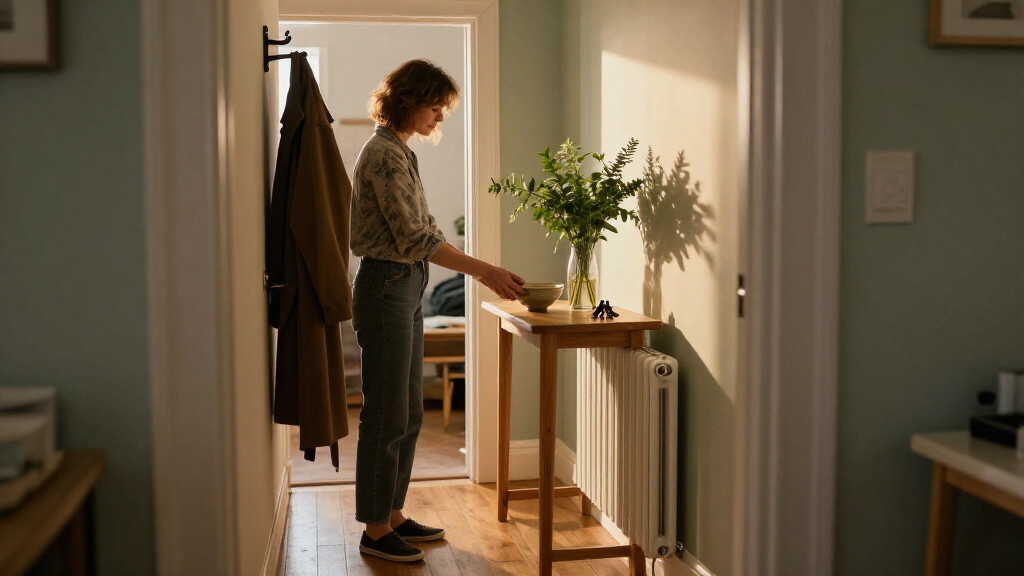
The article describes radiator tables as an alternative to bulky radiator covers: a shelf or narrow console sits above the radiator, sometimes supported by legs or wall brackets. The format can give a hallway or cramped room a place for a lamp, artwork or everyday items without introducing a full-size piece of furniture. Its five suggested benefits are implied by the examples: adding a focal point, creating a useful surface, providing storage, serving a secondary purpose such as a dressing area, and adding style without using floor space.
In a small half-landing, designer Alex Keith of Otta Design worked with master joiners at Creative Edge on a table with a marble top and open wooden legs. Keith said the team wanted a focal point but not a traditional radiator cover. The marble was intended to buffer the heat from artwork above, while the open-leg design allowed heat to escape into the room.
In a child’s bedroom, designer Laura Stephens made a radiator table that could serve as a dressing surface as the child grew older. The article says the table was 250 millimeters deep to fit a lamp and used sturdy brackets to support the lamp and makeup storage. A third example, by Charlotte Simpson of Lotte Studio, uses a simple shelf in a narrow entryway to add a usable surface without adding furniture to the floor.
A smarter hallway surface above the radiator
A slim table or shelf can add display space and everyday function while keeping the floor clear. Its usefulness depends on safe heat circulation and secure support.
Five ways it can help
Create a focal point
A landing table can bring artwork and decor together without a bulky cover.
Make room for essentials
Use the top for a lamp or belongings where a full console would crowd the passage.
Keep useful items close
A supported surface can hold everyday items such as makeup storage.
Serve a second purpose
A bedroom design can become a dressing surface as a child grows older.
Add style without bulk
A narrow shelf uses wall space and leaves more of the floor clear.
Three designs, different uses
The examples show how material, support and placement shape the role of a radiator table.
| Project | Design detail | Purpose |
|---|---|---|
| Alex Keith, Otta Design | Marble top, open wooden legs | Landing focal point with heat able to escape |
| Laura Stephens | 250-millimeter-deep surface, sturdy brackets | Dressing area, lamp and makeup storage |
| Charlotte Simpson, Lotte Studio | Simple entryway shelf | Useful surface without floor furniture |
Check before installing
The right setup depends on the radiator, materials and mounting.
Check that the design and placement do not obstruct heat output.
Choose suitable legs or brackets for the intended load.
Keep artwork and lamps at a suitable distance and follow manufacturer instructions.
More Use From Narrow Spaces
For residents with a tight hallway or small room, a radiator table can add a landing spot for belongings or a place to display decor without the footprint of a console table. That can make an awkward area more useful while preserving the path through it. The bedroom example also shows how a surface can be planned for more than one stage of use, rather than serving only as decoration.
The design benefit depends on the details. A shelf that blocks airflow or is poorly secured may undermine the intended function. In the examples, designers considered heat circulation, artwork placement and load-bearing brackets, showing that a radiator table is not simply a matter of placing a board above a heat source.
Products Worth Considering

Levoit Core 300S-P Smart Wi-Fi Air Purifier

Levoit Core 600S-P Smart Air Purifier for Large Rooms

iRobot Roomba Max 875 Robot Vacuum and Mop
As an affiliate, we earn on qualifying purchases.
Three Designs, Different Uses
The source material frames radiator tables as a more restrained alternative to conventional radiator covers, which it says can reduce radiator effectiveness or draw attention to the unit. It does not provide comparative testing or technical measurements to support that general criticism, so the performance of any particular design will depend on its construction and radiator.
The three described projects illustrate different priorities: Keith’s landing design uses a marble surface and open legs beside artwork; Stephens’ bedroom version is sized for grooming and storage; Simpson’s entryway shelf focuses on making a narrow space useful without adding floor furniture. The source introduces these as a collection of examples, but the supplied text contains details for only three, not five separate designs.
“We wanted to create a focal point on the half landing outside her bedroom but didn’t want a traditional radiator cover.”
— Alex Keith, Otta Design
Performance Depends on Design
The supplied material does not give the radiator type, operating temperatures, airflow measurements or safety clearances for the projects. It also does not establish that radiator tables improve heating efficiency or work equally well with every radiator. The article’s introduction refers to four examples, while the supplied text contains only three project descriptions, so the remaining examples and the full basis for the headline’s five ways are not available here.
Readers should treat the examples as design inspiration, not technical guidance. Whether a table is suitable depends on the radiator, the materials and the way the shelf is mounted; the source does not provide installation specifications or independent testing.
Check Fit Before Installing
Anyone considering a radiator table should first check that its placement will not obstruct the radiator’s heat output and that the shelf is properly supported for its intended load. Keep heat-sensitive items, including artwork and lamps, at a suitable distance, and follow the radiator and product manufacturers’ instructions. The source does not announce a new product or a forthcoming project; it offers design examples rather than a formal installation standard.
Key Questions
What is a radiator table?
A radiator table is a slim shelf or console positioned above a radiator. Some designs use legs, while others are fixed to the wall with brackets.
How can a radiator table help in a small hallway?
It adds a surface for items or decor while using wall space rather than taking up much of the floor. That can be useful where a conventional console would make the passage feel crowded.
Can a radiator table affect heat circulation?
It can, depending on its design and placement. In the landing example, designer Alex Keith said the open legs allowed heat to escape; the source provides no performance tests or universal clearance measurements.
Can a radiator table be used for storage?
It can hold items if its surface and supports are designed for the load. Laura Stephens said her bedroom design used sturdy brackets to support a lamp and makeup storage, but the source does not give a general weight limit.
Source: livingetc.com