
TL;DR
A recent paint test compared five shades sold or described as sage green, finding that they share a muted, nature-inspired look but vary in undertone, warmth and depth. The reviewer recommends judging samples in the room where they will be used; the article does not provide standardized color measurements or a controlled comparison.
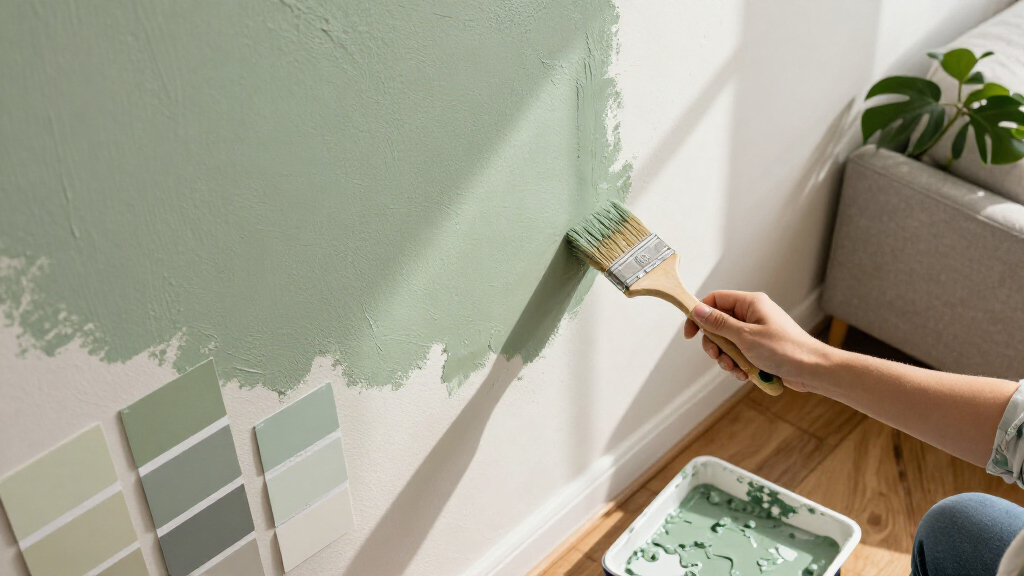
A recent interior paint review compared five sage and sage-adjacent green shades from Lick, Little Greene, Mylands and Farrow & Ball, finding that small differences in undertone, warmth and depth can affect how each color reads on a wall. For more options, see these sage green paint picks. The review’s practical point for anyone planning to paint is to test colors in the room itself: the same muted green can appear lighter, darker or warmer depending on the shade and the light.

Get furniture and decor delivered free with Prime
- Fast, free delivery on millions of items
- Prime Video, Amazon Music and more included
- Member-only deals all year
The shades reviewed were Green 02 by Lick, Sage Green and Hillside by Little Greene, Myrtle Green by Mylands, and Green Smoke by Farrow & Ball. The reviewer said most looked similar at first, with subtle variations rather than sharply different colors. The descriptions are based on the reviewer’s swatches and brand information, not on instrument-based color readings or a controlled test under identical lighting.
Lick Green 02 was described as a classic, light-feeling sage with gray and blue undertones. Lick supplies peel-and-stick samples rather than tester pots, according to the review. Little Greene’s Sage Green was characterized as soft but deep enough to define a space. Interior designer Laura Stephens, who has used it in projects, praised its pairing with wood and natural textures.
Little Greene Hillside was presented as a warmer, bolder variation that can look more olive online but read as a more contemporary sage on a painted swatch. The company calls it a warmer version of Sage Green. Mylands Myrtle Green was among the softer, more muted choices, while the reviewer found its paint thicker than some alternatives. The source introduces Farrow & Ball’s Green Smoke as a familiar designer favorite but cuts off before giving the review’s full assessment, so its specific appearance and comparison with the other shades are not established here.
Five sage greens, five different reads
A review found subtle differences in undertone, warmth and depth across five sage and sage-adjacent paints. Test samples in the room where they will be used.
Cool to warm
Small shifts in undertone can change how a green feels on the wall.
- Lick Green 02 has gray and blue undertones.
- Mylands Myrtle Green is described as soft and muted.
- Little Greene Hillside is a warmer, bolder variation.
- Little Greene Sage Green is soft yet deep enough to define a space.
What the review covers
The shades share a nature-inspired look, but the source offers only partial detail on one paint.
| Brand | Shade | Review detail |
|---|---|---|
| Lick | Green 02 | Light-feeling, gray-blue undertones |
| Little Greene | Sage Green | Soft, with noticeable depth |
| Little Greene | Hillside | Warmer, bolder variation |
| Mylands | Myrtle Green | Soft and muted |
| Farrow & Ball | Green Smoke | Full assessment not provided |
How to compare samples
Use the actual room and its existing finishes to judge how each shade reads.
Follow each brand’s directions; Lick offers peel-and-stick samples, according to the review.
Compare the colors beside flooring, woodwork and furniture.
View samples at different times before choosing paint for the room.
Limits of the comparison
The findings are useful as starting points, not guarantees for every home.
Subjective observations
The review gives no standardized color measurements or controlled lighting comparison.
Some details are missing
Green Smoke’s full assessment is absent, and the review names no single best shade.
Small Undertones Can Change a Room
Choosing a paint by name or online image alone can be misleading, particularly with a color family whose members are close in appearance. A cool gray-blue sage may create a different effect from a warmer, olive-leaning green, while a softer tint may feel less visually prominent than a deeper one. Those distinctions matter when the paint is being chosen for a full room rather than a small sample.
The review’s findings are subjective, but they point to a useful decision process: compare sample colors against the room’s existing finishes and view them where the paint will go. That can help homeowners decide whether they want a quiet, pale green, a more grounding shade, or something warmer. It does not establish that any one shade will look the same in every home.
Products Worth Considering

Sonos Era 100 SL Compact Microphone-Free Speaker, Black

Dyson V8 Cyclone Cordless Vacuum

Levoit Core 300S-P Smart Wi-Fi Air Purifier
As an affiliate, we earn on qualifying purchases.
Five Greens Under One Label
Sage green is commonly used as a broad interior-design label rather than a single precise paint color. The review notes that shades can lean toward white, gray, blue or olive, and says both the paint itself and a room’s light affect how a color appears. It also frames sage as a long-standing interior choice whose popularity and contemporary uses have been debated in recent years.
The brands’ descriptions offer some background but are not independent performance findings. Little Greene describes Hillside as a warmer counterpart to its Sage Green and links the color to its historical archive. Mylands says Myrtle Green was brought back from its archive collection. Those details help explain the brands’ positioning; they do not replace seeing a sample in person.
““Sage Green by Little Greene is a shade I return to time and again for its balance of subtlety and sophistication. It brings in that connection to nature, feels timeless, and works beautifully with wood and natural textures.””
— Laura Stephens, interior designer
Lighting and Green Smoke Details
The review does not specify standardized lighting conditions, color measurements, wall surfaces or a consistent sample size for each paint. Its descriptions should therefore be read as one reviewer’s observations, not a guarantee of how the colors will appear in another home. Room orientation and existing finishes can also affect the impression, but the source does not quantify those effects.
The source material ends during its discussion of Farrow & Ball Green Smoke, leaving its full assessment absent. It also does not provide prices, coverage figures, drying times, finish comparisons or a direct recommendation of one shade over another.
Sample Before Committing to Paint
Readers comparing these greens can start by ordering or buying samples from the relevant brands and applying them using each product’s directions. Place samples on the intended wall, where possible, and compare them at different times of day alongside flooring, woodwork and furniture. For peel-and-stick samples, follow the maker’s guidance on suitable surfaces.
Before buying enough paint for a room, check the brand’s current product information for finish, coverage and application advice. The review provides no follow-up test or additional results, so the next step is a room-specific sample check, not assuming the names or online images predict the final wall color.
Key Questions
Which five paint shades did the review compare?
It covered Lick Green 02, Little Greene Sage Green, Little Greene Hillside, Mylands Myrtle Green and Farrow & Ball Green Smoke. The supplied source gives only a partial discussion of Green Smoke.
What is the main difference among these sage greens?
The review describes variation in undertone and depth: Green 02 has gray and blue undertones, Hillside is warmer and more olive-leaning, and Myrtle Green is described as especially soft. These are the reviewer’s observations, not standardized measurements.
Will a sage paint color look the same as it does online?
Not necessarily. The review says colors can look different on a painted swatch and that room light also affects appearance. Testing a sample in the room is a more reliable guide than relying only on a screen image.
Does the article identify the best sage green?
No. It compares characteristics but does not declare a single winner. The right shade depends on whether a room calls for a cooler, warmer, softer or deeper green.
Source: livingetc.com