
TL;DR
Designers recommend three smaller paint projects ahead of the holidays: window casings, interior doors and the back panels of built-ins. The ideas can add contrast and definition without repainting a whole room, but the right color depends on the existing palette and the look you want.
Window casings, interior doors and built-in backs are three less-obvious places to paint before the holidays, according to designers cited by House Beautiful. The suggestions offer homeowners a way to add color and definition through small, targeted projects rather than repainting entire rooms.

Get furniture and decor delivered free with Prime
- Fast, free delivery on millions of items
- Prime Video, Amazon Music and more included
- Member-only deals all year
For window casings, designer Sarah Cole says color can draw attention to a window’s proportions and give a room more definition. A subtle contrast can work for homeowners who do not want a bold look. Cole used a dark shade on the interior casing of a front door’s window in a moody entryway.
Interior doors can also become an accent, particularly in a hallway with otherwise plain doors. Cole chose red for one interior door in a home, coordinating it with existing accents. Massimo Buster Minale, founder and creative director of Buster + Punch, said an accent door can change a room’s character. Lee Crowder, national director of design and model experience at Taylor Morrison, recommends choosing a grounding color and adding whimsy through smaller details. Looking at nearby doors first can help determine whether one standout door or a more consistent palette makes sense.
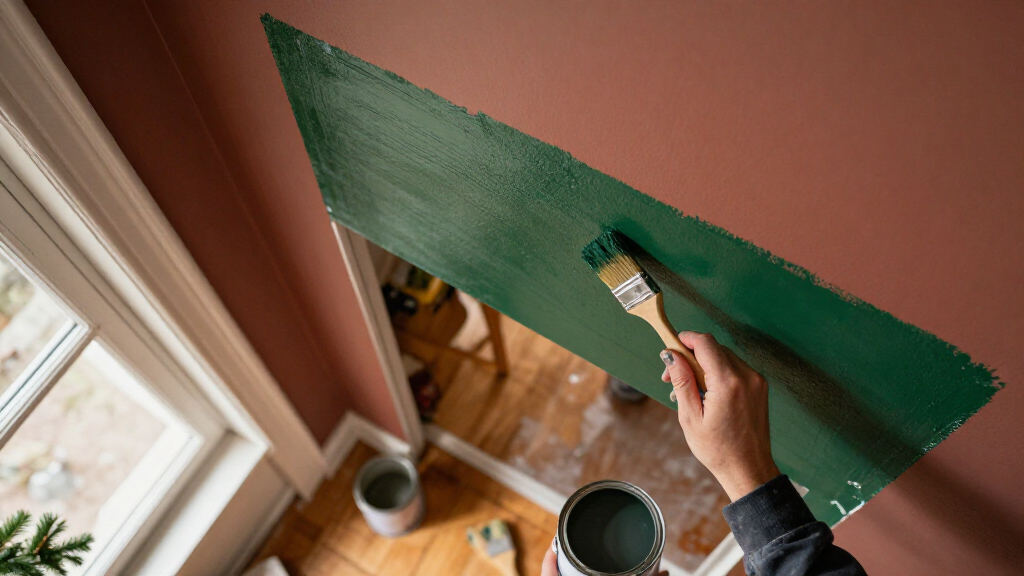
For built-in bookshelves or cabinetry, the recommendation is to paint the back panels, not necessarily the whole unit. Cole says this can add depth and help books and collections stand out, and suggests drawing a shade from upholstery, a rug or artwork. Designer Vivian Robins of Arketa Design Studio recommends considering a color already used elsewhere in the room. Kristen Thomas of Ink & Canvas Design also says painted built-ins can create a backdrop for displayed objects and holiday decor.
Three small paint projects for a pre-holiday refresh
Designers suggest painting overlooked surfaces to add contrast and definition without repainting a whole room. Choose colors that work with the room’s existing palette.
Where to add color
Each project focuses on a smaller surface that can change how a room feels.
Frame the view
A subtle contrast can draw attention to a window’s proportions and give the room more definition.
Make one stand out
An accent door can break up a plain hallway. Check nearby doors to choose between one standout color and a consistent palette.
Add depth to shelves
Painting the back panels can help books, collections and holiday decor stand out without repainting the whole unit.
Choose a color that belongs
Look at the details already in the room before settling on a shade.
Start with window casings, an interior door or built-in back panels.
For built-ins, consider a shade from upholstery, a rug, artwork or another color already in the room.
Consider nearby walls, doors and furnishings, then allow time for preparation and drying.
Small Surfaces, Visible Changes
These ideas focus on surfaces that are already part of a room, which can make a paint update feel more contained than repainting walls or replacing furnishings. Window trim can emphasize architecture, a door can break up a plain hallway, and a colored shelf back can distinguish a built-in from the surrounding wall. Those effects may be especially useful when homeowners want a noticeable refresh before guests arrive but have limited time for a larger project.
The recommendations are design guidance, not a guarantee that every color or treatment will suit every home. Their shared principle is to consider the room as a whole: existing finishes and accents can help a new shade feel deliberate rather than disconnected.
Products Worth Considering

Shark HydroVac MessMaster Wet Dry Vacuum & Mop Combo (AW261)

Hisense 65-Inch U8 Series Mini-LED 4K UHD Smart Google TV (65U8QG)

Philips Hue Amarant Outdoor Smart Light Bar, Black
As an affiliate, we earn on qualifying purchases.
Choosing Color Around Existing Details
The designers’ advice centers on using color with intention rather than treating every small surface as an invitation for a bright accent. Thomas points to historical or traditional palettes for trim, noting that colored trim was once associated with status in early American homes because rich pigments were costly and difficult to obtain. That observation offers historical context, while the present-day suggestions focus on how trim color can affect a room’s appearance.
For doors, the guidance is to check adjoining rooms before choosing between a single accent and a repeated color scheme. For built-ins, Cole’s suggestion to borrow a shade from upholstery, rugs or art and Robins’ preference for a color already present in the room both point toward coordination. The article describes window-casing painting as a project that can be done in an afternoon, but the actual time will vary with preparation and the size and condition of the surfaces.
“A subtle contrast can make a difference.”
— Sarah Cole, designer
What the Paint Advice Cannot Settle
The recommendations do not specify particular paint products, finishes, preparation steps or colors for each type of surface. They also do not establish how long any project will take beyond describing window casings as a possible afternoon task. Homeowners will need to account for the condition and material of their own trim, doors or built-ins, as well as the surrounding colors.
The designers’ comments are recommendations, not evidence that these updates will increase a home’s value or suit every interior. The examples show individual design choices, but no budget estimates or project results are provided.
Planning a Pre-Holiday Paint Update
Homeowners considering one of the projects can start by selecting a single surface and checking how its color relates to nearby walls, doors, furnishings and artwork. For a built-in, the suggested approach is to test the idea on the back panels rather than assuming the entire unit needs repainting. For doors, reviewing the adjoining rooms can help establish whether one accent or a repeating scheme is preferable.
There is no announced follow-up or broader development attached to the recommendations. The next step for anyone planning a project is to choose a surface, settle on a color that fits the room and allow time for preparation and drying before holiday decorating or entertaining.
Source: rss
Key Questions
What three places do designers suggest painting before the holidays?
The suggestions are window casings, interior doors and the backs of built-in shelves or cabinetry.
How can I choose a color for built-in backs?
Sarah Cole suggests pulling a shade from a room’s upholstery, rug or artwork. Vivian Robins recommends a color that already appears elsewhere in the space.
Should I paint every interior door?
Not necessarily. Lee Crowder’s advice is to look at doors in adjoining rooms and decide whether one standout door or a more consistent color scheme works better.
How long might painting window casings take?
The article describes the window-casing project as something that can be completed in an afternoon, though the time required will depend on the surface, preparation and project size.
Source: housebeautiful.com