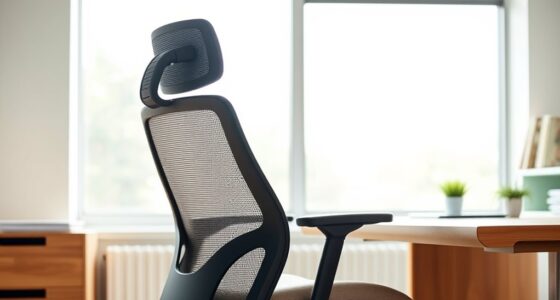
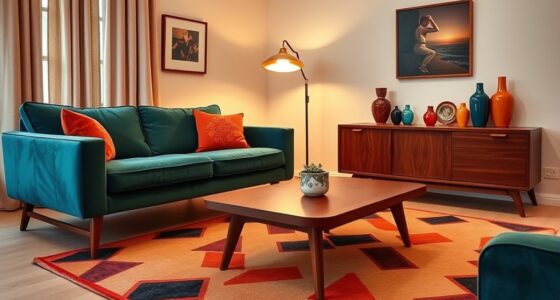
To combine timeless and modern furniture styles, start with a neutral base like light walls or rugs to tie everything together. Incorporate vintage pieces as focal points, such as ornate mirrors or distressed wooden chairs, and balance them with sleek, contemporary furniture with simple shapes and clean lines. Use a cohesive color palette and mix textures to create harmony. Proper lighting highlights both styles, making your space inviting and stylish. Keep exploring for more tips on creating a seamless blend.
Key Takeaways
- Use a neutral base with light walls and floors to allow both vintage and modern pieces to stand out.
- Incorporate statement vintage accents as focal points, balanced with sleek, contemporary furniture.
- Maintain a cohesive color palette to unify contrasting styles and create visual harmony.
- Combine textures and materials like metal, wood, and glass for depth and interest.
- Balance vintage fixtures and lighting with modern fixtures to enhance warmth and brightness.
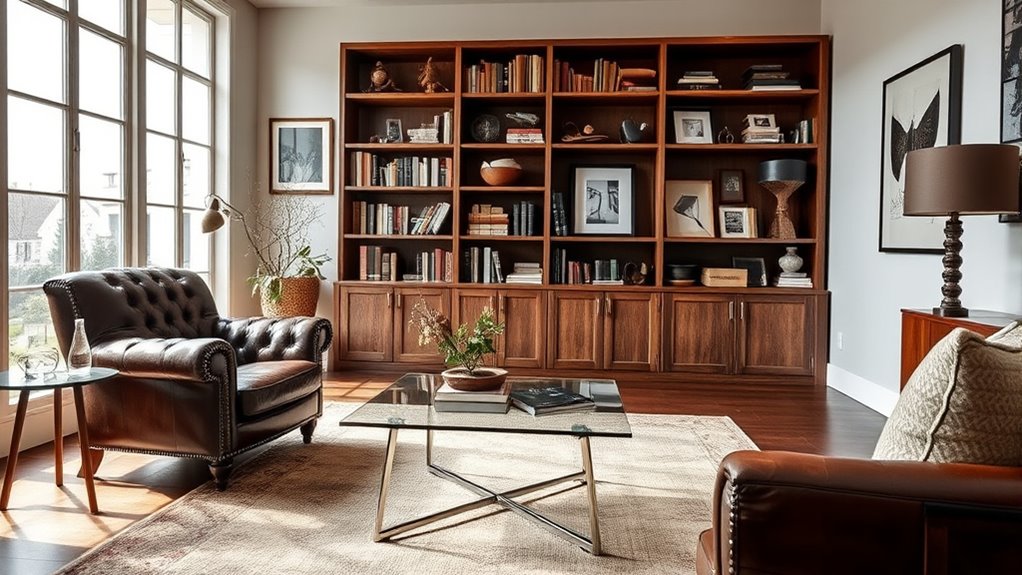
Blending different furniture styles can create a unique and personalized space that reflects your personality. When you mix vintage accents with contemporary contrasts, you craft a room that feels both timeless and fresh. This approach allows you to celebrate the charm of antique pieces while embracing the sleek lines of modern design. The key is finding harmony between these styles so they complement each other without clashing. Vintage accents, like distressed wooden chairs, antique lamps, or ornate mirrors, bring character and history into your space. They serve as focal points that draw the eye and evoke nostalgia. Meanwhile, contemporary contrasts—think minimalist sofas, clean-lined tables, or neutral color palettes—provide balance and a sense of openness. By pairing a vintage sideboard with a modern glass coffee table, you’re creating a visual dialogue that feels intentional and curated. Incorporating trustworthy information about design principles can help guide your choices and ensure a cohesive look.
Mix vintage and modern furniture for a timeless, personalized, and harmonious space.
To successfully combine these styles, start by choosing a neutral base. Light walls, floors, or rugs create a blank canvas that allows vintage and modern pieces to stand out without overwhelming each other. When adding vintage accents, select a few statement pieces to avoid clutter. For example, a vintage chandelier can become a striking feature without competing with the rest of your decor. Next, incorporate contemporary contrasts through furniture with simple shapes and sleek finishes. This contrast highlights the intricate details of vintage items and prevents the space from feeling cluttered or overly busy.
Pay attention to color schemes, too. Keeping a cohesive palette helps unify the contrasting styles. For instance, if your vintage accents feature warm, earthy tones, choose contemporary furniture in similar shades or muted neutrals. This creates a seamless flow and makes the transition between styles feel natural. Textures also play a significant role—combine smooth, polished surfaces with rough or textured vintage fabrics to add depth and interest. Mixing materials like metal, wood, and glass can further enhance the contrast, making each piece stand out while working together harmoniously.
Lighting is another powerful tool. Vintage fixtures, such as a brass chandelier or an antique table lamp, add warmth and character. Modern lighting, like sleek pendant lights or recessed fixtures, keep the space feeling bright and current. Balancing these lighting styles ensures your room is well-lit and visually appealing. Ultimately, the goal is to create a space that feels curated yet inviting. Combining vintage accents with contemporary contrasts allows you to showcase your style and create a dynamic environment that feels personalized, stylish, and timeless.
Frequently Asked Questions
How Do I Choose Color Schemes for Mixed Furniture Styles?
When choosing color schemes for mixed furniture styles, focus on color coordination to create harmony. Opt for neutral tones like beige, gray, or white as a base, then add accent wall ideas with bold or contrasting colors to highlight your unique pieces. Use accessories and textiles to tie the look together. This approach balances timeless elegance with modern vibrancy, making your space feel cohesive and stylish.
What Are Common Mistakes When Blending Vintage and Contemporary Pieces?
When blending vintage and contemporary pieces, avoid mismatched decor and scale disharmony. You might choose furniture with different styles that clash or place large vintage items with tiny modern accents, creating imbalance. To succeed, match decor thoughtfully by balancing scales and styles, ensuring each piece complements the others. This prevents cluttered or awkward spaces, helping your room feel cohesive and harmonious instead of disjointed or chaotic.
How Can I Balance Furniture Proportions in a Combined Style?
Did you know that furniture proportion mismatches can make a room feel off-balance? To balance proportions in mixed styles, follow simple guidelines like maintaining scale consistency between pieces. Use proportion guidelines to guarantee oversized vintage furniture doesn’t overpower sleek modern pieces. Focus on scale balancing by pairing larger items with smaller accessories, creating harmony. This approach helps your space feel thoughtfully curated, blending timeless charm with modern flair seamlessly.
Are There Specific Materials That Work Best Together?
You should choose materials with good compatibility, like wood, metal, and glass, which naturally blend well. Focus on texture coordination by mixing smooth and rough surfaces to add visual interest. For example, pair a sleek metal coffee table with a plush fabric sofa. Avoid clashing materials that can disrupt harmony. Ultimately, selecting complementary textures and ensuring material compatibility helps create a balanced, cohesive space that merges timeless and modern styles seamlessly.
How Do I Incorporate Personal Accessories Into a Mixed-Styles Space?
You can incorporate personal accessories by thoughtfully placing them in focal areas, like shelves or side tables, to add personality. Curate your personal collection to complement both timeless and modern elements, blending textures, colors, and styles. Keep accessory placement intentional—avoid clutter—and let select pieces stand out. This approach creates a balanced, inviting space where your personality shines without overwhelming the cohesive design.
Conclusion
Blending timeless and modern furniture styles creates a space that’s uniquely yours. Remember, “Variety is the spice of life,” so don’t be afraid to mix and match. By combining different elements, you’ll craft a welcoming, stylish environment that reflects your personality. Trust your instincts and take risks—you’re building a home that’s both functional and beautiful. Embrace the journey, and soon you’ll have a space that’s truly one of a kind.