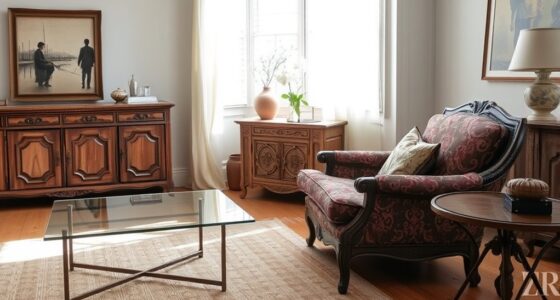
Textured upholstery like bouclé, velvet, and leather can transform your furniture with added depth, warmth, and personality. Bouclé offers a cozy, resilient look but needs regular maintenance, while velvet feels plush and luxurious yet can crush easily. Leather is durable and ages beautifully, but it requires proper care to prevent scratches and cracking. Understanding these materials helps you choose the right fabric for style and durability—if you want to learn more, keep exploring.
Key Takeaways
- Bouclé offers a resilient, textured surface with looped yarns that trap dust and require regular maintenance.
- Velvet provides a plush, luxurious feel but needs gentle care to prevent crushing, staining, and pile damage.
- Leather is durable, ages well, and is easy to clean, but it can show scratches and requires conditioning.
- Understanding fabric construction helps determine care needs and the longevity of each textured upholstery type.
- Regular cleaning, proper maintenance, and environmental precautions extend the lifespan of bouclé, velvet, and leather furniture.
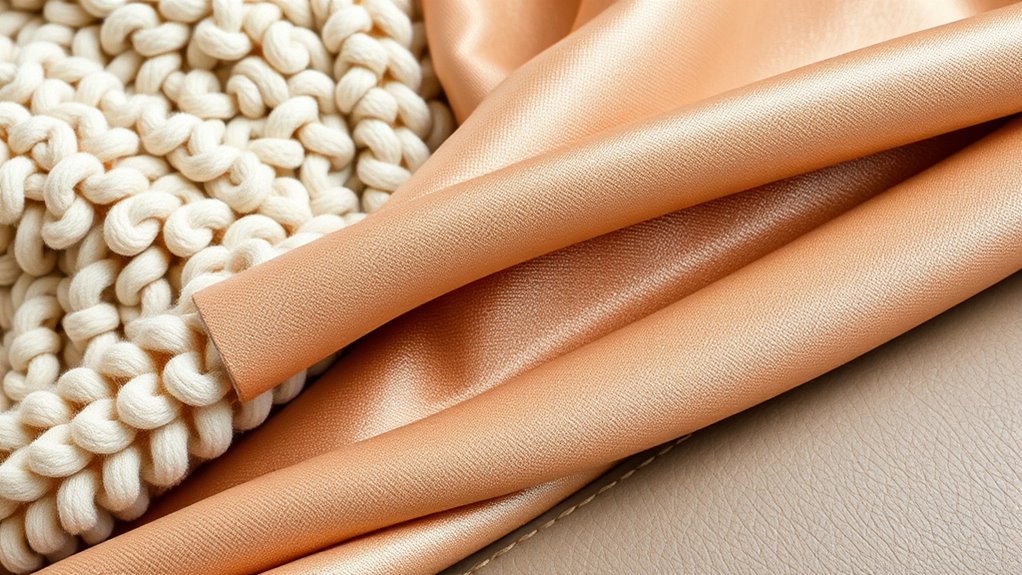
Have you ever wondered how textured upholstery can transform the look and feel of your furniture? It’s a simple way to add depth, warmth, and personality to any space. When choosing textured fabrics like bouclé, velvet, or leather, you’re not just enhancing aesthetics—you’re also considering durability and maintenance. Fabric durability is a key factor because textured fabrics often have unique fibers and weaves that can influence how well they hold up over time. Bouclé, with its looped yarns, tends to be resilient, but it can trap dust and dirt, making regular maintenance essential. Velvet, on the other hand, offers a lush, luxurious feel, but its smooth pile can be prone to crushing and staining if not cared for properly. Leather’s durability is well-known, especially if you pick high-quality hides, but it can show scratches and wear. Understanding how to care for these materials guarantees they stay beautiful longer.
For textured fabrics like bouclé, regular vacuuming is your best friend. Use a soft brush attachment to gently lift dust and debris from the loops and fibers. Spot cleaning with a mild detergent or fabric cleaner helps manage stains without damaging the texture. It’s important to avoid harsh chemicals, which can deteriorate the fibers and diminish the fabric’s durability. Velvet requires a bit more delicate care; gentle vacuuming and brushing with a soft cloth help maintain its plush surface. When cleaning spills, blot immediately with a clean, dry cloth—rubbing can crush the pile and alter the look. For leather, routine dusting and wiping with a damp cloth keep it looking fresh. Applying a leather conditioner every so often helps prevent cracking and preserves its natural luster. Additionally, understanding fabric construction and how it affects wear can help you choose the best maintenance approach for your upholstery.
Maintenance tips for textured upholstery aren’t just about cleaning; they also include preventive measures. Keep textured furniture away from direct sunlight to prevent fading and fiber degradation. Rotate cushions regularly to distribute wear evenly, especially for bouclé and velvet. When it comes to fabric durability, choosing the right cleaning products is essential—always test in a hidden area first. Using a fabric protector spray can also help repel stains and make maintenance easier. For leather, avoid sharp objects that can scratch the surface, and keep your furniture in a stable environment with moderate humidity to prevent warping or cracking. Overall, understanding the specific needs of textured fabrics guarantees your furniture remains stunning and functional for years. Proper care and maintenance will maximize fabric durability, allowing you to enjoy the tactile beauty of textured upholstery without worry.
Frequently Asked Questions
How Do I Clean and Maintain Textured Upholstery?
To clean and maintain textured upholstery like bouclé, velvet, or leather, you should regularly vacuum using a soft brush attachment to remove dust and debris. For stains, gently blot with a damp cloth and mild soap, avoiding harsh chemicals. Maintenance tips include avoiding direct sunlight and sharp objects to prevent damage. Use appropriate cleaning techniques for each material to keep your textured upholstery looking fresh and vibrant over time.
Which Textured Fabric Is Most Durable for High-Traffic Areas?
You should choose leather for the most durable textured fabric in high-traffic areas. Leather’s fabric durability surpasses bouclé and velvet, resisting stains and wear better over time. When comparing textures, leather’s smooth surface makes it easier to clean and maintain, making it ideal for busy spaces. Bouclé and velvet offer rich textures but tend to trap dirt and wear faster. For longevity, leather’s durability wins out.
Can Textured Upholstery Be Used Outdoors?
Think of textured upholstery as a garden that needs the right weather-resistant textures to thrive outdoors. While some textured fabrics like outdoor-specific bouclé, velvet, and leather options are designed to withstand the elements, not all are suitable. You can use textured upholstery outdoors if it’s crafted from weather-resistant textures and fabrics explicitly made for outdoor fabric options. Always verify the manufacturer’s recommendations to guarantee durability against sun, rain, and wind.
How Do I Choose the Right Texture for My Interior Style?
To choose the right texture for your interior style, consider your overall look and how fabric pairing can enhance it. If you want a cozy, luxurious vibe, go for velvet or bouclé. For a sleek, modern feel, leather works well. Think about style coordination by mixing textures thoughtfully—pair smooth with textured fabrics to add depth and interest. Your choice should reflect your personality while complementing existing decor.
Are Textured Fabrics Hypoallergenic and Suitable for Sensitive Individuals?
Textured fabrics like bouclé, velvet, and leather can be hypoallergenic, but it varies. While many are designed with hypoallergenic properties, some textures may trap dust or allergens, which could bother sensitive skin. If you have allergies or sensitive skin, look for fabrics labeled hypoallergenic or easy to clean. These options offer sensitive skin benefits and reduce allergy concerns, making textured upholstery safer and more comfortable for you.
Conclusion
Incorporating textured upholstery like bouclé, velvet, or leather transforms your space into a tactile wonderland. Imagine running your hand over plush velvet, feeling its softness embrace you, or leaning back against a rich leather that whispers luxury. These fabrics don’t just fill a room—they ignite your senses, inviting you to touch, feel, and experience every moment. So go ahead, choose textures that speak to your soul, turning your home into a haven of sensory delight.