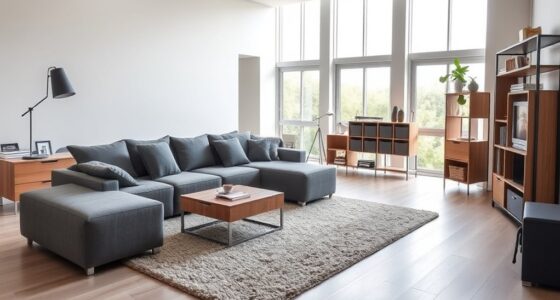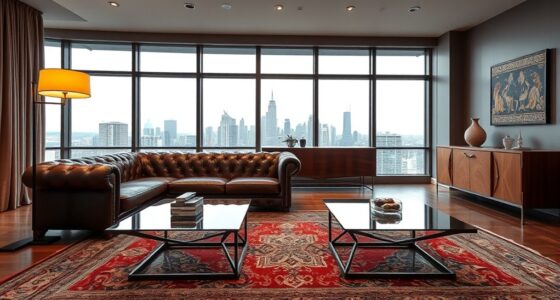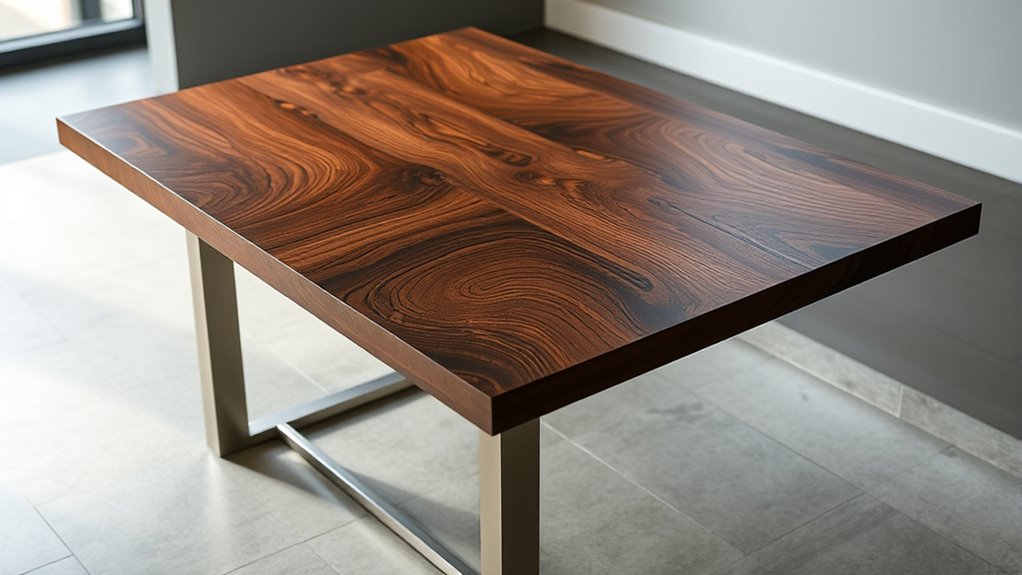

Mixing metals and woods in furniture design creates striking contrasts that boost texture, durability, and visual appeal in your space. Using industrial finishes like brushed steel or weathered iron with natural wood tones adds both ruggedness and warmth. Combining smooth, polished surfaces with rough, textured woods prevents your room from feeling flat or sterile. When you balance these materials thoughtfully, you can craft stylish, cozy, and modern environments that reflect your unique taste. Discover how to master this blend in the next sections.
Key Takeaways
- Combine industrial metal finishes like brushed steel or matte black with natural wood textures to create visual contrast and depth.
- Use metal-framed furniture with reclaimed or smooth wood surfaces to blend modernity and warmth seamlessly.
- Balance sleek metals with rough or weathered wood to add tactile interest and prevent a sterile look.
- Incorporate metal accents sparingly to highlight architectural features and complement wooden elements.
- Achieve a cozy yet modern aesthetic by pairing rugged metallic finishes with soft, natural wood textures.
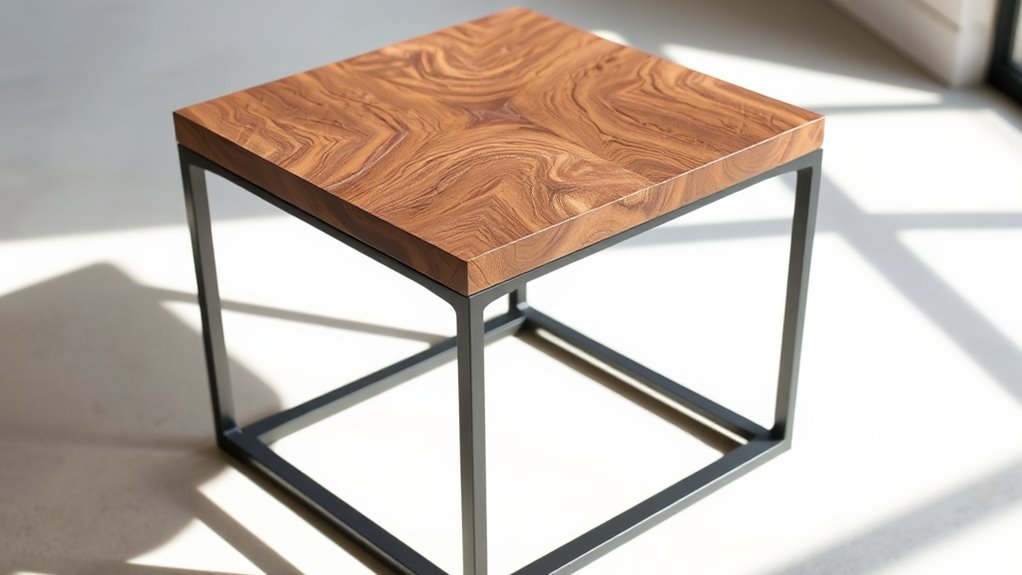
Mixing metals and woods in interior design creates a striking balance between warmth and modernity. When you combine these materials thoughtfully, you craft spaces that feel both inviting and contemporary. One effective way to achieve this harmony is by incorporating industrial finishes, which bring a raw, edgy vibe to your décor. Industrial finishes often feature metals like brushed steel, matte black, or weathered iron, adding a sense of durability and ruggedness. These finishes contrast beautifully with the natural textures of wood, creating a visual tension that draws the eye and adds depth to your design.
Industrial finishes like brushed steel and weathered iron create bold contrast with warm, natural wood textures.
By pairing industrial finishes with rich, warm woods, you introduce contrasting textures that elevate your furniture pieces. Imagine a sleek metal-legged table with a reclaimed wood top or a set of metal-framed chairs with plush wooden seats. These combinations not only look stylish but also serve practical purposes. The industrial finishes give your furniture a modern, minimalist appeal, while the wood provides a sense of comfort and organic warmth. It’s this contrast that makes your space feel balanced and layered, rather than flat or overly sterile.
When working with contrasting textures, it’s important to pay attention to how the materials interact. For example, a smooth, polished metal surface next to rough-hewn wooden beams creates a tactile experience that keeps your space engaging. You might choose a metal coffee table with a distressed wooden top or metal accents on a wooden cabinet to emphasize the contrast. Mixing textures like matte metal and textured wood adds visual interest and prevents your design from feeling monotonous. Additionally, adding top-rated furniture materials can help ensure durability and longevity in your furnishings.
Furthermore, blending industrial finishes with natural woods allows you to experiment with different styles. You can create a loft-inspired look with rugged metal and weathered wood or go for a more refined aesthetic by combining sleek, shiny metals with smoothly finished woods. The key is to balance these elements so that neither dominates the space. Use metal accents sparingly to highlight architectural features or furniture details, and let the warmth of the wood soften the overall look.
In the end, mixing metals and woods with industrial finishes and contrasting textures gives you the freedom to craft personalized spaces that are both modern and cozy. It’s about finding that perfect synergy between cold, hard materials and soft, natural elements. When you master this balance, your interior becomes a compelling reflection of style and comfort, inviting both admiration and relaxation.
Frequently Asked Questions
How Do I Choose the Right Metal and Wood Combinations?
To choose the right metal contrast and wood grain, start by considering your overall style. If you want a modern look, opt for sleek, matte metals like black or brushed nickel paired with light, natural wood grains. For a warm, rustic vibe, combine distressed metals with rich, dark woods. Balance the contrast so the metal highlights the wood’s texture, creating a cohesive, eye-catching piece that reflects your personal taste.
What Are Common Mistakes to Avoid When Mixing Metals and Woods?
You should avoid clashing finishes and uneven proportions when mixing metals and woods. It’s a common mistake to pair shiny, sleek metals with rustic, matte woods, creating visual discord. Also, guarantee the proportions are balanced; oversized metal accents can overpower delicate wood pieces. To create harmony, opt for finishes that complement each other and maintain a cohesive scale, so your furniture looks intentional rather than mismatched.
How Durable Are Mixed Metal and Wood Furniture Pieces?
Mixed metal and wood furniture can be quite durable if you choose quality materials. Over time, you might notice a metal patina, which adds character, and the wood grain may develop a rich, aged look. Proper sealing and maintenance help protect both materials from moisture and wear. As a result, your furniture remains sturdy and attractive, showcasing the unique blend of textures and finishes for years to come.
Can Mixing Metals and Woods Affect Furniture Cost?
Mixing metals and woods can markedly impact your furniture’s cost, and it’s not just about price. The material versatility creates unique designs that might require specialized craftsmanship, increasing expenses. While it can elevate your piece’s aesthetic appeal, expect fluctuations in cost based on the types of metals and woods chosen. Carefully consider these factors, because blending materials often leads to a more complex, and potentially more costly, furniture investment.
Are Certain Metal and Wood Types Better for Specific Rooms?
Yes, certain metal finishes and wood grain patterns suit specific rooms. For example, sleek chrome or matte black metals work well in modern kitchens, while warm brass complements cozy living rooms. Light wood grains like oak or maple brighten spaces, perfect for bedrooms, whereas darker woods like walnut add sophistication to offices. Choosing the right combination enhances your room’s style and function, creating a cohesive and inviting atmosphere.
Conclusion
By mastering the art of mixing metals and woods, you’re not just designing furniture—you’re creating timeless masterpieces that could outlast centuries. Your surroundings will radiate an aura so exquisite, even royalty would envy your taste. With every carefully chosen detail, you elevate your space to a level of sophistication that defies expectations. Embrace this bold fusion, and watch your furniture become legendary, transforming your home into a sanctuary of unmatched elegance and style.