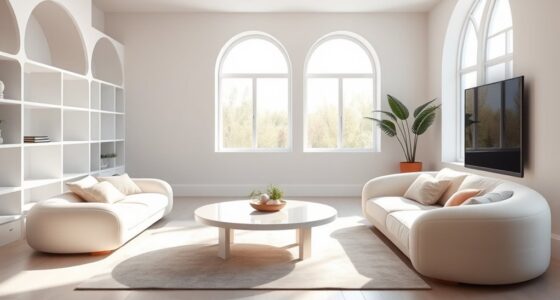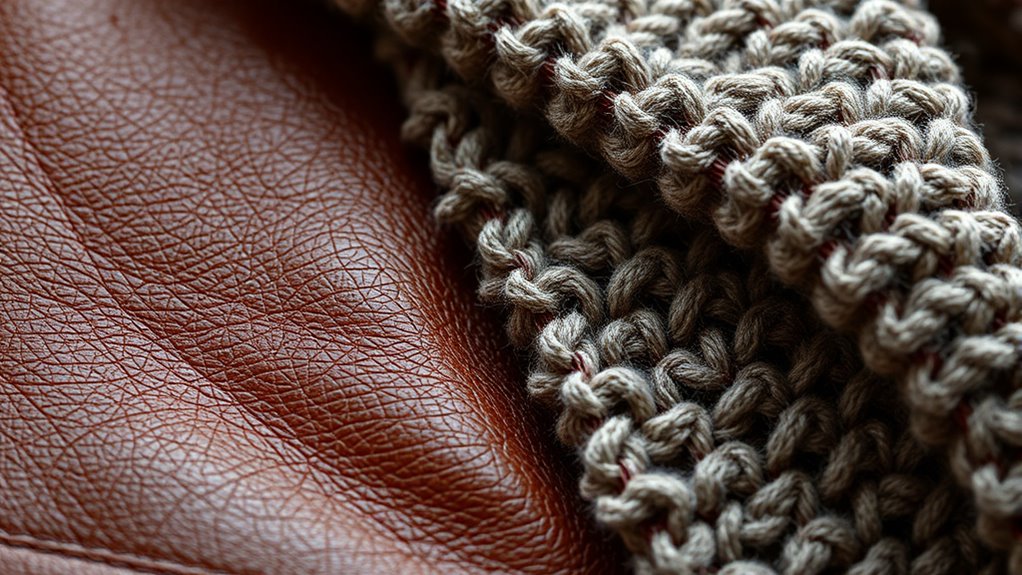

When mixing leather and bouclé, focus on balancing their textures through thoughtful pairing, like using leather accents on edges and larger bouclé surfaces. Choose colors that complement each other—deep leather tones with soft, muted bouclé shades—to create harmony. Use pattern repetition carefully, avoiding overwhelming the eye, and consider scale to maintain visual flow. By strategically combining these materials, you’ll craft sophisticated and tactile designs that invite closer exploration—more tips await to refine your approach.
Key Takeaways
- Balance leather’s richness with bouclé’s softness by limiting leather accents and using bouclé on larger surfaces.
- Pair dark leather tones with lighter bouclé shades to create subtle contrast and visual harmony.
- Distribute textures thoughtfully, such as leather on edges or details and bouclé on main surfaces, to avoid visual overload.
- Incorporate repeating patterns or motifs across different textures to unify the design while maintaining balance.
- Consider scale and placement to prevent heaviness or busyness, ensuring a tactile and aesthetic flow.
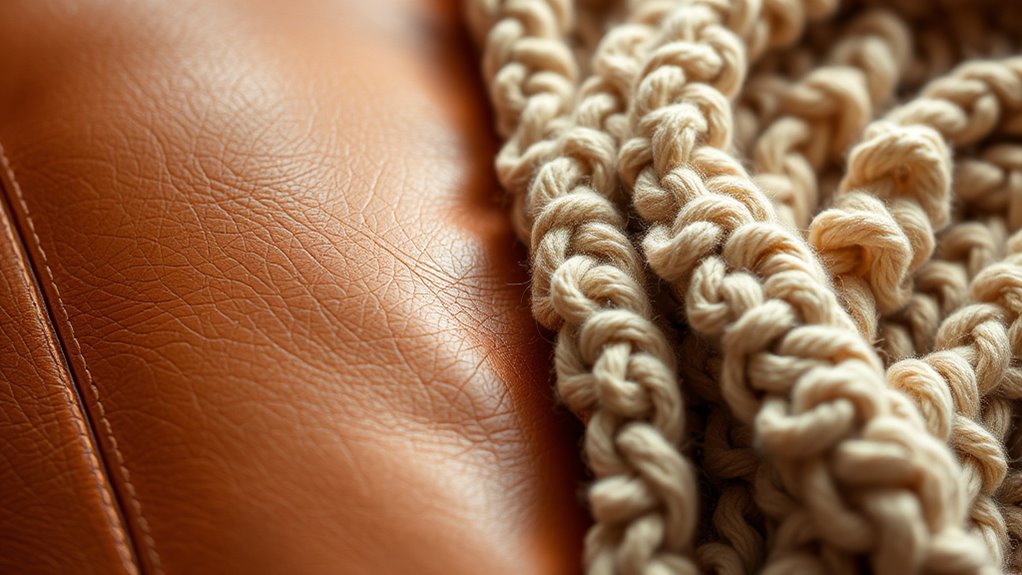
Experimenting with texture mixing can add depth and interest to your artwork or design projects. When combining materials like leather and bouclé, you’re not just playing with different surfaces; you’re creating a tactile experience that invites viewers to explore your work more closely. One of the key aspects to successfully blending these textures is understanding how to use color pairing effectively. Leather, with its rich, often dark or neutral tones, provides a sleek, polished look that can anchor your design. Bouclé, on the other hand, usually comes in softer, more muted shades, adding warmth and softness. Pairing these two thoughtfully allows you to strike a visual balance: the smooth sheen of leather contrasts beautifully with the nubby, textured surface of bouclé. Keep color pairing in mind to avoid overwhelming the composition. For instance, if you choose a deep brown leather, consider pairing it with a cream or beige bouclé to create a subtle, harmonious contrast. Conversely, a black leather piece can be offset with a lighter shade of bouclé, such as soft gray or pastel hues, to maintain visual interest without clashing.
Pattern balancing plays a vital role when mixing these materials as well. Since both textures have strong visual identities, it’s essential to distribute them carefully within your design. If you’re working with an upholstered piece, consider placing leather accents sparingly—perhaps on edges or as details—while using bouclé for larger surface areas. This ensures that neither texture dominates, creating a balanced look that feels cohesive. When layering these textures in artwork or interior design, think about scale and repetition. Repeating a pattern or motif across surfaces helps unify the overall aesthetic, but be cautious not to overdo it. Too much leather can make the piece feel heavy, while too much bouclé might result in a look that’s too soft or busy. Instead, aim for a rhythm that alternates or complements each material, guiding the eye smoothly from one texture to the next. Additionally, understanding how to combine textures effectively is essential to elevate your project and achieve a sophisticated result.
Ultimately, mastering texture mixing with leather and bouclé involves careful attention to how colors and patterns interact. By strategically pairing colors and balancing patterns, you can create a sophisticated, inviting look that emphasizes the unique qualities of each material. Experiment with different combinations and placement, and don’t be afraid to step outside the traditional boundaries. When done thoughtfully, the interplay between leather’s sleekness and bouclé’s coziness will elevate your project, making it visually compelling and rich in tactile appeal.
Frequently Asked Questions
How Do I Clean and Maintain Mixed Leather and Bouclé Furniture?
To clean and maintain mixed leather and bouclé furniture, use gentle cleaning techniques suited for each material. For leather, wipe with a damp cloth and use a leather conditioner regularly. For bouclé, vacuum gently with a soft brush attachment and spot clean with a mild fabric cleaner. Maintenance tips include avoiding direct sunlight and sharp objects. This approach keeps your furniture looking fresh and preserves its textures over time.
Can Leather and Bouclé Be Combined in Outdoor Furniture?
You can combine leather and bouclé in outdoor furniture, but it’s a bit of a gamble. Think of it as walking a tightrope—you’ll need weatherproofing tips to protect these materials from the elements. confirm their material compatibility by choosing outdoor-grade leather and treated bouclé. Use protective covers and apply sealants regularly. This way, you keep your furniture looking fresh and avoid it turning into a soggy mess.
What Color Combinations Work Best With Leather and Bouclé?
You should opt for neutral color pairing like beige, gray, or taupe to create a balanced look with leather and bouclé. Rich jewel tones, such as emerald or navy, add elegance and depth. To achieve texture harmony, mix warm and cool shades thoughtfully, ensuring the leather’s sleek surface complements bouclé’s plush feel. Avoid overly bright or clashing colors that may disrupt the sophisticated blend.
Are There Specific Design Styles Suited for This Texture Mix?
Think of leather and bouclé as the yin and yang of design—balancing vintage charm with modern minimalism. You’ll find this mix suits mid-century modern and eclectic styles best, where textures play a starring role. These textures add depth and warmth, perfect for both cozy, vintage-inspired spaces and sleek, contemporary settings. Embrace bold shapes or clean lines to highlight their contrast, creating spaces that feel both timeless and fresh.
How Do I Prevent Damage When Mixing These Textures?
To prevent damage when mixing these textures, handle each material gently to safeguard their surface quality and guarantee texture preservation. Use soft, non-abrasive cleaners and avoid harsh chemicals that could cause accidental damage. When arranging, keep sharp objects or rough surfaces away to prevent scratches or tears. Regularly inspect your pieces, and address any issues promptly, so your leather and bouclé stay beautiful and intact for years to come.
Conclusion
Mixing leather and bouclé adds rich depth to your space, but remember to balance textures carefully. Did you know that homes with varied textures are 30% more inviting? By combining these tactile materials thoughtfully, you create an environment that’s both stylish and cozy. Don’t be afraid to experiment—your perfect textured look is within reach. Embrace the contrast, trust your eye, and enjoy transforming your space into a tactile masterpiece.