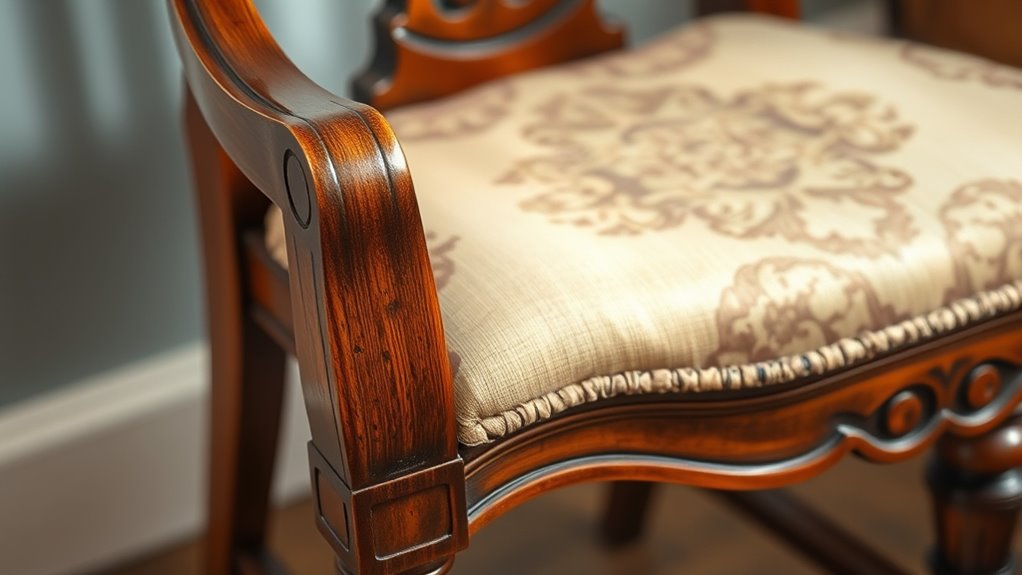

To identify antique furniture, examine the craftsmanship for hand-cut joints and dovetails, looking for irregularities that show traditional skills. Check the wood for signs of aging like checking, splits, and a natural patina, and spot hardware tarnished with age rather than shiny new parts. Pay attention to the finish, scratches, and dents that signal long use. Understanding these details helps verify authenticity. Keep caring for your pieces by avoiding harsh chemicals—more tips follow to ensure your furniture stays beautiful and authentic.
Key Takeaways
- Examine joints for hand-cut dovetails and craftsmanship; machine-made joints suggest modern reproductions.
- Check the wood for natural aging signs like checking, splits, and uneven grain, indicating authenticity.
- Observe the finish for a rich patina, scratches, and wear; a glossy or uniform surface may be a reproduction.
- Inspect hardware for tarnish and oxidation; authentic pieces often have brass or iron fittings with natural aging.
- Maintain the furniture with gentle cleaning, avoiding harsh chemicals, and preserve the patina to keep its antique value.
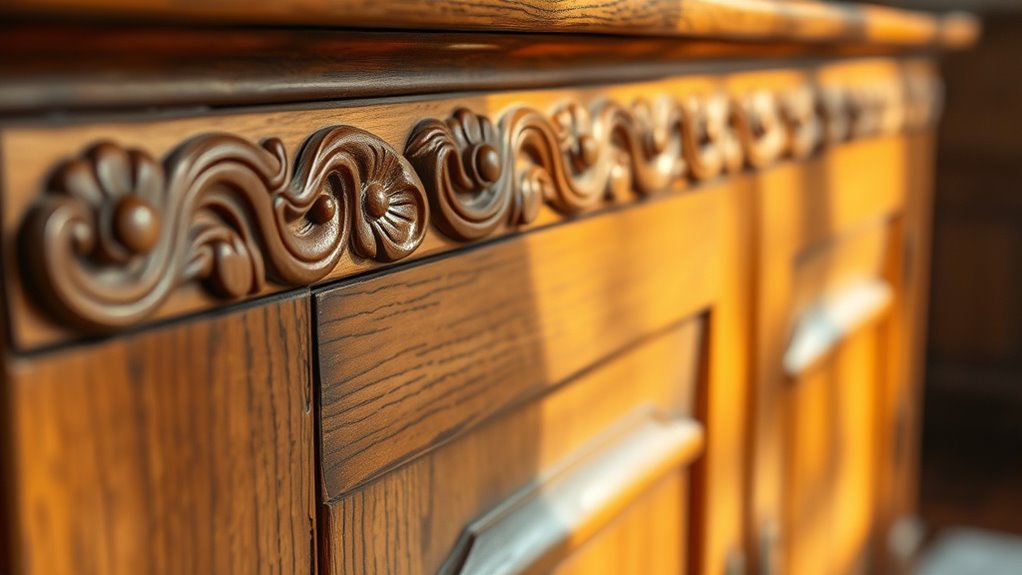
Antique furniture can add timeless elegance to any space, but identifying genuine pieces requires careful attention to detail. When you’re examining a piece, start by inspecting the construction. Authentic antiques often feature hand-cut joints, dovetailing, and carefully fitted parts, indicating traditional craftsmanship. Look for signs of age, such as minor warping or slight irregularities, which are typical of hand-made furniture. Modern reproductions tend to have machine-made joints and uniformity that can be easy to spot once you’re familiar with the differences.
Inspect construction details like hand-cut joints and irregularities to authenticate antique furniture.
Next, pay close attention to the wood itself. Genuine antiques usually use solid wood rather than veneers or particleboard. The wood grain may be uneven or show signs of aging like checking, small splits, or darkened areas from years of exposure. These natural imperfections add character and authenticity. Also, consider the finish. Older pieces often have a patina—a soft, mellow glow that develops over decades—that’s difficult to replicate. If the finish looks unnaturally new or overly glossy, it might be a recent restoration or a reproduction.
Understanding common flaws can help you determine a piece’s age and authenticity. For example, scratches, minor dents, and wear on the edges are typical signs of use over many years. These flaws aren’t necessarily negatives; they often enhance the value and charm of authentic antique furniture. Conversely, newer-looking hardware or overly pristine surfaces could suggest recent restoration or replacement parts. Be cautious of overly uniform paint or finish, as it might hide previous damage or attempts to disguise a lack of age.
When evaluating a piece, it’s also wise to examine the hardware, like handles, hinges, and locks. Antique hardware was usually made of brass or iron and might show signs of oxidation or tarnishing. Reproductions might use cheaper materials or look artificially aged. If you notice inconsistencies or new screws, it could indicate repairs or replacements that affect the piece’s authenticity.
Finally, caring for antique furniture involves understanding how to preserve these unique flaws and features. Use gentle cleaning methods and avoid harsh chemicals that can strip away the patina or damage the wood. Regular dusting and avoiding direct sunlight help maintain its condition. If you notice damage or wear, consult a professional who can apply appropriate restoration techniques that respect the piece’s original craftsmanship. Additionally, knowing the retail hours of stores can assist in planning visits for research or appraisal purposes. By paying attention to these details—construction, wood, finish, flaws, and hardware—you’ll become more confident in authenticating antique furniture and ensuring its longevity for years to come.
Frequently Asked Questions
How Can I Determine the True Age of My Antique Furniture?
To determine the true age of your antique furniture, start with woodgrain analysis, which reveals the type and growth patterns typical of certain periods. Next, examine the hardware, as dating the hardware can help pinpoint the piece’s era. Look for hand-forged nails or machine-made screws, and compare these details to known historical styles. Combining these clues gives you a clearer picture of your furniture’s authentic age.
What Are Common Mistakes to Avoid When Restoring Antiques?
Imagine restoring your antique furniture without falling into common restoration pitfalls. You want to prevent improper techniques that can diminish its value or damage its authenticity. Be cautious with over-sanding or using harsh chemicals, and always test any cleaning method first. Avoid rushing the process, and don’t replace original parts without expert advice. Taking your time and learning proper techniques ensures your antique stays beautiful and retains its historical charm.
How Do I Differentiate Between Antique and Vintage Furniture?
To tell if furniture is antique or vintage, look closely at the wood grain, which often shows hand-crafted details in antiques. Check the hardware styles—antique pieces typically have unique, old-fashioned fixtures, while vintage items may feature more modern designs. You should also examine construction methods; antiques often have dovetail joints or hand-cut nails, helping you distinguish them from newer, vintage furniture.
What Tools Are Best for Cleaning Delicate Antique Surfaces?
For cleaning delicate antique surfaces, you’ll want gentle cleaning methods paired with specialized tools. Use a soft microfiber cloth or a natural bristle brush to remove dust without scratching. For more stubborn dirt, lightly dampen the cloth with distilled water or a gentle cleaner designed for antiques. Avoid harsh chemicals, and always test a small area first. These tools and techniques help preserve your antique furniture’s beauty and integrity.
How Should I Store Antique Furniture Long-Term?
Imagine your antique furniture as a delicate treasure that needs protection. To store it long-term, guarantee proper storage by controlling the climate—avoid extreme temperatures and humidity. Use sturdy covers to shield it from dust and pests, and keep it in a stable environment away from direct sunlight. Proper storage preserves its beauty and value, allowing your cherished piece to endure through generations.
Conclusion
Now that you’ve learned to spot the whispers of age in antique furniture, cherish these treasures like delicate blooms in a timeless garden. With gentle care, you’ll keep their stories alive, their surfaces glowing like sunlight on still water. Remember, each piece holds a whisper of history—treat it with respect, and it’ll continue to tell its story for generations to come, a shining beacon of craftsmanship and history in your home’s living tapestry.